• Skip to primary navigation
  • Skip to main content
  • Skip to primary sidebar

Carnegie Museum of Natural History

One of the Four Carnegie Museums of Pittsburgh

  • Visit
    • Buy Tickets
    • Visitor Information
    • Exhibitions
    • Events
    • Dining at the Museum
    • Celebrate at the Museum
    • Powdermill Nature Reserve
    • Event Venue Rental
  • Learn
    • Field Trips
    • Educator Information
    • Programs at the Museum
    • Bring the Museum to You
    • Guided Programs FAQ
    • Programs Online
    • Climate and Rural Systems Partnership
  • Research
    • Scientific Sections
    • Science Stories
    • Science Videos
    • Senior Science & Research Staff
    • Museum Library
    • Science Seminars
    • Scientific Publications
    • Specimen and Artifact Identification
  • About
    • Mission & Commitments
    • Directors Team
    • Museum History
  • Tickets
  • Give
  • Shop

Poisons of the Carnegie: Hemlock

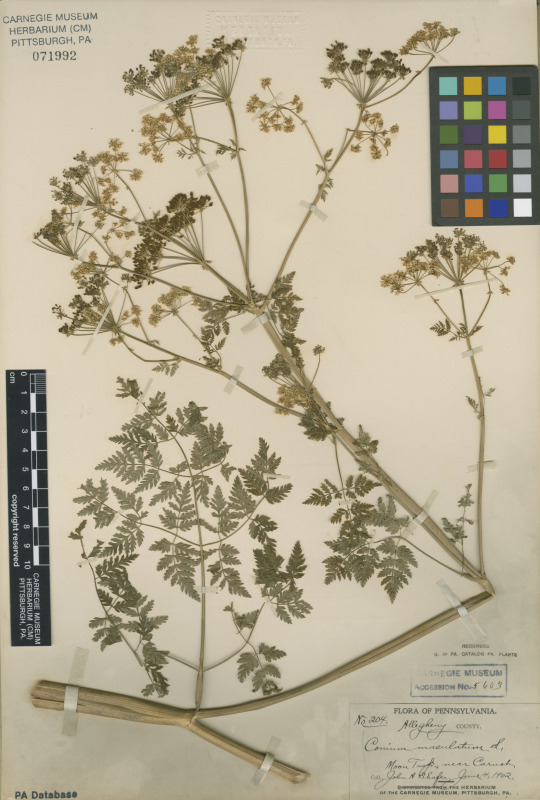
herbarium specimen of poison hemlock

by Mason Heberling

Poison hemlock (Conium maculatum) was used to kill the Greek philosopher Socrates in 399 BC. All parts of the plant are
highly toxic, containing an alkaloid poison, coniine, which disrupts the central nervous system and can cause paralysis of respiratory muscles and death.

Although native to Europe, poison hemlock has been introduced to the United States and can be found in the Pittsburgh region.
Despite the name, it is not related to hemlock trees, but instead a member of the carrot family (Apiaceae). Carrot family members are often recognizable by their flowers, which are on stalks that spread from a common point to form umbrella-like
clusters (botanically called an “umbel”).

Keep an eye out for this species. It is blooming now in our region along roadsides and ditches. Towering at heights of over 9 feet, this plant is hard to miss if you look for it. Aside from its height, it can also be distinguished from similar species by the purple blotches on the stems. It is best to avoid contact with this species. It can be fatal if ingested and can
also cause skin irritations if touched.
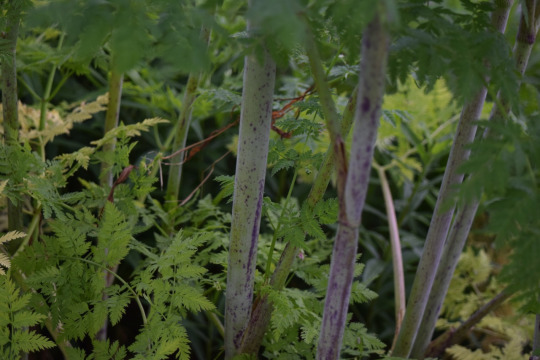
purple and green stems and leaves of a hemlock plant

This summer is all about poison at Carnegie Museum of Natural History. Staff will be sharing fascinating pieces of our collection that are toxic, poisonous, or venomous to celebrate our summer blockbuster exhibition The Power of Poison. For more information about this highly interactive, family-friendly exhibition, visit pop.carnegiemnh.org.

sidebar

About

  • Mission & Commitments
  • Directors Team
  • Museum History

Get Involved

  • Volunteer
  • Membership
  • Carnegie Discoverers
  • Donate
  • Employment
  • Events

Bring a Group

  • Groups of 10 or More
  • Birthday Parties at the Museum
  • Field Trips

Powdermill

  • Powdermill Nature Reserve
  • Powdermill Field Trips
  • Powdermill Staff
  • Research at Powdermill

More Information

  • Image Permission Requests
  • Science Stories
  • Accessibility
  • Shopping Cart
  • Contact
  • Visitor Policies
One of the Four Carnegie Museums | © Carnegie Institute | Privacy Policy | Terms of Use | Accessibility
Rad works here logo