• Skip to primary navigation
  • Skip to main content
  • Skip to primary sidebar

Carnegie Museum of Natural History

One of the Four Carnegie Museums of Pittsburgh

  • Visit
    • Buy Tickets
    • Visitor Information
    • Exhibitions
    • Events
    • Dining at the Museum
    • Celebrate at the Museum
    • Powdermill Nature Reserve
    • Event Venue Rental
  • Learn
    • Field Trips
    • Educator Information
    • Programs at the Museum
    • Bring the Museum to You
    • Guided Programs FAQ
    • Programs Online
    • Climate and Rural Systems Partnership
  • Research
    • Scientific Sections
    • Science Stories
    • Science Videos
    • Senior Science & Research Staff
    • Museum Library
    • Science Seminars
    • Scientific Publications
    • Specimen and Artifact Identification
  • About
    • Mission & Commitments
    • Directors Team
    • Museum History
  • Tickets
  • Give
  • Shop

Poisons of the Carnegie: Io Moth

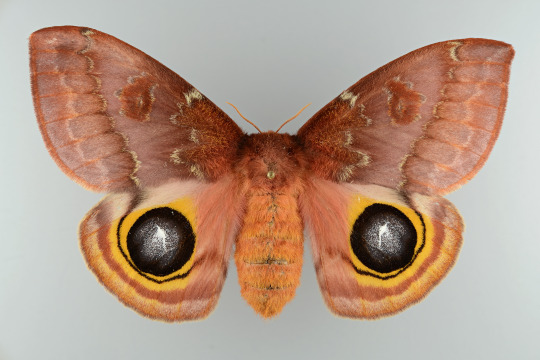
Female Io moth
Female Io moth


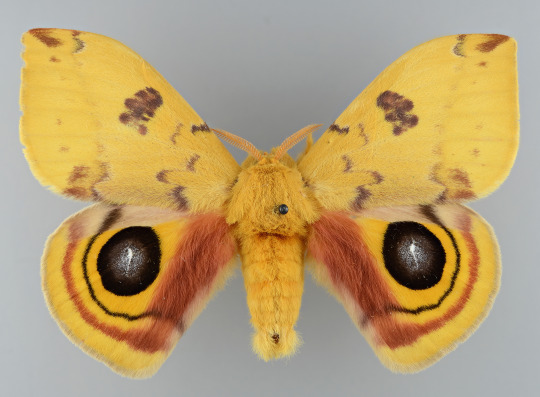
Male Io moth
Male Io moth


by Vanessa Verdecia

The Io moth (Automeris io) is in the subfamily Hemileucinae, which belongs in the family called Saturniidae—the Giant Silkworm Moths. Caterpillars in the hemileucine subfamily have urticating spines that are filled with poison. There are many
different species in this group, some more toxic than others.

The Io moth occurs here in Pennsylvania as well as other parts of the eastern United States. The last instar of the caterpillar is green and has a red and white stripe down the side as seen in the image below.
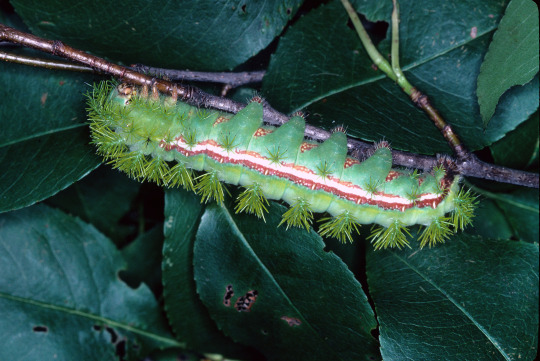
instar of the caterpillar of an Io moth

The caterpillar is covered in spines that can break off and embed themselves in one’s skin if it is handled. The broken spines cause an irritation on the skin that can last for some time after the sting. Seen above are pictures of the adult male and female moths from the Carnegie collection. The female moth has a wingspan of about 8 centimeters and is reddish-brown in appearance, while the male has yellow wings and is a little smaller. They both have eyespots on the hindwings which serve as a
defense mechanism against predators, such as birds, that might confuse them for an animal looking back at them.


This summer is all about poison at Carnegie Museum of Natural History. Staff will be sharing fascinating pieces of our collection that are toxic, poisonous, or venomous to celebrate our summer blockbuster exhibition The Power of Poison. For more information about this highly interactive, family-friendly exhibition, visit pop.carnegiemnh.org.

sidebar

About

  • Mission & Commitments
  • Directors Team
  • Museum History

Get Involved

  • Volunteer
  • Membership
  • Carnegie Discoverers
  • Donate
  • Employment
  • Events

Bring a Group

  • Groups of 10 or More
  • Birthday Parties at the Museum
  • Field Trips

Powdermill

  • Powdermill Nature Reserve
  • Powdermill Field Trips
  • Powdermill Staff
  • Research at Powdermill

More Information

  • Image Permission Requests
  • Science Stories
  • Accessibility
  • Shopping Cart
  • Contact
  • Visitor Policies
One of the Four Carnegie Museums | © Carnegie Institute | Privacy Policy | Terms of Use | Accessibility
Rad works here logo