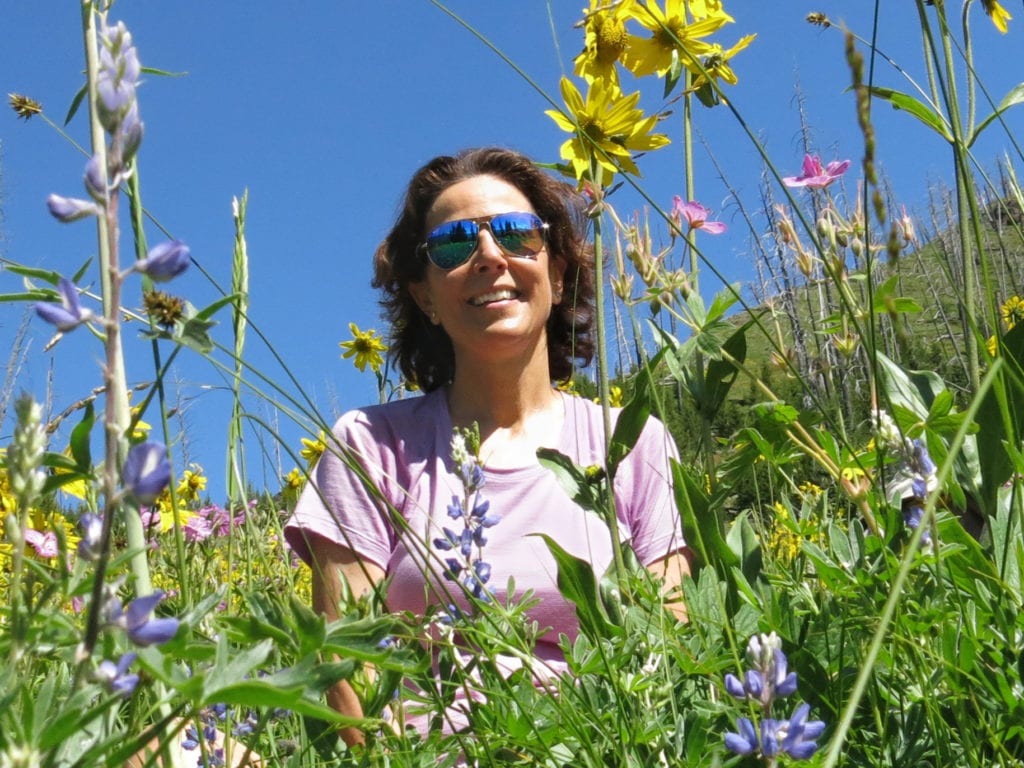
Carnegie Museums of Art and Natural History announce “Catherine Chalmers: The Arts of Living in the Anthropocene” to be held on Thursday, May 16 at 5:30 in the CMOA Theater. Artist and photographer Catherine Chalmers will join Curator of Photography Dan Leers and Anthropocene Curator Dr. Nicole Heller to discuss Chalmers’ art practice and award-winning short film Leafcutters, currently featured in Carnegie Museum of Natural History’s Anthropocene Living Room.
Chalmers’ work examines life in the Anthropocene, the proposed name of the current geological epoch when humans have become the dominant planetary force, restructuring earth system processes as well as the diversity and abundance of life. The Anthropocene calls into question the idea that nature and culture are separated. Similarly, Chalmers’ work blurs the line between natural history and art. She writes in her Artist Statement at CatherineChalmers.com, “My work is at the intersection of art, science and nature. I do extensive research for each of my long-term, multimedia projects and a direct engagement with the natural world is central to what I do.”
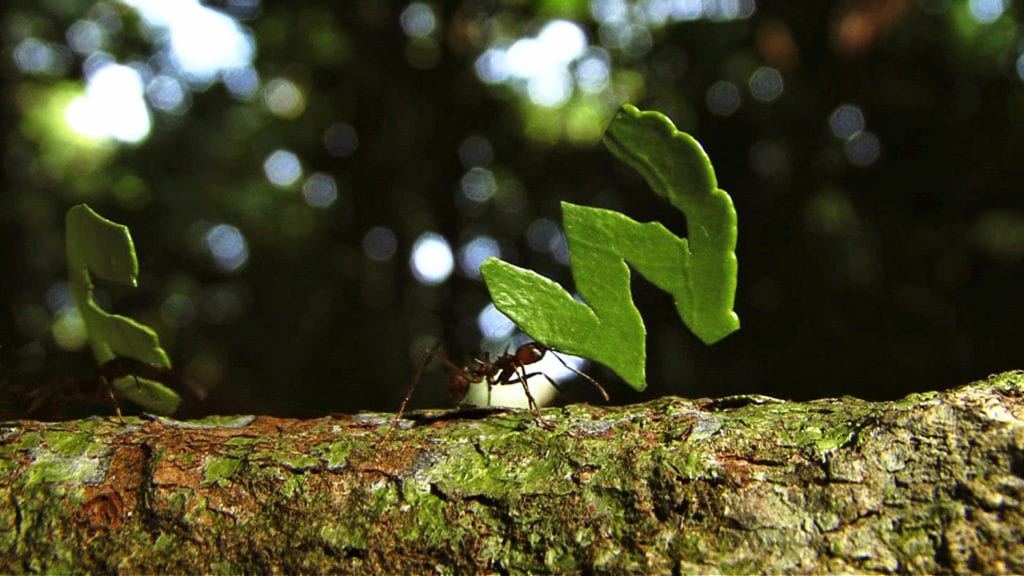
Nicole Heller, curator of the Anthropocene Living Room, says, “I chose Chalmers as our first Anthropocene artist to feature because her visually rich and beautiful film takes the viewer into the intimate and busy world of the leafcutter ants, new world ants in genus Atta, famous for their symbiotic fungal gardens. Chalmers’ art practice demonstrates a subtle but vital response to the Anthropocene crisis, namely the importance of multispecies collaboration and paying close attention. I love the way this piece, by showing the collective work of millions of social ants, invites comparisons to the collective impact of billions of human beings in the Anthropocene.”
With her art practice, Chalmers joins an established legacy of artists who turn their lens on the role of humanity within the natural world. Her work prompts questions about how to live in a culture so defined by the division between people and their natural surroundings.
“For nearly the past twenty years, Chalmers has created photographs and videos that raise awareness about environmental concerns in a whimsical and visually stunning manner,” says Dan Leers, Curator of Photography. “Leafcuttersreveals uncanny parallels between ants and humans to encourage viewers to contemplate their own relationship to the surrounding world.”
Carnegie Museum of Natural History adopted the Anthropocene as a major new theme for scientific research and visitor engagement in 2017 and appointed Nicole Heller as the world’s first Curator of the Anthropocene. TheAnthropocene Living Room, opened in 2019, showcases contemporary Anthropocene science, art, and related literature. The content of the gallery, both scientific and artistic, evolves in response to community interest and current events. As a transdisciplinary cultural and scientific concept, with deep relevance to all sectors of society and knowledge, the Anthropocene is a fertile subject for ongoing collaboration among the Carnegie Museums of Pittsburgh and the region’s scientific and cultural organizations. The museum is excited to plan future collaborations that examine this concept through the collision of natural history science, contemporary art exhibitions, and community conversation.
Tickets to “Catherine Chalmers: The Arts of Living in the Anthropocene” are $10 for adults, $5 for members, and free for students. Get tickets and more information at carnegiemnh.org.
Catherine Chalmers holds a B.S. in Engineering from Stanford University and an M.F.A. in Painting from the Royal College of Art in London. She has exhibited her artwork around the world, including MoMA P.S.1; MASSMoCA; Kunsthalle Vienna; Today Art Museum, Beijing; among others. Her work has appeared in a variety of publications, including theNew York Times, Washington Post, ArtNews and Artforum. She has been featured on PBS, CNN, NPR, and the BBC. Two books have been published on her work: FOOD CHAIN (Aperture 2000) and AMERICAN COCKROACH (Aperture 2004). Her video “Safari” received a Jury Award (Best Experimental Short) at SXSW Film Festival in 2008. In 2010 Chalmers received a Guggenheim Fellowship and in 2015 she was awarded a Rauschenberg Residency. In 2018 she created a course called Art & Environmental Engagement and taught it spring quarter at Stanford University. Her video “Leafcutters” won Best Environmental Short at the 2018 Natourale Film Festival in Wiesbaden, Germany and in 2019 it won the Gil Omenn Art & Science Award at the Ann Arbor Film Festival. She lives in New York City.
