• Skip to primary navigation
  • Skip to main content
  • Skip to primary sidebar

Carnegie Museum of Natural History

One of the Four Carnegie Museums of Pittsburgh

  • Visit
    • Buy Tickets
    • Visitor Information
    • Exhibitions
    • Events
    • Dining at the Museum
    • Celebrate at the Museum
    • Powdermill Nature Reserve
    • Event Venue Rental
  • Learn
    • Field Trips
    • Educator Information
    • Programs at the Museum
    • Bring the Museum to You
    • Guided Programs FAQ
    • Programs Online
    • Climate and Rural Systems Partnership
  • Research
    • Scientific Sections
    • Science Stories
    • Science Videos
    • Senior Science & Research Staff
    • Museum Library
    • Science Seminars
    • Scientific Publications
    • Specimen and Artifact Identification
  • About
    • Mission & Commitments
    • Directors Team
    • Museum History
  • Tickets
  • Give
  • Shop

Scientist Takeover Activity: Measuring Leaves

The Surface Area of Leaves

The surface area of leaves plays an important role in plant growth and photosynthesis. Photosynthesis is the process by which plants transform light (light energy) into food (chemical energy). Light, water, and carbon dioxide gas are all necessary for photosynthesis to occur. Light is absorbed by leaves and differences in surface area exposed to light can change the rates of photosynthesis. Cell structures involved in carbon dioxide exchange, called stomates or stomata, exist in proportion to a leaf’s surface area. Water also evaporates, or transpires, through the many stomata on the leaf surface. As such, the rate of transpiration is directly related to the surface area. 

One method of measuring the surface area of leaves is known as the grid method or the grid count method. The grid method is useful for measuring a small quantity of leaves and is known for being highly accurate.
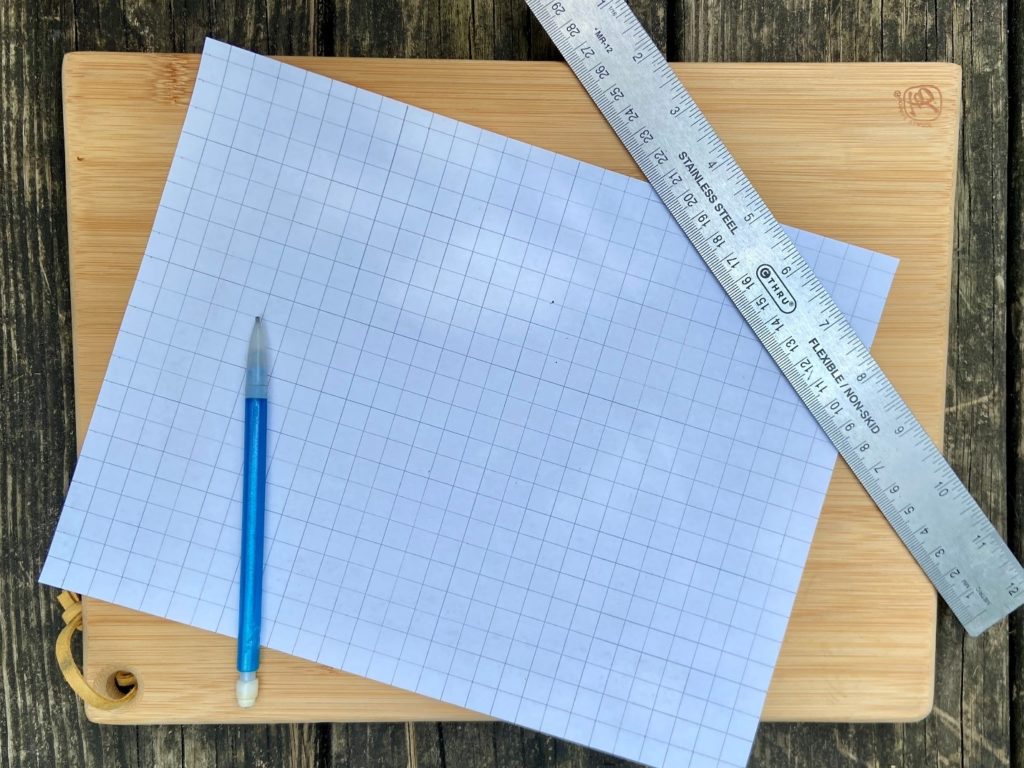
grid paper and ruler

Grid Method

  1. Print or draw graph paper with a 1-centimeter grid (search “1 cm grid paper template” for printable options).
  2. Carefully remove leaf from plant and place on grid paper.
  3. Trace the leaf’s outline and remove the leaf.
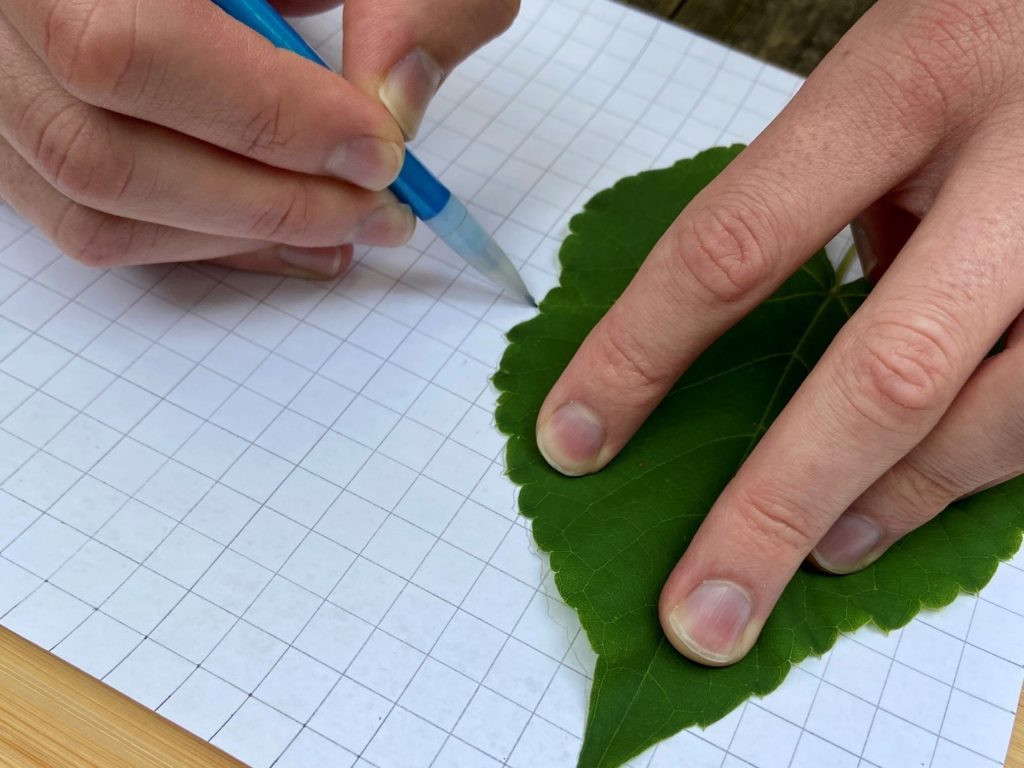
tracing leaf on grid paper
  1. 4. Count the number of squares that are completely within the outline.
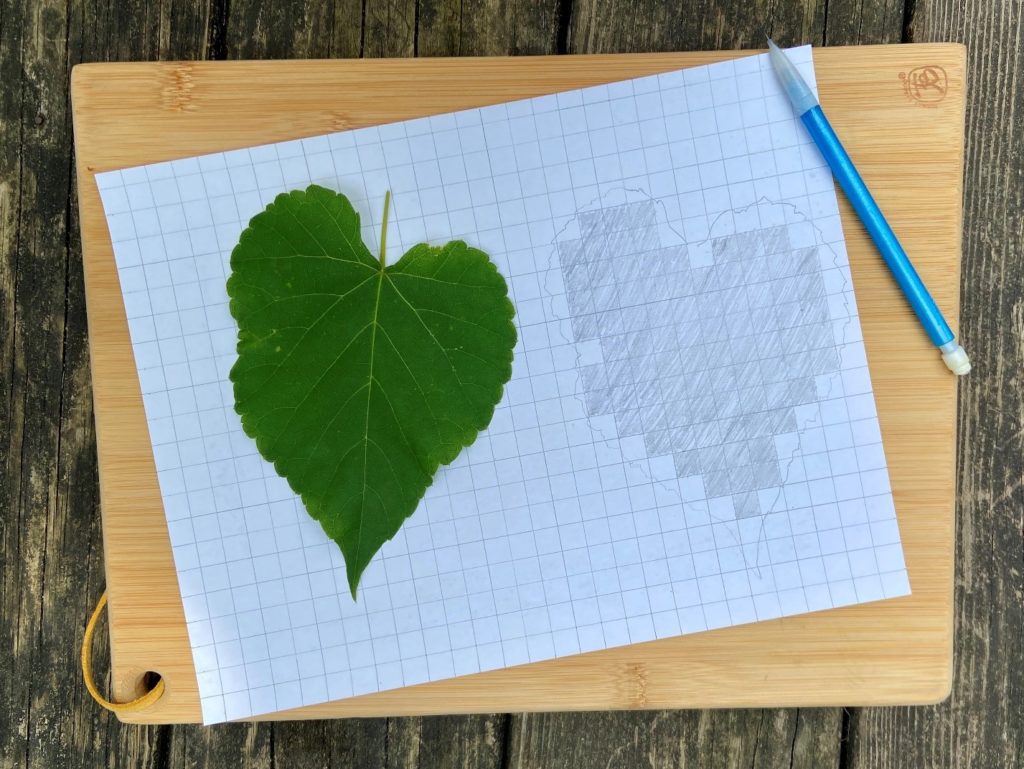
leaf with grid shaded
  1. Estimate the areas partially covered – The simplest way to do this is: count a partial square if it is at least half covered by the leaf; do not count partial squares that are less than half covered.
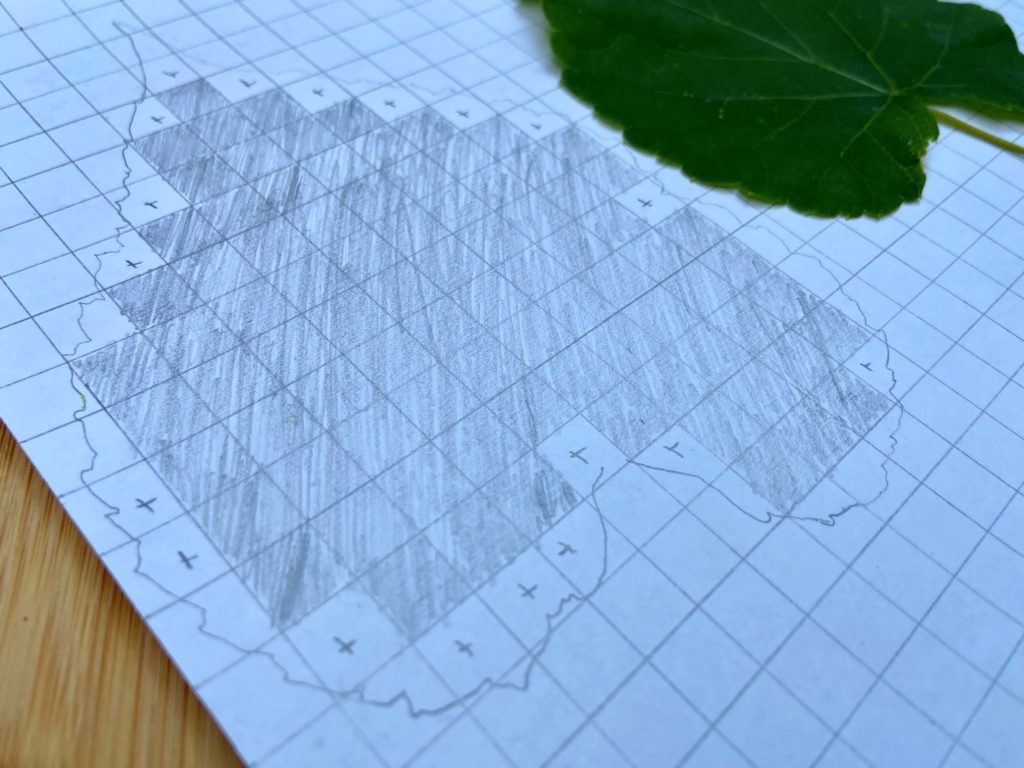
shaded leaf grid with squares counted
  1. Add up the number of squares counted (fully filled + half full squares) and you now have the surface area of the leaf in centimeters squared (cm2).

This activity was written by Jane Thaler, a Gallery Presenter in the museum’s LifeLong Learning Department.

sidebar

About

  • Mission & Commitments
  • Directors Team
  • Museum History

Get Involved

  • Volunteer
  • Membership
  • Carnegie Discoverers
  • Donate
  • Employment
  • Events

Bring a Group

  • Groups of 10 or More
  • Birthday Parties at the Museum
  • Field Trips

Powdermill

  • Powdermill Nature Reserve
  • Powdermill Field Trips
  • Powdermill Staff
  • Research at Powdermill

More Information

  • Image Permission Requests
  • Science Stories
  • Accessibility
  • Shopping Cart
  • Contact
  • Visitor Policies
One of the Four Carnegie Museums | © Carnegie Institute | Privacy Policy | Terms of Use | Accessibility
Rad works here logo