• Skip to primary navigation
  • Skip to main content
  • Skip to primary sidebar

Carnegie Museum of Natural History

One of the Four Carnegie Museums of Pittsburgh

  • Visit
    • Buy Tickets
    • Visitor Information
    • Exhibitions
    • Events
    • Dining at the Museum
    • Celebrate at the Museum
    • Powdermill Nature Reserve
    • Event Venue Rental
  • Learn
    • Field Trips
    • Educator Information
    • Programs at the Museum
    • Bring the Museum to You
    • Guided Programs FAQ
    • Programs Online
    • Climate and Rural Systems Partnership
  • Research
    • Scientific Sections
    • Science Stories
    • Science Videos
    • Senior Science & Research Staff
    • Museum Library
    • Science Seminars
    • Scientific Publications
    • Specimen and Artifact Identification
  • About
    • Mission & Commitments
    • Directors Team
    • Museum History
  • Tickets
  • Give
  • Shop

Selected for Speed

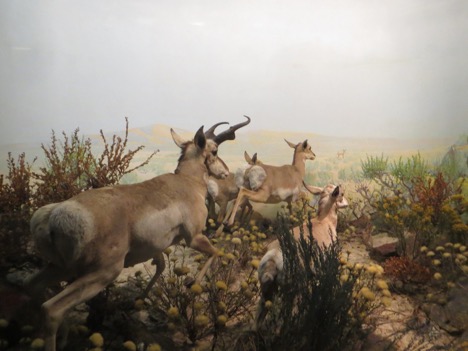
Pronghorn Antelopes in a diorama by Patrick McShea

At first it seems absurd to discuss speed in front of adiorama in which nothing moves. With appropriate prompts, however, this threedimensional snapshot of galloping pronghorn antelopes can generate an astonishing level of mind’s eye animation.

When viewed from dusty Wyoming roadsides, distant pronghorns appear to gallop without sound, even when their pace suddenly changes and their speed doubles for 100-yard stretches.

At the close vantage point offered by the diorama, such antelope maneuvers would undoubtedly produce a sensory mix of blurred furred forms, the staccato clatter of hooves against rock, and the powerful scent of crushed sage.

The species’ blazing speed invites speculation about its evolutionary history. Could pronghorn antelopes be adapted to elude a predator no longer found on western landscapes? A large extinct cat termed an American cheetah is sometimes cited as the missing participant in this natural selection process.

Fossil evidence examined during the past 25 years complicates this narrative. Paleontologists point to expansive ranges for these big cats that include mountainous areas and sea coasts, and the absence, to date, of sites containing both cat and antelope fossils.

With the identity of the pronghorn’s prehistoric predator unsettled, a viewing position in front of the diorama is a place to ponder possibilities.


Patrick McShea works in the Education and Visitor Experience department of Carnegie Museum of Natural History. Museum employees are encouraged to blog about their unique experiences of working at the museum.

sidebar

About

  • Mission & Commitments
  • Directors Team
  • Museum History

Get Involved

  • Volunteer
  • Membership
  • Carnegie Discoverers
  • Donate
  • Employment
  • Events

Bring a Group

  • Groups of 10 or More
  • Birthday Parties at the Museum
  • Field Trips

Powdermill

  • Powdermill Nature Reserve
  • Powdermill Field Trips
  • Powdermill Staff
  • Research at Powdermill

More Information

  • Image Permission Requests
  • Science Stories
  • Accessibility
  • Shopping Cart
  • Contact
  • Visitor Policies
One of the Four Carnegie Museums | © Carnegie Institute | Privacy Policy | Terms of Use | Accessibility
Rad works here logo