by Stephen Rogers
For many years beginning in the early 1980s, collection managers in Carnegie Museum of Natural History’s Section of Birds began keeping a spread wing and sometimes a tail for many of the skeletons we produced. The rational was that there were two sets of wing bones, and sacrificing one side to produce a spread wing and sometimes also a tail (not sacrificing the pygostyle), would produce a reference item that could be used to examine molt, verify identity, and as reference for morphology and artists who use the collection.
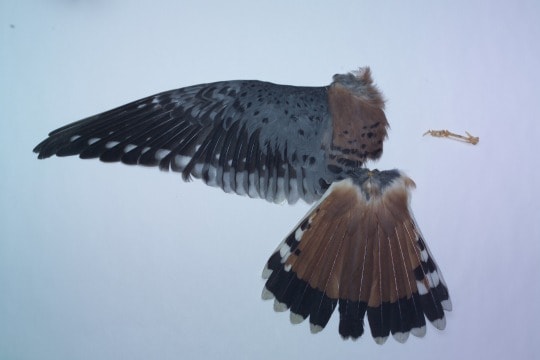
Above is an example of a spread wing and tail and the other corresponding wing parts from the other side of the wing. This photo was sent to a person wishing to have measurements of the pollex bone and the length of the alula—in this case we could provide measurements from the same individual. The pieces of tissue on the wing can also be used to supply dried tissue for DNA.
We did not and, even now, do not preserve tissue in ethanol or liquid nitrogen. Usually dried toe-pad material is used to get DNA when tissue is not available, but if we did not save skins of the specimens collected, a piece of tissue from the wing can be used. Another use of these specimens has been the extraction of wax like material that birds apply from the uropygial gland to keep the bird feather waterproof. One researcher extracted these chemicals from spread wings which was easier than doing so from study skins—dipping the feathers into a solution to dissolve off the material and running it through a gas chromatograph.
Stephen Rogers is a collections manager at Carnegie Museum of Natural History. Museum employees are encouraged to blog about their unique experiences and knowledge gained from working at the museum.
