• Skip to primary navigation
  • Skip to main content
  • Skip to primary sidebar

Carnegie Museum of Natural History

One of the Four Carnegie Museums of Pittsburgh

  • Visit
    • Buy Tickets
    • Visitor Information
    • Exhibitions
    • Events
    • Dining at the Museum
    • Celebrate at the Museum
    • Powdermill Nature Reserve
    • Event Venue Rental
    • Gift Cards
  • Learn
    • Field Trips
    • Educator Information
    • Programs at the Museum
    • Bring the Museum to You
    • Guided Programs FAQ
    • Programs Online
    • Climate and Rural Systems Partnership
  • Research
    • Scientific Sections
    • Science Stories
    • Science Videos
    • Senior Science & Research Staff
    • Museum Library
    • Science Seminars
    • Scientific Publications
    • Specimen and Artifact Identification
  • About
    • Mission & Commitments
    • Directors Team
    • Museum History
  • Tickets
  • Give
  • Shop

Snake ID with a 3D Field Guide

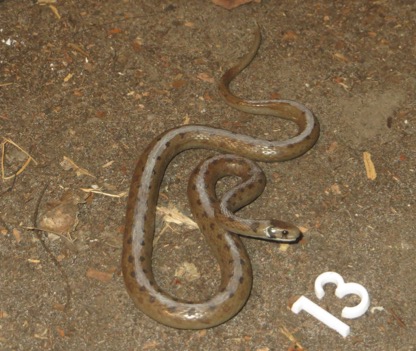
brown snake, Storeria dekayi

by Patrick McShea

In the wild, even the limited wild of our backyards, snakes don’t pose for identification near the numbers of convenient reference keys. Still, the small snake I encountered one cool November morning while raking leaves remained still enough for a prolonged close inspection.

The pencil-thin and ruler-length reptile was in a tight coil beneath a pile of leaves I had neglected to remove the previous afternoon. The unfamiliar creature apparently found both cover and relative warmth in the isolated pile, and I guessed it would depart on its own once the day warmed. As I gently replaced its leafy blanket I remembered where to find its identity.

Some natural museum exhibits function as three-dimensional field guides. Number 13 in the Non-Poisonous Snakes of Pennsylvania display case on the Daniel G. & Carole L. Kamin T-rex Overlook bears the simple descriptive name brown snake, and is known scientifically as Storeria dekayi.

With that information I found out more about the harmless creature I had unknowingly been sharing space with by visiting the website PAHERPS, which specializes in images and data related to Pennsylvania’s amphibians and reptiles and is a great tool for educators and curious gardeners alike.


Patrick McShea works in the Education and Visitor Experience department of Carnegie Museum of Natural History. Museum employees are encouraged to blog about their unique experiences of working at the museum.

sidebar

About

  • Mission & Commitments
  • Directors Team
  • Museum History

Get Involved

  • Volunteer
  • Membership
  • Carnegie Discoverers
  • Donate
  • Employment
  • Events

Bring a Group

  • Groups of 10 or More
  • Birthday Parties at the Museum
  • Field Trips

Powdermill

  • Powdermill Nature Reserve
  • Powdermill Field Trips
  • Powdermill Staff
  • Research at Powdermill

More Information

  • Image Permission Requests
  • Science Stories
  • Accessibility
  • Shopping Cart
  • Contact
  • Visitor Policies
Stay in the loop! Sign up for our newsletter(s).
One of the Four Carnegie Museums | © Carnegie Institute | Privacy Policy | Terms of Use | Accessibility
Rad works here logo