When you stroll down Bird Hall at Carnegie Museum of Natural History, most of the birds you will see in the cases are sitting on branches or faux ground surfaces, seemingly alive but frozen in time.
But the roughly 190,000 birds in the museum’s collection are preserved and stored in a variety of ways for different purposes that include display and scientific study.
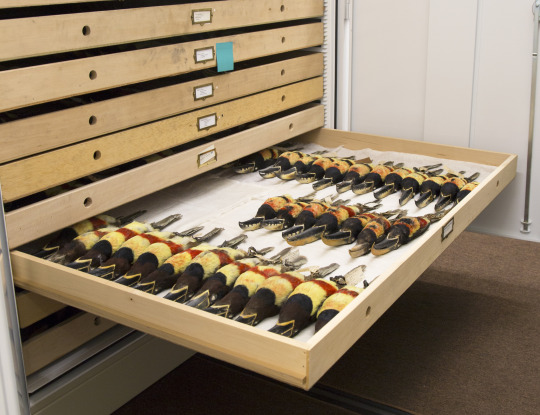
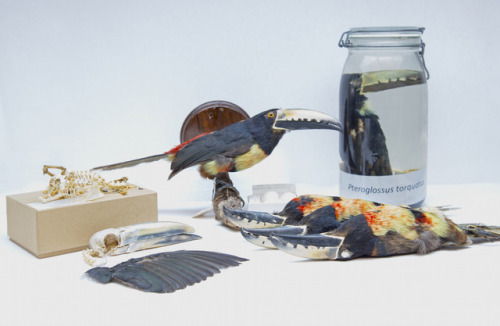
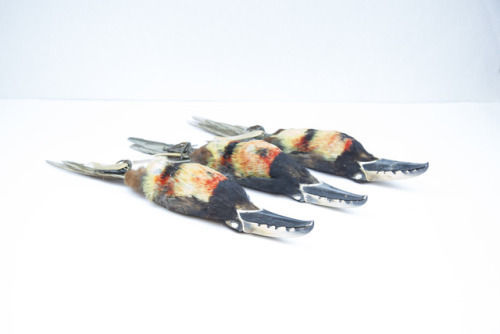
As seen in the photo above, stored specimens can be taxidermy mounts (preserved as they would have been seen in life), specimen skins (which are seen lying on their backs), skeletons, dried spread wings, and eggs. A select few birds, like this Collared Aracari (Pteroglossus torquatus), are even stored in 70% ethanol alcohol.
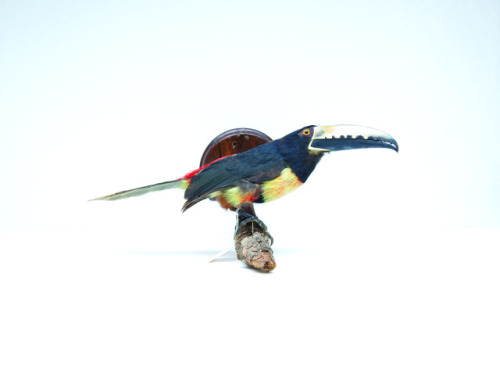
Each type of preparation has a purpose. Taxidermy mounts are for education and display. Skeleton preparations allow study of bones, which is helpful in understanding evolution, especially since often that is what is left in fossils found by vertebrate paleontologists.
Eggs document breeding localities and can even show changes in size and number through time as a method of climate change. Fluid specimens can be used for dissection in study of anatomy (muscles, brains, stomach contents, etc.) and recently have been used in CT scanning methods that even outline muscles and organ systems without dissection. Spread wings can show molt patterns and color patterns, which are often important in mating.
Finally, the study skin is the most common preparation type as it, as well as other preps, document the exact location, time, and condition of the bird when collected or salvaged. The feathers often indicate the age class of the bird, and it can serve in other more modern ways. DNA can be obtained from tissue and stable isotope data can be obtained from feathers allowing study of shifts in breeding ranges through time.