By John Wenzel
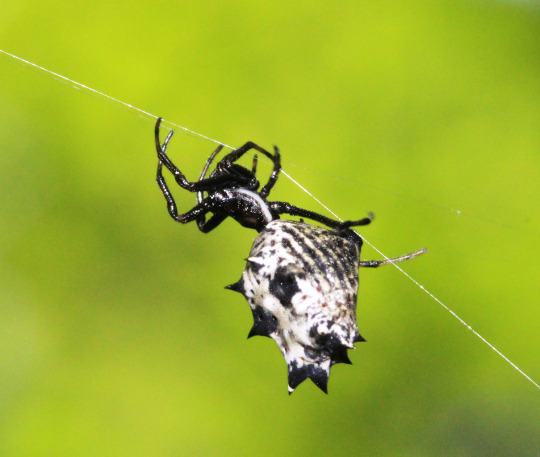
The woods are full of spiders in late summer, as any hiker knows. Spider silk strands and webs are annoying, and one of the main offenders in our area is Micrathena gracilis, a small spider that likes to build webs across open spaces a couple of yards wide, like footpaths. These diligent weavers have striking spiky abdomens, and other species in the genus are quite spectacular for looking like thorns.
Spiders make several kinds of silk that are used for different purposes. The sticky silk of the spiral capture web is different from the frame lines that support the web and connect it to the vegetation nearby. Frame lines have greater tensile strength than steel.
One of the largest web spinners, the golden orb weaver (Nephila), makes frame lines commonly more than 15 feet long to support a web that can be more than three feet wide. These spiders are abundant in Florida and warm forests world-wide. Their silk is a lustrous gold color naturally.
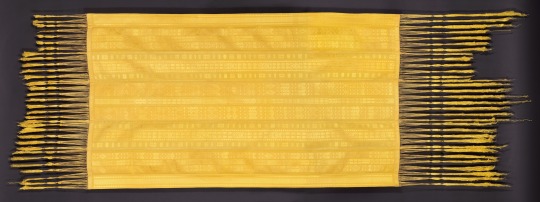
Recently, Simon Peers and Nicholas Godley led a team in Madagascar that worked for years to harvest silk from more than a million of these spiders to make stunning gold cloth, both in their traditional native style (a lamba) and also a European-style cape. These have been displayed in the Victoria and Albert Museum in London, the American Museum of Natural History in New York, and currently at the Royal Ontario Museum in Toronto.
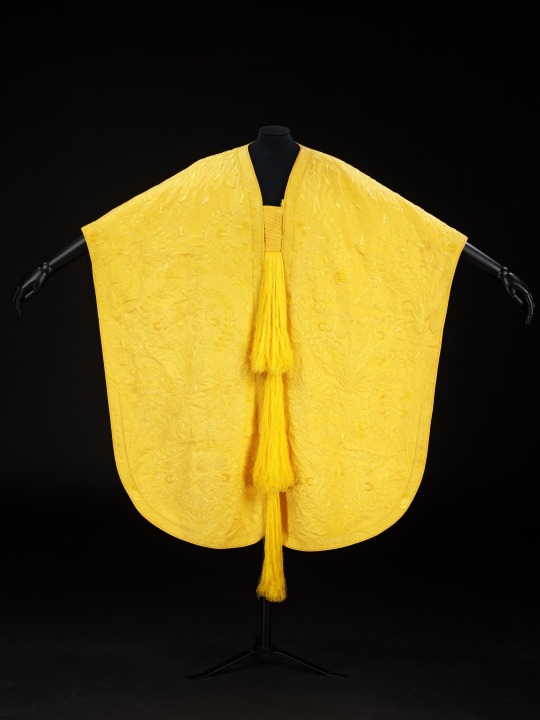
More on this unusual project and how they created these museum pieces from golden spider silk is available at godleypeers.com.
John Wenzel is the Director at Powdermill Nature Reserve, Carnegie Museum of Natural History’s environmental research center. He has published research on the evolution of web building behavior. Museum employees are encouraged to blog about their unique experiences and knowledge gained from working at the museum.
