• Skip to primary navigation
  • Skip to main content
  • Skip to primary sidebar

Carnegie Museum of Natural History

One of the Four Carnegie Museums of Pittsburgh

  • Visit
    • Buy Tickets
    • Visitor Information
    • Exhibitions
    • Events
    • Dining at the Museum
    • Celebrate at the Museum
    • Powdermill Nature Reserve
    • Event Venue Rental
  • Learn
    • Field Trips
    • Educator Information
    • Programs at the Museum
    • Bring the Museum to You
    • Guided Programs FAQ
    • Programs Online
    • Climate and Rural Systems Partnership
  • Research
    • Scientific Sections
    • Science Stories
    • Science Videos
    • Senior Science & Research Staff
    • Museum Library
    • Science Seminars
    • Scientific Publications
    • Specimen and Artifact Identification
  • About
    • Mission & Commitments
    • Directors Team
    • Museum History
  • Tickets
  • Give
  • Shop

Squirrels at CMNH

by John Wible
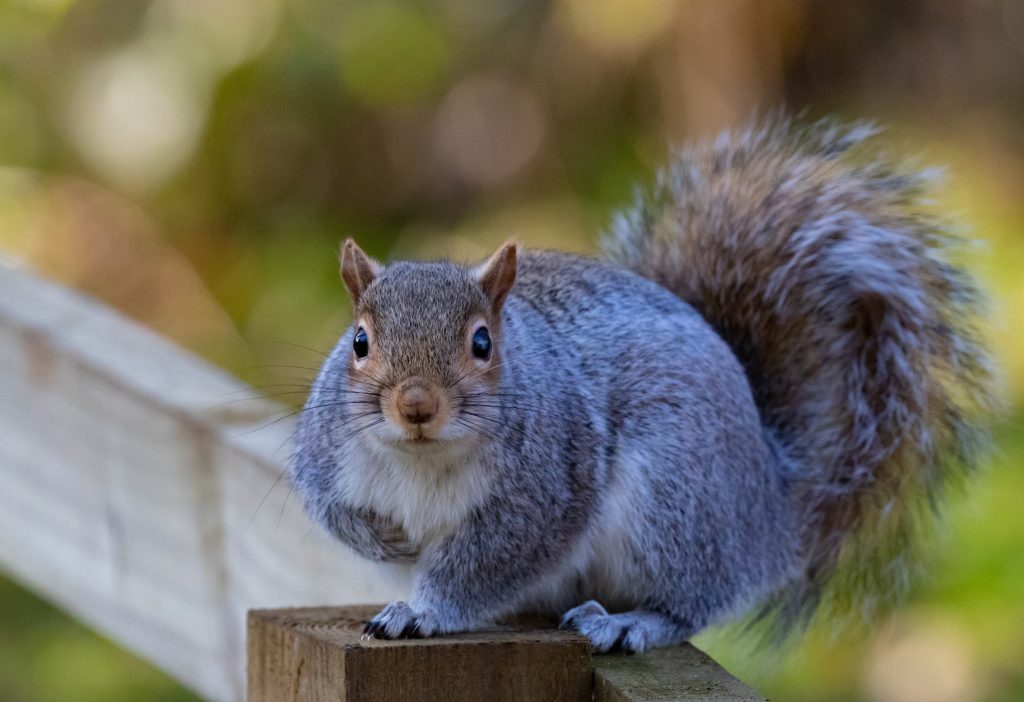
squirrel on a fence post

Like many people in western Pennsylvania, I share my yard with gray squirrels (Sciurus caroliensis). Other than the mammalian pets in our houses, gray squirrels are the mammals we are most likely to see on a daily basis. They amuse us with their acrobatic antics at our bird feeders, their chattering vocalizations, and their skirmishes with their squirrel neighbors.

Gray squirrels are rodents with large, ever-growing incisors that help them open nuts and seeds. They belong to the squirrel family (Sciuridae), which also includes chipmunks, woodchucks, and flying squirrels. In fact, there are more than 200 species of squirrels that inhabit all continents except Antarctica, although humans brought them along to Australia.
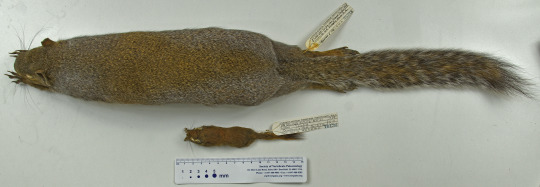
brown squirrel specimen in the Section of Mammals
Gray squirrel and African pygmy squirrel specimens.

A typical adult gray squirrel in western Pennsylvania is about two feet from head to tail tip. That is not a baby gray squirrel below it in the picture above. That is an adult of the world’s smallest squirrel, the African pygmy squirrel (Myosciurus pumilio)! It measures about 5 inches and weighs 16 grams, less than half an ounce. They are found in lowland tropical forests in west central Africa (Cameroon, Gabon, Congo, and Equatorial Guinea). They are omnivores, foraging constantly, eating bark, fruits, and insects. Their conservation status is generally okay, but deforestation is a threat.

The African pygmy squirrel is the only squirrel that travels frequently both upside down and right side up along branches. What a treat it would be to see how one of these would get to my bird feeder!

John Wible, PhD, is the curator of the Section of Mammals at Carnegie Museum of Natural History. Museum employees are encouraged to blog about their unique experiences and knowledge gained from working at the museum.

Related Content

Ask a Scientist: What is the “Crazy Beast?”

How-to Draw a Squirrel

Armadillos: Identical Quadruplets Every Time

Carnegie Museum of Natural History Blog Citation Information

Blog author: Wible, John
Publication date: March 15, 2017

Share this post!

  • Share on Twitter Share on Twitter
  • Share on Facebook Share on Facebook
  • Share on Pinterest Share on Pinterest
  • Share on LinkedIn Share on LinkedIn
  • Share on Reddit Share on Reddit
  • Share via Email Share via Email

sidebar

About

  • Mission & Commitments
  • Directors Team
  • Museum History

Get Involved

  • Volunteer
  • Membership
  • Carnegie Discoverers
  • Donate
  • Employment
  • Events

Bring a Group

  • Groups of 10 or More
  • Birthday Parties at the Museum
  • Field Trips

Powdermill

  • Powdermill Nature Reserve
  • Powdermill Field Trips
  • Powdermill Staff
  • Research at Powdermill

More Information

  • Image Permission Requests
  • Science Stories
  • Accessibility
  • Shopping Cart
  • Contact
  • Visitor Policies
One of the Four Carnegie Museums | © Carnegie Institute | Privacy Policy | Terms of Use | Accessibility
Rad works here logo
