• Skip to primary navigation
  • Skip to main content
  • Skip to primary sidebar

Carnegie Museum of Natural History

One of the Four Carnegie Museums of Pittsburgh

  • Visit
    • Buy Tickets
    • Visitor Information
    • Exhibitions
    • Events
    • Dining at the Museum
    • Celebrate at the Museum
    • Powdermill Nature Reserve
    • Event Venue Rental
  • Learn
    • Field Trips
    • Educator Information
    • Programs at the Museum
    • Bring the Museum to You
    • Guided Programs FAQ
    • Programs Online
    • Climate and Rural Systems Partnership
  • Research
    • Scientific Sections
    • Science Stories
    • Science Videos
    • Senior Science & Research Staff
    • Museum Library
    • Science Seminars
    • Scientific Publications
    • Specimen and Artifact Identification
  • About
    • Mission & Commitments
    • Directors Team
    • Museum History
  • Tickets
  • Give
  • Shop

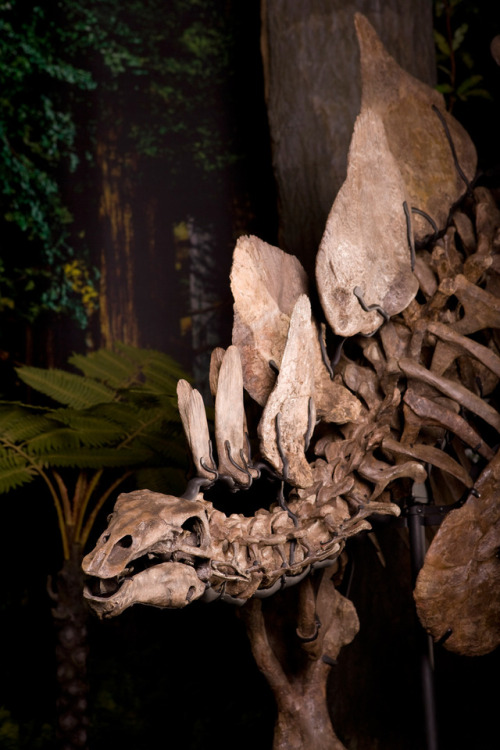
Stegosaurus armatus

skelleton of Stegosaurus armatus dinosaur
Photo Credit: Joshua Franzos for Carnegie Museum of Natural History

Stegosaurus armatus is one of the most recognizable dinosaurs of all. With a name that means “plated reptile,” Stegosaurus is a favorite among dinosaur enthusiasts. An herbivore, this dinosaur roamed western North America during the late Jurassic Period, between 145 and 150 million years ago.

Stegosaurus had small, simple teeth and weak jaw muscles. Scientists believe these reptiles were not effective chewers and ate vegetation that grew low to the ground, most likely ripping and swallowing most of it whole.

Growing up to 25 feet long, Stegosaurus had tall, bony plates that lined its back. While these plates probably offered protection, they were also crisscrossed by blood vessels and may have been used to regulate the animal’s body temperature or to signal to other Stegosaurus individuals. Stegosaurus also featured paired spikes on its tail, which it used for protection against large carnivorous dinosaurs such as Allosaurus. A few Allosaurus fossils have even been found with what are believed to be wounds inflicted by the tail of Stegosaurus.

sidebar

About

  • Mission & Commitments
  • Directors Team
  • Museum History

Get Involved

  • Volunteer
  • Membership
  • Carnegie Discoverers
  • Donate
  • Employment
  • Events

Bring a Group

  • Groups of 10 or More
  • Birthday Parties at the Museum
  • Field Trips

Powdermill

  • Powdermill Nature Reserve
  • Powdermill Field Trips
  • Powdermill Staff
  • Research at Powdermill

More Information

  • Image Permission Requests
  • Science Stories
  • Accessibility
  • Shopping Cart
  • Contact
  • Visitor Policies
One of the Four Carnegie Museums | © Carnegie Institute | Privacy Policy | Terms of Use | Accessibility
Rad works here logo