Can you answer these giraffe questions?
Grab your best stuffed animal friend and a notebook to use for this week’s activities–your safari field journal–and let’s get started! If you need help answering some questions, an adult can help you look for answers online.
- Where do giraffes mainly live?
- What does this habitat look like? Draw it in your safari field journal!
- Could your stuffed animal friend live in this kind of habitat? Why or why not?
- What is one special adaptation giraffes have to help them survive in their habitat?
- What do giraffes eat? Are they carnivores, herbivores, or omnivores?
- Are giraffes endangered, vulnerable, or something else? What does this mean for future populations?
Learn More About Giraffes, Including Giraffes in the Museum Collection!
As the tallest terrestrial animal on Earth, giraffes (Giraffa) can get to fruits and leaves that other animals can’t reach. But giraffes’ long limbs aren’t their only extraordinary features!
Giraffes are at home in the forests and savannahs of Africa. These habitats are also where giraffes can find plenty of food high up in trees. While tree leaves are the main part of their diet, they might also eat fruit, grass, and smaller shrubs. Between 14 to 20 feet tall, adult giraffes can eat up to 75 pounds of leaves a day! In order to easily pull all of those leaves out of trees, giraffes have an 18-inch-long purple tongue covered in thick hairs to protect against thorny twigs.
Baby giraffes start their life at six feet tall—which is as tall as an adult giraffe’s neck. Within hours, the newborn giraffe can almost keep up with a running herd at 35 miles per hour. Giraffes need to run fast from predators like lions and hyenas, but they can also defend themselves with a deadly kick powered by their long legs.
Not all giraffes are the same; there are at least eight different types or subspecies of giraffe found in Africa. The pattern of blocky spots is one way to tell them apart—some giraffes’ spots have jagged edges and others are light or dark in color.
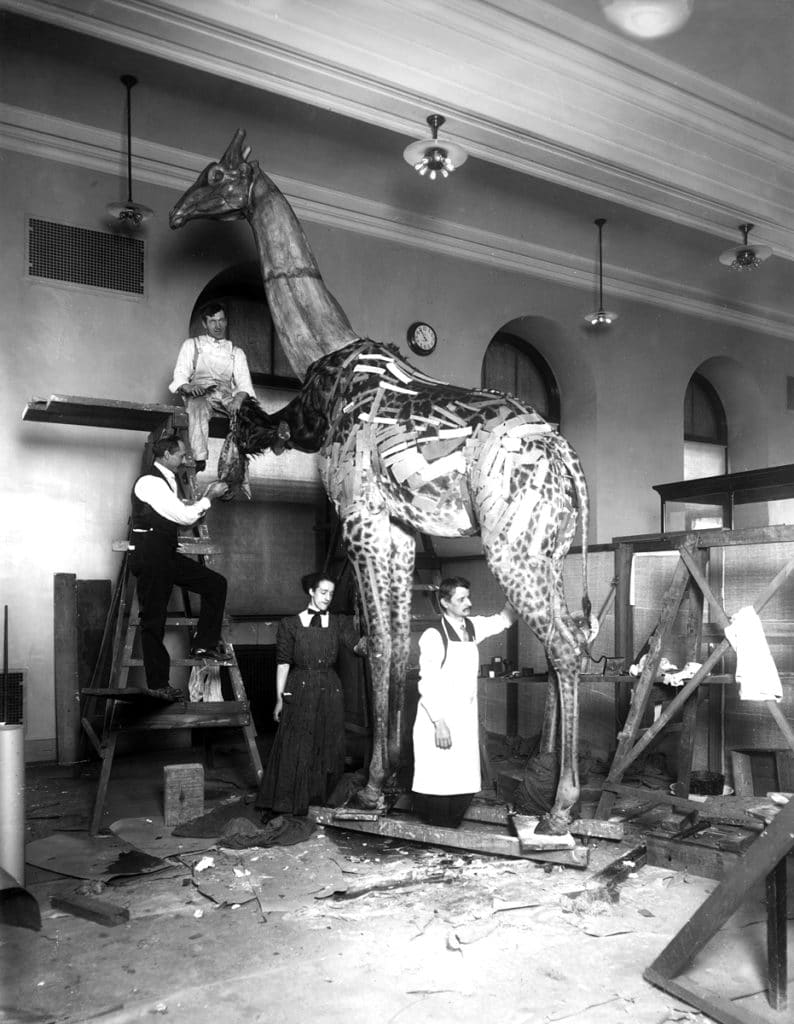
There are two different giraffes on display at the museum. In the water hole exhibit is a Reticulated giraffe with large blocky spots that almost touch. The other giraffe on display is a Masai giraffe with jagged spots. The Masai giraffe was collected by Pittsburgh-born Childs Frick on an expedition to Africa in 1912. The completed giraffe display was the first of its kind in North America.
Giraffes are listed as “Vulnerable” for conservation concerns and some types of giraffe are endangered. This means that giraffes face serious risks in their native habitat and the number of wild giraffes is decreasing. Major threats to giraffes include agricultural competition and illegal hunting. Farmers and ranchers often exclude wild animals like giraffes from their land in order to prevent damage to crops or livestock. Poaching, or illegal hunting, also directly impacts giraffe populations and can harm conservation efforts. The Giraffe Conservation Foundation is a great resource to learn more about and help wild giraffe populations!
