Map Key
Materials Needed:
- Paper
- Something to write with
- Something to color with
- Scissors (optional)
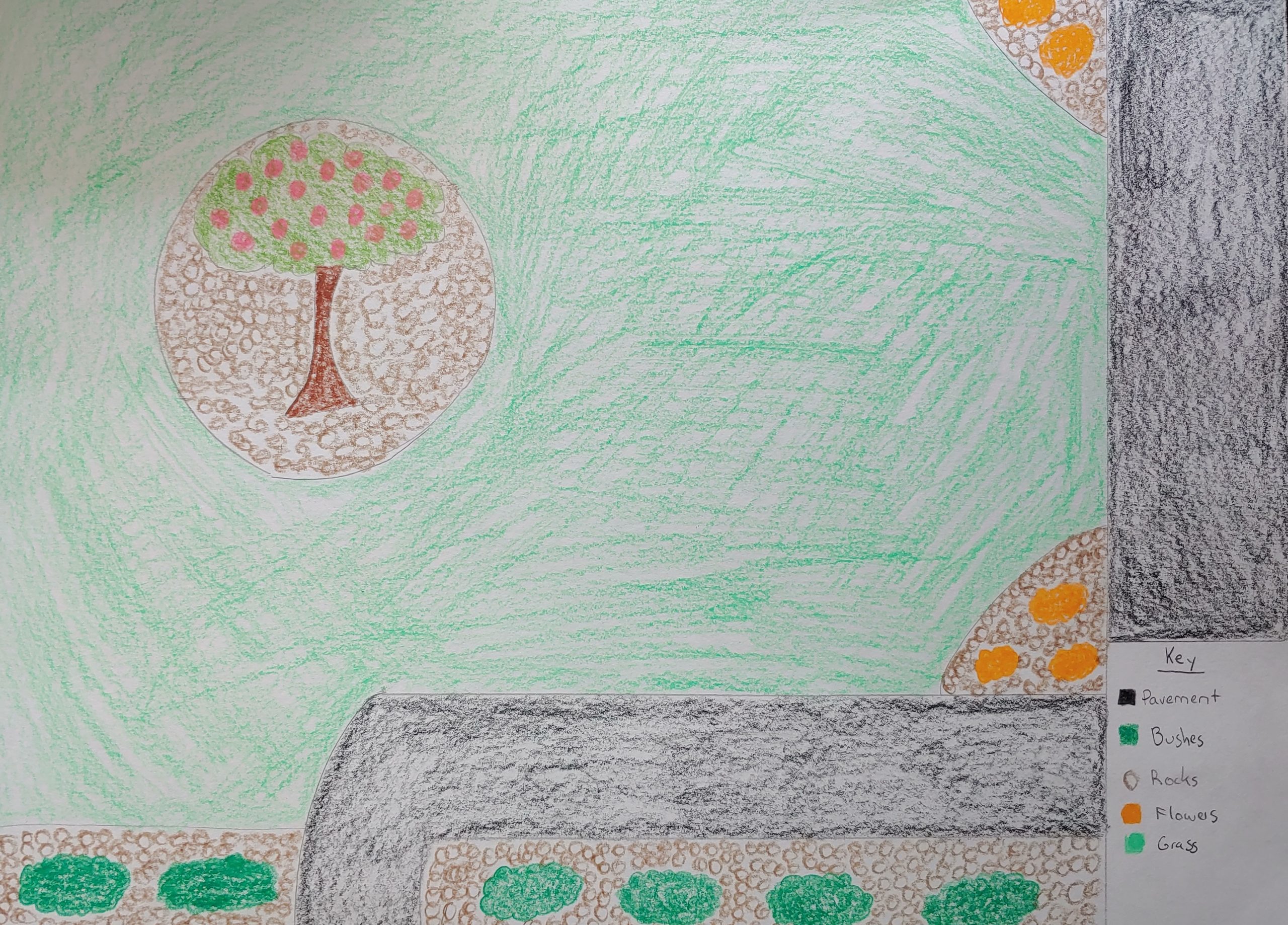
Use those materials to create a map of an outside space. It can be your yard, your neighborhood, even your city, or state! You can draw your map from memory or by exploring outside.
You can make your map interactive! If your environment changes you can update your map. Or if you want to track when and where animals are visiting, try drawing and cutting out a symbol that you can attach or remove!
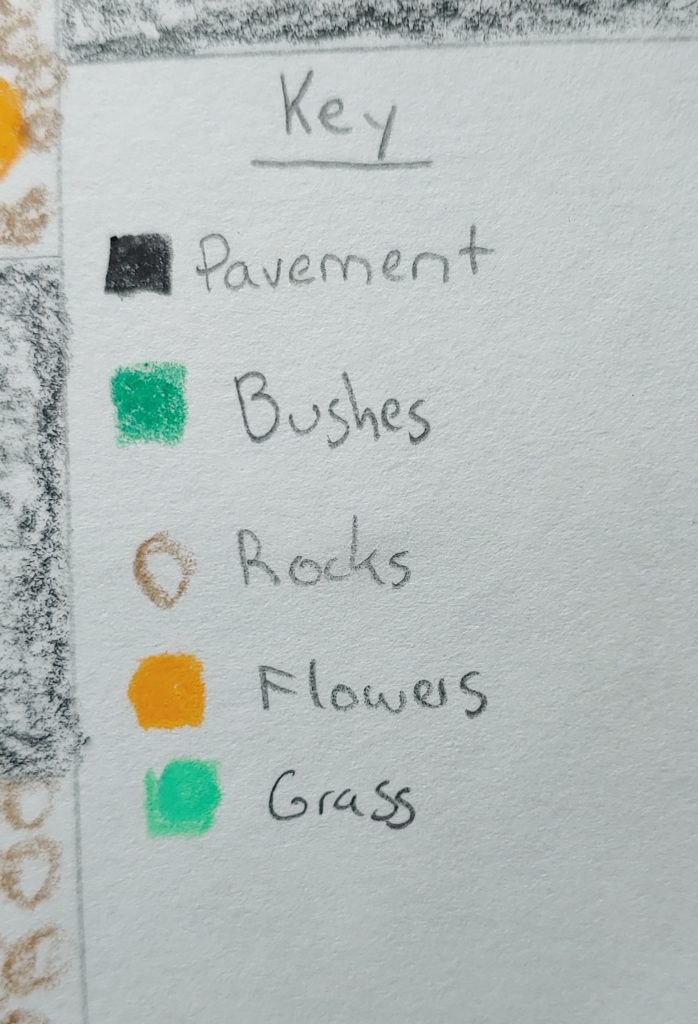
A map key will help you, and others, understand your map. A key is a little guide that explains what the different symbols or colors represent.
Why is mapping important?
Mapping increases your understanding of your own environment and improves your sense of place. Sense of place is the attachment you feel to your surroundings. By sitting down to map out what is around you, you are using your senses to experience the world and thinking about what you are experiencing.
Maps can often reveal what is most important to you. For example, my map features the cherry tree in my front yard because I love watching birds land on it and squirrels climb it. Even though it isn’t in bloom this late in the year, I drew cherry blossoms because I love seeing the pretty flowers. Your map may include your sandbox, swingset, or whatever is most important to you!
Participatory Mapping
For a different challenge, you can work together as a family or household to make one map that everyone creates together. Just like a map you create by yourself, a map made by a group can show what is important to everyone. Participatory maps are even used by cities and towns to discover what their citizens find most important about their environment!
What do maps mean for safaris?
Safari guides will use maps to navigate as they take people to explore. Those maps may show where animals are typically found, what areas are dangerous and should be avoided, and other important landmarks. Those maps will exist because someone explored or remembered their environment and created them, just like your map!
