• Skip to primary navigation
  • Skip to main content
  • Skip to primary sidebar

Carnegie Museum of Natural History

One of the Four Carnegie Museums of Pittsburgh

  • Visit
    • Buy Tickets
    • Visitor Information
    • Exhibitions
    • Events
    • Dining at the Museum
    • Celebrate at the Museum
    • Powdermill Nature Reserve
    • Event Venue Rental
  • Learn
    • Field Trips
    • Educator Information
    • Programs at the Museum
    • Bring the Museum to You
    • Guided Programs FAQ
    • Programs Online
    • Climate and Rural Systems Partnership
  • Research
    • Scientific Sections
    • Science Stories
    • Science Videos
    • Senior Science & Research Staff
    • Museum Library
    • Science Seminars
    • Scientific Publications
    • Specimen and Artifact Identification
  • About
    • Mission & Commitments
    • Directors Team
    • Museum History
  • Tickets
  • Give
  • Shop

Sweet ‘n sassy, Sassafras

by John Wenzel

The flavoring of our popular root beer comes from the roots of sassafras, a common tree in open areas or at forest edges. Trees are either male or female, with the females producing interesting and attractive fruits in late August at our location.
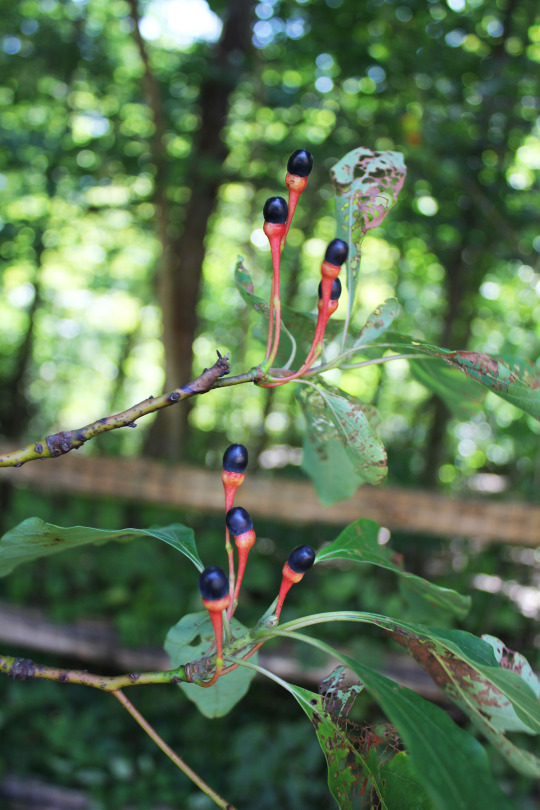
sassafras fruit
Photo credit: Andrea Kautz

As is typical of members of the Laurel family, the leaves and twigs have a pleasant odor when crushed. The spice we call bay laurel is a relative of sassafras, and other relatives include our local spicebush and in the tropics avocados and cinnamon.

The leaves may be used in some Louisiana Creole cooking such as gumbo. The leaves are unusual in that the same tree may have simple leaves, or leaves with two lobes that resemble a mitten, or leaves with three lobes.
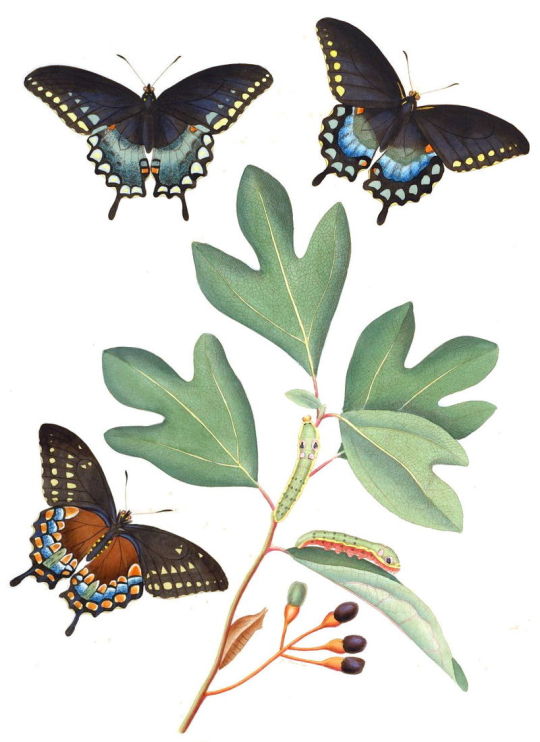
butterflies and sassafras

Sassafras is a traditional medicinal plant, and its oils were used in dentistry as both an anesthetic and disinfectant, although they are now banned in the USA due to carcinogenic properties. The tree is one of the main hosts of the attractive spicebush swallowtail butterfly, which was one of the first insects described from the New World by Linnaeus in 1758.

John Wenzel is the Director at Powdermill Nature Reserve, Carnegie Museum of Natural History’s environmental research center. Museum employees are encouraged to blog about their unique experiences and knowledge gained from working at the museum.

sidebar

About

  • Mission & Commitments
  • Directors Team
  • Museum History

Get Involved

  • Volunteer
  • Membership
  • Carnegie Discoverers
  • Donate
  • Employment
  • Events

Bring a Group

  • Groups of 10 or More
  • Birthday Parties at the Museum
  • Field Trips

Powdermill

  • Powdermill Nature Reserve
  • Powdermill Field Trips
  • Powdermill Staff
  • Research at Powdermill

More Information

  • Image Permission Requests
  • Science Stories
  • Accessibility
  • Shopping Cart
  • Contact
  • Visitor Policies
One of the Four Carnegie Museums | © Carnegie Institute | Privacy Policy | Terms of Use | Accessibility
Rad works here logo