• Skip to primary navigation
  • Skip to main content
  • Skip to primary sidebar

Carnegie Museum of Natural History

One of the Four Carnegie Museums of Pittsburgh

  • Visit
    • Buy Tickets
    • Visitor Information
    • Exhibitions
    • Events
    • Dining at the Museum
    • Celebrate at the Museum
    • Powdermill Nature Reserve
    • Event Venue Rental
  • Learn
    • Field Trips
    • Educator Information
    • Programs at the Museum
    • Bring the Museum to You
    • Guided Programs FAQ
    • Programs Online
    • Climate and Rural Systems Partnership
  • Research
    • Scientific Sections
    • Science Stories
    • Science Videos
    • Senior Science & Research Staff
    • Museum Library
    • Science Seminars
    • Scientific Publications
    • Specimen and Artifact Identification
  • About
    • Mission & Commitments
    • Directors Team
    • Museum History
  • Tickets
  • Give
  • Shop

Alcoa Foundation Hall of American Indians

January 26, 2017 by wpengine

Allegheny River Ridge Wildlife

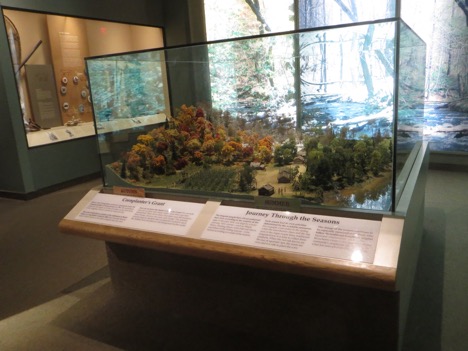
miniature reproduction of Cornplanter’s Grant

by Patrick McShea

Designers of museum exhibits, when they are successful, create interesting displays that convey important information and sustain multiple levels of interpretation. Occasionally, effective designs include the placement of some elements in locations certain to garner the attention of young museum visitors.

Within Alcoa Foundation Hall of American Indians, a highlight of the exhibition’s East quadrant is a detailed, miniature reproduction of Cornplanter’s Grant, a tract of Iroquois-owned land along the Allegheny River in northwestern Pennsylvania. The model landscape, which stretches from river edge to ridge crest, depicts activity on the tract in four distinct seasons of 1800.

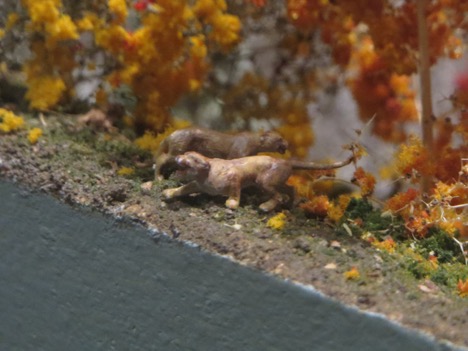
The seasonal contrasts serve as an unwritten invitation to circle the historic domain. During such movements, visitors whose eye level approaches the ridge crest encounter depictions of fingernail-sized wildlife beneath the blaze of autumn foliage.
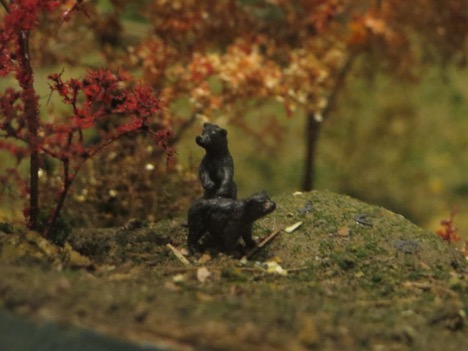
miniature black bear statues
miniature wildlife statues

Patrick McShea works in the Education and Visitor Experience department of Carnegie Museum of Natural History. Museum employees are encouraged to blog about their unique experiences and knowledge gained from working at the museum.
Filed Under: Blog Tagged With: Alcoa Foundation Hall of American Indians, Native Americans, western pennsylvania

January 3, 2017 by wpengine

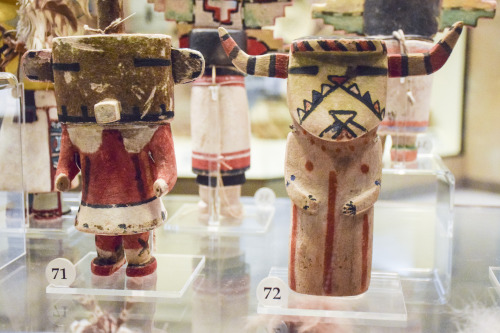
Spirits called katsinas

Katsina dolls
Katsinas found in Alcoa Foundation Hall of American Indians at Carnegie Museum of Natural History

For about six months each year, spirits called katsinas come to live with the Hopi on their mesa tops. Each figure is identified by its own individual character, costume, song, or dance.

(Photo by Hayley Pontia)

Filed Under: Blog Tagged With: Alcoa Foundation Hall of American Indians, katsina

May 9, 2016 by wpengine

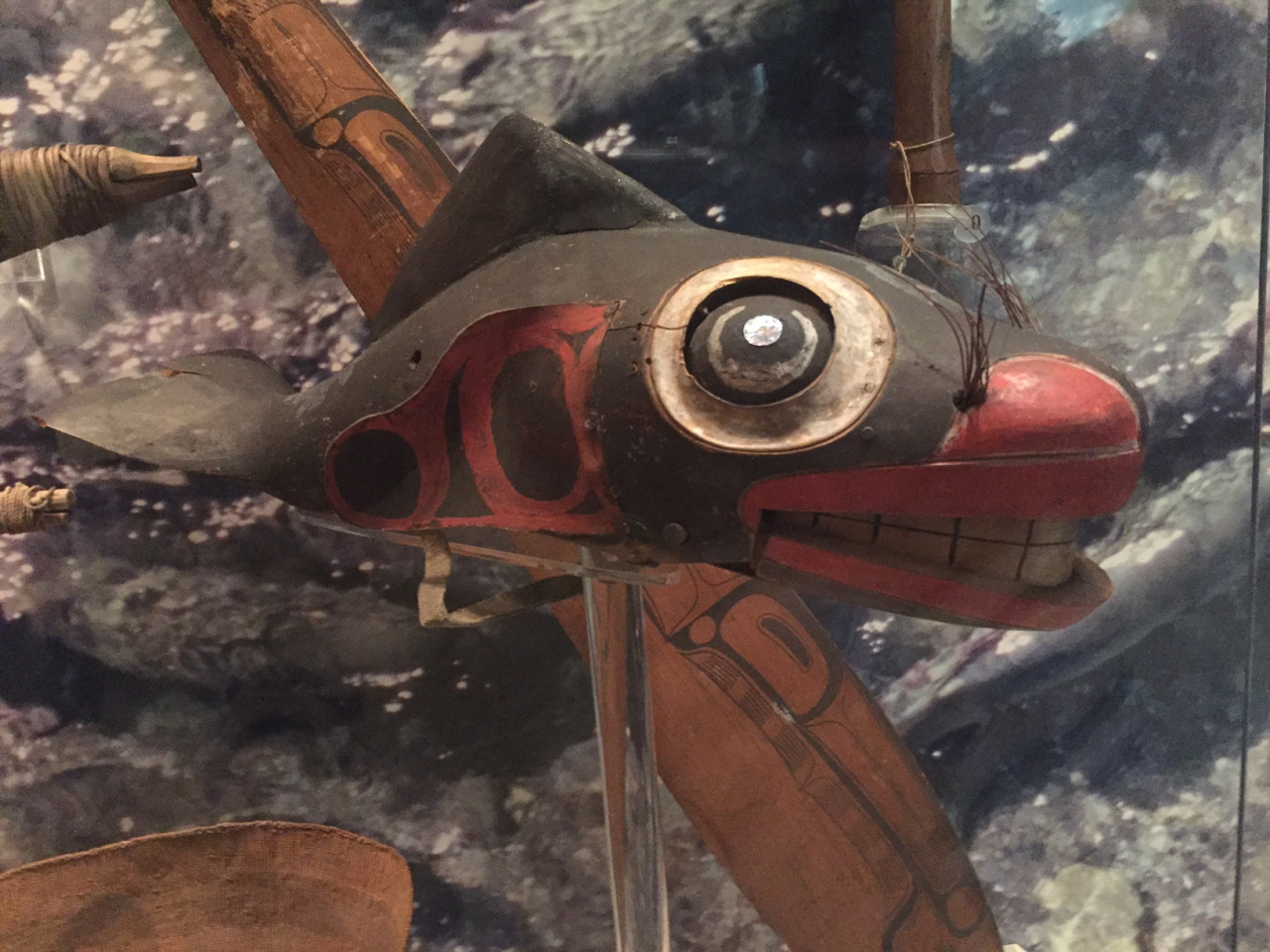
Orca Whale Headdress

orca whale headdress

This carving of an orca whale is actually a headdress made by the Tlingit, the indigenous people of the Pacific North West.

Made of wood, tanned hide, sea lion whiskers, shells, iron, and mineral paint, the headdress’ eyes and lower jaw can move during a theatrical performance where a dancer would have worn it.

The headress was collected in 1904 and is currently in Carnegie Museum of Natural History’s Alcoa Foundation Hall of American India

Filed Under: Blog Tagged With: Alcoa Foundation Hall of American Indians, museums

  • « Go to Previous Page
  • Page 1
  • Page 2

sidebar

About

  • Mission & Commitments
  • Directors Team
  • Museum History

Get Involved

  • Volunteer
  • Membership
  • Carnegie Discoverers
  • Donate
  • Employment
  • Events

Bring a Group

  • Groups of 10 or More
  • Birthday Parties at the Museum
  • Field Trips

Powdermill

  • Powdermill Nature Reserve
  • Powdermill Field Trips
  • Powdermill Staff
  • Research at Powdermill

More Information

  • Image Permission Requests
  • Science Stories
  • Accessibility
  • Shopping Cart
  • Contact
  • Visitor Policies
One of the Four Carnegie Museums | © Carnegie Institute | Privacy Policy | Terms of Use | Accessibility
Rad works here logo
