• Skip to primary navigation
  • Skip to main content
  • Skip to primary sidebar

Carnegie Museum of Natural History

One of the Four Carnegie Museums of Pittsburgh
  • Visit
    • Buy Tickets
    • Visitor Information
    • Exhibitions
    • Events
    • Dining at the Museum
    • Celebrate at the Museum
    • Powdermill Nature Reserve
    • Event Venue Rental
  • Learn
    • Field Trips
    • Educator Information
    • Programs at the Museum
    • Bring the Museum to You
    • Guided Programs FAQ
    • Programs Online
    • Climate and Rural Systems Partnership
  • Research
    • Scientific Sections
    • Science Stories
    • Science Videos
    • Senior Science & Research Staff
    • Museum Library
    • Science Seminars
    • Scientific Publications
    • Specimen and Artifact Identification
  • About
    • Mission & Commitments
    • Directors Team
    • Museum History
  • Tickets
  • Give
  • Shop

alcohol house

August 3, 2017 by wpengine

Behind the scenes

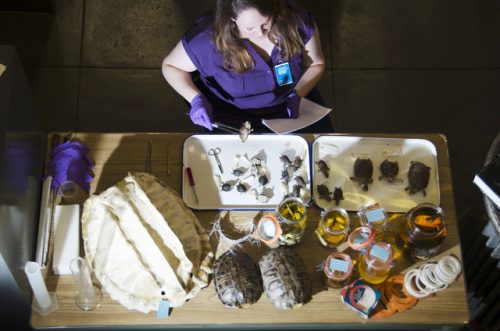
Kaylin working with reptile specimens
Behind the scenes in Carnegie Museum of Natural History’s Alcohol House with Curatorial Assistant Kaylin Martin
(Courtesy Kathy Hair)

Filed Under: Blog Tagged With: alcohol house, Kaylin Martin

June 26, 2017 by wpengine

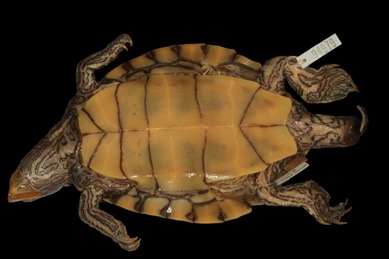
Graptemysgibbonsi

Graptemys gibbonsi, a turtle shown from the bottom

Graptemys gibbonsi, a holotype specimen in Carnegie Museum of Natural History’s fluid-preserved collection known as the Alcohol House

(Photo by Paul S. Freed)
Filed Under: Blog Tagged With: alcohol house

March 6, 2017 by wpengine

Preserving museum specimens

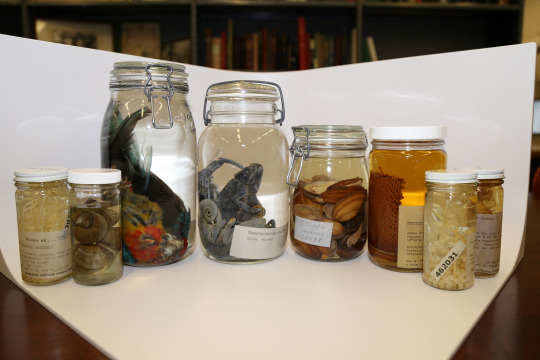
plant and animal specimens preserved in glass jars
Pictured above from left to right: Maianthemum racamosum flowers, Cipangopaludina chinensis, Platycercus eximius, Chameleo gracilis gracilis, Elliptio jayensis, Monstera of Costa Rica, Maianthemum racamosum fruits, and Polygonatum biflorum

by Kaylin Martin

Reptile and amphibian specimens are not the only things stored in 70% ethanol in Carnegie Museum of Natural History’s Alcohol House!

Departments such as Ornithology, Botany, and Mollusks preserve select specimens in fluid for further scientific use. This method preserves soft tissues that would otherwise need to be removed, maintains the natural three-dimensional shape, and slows down DNA degradation.

Fluid collections are more difficult to maintain, however, as they take up more space and have to be regularly monitored to prevent the specimens from drying out.

Keep an eye out for our future Alcohol House public tours to see these specimens up close and to meet collection managers.


Kaylin Martin is a curatorial assistant in the Section of Herpetology. She blogs about the collection in Carnegie Museum of Natural History’s historic Alcohol House, which is home to thousands of fluid-preserved specimens.
Filed Under: Blog Tagged With: alcohol house, herpetology, Kaylin Martin

March 2, 2017 by wpengine

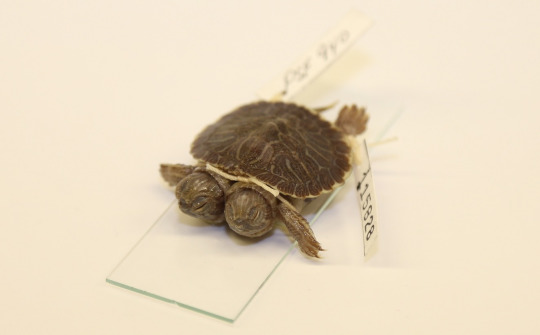
Two-headed Turtle Specimen

Small brown turtle with two fully developed heads.

by Kaylin Martin

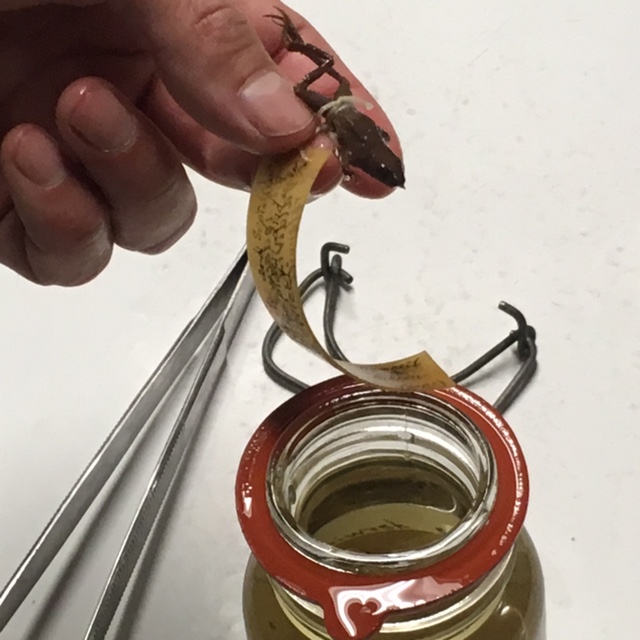
Red-eared sliders (Trachemys scripta elegans) are the most popular pet turtles in the United States. This one in Carnegie Museum of Natural History’s Alcohol House has two heads. Due to extensive trading and people releasing their pets into the wild, red-eared sliders are listed as one of the world’s 100 most invasive species.


Kaylin Martin is a curatorial assistant in the Section of Herpetology. She blogs about the collection in Carnegie Museum
of Natural History’s historic Alcohol House, which is home to thousands of fluid-preserved specimens.
Filed Under: Blog Tagged With: alcohol house, herpetology, Kaylin Martin

March 28, 2016 by wpengine

Unseen at Carnegie Museum of Natural History: The Alcohol House

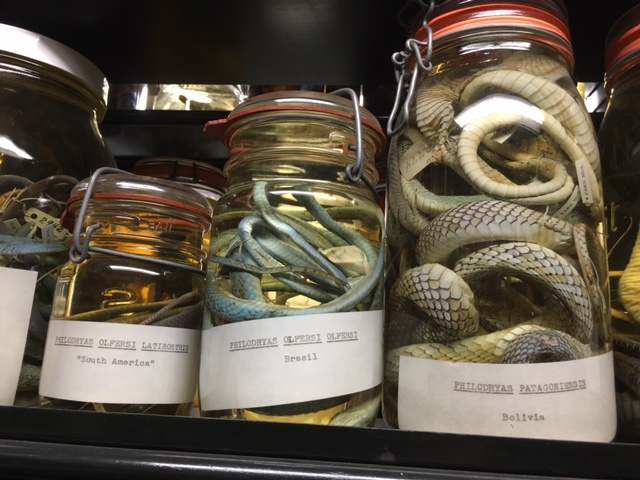
specimen in a jar shelves of specimens at alcohol house snakes in jars with labels
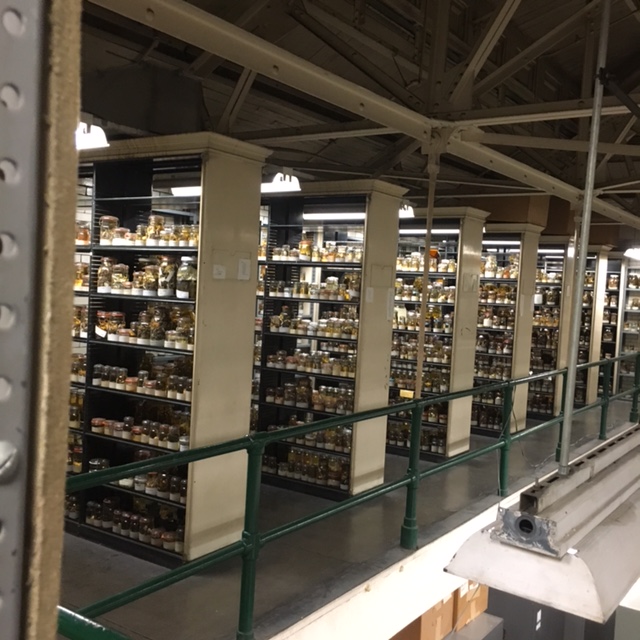
Away from the public eye, scientists at Carnegie Museum of Natural History have access to more than 200,000 jarred, labeled, and perfectly preserved specimens stored in The Alcohol House.

The three-story storage room has been a part of the museum for more than 100 years and is a herpetologist’s dream. It boasts about 65,000 salamanders, 54,000 frogs, 29,500 snakes, 29,500
turtles, and 30,500 lizards, all preserved in ethyl alcohol.

A past curator of the Alcohol House, C. J. McCoy, said the room is like “a three-way hybrid between a pickle warehouse, a reference library, and a mail-order establishment.”

Scientists use the specimens for their research, and can compare the size, shape, and extremities of reptiles and amphibians from 100 years ago with those found today and identify new species.

Filed Under: Blog Tagged With: alcohol house, herpetology

  • « Go to Previous Page
  • Page 1
  • Page 2

sidebar

About

  • Mission & Commitments
  • Directors Team
  • Museum History

Get Involved

  • Volunteer
  • Membership
  • Carnegie Discoverers
  • Donate
  • Employment
  • Events

Bring a Group

  • Groups of 10 or More
  • Birthday Parties at the Museum
  • Field Trips

Powdermill

  • Powdermill Nature Reserve
  • Powdermill Field Trips
  • Powdermill Staff
  • Research at Powdermill

More Information

  • Image Permission Requests
  • Science Stories
  • Accessibility
  • Shopping Cart
  • Contact
  • Visitor Policies
One of the Four Carnegie Museums | © Carnegie Institute | Privacy Policy | Terms of Use | Accessibility
Rad works here logo