• Skip to primary navigation
  • Skip to main content
  • Skip to primary sidebar

Carnegie Museum of Natural History

One of the Four Carnegie Museums of Pittsburgh

  • Visit
    • Buy Tickets
    • Visitor Information
    • Exhibitions
    • Events
    • Dining at the Museum
    • Celebrate at the Museum
    • Powdermill Nature Reserve
    • Event Venue Rental
  • Learn
    • Field Trips
    • Educator Information
    • Programs at the Museum
    • Bring the Museum to You
    • Guided Programs FAQ
    • Programs Online
    • Climate and Rural Systems Partnership
  • Research
    • Scientific Sections
    • Science Stories
    • Science Videos
    • Senior Science & Research Staff
    • Museum Library
    • Science Seminars
    • Scientific Publications
    • Specimen and Artifact Identification
  • About
    • Mission & Commitments
    • Directors Team
    • Museum History
  • Tickets
  • Give
  • Shop

botany hall

February 27, 2017 by wpengine

1920s Exhibit on Conservation

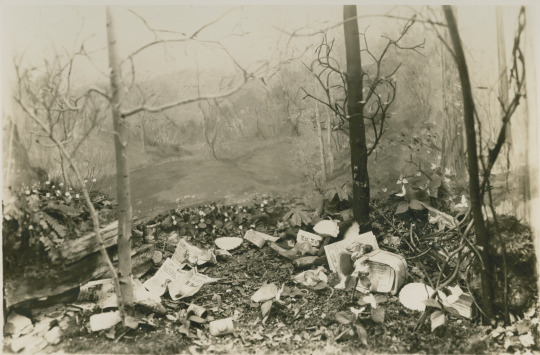
Sepia-toned photo of a 1920's diorama including trash littering the ground

by Bonnie Isaac

In looking through museum archives, I found a photograph that intrigued me. The image (above) looked very similar to the spring wildflower diorama in Botany Hall, but different in that there was litter on the ground. After some digging around, it turns out that our curators and exhibit designers here at the museum were way ahead of the curve on conservation awareness.

The 32nd annual report of Carnegie Museum from 1929 states:

“One of the ideas underlying the preparation of this group was that of stressing the importance of preserving our wildflowers. In order to present this idea without marring the natural appearance of the main exhibit, there were prepared two miniature exhibits, exact duplicates of the larger one, but showing on the one hand the desecration of such a beautiful spot by thoughtless and destructive picnickers, and, on the other hand, the bleak devastation wrought by fire. These miniature exhibits, one placed on each side of the main exhibit, have attracted much attention and undoubtedly help to serve the desired educational purpose.”

Smokey Bear was created in 1944, and the first Earth Day was celebrated in 1970. Carnegie Museum of Natural History was raising these concerns in 1928!
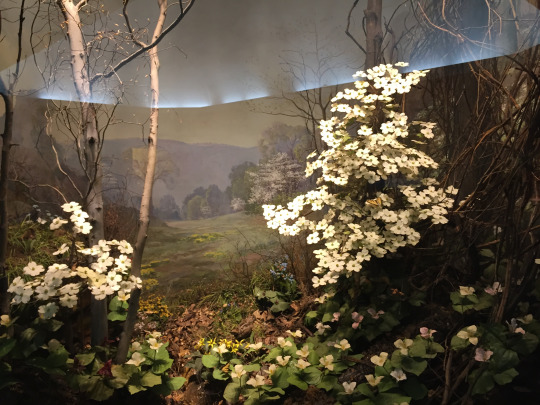
spring wildflower diorama
The spring wildflower diorama today


Bonnie Isaac is the collection manager in the Section of Botany at Carnegie Museum of Natural History. Museum employees are encouraged to blog about their unique experiences and knowledge gained from working at the museum.
Filed Under: Blog Tagged With: Bonnie Isaac, Botany, botany hall, conservation

January 25, 2017 by wpengine

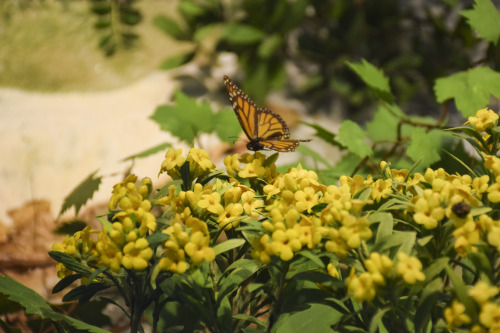
Monarchs

Monarch Butterfly

Monarchs migrate farther than any other butterflies in the world– up to 3,000 miles and back. Milkweed is an important food source, especially for monarch caterpillars. Many other native wildflowers also provide nectar for adults along their migration route. In this Botany Hall diorama of Presque Isle, a monarch visits the flowers of the hairy puccoon (Lithospermum caroliniense). Presque Isle is the only known existing site in Pennsylvania with this plant species.

(photo by Hayley Pontia)

Filed Under: Blog Tagged With: botany hall, western pennsylvania

January 12, 2017 by wpengine

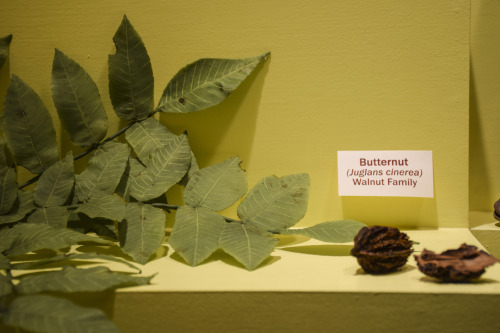
Butternut

Butternut
(photo by Hayley Pontia)

Butternut, a part of the walnut family, displayed in the Hall of Botany at Carnegie Museum of Natural History

Filed Under: Blog Tagged With: Botany, botany hall

January 5, 2017 by wpengine

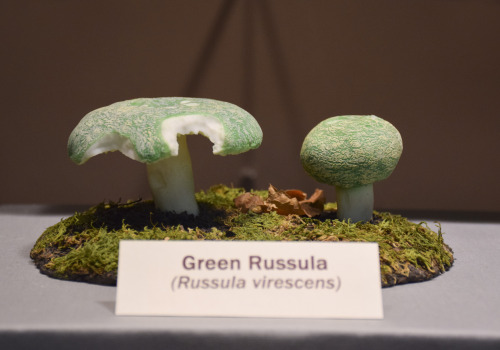
Green Russula

Green Russula Mushroom
(Photo by Hayley Pontia)

Green Russula found in the Hall of Botany

Filed Under: Blog Tagged With: Botany, botany hall

December 13, 2016 by wpengine

Botany Hall Dioramas in Context

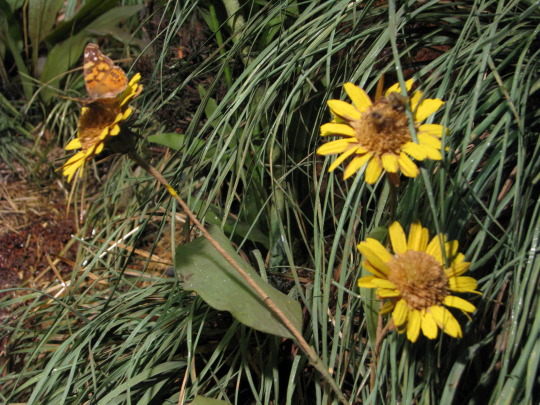
yellow flowers in grass
Details of a diorama found in Carnegie Museum of Natural History’s Botany Hall.
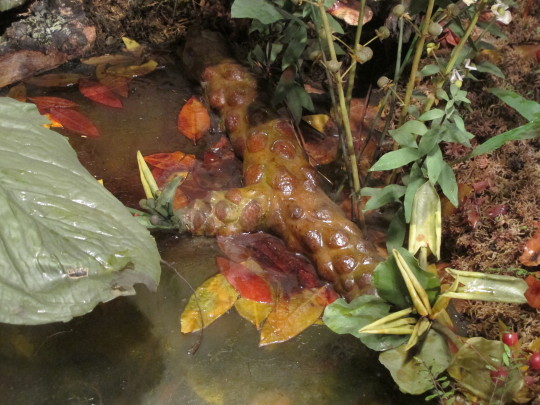
botany diorama close up
Details of a diorama found in Carnegie Museum of Natural History’s Botany Hall.

by Aisling Quigley and Colleen O’Reilly, University of Pittsburgh

What is the role of crafted objects in the exchange of scientific knowledge? How might we describe the authority of scientific displays without obscuring their culturally-specific artistic origins? How can natural history museums make the histories of objects in their collection visible to viewers? Can digital infrastructures offer new solutions?

As part of our graduate work at the University of Pittsburgh, we are creating an online exhibition that explores these issues in relation to the Carnegie Museum of Natural History’s Botany Hall, bringing it into contact with objects from other institutions, and positioning it as a focal point for interdisciplinary expert knowledge.

Botany Hall is situated in a corner of the second floor of the Carnegie Museum of Natural History, accessible through the Hall of North American Wildlife. Inside, seven window dioramas dating from the 1930s through the 1970s depict seven different biomes of the United States.

In each, a richly painted curved wall supports a highly detailed three-dimensional scene, in which every individual leaf, stem, insect wing, and bit of moss is hand-crafted and botanically accurate. This form of art and scientific display has a long history, and involves specific visual strategies that create an immersive experience for viewers. The backgrounds extend beyond the window frames, allowing the viewer the impression they are looking into another fully articulated world.

The artists paid special attention to the places where the two-dimensional meets the three-dimensional, and employed certain visual devices to make a seamless transition and enhance illusion, such as carefully placed plants or rocks, play with light and shadow, and the repetition of specimens. The exhibition team designed these dioramas based on a complex network of intersecting criteria.

They prioritized fidelity to what would be found in nature, the creation of a complete and representative picture of a particular biome, and the presentation of a harmonious aesthetic. The achieved effect speaks to a yearning for a version of nature that can be harnessed and dominated by human eyes and hands. Each
diorama was conceived as a unified whole, in which all parts work together, both aesthetically and as a natural environment.

Our exhibition will be a research project on Botany Hall itself and will also represent a new way for audiences to learn about natural history museum display. Over the coming months we will be digging in archives, examining objects, conducting workshops, and seeking out collaborations.

Ultimately, visitors to our online space will be able to get various perspectives on Botany Hall, compare the dioramas with objects in other collections, and find out about their history. We will combine our backgrounds in art history and information science to explore how formal concerns intertwine with scientific ones and to look at creative ways of contextualizing the information contained within these objects.

We will explore the interdisciplinary goals that drive the creation of educational objects for natural history museums, and the implications of the material presence of these objects in museum collections over time.

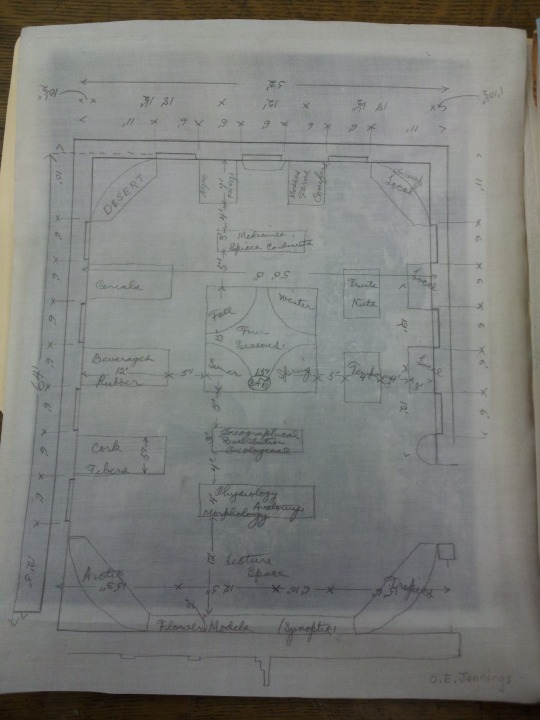
architectural drawing of Botany Hall
A diagram of Botany Hall
drawing of a diorama in botany hall
A Botany Hall exhibit diagram

Filed Under: Blog Tagged With: Botany, botany hall, diorama

October 28, 2016 by wpengine

Don’t let that pretty foliage fool you.

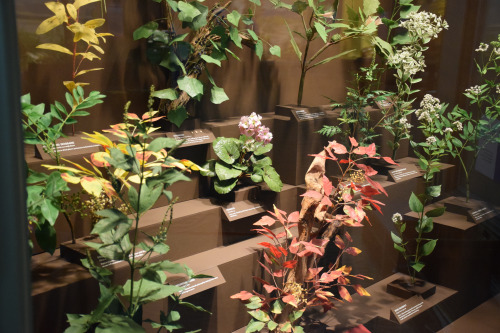
Don’t let that pretty foliage fool you. This case in Botany Hall is full of local plant species that are poisonous or irritating to humans.

Of the nearly 3,500 plant species in Pennsylvania, about 100 can cause rashes, skin irritation, or even death.

Plants like poison ivy, primrose, common ragweed and other nefarious plants found in and around Pittsburgh are included in the case. Take a closer look at Carnegie Museum of Natural History!

Filed Under: Blog Tagged With: Botany, botany hall, plants, poisonus

  • « Go to Previous Page
  • Page 1
  • Page 2
  • Page 3
  • Page 4
  • Go to Next Page »

sidebar

About

  • Mission & Commitments
  • Directors Team
  • Museum History

Get Involved

  • Volunteer
  • Membership
  • Carnegie Discoverers
  • Donate
  • Employment
  • Events

Bring a Group

  • Groups of 10 or More
  • Birthday Parties at the Museum
  • Field Trips

Powdermill

  • Powdermill Nature Reserve
  • Powdermill Field Trips
  • Powdermill Staff
  • Research at Powdermill

More Information

  • Image Permission Requests
  • Science Stories
  • Accessibility
  • Shopping Cart
  • Contact
  • Visitor Policies
One of the Four Carnegie Museums | © Carnegie Institute | Privacy Policy | Terms of Use | Accessibility
Rad works here logo