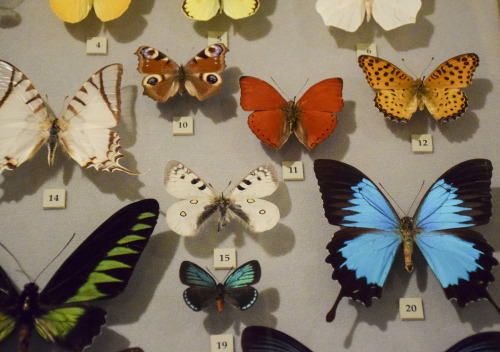
Scientists have discovered more than 180,000 species of Lepidoptera (moths, butterflies, and skippers), of this amount only 20,000 are butterflies.
Carnegie Museum of Natural History
One of the Four Carnegie Museums of Pittsburgh
Scientists have discovered more than 180,000 species of Lepidoptera (moths, butterflies, and skippers), of this amount only 20,000 are butterflies.
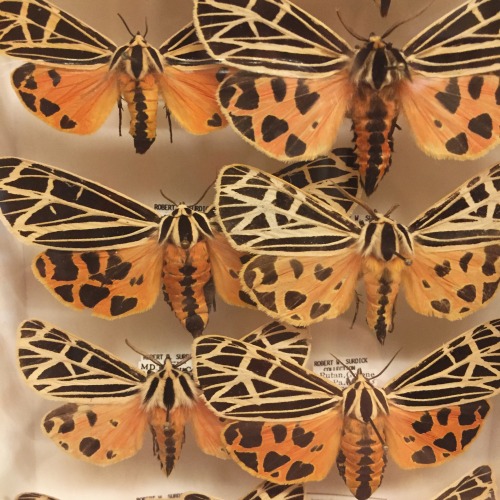
Specimens from the invertebrate zoology collection at Carnegie Museum of Natural History

Have you ever wondered what makes butterflies so colorful?
Butterflies are covered in tiny scales that appear colored in two ways. Some contain pigments that reflect certain colors. Other scales are microscopically structured to reflect only certain wavelengths of light, which makes them appear colored.
Some butterflies have both types of scales. Check out a wide variety of butterflies, moths, and beetles at Carnegie Museum of Natural History in Pittsburgh!
 When you think of a butterfly, do you imagine it fluttering through your garden? Maybe landing on a flower in a tropical forest?
Whatever you’re thinking… it’s probably doesn’t involve the Arctic. But butterflies live surprisingly far north!
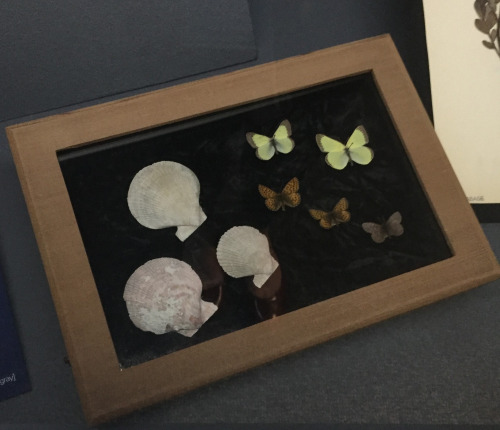
Less than 20 species of butterflies are known to live in the Arctic. Carnegie Museum of Natural History scientists collected these High Arctic Butterfly specimens on expeditions in the 1930s and 1940s. Five species are currently on display in Polar World: Wyckoff Hall of Arctic Life.
Shown above next to specimens of Icelandic Scallops, are five types of High Arctic butterflies.
