• Skip to primary navigation
  • Skip to main content
  • Skip to primary sidebar

Carnegie Museum of Natural History

One of the Four Carnegie Museums of Pittsburgh

  • Visit
    • Buy Tickets
    • Visitor Information
    • Exhibitions
    • Events
    • Dining at the Museum
    • Celebrate at the Museum
    • Powdermill Nature Reserve
    • Event Venue Rental
  • Learn
    • Field Trips
    • Educator Information
    • Programs at the Museum
    • Bring the Museum to You
    • Guided Programs FAQ
    • Programs Online
    • Climate and Rural Systems Partnership
  • Research
    • Scientific Sections
    • Science Stories
    • Science Videos
    • Senior Science & Research Staff
    • Museum Library
    • Science Seminars
    • Scientific Publications
    • Specimen and Artifact Identification
  • About
    • Mission & Commitments
    • Directors Team
    • Museum History
  • Tickets
  • Give
  • Shop

Cenozoic Hall

March 19, 2019 by wpengine

March Mammal Madness Update

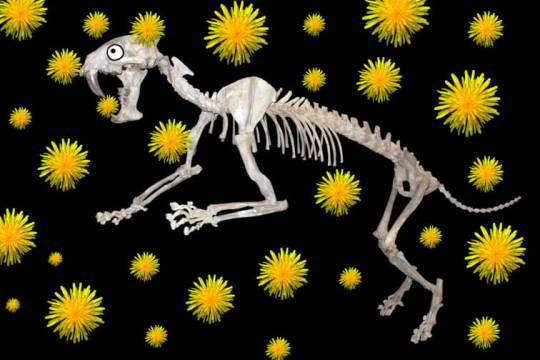
sabertooth cat fossil on black background with yellow dandelions

It’s time to break out the big cats.

Last night’s matches pitted various “cats” against each other, although some cats were only cats in name (for example, the catfish and antlion).

Our most anticipated match had a nimravid (a fossil false sabertooth cat) versus a dandelion. We weren’t sure if the nimravid would only be fossilized bones and stand little chance against the dandelion, or if the nimravid would come to life and be allergic to dandelions. So when the contest began, the nimravid was alive but it began sneezing and as a by-product bit down decapitating the fearsome dandelion. If you fancy seeing a real nimravid, there is one on display in Cenozoic Hall at the Carnegie Museum of Natural History.

For more details on this year’s tournament, click here.

Blog post courtesy of the Section of Mammals. 
Filed Under: Blog Tagged With: Age of Mammals, Cenozoic Hall, fossils, mammals, paleontology, Section of Mammals, Vertebrate Paleontology

February 26, 2018 by wpengine

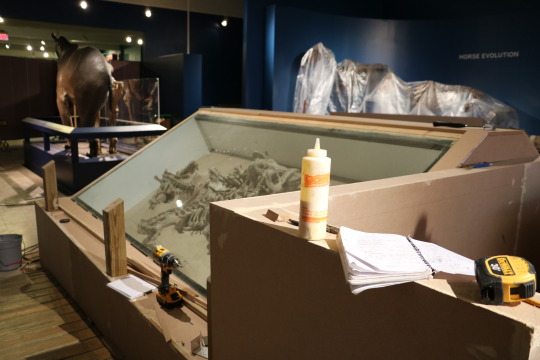
Renovating Age of Mammals: The Cenozoic Era

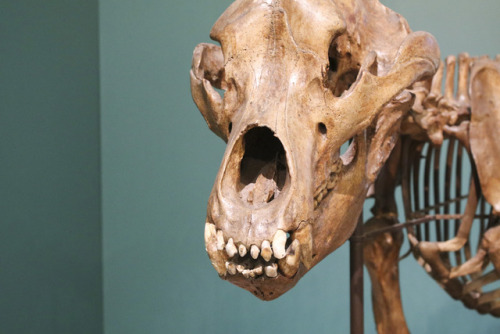
exhibition under construction

Carnegie Museum of Natural History’s exhibition team has been working on renovating parts of Age of Mammals: The Cenozoic Era which features fascinating fossils of some animal relatives you may be familiar with–like the 55-million-year old ancestors of horses and giant ground sloths!

The renovated parts of this exhibition should be back on display by March 10th. To learn more about it in the meantime, check out our relevant blogs.

Filed Under: Blog Tagged With: Age of Mammals: The Cenozoic Era, Cenozoic Hall, ice age mammals

February 26, 2018 by wpengine

Did you know?

skelleton of an ice age mammal

Did you know that Carnegie Museum of Natural History’s Cenozoic Era: Age of Mammals exhibition contains more than 30 mounted real fossil skeletons that range in age from roughly 50 million to a few thousand years old? Most of these were collected by museum staff.

Filed Under: Blog Tagged With: Age of Mammals: The Cenozoic Era, Cenozoic Hall

July 1, 2016 by wpengine

Dire Wolves Off the Screen

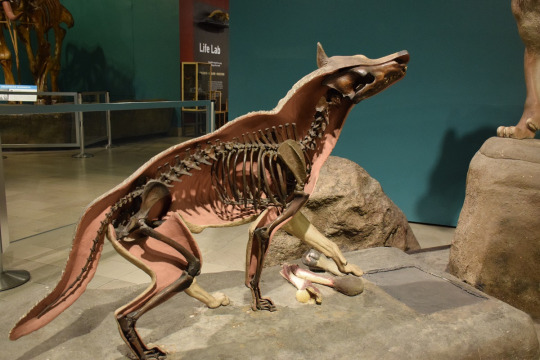
Dire Wolf Skeleton

Despite being extinct, dire wolves are having a comeback thanks to the HBO series “Game of Thrones,” where they protect members of the Stark family.

Unlike dragons and black magic, dire wolves actually did exist. They lived in North America 250,000 to 13,000 years ago during the Ice Age. They had massive jaws and teeth, traveled in packs, and were the heaviest of all known wolves. They are only distantly related to the wolves that Ice Age humans began to domesticate and breed for hunting and defense between 40,000 and 20,000 years ago.

Paleontologists can’t say how dire wolves would have fared against White Walkers, but can at least confirm that they were a predator to be reckoned with in their day!

Filed Under: Blog Tagged With: Age of Mammals: The Cenozoic Era, Cenozoic Hall, Pittsburgh

March 17, 2016 by wpengine

Ireland in the Ice Age

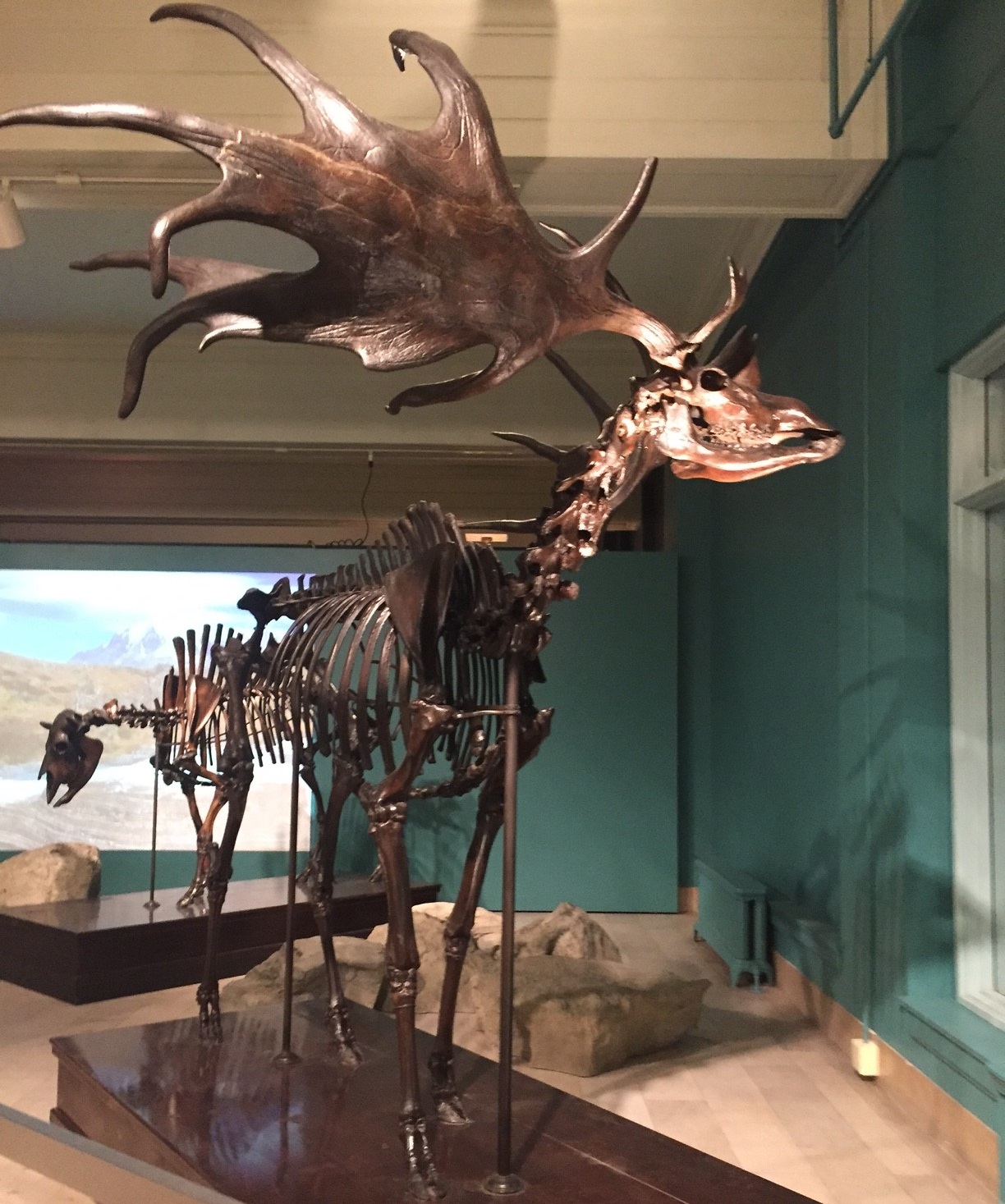
Megaloceros giganteus in museum
Long before St. Patrick chased the snakes out of Ireland, the Megaloceros giganteus strutted across the Emerald Isle during the Ice Age sporting antlers that weighed as much as 100 pounds and spanned up to 12 feet. Also known as Irish elk, Megaloceros giganteus were about 7-feet tall at the shoulder and the largest known deer that ever lived.

The species is thought to have lived throughout Eurasia, but the best documented remains are found in Irish peat bogs.

Our specimen was found in peat bog near Dublin, Ireland and is on display in Cenozoic Hall.

Filed Under: Blog Tagged With: Age of Mammals: The Cenozoic Era, Cenozoic Hall, paleontology

sidebar

About

  • Mission & Commitments
  • Directors Team
  • Museum History

Get Involved

  • Volunteer
  • Membership
  • Carnegie Discoverers
  • Donate
  • Employment
  • Events

Bring a Group

  • Groups of 10 or More
  • Birthday Parties at the Museum
  • Field Trips

Powdermill

  • Powdermill Nature Reserve
  • Powdermill Field Trips
  • Powdermill Staff
  • Research at Powdermill

More Information

  • Image Permission Requests
  • Science Stories
  • Accessibility
  • Shopping Cart
  • Contact
  • Visitor Policies
One of the Four Carnegie Museums | © Carnegie Institute | Privacy Policy | Terms of Use | Accessibility
Rad works here logo