• Skip to primary navigation
  • Skip to main content
  • Skip to primary sidebar

Carnegie Museum of Natural History

One of the Four Carnegie Museums of Pittsburgh

  • Visit
    • Buy Tickets
    • Visitor Information
    • Exhibitions
    • Events
    • Dining at the Museum
    • Celebrate at the Museum
    • Powdermill Nature Reserve
    • Event Venue Rental
  • Learn
    • Field Trips
    • Educator Information
    • Programs at the Museum
    • Bring the Museum to You
    • Guided Programs FAQ
    • Programs Online
    • Climate and Rural Systems Partnership
  • Research
    • Scientific Sections
    • Science Stories
    • Science Videos
    • Senior Science & Research Staff
    • Museum Library
    • Science Seminars
    • Scientific Publications
    • Specimen and Artifact Identification
  • About
    • Mission & Commitments
    • Directors Team
    • Museum History
  • Tickets
  • Give
  • Shop

Eddie Phillips

May 7, 2020 by wpengine

The City Nature Challenge Family Experience

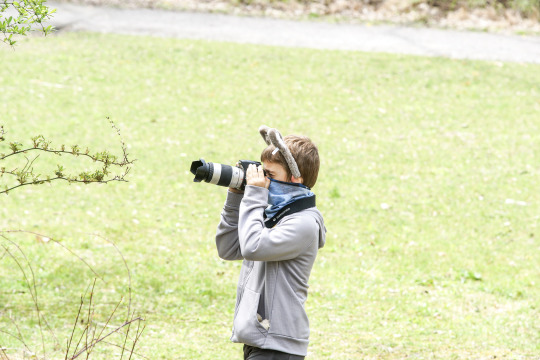
photograph of a boy with a camera in a field

In these unprecedented times, it can be the simplest acts of normalcy that are most welcome.

It had been a while since we piled the entire family, including my wife, son, daughter, and myself, into the family minivan and headed off on an adventure.

The past six weeks consisted of self quarantine, at-home work, at-home schoolwork, neighborhood walks and riding bikes in the alley behind our house. The occasional trip to the grocery store, a most routine act any other time that I would probably have put off, had become a welcome escape.

Enter the City Nature Challenge. This worldwide event provided everything we needed: Fresh air. New experiences. Wonder. An opportunity to explore new worlds and use new technology.

Each previous year was an awesome event. This year’s felt more like a necessary one.

The drive over started off a little rough, with choruses of “I’m bored” and “My toe hurts.” As I passed the exit off Route 28 for St. Margaret’s Hospital, I made the tough decision not to pull off for the supposedly injured toe and keep the hospital bed free for another patient.

As we pulled into the parking lot of Beechwood Farms Nature Reserve in Fox Chapel, the gravel crunching beneath our tires was like a wakeup call. The kids shot up in their carseats and bobbed their heads as they desperately tried to get a view of the nature reserve. Once it was safe, they bounded through the lot and onto the trail with a relentless energy and optimism. My wife and I took a more leisurely stroll and joked how they looked like a couple of labradors let off their leashes.

The main idea of the City Nature Challenge is to collect images of plant and animal specimens and upload them through the iNaturalist app. This allows others to identify your collection and thus help researchers around the globe better understand the ecosystem of your hometown. The simplest way to do this is by taking an image on your phone and uploading it to the app. Easy. Because I am a writer and photographer by trade, I had several DSLRs on hand for the family to use. I think it is important to note that you can also use a camera of your choice. There is a huge contingency of DSLR, and now mirrorless, camera buyers who love wildlife and nature photography. In fact, the flagship models of every major camera brand, and many of their lower tier models, specifically mention wildlife photography in their product descriptions. If you are like me and prefer this method of shooting, chances are you don’t mind going back home, finding a few keepers, and uploading those images from your computer. That is what we did. I feel like it’s good to know that iNaturalist is versatile and can be more than an app on your phone if you would like it to be.
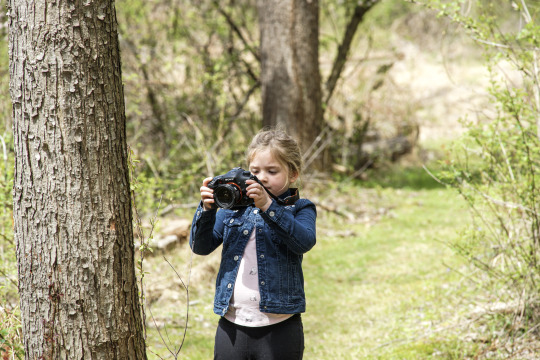
girl holding a camera in the woods

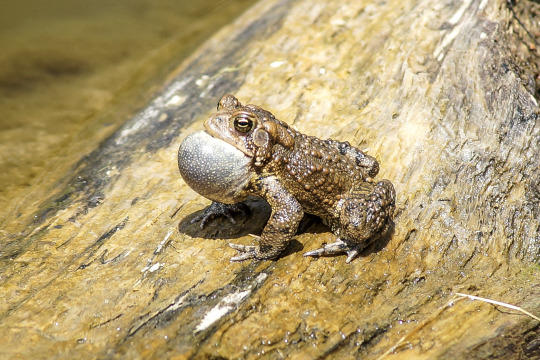
Beechwood Farms did not disappoint. Our first stop was a pond teeming with life. American Toads leaped off the trail and into the grass as we approached. The closer we got to the water, we could hear the “sploosh!” and catch a quick glimpse of hind legs as the toads jumped into the water.

The pond was filled with those toads, numerous species of fish and Canada geese. We just kept snapping away and asking each other, “Did you see that?”

From there, we hiked a loop of trail that took us through sunny meadows and patches of forest where we spotted mayapple, violets, numerous blooming trees and more. I am always interested in what catches the kids’ attention. My son, who is 7 and already has a terrific eye and excellent ability, operates by the well-known photographer’s motto: “If you think you’re too close, take one step closer.” His shots are well framed and detailed.
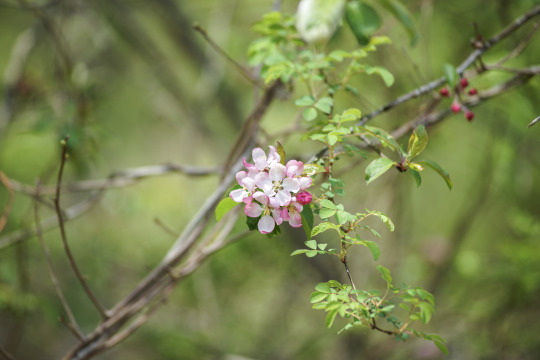
photo of pink and white flowers on a tree branch

My daughter, who is 4, had the wide-angle lens and preferred sweeping images of scenery. She liked one particular field because the yellow grass looked like blonde princess hair.
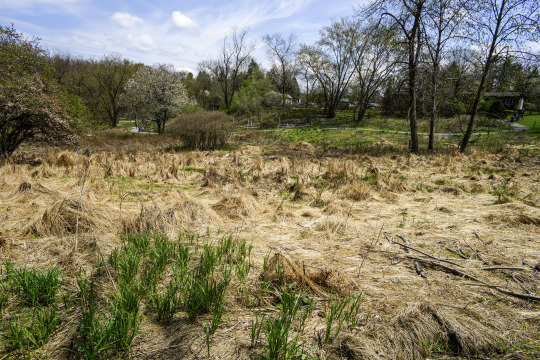
photo of a field with yellow grass

My wife is a fan of contrasting texture and color, like moss carpeting a dead tree trunk. (Insert Jill moss pic)
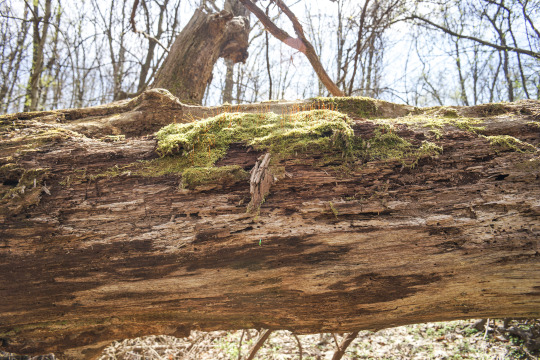
photo of moss growing on a dead tree trunk

I prefer wildlife and action shots.

photo of a frog on a rock

As we neared the end of the loop, we clunked along a bridge atop a stream. The kids couldn’t resist it and before we knew it, their socks and shoes were off and they were in the water. Their toes appeared to be just fine.

When we got back to our house, we couldn’t wait to look over the photos and upload them to iNaturalist. We weren’t sure what everything was – and that’s OK! Let your natural curiosity and wonder carry you through. There’s an entire support system to help classify and identify. You can even do the same for others.

We could use your help identifying our photos! Look for phillipps_family in your iNaturalist app or the website.

Eddie Phillips is an educator at Carnegie Museum of Natural History. Museum staff, volunteers, and interns are encouraged to blog about their unique experiences and knowledge gained from working at the museum.
Filed Under: Blog Tagged With: City Nature Challenge, Eddie Phillips, Education, Educators, Nature 360, Nature Lab

September 3, 2019 by wpengine

How to Use a Lensatic Compass

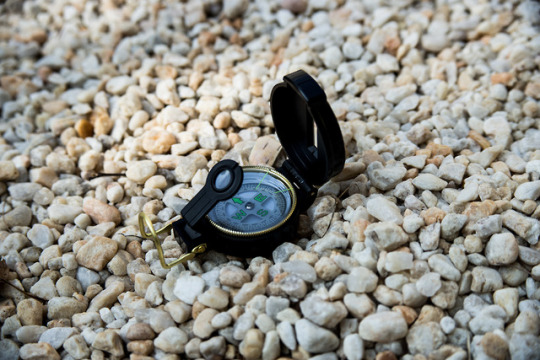
compass open on rocky ground

Have you ever heard someone say they need to find their bearings? It dates back to the Age of Discovery and refers to the bearings inside a compass that move the directional needle. That saying has lived on and so has the simple compass! Let’s learn about the military’s preferred version, the lensatic compass. It’s incredibly precise, affordably priced at just a couple of dollars, and easy to find in your local big box or sporting goods store.

What you’ll need

Lensatic compass

Enough room to rotate in a circle

Step 1

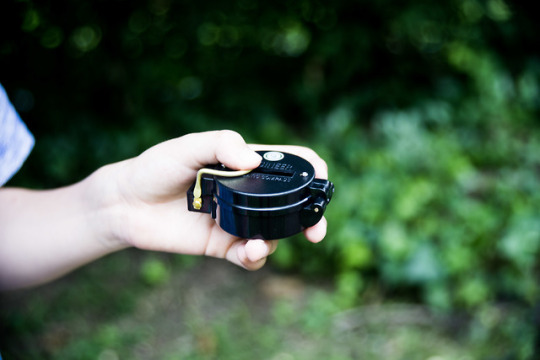
closed compass in hand

●     Hold the compass in the hand that you write with.

●     Make sure the side facing up has the open slot in the cover.

Step 2

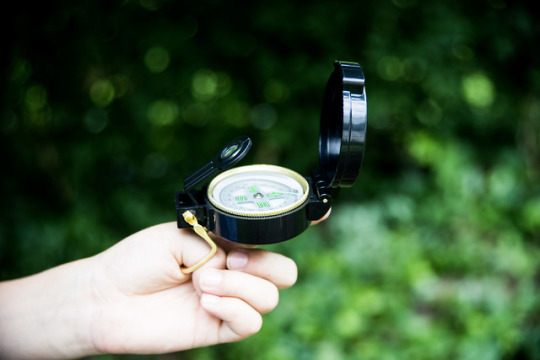
open compass in hand

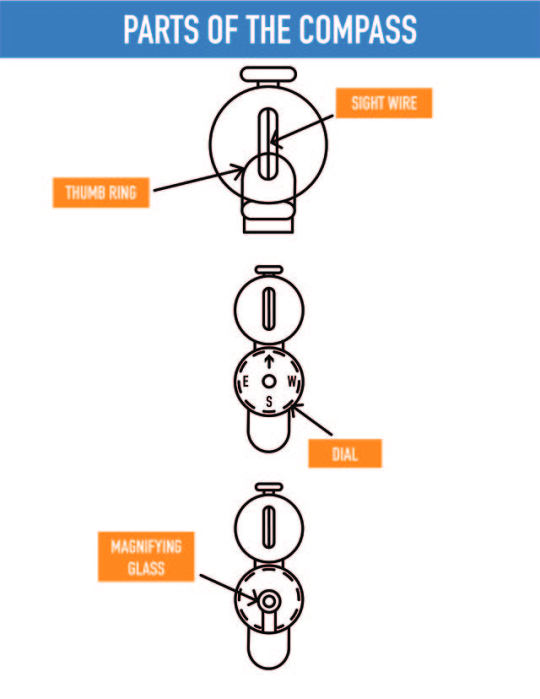
●     Use your thumb to pull the thumb ring back about halfway.

●     Flip up the lid to a 90-degree angle.

●     Flip up the small magnifying glass.

●     Pull the ring underneath the compass and put your thumb through.

●     Wrap your middle, ring and pinky finger around your thumb for support. Use your index finger to steady the front of the compass.

Step 3

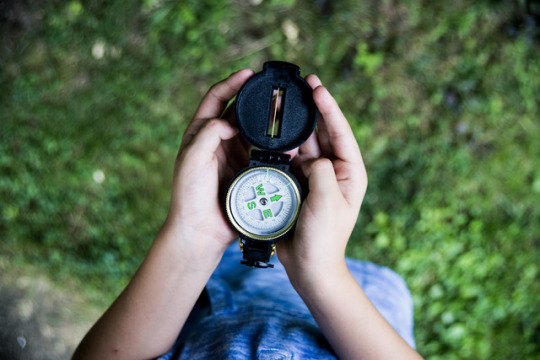
open compass in two hands

●     Notice the slot in the lid has a sight wire running down the middle.

●     Turn the dial until the larger line aligns with the sight wire.

●     Notice the second line of numbers surrounding the outside of the dial goes from 0 to 360 degrees to represent a full circle. That provides a more accurate direction. Saying an object is at 340 degrees Northwest is more accurate than saying it is Northwest.

Step 4

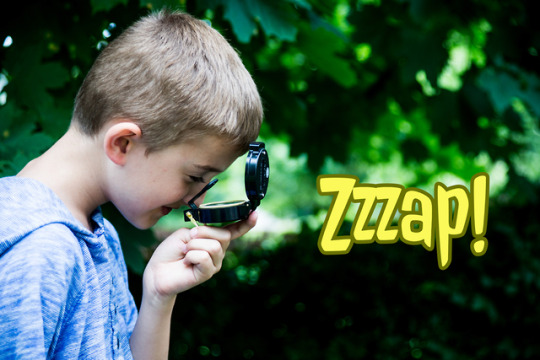
child reading compass

●     Hold the compass in front of your nose with the lid facing out.

●     Pick an object, rotate your entire body (not just the compass), and align the object with the sight wire.

●     Look through the magnifying glass and find the green line that we matched to the sight wire.

●     Locate the number on the inner dial. You will also see the directions North, South, East, and West. Congratulations, you found your bearings!

●     Pretend your compass is a cool space laser and say “Zzzap!” as you pretend to fire away at your landmark….OK that last part isn’t necessary, but might be fun!

Fun Fact

The lensatic compass is very versatile. You can also use it as you would a standard compass by pulling back the lid and magnifying glass to fully show directions North, South, East, and West. Hold your elbows tight against your body and the compass near your waist to get your bearings and find out which direction you are facing!

parts of the compass diagram


“There’s an app for that”

True, but learning how to read a compass can come in handy.

Do you have a phone or tablet? Look down and check the battery life. How about the WiFi and cellular service? Remember, batteries lose their charge and service can be unreliable in some areas.

Learn this skill in familiar territory like your backyard or a local park.

That way, if you need to use it in unfamiliar territory, you will be ready.

Can you com-pass this text? Give it a try!

Now that you know how to use the compass, let’s put your knowledge to the test! Head into your yard or an outdoors area to begin. Ready? Set? Go!

Locate North. What do you see? _______________

Rotate to the East. What do you see? _______________

Now West. What do you see? _______________

Find South. What do you see?  _______________

Great job so far! Let’s make things a little more challenging by incorporating the degrees.

Locate 340 degrees Northwest. What do you see? _______________

Now turn to 120 degrees Southeast. What do you see? _______________

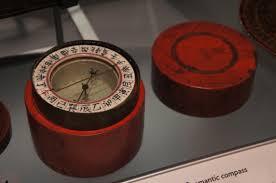
You are now part of a group of navigators that goes back hundreds of years. Research dates the use of the magnetized mineral lodestone as a compass all the way back to the year 1,000. Ancient Chinese explorers learned that they could float the stone on a small piece of wood in a cup of water and the stone would always point to the north pole. Sailors later discovered that rubbing a needle against a piece of lodestone made the needle magnetic and the evolution of the modern compass began, along with superstitions. Prior to the scientific explanation, sailors thought the compass was a magical object that could tell fortunes and cure illness. They also thought that onions and garlic could block the magnetic force, so those ingredients never boarded their ships.

Luckily, we know that compasses today are useful tools that help us find our bearings – no magic required. Congratulations on joining the club of compass navigators!

The ancient Chinese are believed to have created the first compass. This version was used on a ship around 1760.

Blog post by Eddie Phillips. Graphics by Megan Jones. 

Learn more in Nature Lab!

Filed Under: Blog Tagged With: Eddie Phillips, Education, Megan Jones, Nature 360, Nature Lab

August 26, 2019 by wpengine

Make Your own Cloud

Are you the kind of person who always has their head in the clouds? Come back down to earth, but bring the clouds with you. With just a few household items, you’ll get to see clouds form right in front of you!

Here’s What You Need:

  • A glass jar with a lid
  • Hot (almost boiling) water
  • Ice
  • Aerosol hairspray

Here’s What To Do:

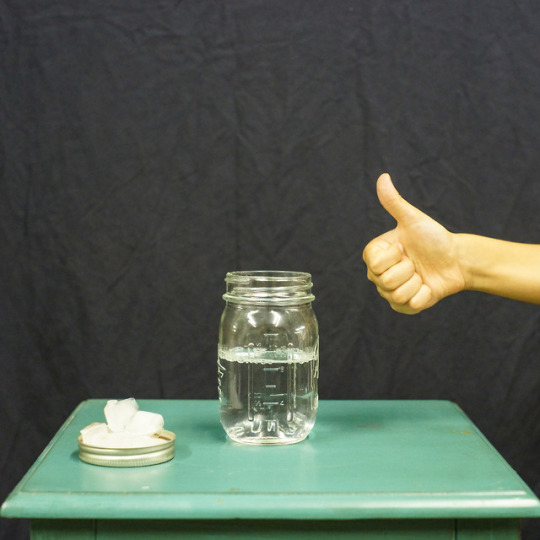
  1. Fill your jar about 1/3 full with hot water.
  2. Place the lid upside-down on top of the jar.
  3. Fill the lid with as many ice cubes as will fit.
  4. Let the jar sit for about 10 seconds.
  5. Quickly, lift the lid and spray some hairspray into the jar.
  6. Place the lid with ice back on top of the jar.
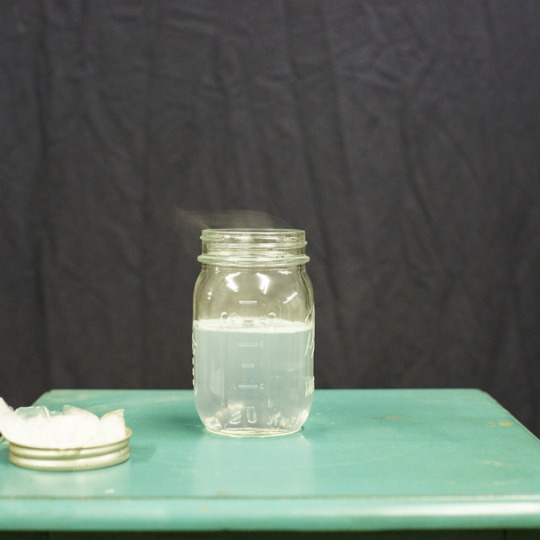
  7. Watch as a cloud forms above the water!

For step-by-step visuals, check out this quick animation!

https://carnegiemnh.org/wp-content/uploads/2019/08/Cloud-in-a-Jar-animation.mp4

Here’s How It Works:

Clouds are formed when water vapor (the gaseous form of water) condenses (turns from a gas into a liquid) into very small, visible droplets.  The water vapor condenses onto other particles in the air, like dust or smoke. In the jar, the hot water gives off water vapor that cools when it reaches the ice on the top of the jar. By spraying hairspray in the jar, we give the water vapor particles to condense onto.  The water vapor condenses into tiny droplets that we see as a miniature cloud.

Go outside and take a look at the clouds. How do they compare to the cloud you saw in your jar? What is the same? What is different?

mason jar filled with water, mason jar lid with ice, and thumbs up

mason jar filled with water beside mason jar lid with ice

Fun Fact:

Clouds are actually quite heavy. Those white, fluffy clouds that look weightless as they float through the air can contain millions, billions, or even trillions of pounds of water! Clouds float because they are not as dense or heavy  as the dry air beneath them. It’s similar to the way that oil floats on water.

Blog post by Eddie Phillips. 

Learn more in Nature Lab!

Filed Under: Blog Tagged With: Eddie Phillips, Education, Educators, nature, Nature 360, Nature Lab

sidebar

About

  • Mission & Commitments
  • Directors Team
  • Museum History

Get Involved

  • Volunteer
  • Membership
  • Carnegie Discoverers
  • Donate
  • Employment
  • Events

Bring a Group

  • Groups of 10 or More
  • Birthday Parties at the Museum
  • Field Trips

Powdermill

  • Powdermill Nature Reserve
  • Powdermill Field Trips
  • Powdermill Staff
  • Research at Powdermill

More Information

  • Image Permission Requests
  • Science Stories
  • Accessibility
  • Shopping Cart
  • Contact
  • Visitor Policies
One of the Four Carnegie Museums | © Carnegie Institute | Privacy Policy | Terms of Use | Accessibility
Rad works here logo