• Skip to primary navigation
  • Skip to main content
  • Skip to primary sidebar

Carnegie Museum of Natural History

One of the Four Carnegie Museums of Pittsburgh

  • Visit
    • Buy Tickets
    • Visitor Information
    • Exhibitions
    • Events
    • Dining at the Museum
    • Celebrate at the Museum
    • Powdermill Nature Reserve
    • Event Venue Rental
  • Learn
    • Field Trips
    • Educator Information
    • Programs at the Museum
    • Bring the Museum to You
    • Guided Programs FAQ
    • Programs Online
    • Climate and Rural Systems Partnership
  • Research
    • Scientific Sections
    • Science Stories
    • Science Videos
    • Senior Science & Research Staff
    • Museum Library
    • Science Seminars
    • Scientific Publications
    • Specimen and Artifact Identification
  • About
    • Mission & Commitments
    • Directors Team
    • Museum History
  • Tickets
  • Give
  • Shop

Heather Hulton VanTassel

February 10, 2021 by wpengine

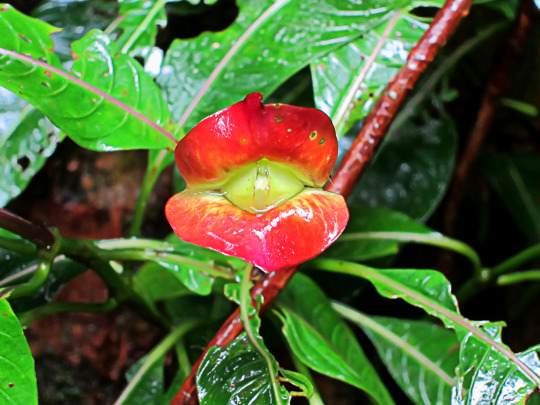
Do plants have lips? No, but one genus sure looks like it does!

close up of bright red bracts of Palicourea elata, a plant nicknamed hot lips

Pucker up! Hot lips, Palicourea elata, is a tropical tree found in the rain forests of Central and South America with bright red lips, I mean bright red bracts – modified or specialized leaves at the base of the flower. The bright red bracts evolved to attract pollinators, including hummingbirds and butterflies, and they will eventually spread open to reveal the plant’s flowers. Interestingly, this plant’s flower does not give off a scent, and relies on visual cues to attract its pollinators.

Palicourea elata is part of an important group of plants in the coffee family (Rubiaceae), and it has more to offer than what the eye can see. Species in the Palicourea and the related Psychotria genus have also been shown to have antimicrobial, anti-inflammatory, and psychedelic properties. It is also used as traditional medicine among the Amazon peoples to treat aches, arthritis, infertility, and impotency.

Let’s revisit a “Collected on this Day” specimen from February 14, 2005.
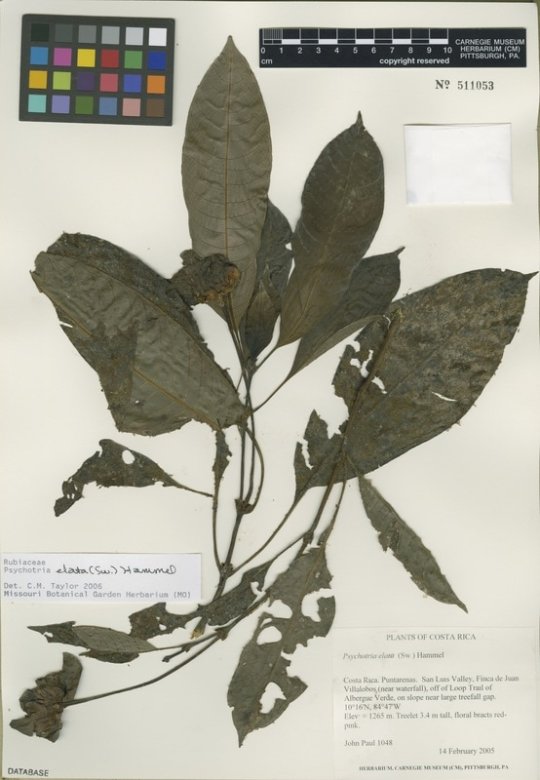
herbarium specimen of Palicourea elata

Though this mounted specimen doesn’t show off its striking flower, it was collected on Valentine’s Day, so that’s pretty romantic! As one of more than half a million specimens in the Carnegie Museum herbarium, this preserved plant is notable for being collected as part of the PhD research at the nearby University of Pittsburgh by John Paul, now a professor at the University of California, San Francisco.

P. elata has become endangered due to deforestation in its native range, and the International Union for Conservation of Nature, or IUCN, has reported that one-tenth of all the Psychotria species are considered threatened.

How can you help species of concern? Log your plant and animal observations into a community-based science platform, such as iNaturalist (like Hot Lips’ page). While you might not have Hot Lips in your backyard, iNaturalist can help you monitor plant and wildlife species, common or endangered. Your observations inform conservation practitioners on changes to a species range, population, behavior, phenology, etc.

Log your observations on iNaturalist the next time you’re in nature!

Heather Hulton VanTassel is Assistant Director of Science and Research at Carnegie Museum of Natural History. Mason Heberling is Assistant Curator of Botany at Carnegie Museum of Natural History. Museum employees are encouraged to blog about their unique experiences and knowledge gained from working at the museum.

Related Content

Ask a Scientist: How do you find rare plants?
Collected in June 1830: Strawberry Bush

Finding Resilience Through Plant Love

Filed Under: Blog Tagged With: Botany, Heather Hulton VanTassel, Mason Heberling, Science News

December 10, 2020 by wpengine

Staying Connected to Nature in the Winter Months

December brought in a thick blanket of snow, and Pittsburgh looked like a winter wonderland. As I write, from my chair looking out into the wonderland, I am reminded of the beauty that nature has to offer and the splendor of Pittsburgh’s seasonal climate. While all I want to do today is curl up with a good book next to a fire sipping a hot drink, I am aware that too much indoor time is not the best for my wellbeing as it can reinforce the “winter blues.”

I personally find that getting outdoors is the best way to re-center, reconnect, and restore my wellbeing. As described by Bratman et al. (2012), “for hundreds of years and across many cultures of the world, influential traditions in science, philosophy, poetry, and religion have emphasized the role that nature plays in providing feelings of wellbeing. In the modern era of scientific enterprise, a large body of work has demonstrated the importance of nature to human physical health, characterizing the numerous ways in which people depend on the natural environment for security in the supply of food, water, energy, climate stability, and other material ingredients of well-being.”

However, while beautiful, winter can make it difficult to get out and get reconnected with nature. So, how do I get out in nature during the winter months? Here are some tricks that I use to keep a hike comfortable during the colder months:

1.     Stay local! The days are short, and there are limited daylight hours – if you stay local, you get to make the most of the shorter days. Staying local also allows shorter outdoor time commitments if it’s too cold, too wet, or there’s just not enough time in the day.

2.     Layer up! We produce a lot of heat when we are active, and we might need to add or take away layers while outside. Layering up (or having layers available) allows us to maintain a more comfortable temperature while outdoors.

3.     Protect your feet! This is a big one for me. My feet’s comfort are my gauge for how long I can stay out. Good socks (or layered socks) with waterproof boots or shoes can really make an outdoor adventure in winter enjoyable. If you are really into the winter hiking, snow shoes or shoes with ice spikes might be necessary for the more adventurous types.

4.     Eat! Bring snacks and keep your metabolism going. Being outdoors in colder weather requires a lot of energy; so bring those snacks! Don’t be afraid of those Christmas cookies if you’re outside burning all those calories!

5.     Be Cautious! Do your homework on where you are going and bring a friend if possible. Knowing the terrain ahead of time and looking up the safest route(s) can help you make the most of your trip. Having someone with you is also important for both safety and overall enjoyment.

Sometimes, it’s just not possible to hike safely during the winter months. Poor road conditions can make hiking sites inaccessible, and extreme temperatures and weather can create hazards. Sometimes, you just don’t have the time, or you are feeling under the weather. Well, there are little ways that you can still reconnect with “nature” indoors. You can grow indoor plants, watch nature TV or programs, read about nature, or even paint/draw nature. Get creative on how you bring the outdoors inside.

If you are feeling the winter blues or you feel out of sorts – try reconnecting with nature. It could be the boost to your wellbeing that you need to get through the indoor season.

Heather Hulton VanTassel is Assistant Director of Science and Research at Carnegie Museum of Natural History. Museum employees are encouraged to blog about their unique experiences and knowledge gained from working at the museum.

Bratman et al. (2012). 118–136. New York Academy of Sciences. doi: 10.1111/j.1749-6632.2011.06400.x.

Related Content

Woodlands in White

What Do Bugs Do During the Winter?

Ask a Scientist: How do you find rare plants? 
Filed Under: Blog Tagged With: Heather Hulton VanTassel, Museum from Home, Science News

November 6, 2020 by wpengine

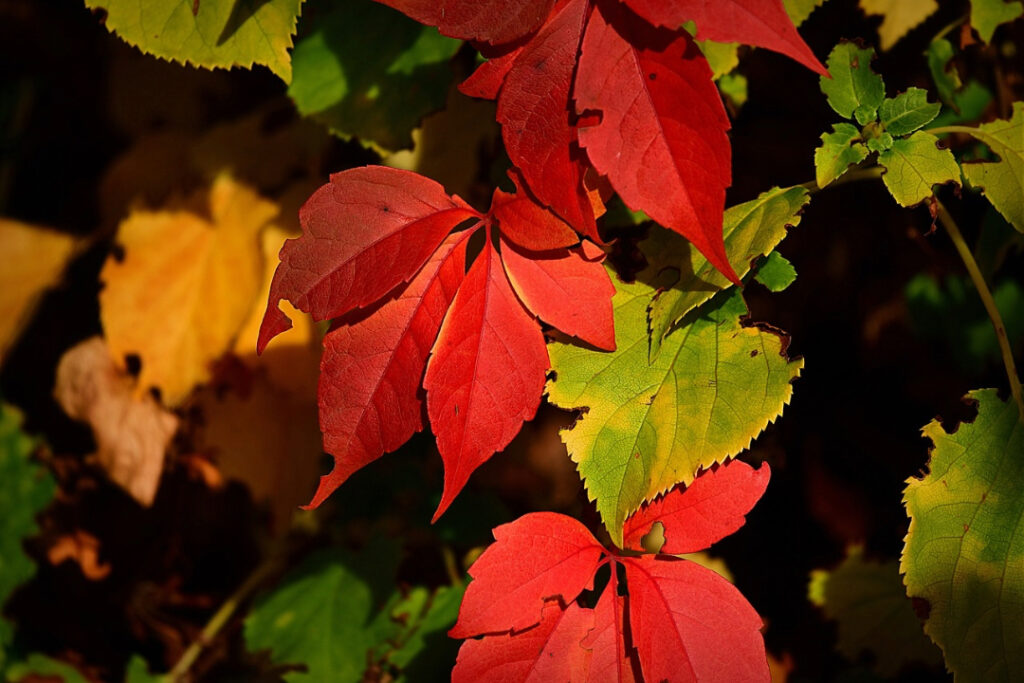
Why Do Leaves Change Color?

Image by 👀 Mabel Amber, who will one day from Pixabay.

This fall seemed to sneak up on me as time has been simultaneously moving at a rapid pace and in slow motion. As someone once told me when I became a parent, “the days are long, but the years are short,” and this global pandemic brings those words even closer to home. Nevertheless, I took the time to slow down and bask in the beauty of the changing fall leaves this October.  For me, nature is truly restorative, and there aren’t many things more beautiful than driving through the mountains of Western Pennsylvania during peak color change.

But, why do leaves change their color?

During the warmer months in Pennsylvania, trees take advantage of the increasing amount of light and good weather available from longer and warmer days. Using their leaves, trees absorb energy from sunlight, breathe in carbon dioxide, drink up water to produce their own food sources – sugar and starch. This process is only possible through chlorophyll housed in the leaf cells – giving leaves their vibrant green coloration.

Leaves also contain other color pigments ranging from yellow to orange – these pigments are often masked by great amounts of green coloring. But in the fall, the tree begins to prepare for shorter days and colder weather, and the leaves stop their food-making process. To prepare for the upcoming winter, the chlorophyll begins to break down, causing the green color to disappear. This change allows the ever-present yellow, orange, and red pigments to become visible. While chlorophyll breaks down, other chemical changes in the leaves can occur, creating an additional ray of colors through the development of red anthocyanin pigments. The yellow and orange pigments mixed with the red anthocyanin pigments give rise to the reddish and purplish fall colors of trees, such as dogwoods and sumacs.

Each species of tree shows off their own fall color. All these colors are due to the mixing of varying amounts of the chlorophyll residue and other pigments in the leaf during the fall season. This winter preparation creates a nature show like no other.

Another aspect of the leaves changing colors is that those leaves will eventually drop to the ground. Most of the broad-leaved trees in Pennsylvania shed their leaves in the fall (some trees retain their dead leaves until new growth starts in the spring). So, what should you do with your leaves in the fall? According to the U.S. Environmental Protection Agency, leaves and other yard debris account for more than 13% of the nation’s solid waste—33 million tons a year. In typical landfills, there isn’t enough oxygen to decompose the yard waste, causing the development and release of the greenhouse gas methane.

So, what do I do? LEAF IT! (get it?). Leave your leaves where they fall in the fall – or at least, find a nice place in your yard to pile the leaves. Leaf litter can act as both a fertilizer returning the nutrients back into the ground, and as a weed suppressant by acting as a ground cover. Leaf litter is also a vital habitat for much of our favorite wildlife. Many critters – from insects to mammals and everything in between – rely on leaf litter for food, shelter, and nesting material. Many of our favorite moth and butterfly caterpillars overwinter in fallen leaves before emerging in spring! So, if you want free mulch and fertilizer, to create wildlife habitat, and have more free time – LEAF IT!

Heather Hulton VanTassel is Assistant Director of Science and Research at Carnegie Museum of Natural History. Museum employees are encouraged to blog about their unique experiences and knowledge gained from working at the museum.

Related Content

Ask a Scientist: What makes poinsettias so special?

Turkeys

Clams in the Concrete! How Old is This Sidewalk?

Filed Under: Blog Tagged With: Botany, Heather Hulton VanTassel, Museum from Home, Science News

May 18, 2020 by wpengine

Garden for the Birds (or bees, or butterflies, or creepy crawlies, or you get the picture)…

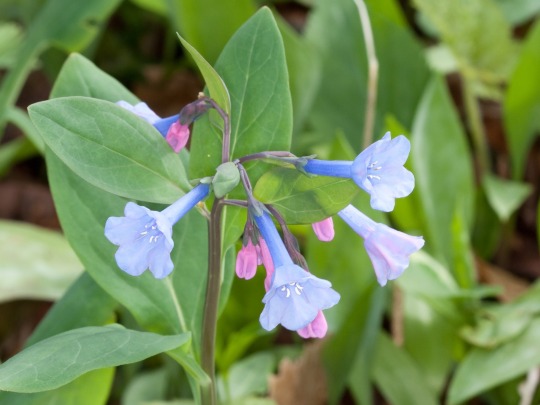
detail photo of blue and pink flowers

“What do I plant?” you may be wondering as spring starts to set in. Maybe you are a master gardener, or maybe you are a novice trying to fill the time during quarantine. Nevertheless, putting plants in the ground is on your mind. What if I told you that choosing native plants over non-native ornamentals does more than create a beautiful landscape – it creates habitat for native wildlife, connects our backyards to bigger natural landscapes, and can help mitigate negative impacts of environmental change.

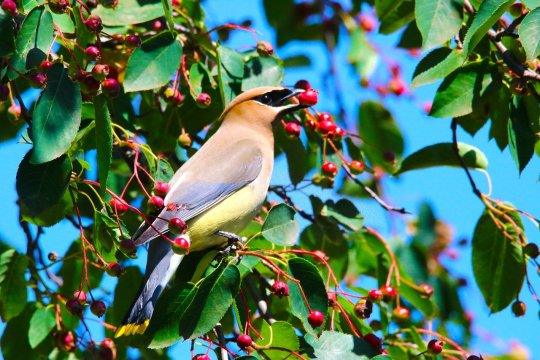
photo of cedar waxwing on a serviceberry branch with a berry in its mouth

Native plants are the plants that occur naturally in the area, and they have evolved with the local environmental conditions and other plants and wildlife that occur in the area. Because of this, native plants often provide the necessary shelter and food needed for local wildlife while requiring little to no fertilizers, pesticides, or water after they are established. Having more native plants in your backyard increases wildlife habitat, reduces air pollution (no mowing required!), decreases erosion (choose plants with deep root systems over non-native grassy lawns), reduces chemicals and excess water use (easy maintenance!), and adds natural beauty to your very own backyard or patio!

Imagine a world where our backyards, patios, and shared spaces are full of native plants – creating a completely connected world full of beautiful plants and providing food and shelter for wildlife. Our landscapes don’t have to be “Developed” OR “Wild”. Our landscapes can be a mosaic of varying levels and sizes of native habitats and local ecosystems – but always with some habitat, connecting one place to the next.

If you want to know more about the benefits of native plants, the sites below are a good place to start.

Benefits of Native Plants for Birds and People

Where I found my inspiration to plant native 

What do I plant? 

Heather Hulton VanTassel, PhD is the Carnegie Museum of Natural History’s Assistant Director of Science and Research. Museum staff, volunteers, and interns are encouraged to blog about their unique experiences and knowledge gained from working at the museum.

Filed Under: Blog Tagged With: Anthropocene, Anthropocene Living Room, Heather Hulton VanTassel, Museum from Home, Science News, We Are Nature 2

sidebar

About

  • Mission & Commitments
  • Directors Team
  • Museum History

Get Involved

  • Volunteer
  • Membership
  • Carnegie Discoverers
  • Donate
  • Employment
  • Events

Bring a Group

  • Groups of 10 or More
  • Birthday Parties at the Museum
  • Field Trips

Powdermill

  • Powdermill Nature Reserve
  • Powdermill Field Trips
  • Powdermill Staff
  • Research at Powdermill

More Information

  • Image Permission Requests
  • Science Stories
  • Accessibility
  • Shopping Cart
  • Contact
  • Visitor Policies
One of the Four Carnegie Museums | © Carnegie Institute | Privacy Policy | Terms of Use | Accessibility
Rad works here logo