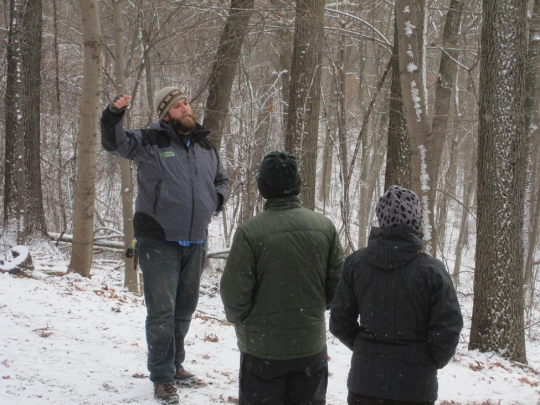
Mike Cornell and the staff at Frick Environmental Center want to get more people to utilize the parks in their Pittsburgh neighborhoods. Pittsburgh has over 640 acres of park land and includes 104 neighborhood parks. He says that a park is a “right and privilege” that should not be taken advantage of and all it takes is to walk out the front door.
Frick Environmental Center offers families, students, and learners of all ages a state-of-the-art space for hands-on, environmental education. There is also a STEM focus for its younger patrons. Mike Cornell, the Naturalist Educator, coordinates the volunteer naturalists and building docents.
Volunteer naturalists are the field educators of the center and offer their time and expertise to work the information desk, assist with school programs, and program development for community education for Frick Environmental Center. Volunteer naturalists are driven by their passion for nature and the environment, and Cornell wants to continue to support this program.
“If they are passionate about it, we can schedule and promote it so they can teach it. The parks and libraries are the two places where you can always go for free and the parks don’t have doors that lock,” he says
To be a Volunteer Naturalist, Pittsburghers must go through a seven week training where they will learn about park conservancy, effective presentation skills, and proper planning strategies for good educational programming. Previous classes have included nature photography, nature education for kids, and hiking skills. Cornell says classes like this can prepare an average citizen to appreciate and embrace parks into their everyday lives and schedules.
“You can get to the park and always enjoy the parks and you don’t have to have a membership. It can be your gym. It can be your classroom. It can be the place you unwind. It can be the place to read a book,” he says.
Frick Environmental Center was opened in 2016 and is housed in Frick Park, Pittsburgh’s largest and youngest urban park.
“Wherever you go in Pennsylvania is a forest because the land is always in a state of going back to forest,” Cornell says. “One thing I like to do is encourage people to believe that what’s right outside their window or while on a bus is nature. You see vacant lots where there are woodpeckers. You see beauty in nature in the crack of a sidewalk and see ants crawling out of it.”
Mike Cornell was intrigued by parks growing up and when he realized a person could make a career out of them, he knew what he wanted to do as an adult.
“I grew up on the edge of Frick Park and I grew up in that park,” Cornell says. “One thing we have to appreciate is that everywhere we go is nature and everywhere we are is the environment.”
He began working with Pittsburgh Parks Conservancy in 2005 as a summer camp counselor, and after graduating from the SUNY College of Environmental Science and Forestry in 2008, he worked seasonally and part time until becoming full time in 2014. Cornell takes pride in connecting volunteer community experts with their neighbors for programming and outreach at the center because it is like returning home.
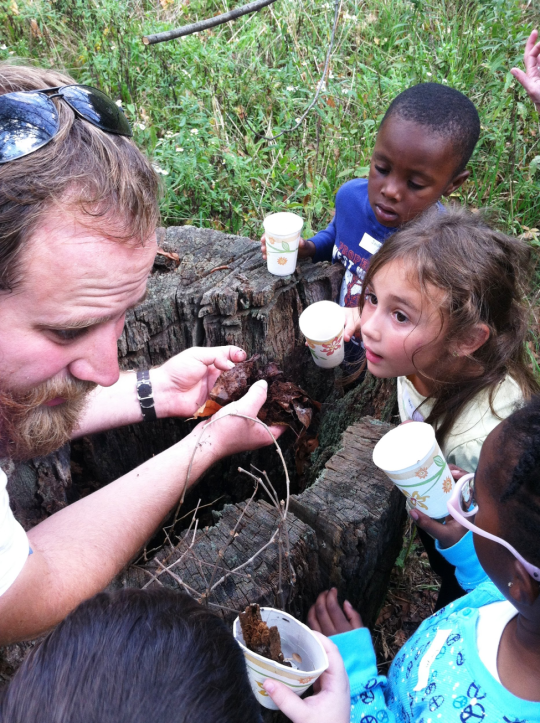
“I studied natural history and interpretation which is what I’m doing now which is connecting people to nature and teaching people about the environment in their communities, and getting people comfortable and curious.”
How can locals get involved with Frick Environmental Center? Go to the Pittsburgh Parks website at https://www.pittsburghparks.org/volunteer and fill out the application to be a volunteer naturalist or docent. Apply soon as spring trainings are coming up. Building docent training is March 23 at 1pm and volunteer naturalist training is April 9, 2018 9-12 noon. Contact Mike Cornell at MCornell@pittsburghparks.org for more information.
In the spirit of recognizing all we are already doing in Pittsburgh, we have started a new blog series to compliment We Are Nature: Living in the Anthropocene, the exhibition about the complex relationship between humans and nature currently on display at Carnegie Museum of Natural History. We are featuring Pittsburghers who are committed to improving the environment in which we live. Each blog features a new individual and shares some of the ways in which they are helping issues of sustainability, conservation, restoration, climate change, or helping Pittsburgh to be an even more beautiful place to live.