• Skip to primary navigation
  • Skip to main content
  • Skip to primary sidebar

Carnegie Museum of Natural History

One of the Four Carnegie Museums of Pittsburgh

  • Visit
    • Buy Tickets
    • Visitor Information
    • Exhibitions
    • Events
    • Dining at the Museum
    • Celebrate at the Museum
    • Powdermill Nature Reserve
    • Event Venue Rental
  • Learn
    • Field Trips
    • Educator Information
    • Programs at the Museum
    • Bring the Museum to You
    • Guided Programs FAQ
    • Programs Online
    • Climate and Rural Systems Partnership
  • Research
    • Scientific Sections
    • Science Stories
    • Science Videos
    • Senior Science & Research Staff
    • Museum Library
    • Science Seminars
    • Scientific Publications
    • Specimen and Artifact Identification
  • About
    • Mission & Commitments
    • Directors Team
    • Museum History
  • Tickets
  • Give
  • Shop

John Wible

April 7, 2022 by Erin Southerland

Early Placental Mammal Evolution Prioritized Brawn over Brains

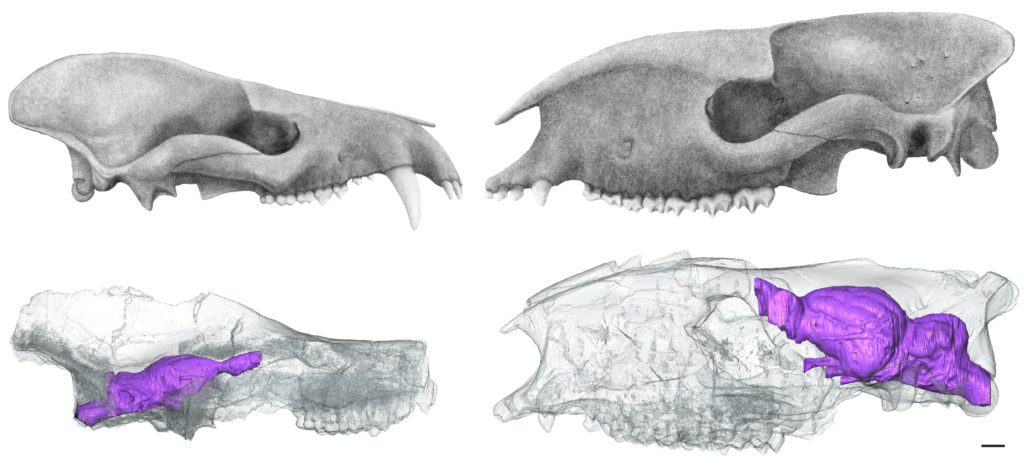
Crania and virtual endocasts inside the translucent cranium of the Paleocene mammal Arctocyon (left) and the Eocene mammal Hyrachyus (right). Credit: Ornella Bertrand and Sarah Shelley. 

An international research team, including scientists from Carnegie Museum of Natural History (CMNH), authored a new study published this month in the prestigious journal Science finding that early placental mammals developed bigger bodies before developing proportionally bigger brains after the extinction of the dinosaurs. Modern mammals have the largest ratio of brain to body size, or encephalization, among vertebrates, and it has long been contended that this ratio emerged in the early stages of mammalian evolution. The study, “Brawn before brains in placental mammals after end-Cretaceous extinction,” finds that mammals prioritized increased body size to enhance survival in the first 10 million years following dinosaur extinction. 

CMNH research associate Dr. Sarah Shelley and curator of mammals Dr. John Wible contributed to the study, led by Dr. Ornella C. Bertrand, postdoctoral fellow at the University of Edinburgh. The team analyzed CT scans on newly discovered fossils from the Paleocene, the epoch 10 million years after the mass extinction. The team learned that relative brain sizes of mammals initially decreased because their body sizes increased at faster rates. Their findings also suggest that mammals in this period retained advanced senses of smell, leaving the other senses—including vision—to adapt later, suggesting that size and smell were more important for survival than intelligence.  

“Because modern mammals are so intelligent, many assumed that large brains enabled mammalian survival after the extinction,” said Wible. “However, it appears our modern brain is much more recent than we anticipated, arriving on the scene in the Eocene epoch, another 10 million years later. It’s very possible that large brains might have proven impediments to survival in the post-dinosaur world.”   
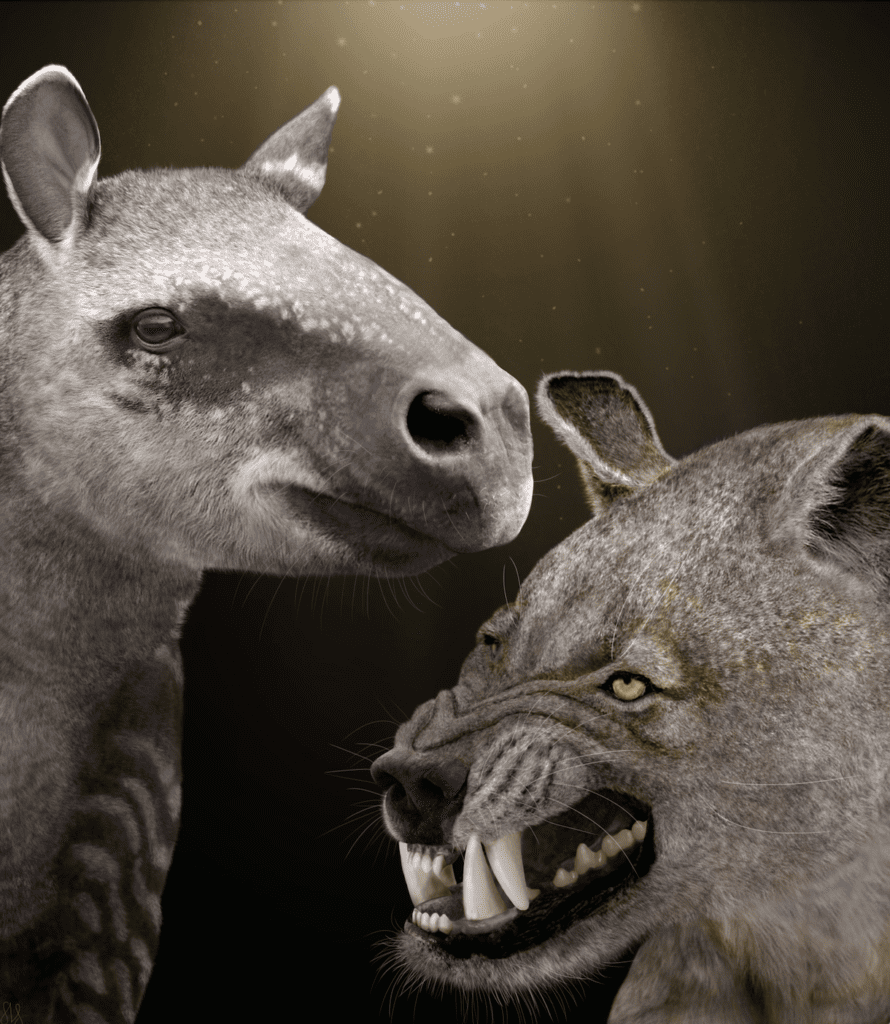
Illustration of two prehistoric mammals.
Reconstruction of the Eocene mammal Hyrachyus modestus, a rhinoceros-tapir ancestor (left) and the Paleocene mammal Arctocyon primaevus, a carnivorous predator most closely related to the group including living pigs, sheep and other even-toed ungulates (right).Credit: Sarah Shelley.

In the Eocene, about 54.8 to 33.7 million years ago, multiple placental mammal lineages independently developed larger relative brain sizes as extinction survivors filled niches vacated by departed species. Brains continued to grow as competition surged in crowded ecosystems.  

Timeline 

  • 66 million years ago: Cretaceous ends with mass extinction, including dinosaurs.
  • 66 million-56 million years ago: Paleocene. Placental mammals evolve larger bodies, but not larger brains. 
  • 55 million-34 million years ago: Eocene. Most modern mammal lineages appear, including ones with larger relative brain sizes.  


Shelley and Wible were involved in all aspects of the study, including CT scanning of fossils, data analysis, and writing. Shelley contributed original art to the accompanying illustrations and figures. 

About Science


Science has been at the center of important scientific discovery since its founding in 1880—with seed money from Thomas Edison. Today, Science continues to publish the very best in research across the sciences, with articles that consistently rank among the most cited in the world. In the last half century alone, Science published the entire human genome for the first time, never-before seen images of the Martian surface, and the first studies tying AIDS to human immunodeficiency virus.
Filed Under: Press Release Tagged With: John Wible, mammals

February 18, 2022 by Erin Southerland

World Pangolin Day: February 19, 2022

by Dr. John Wible

The third Saturday in February is celebrated as World Pangolin Day, a day to raise awareness of this endangered mammal. Pangolins, scaly anteaters, are heavily illegally trafficked for the bogus medicinal powers given to their scales, which are made of keratin, the same material that makes our semi-rigid fingernails. 

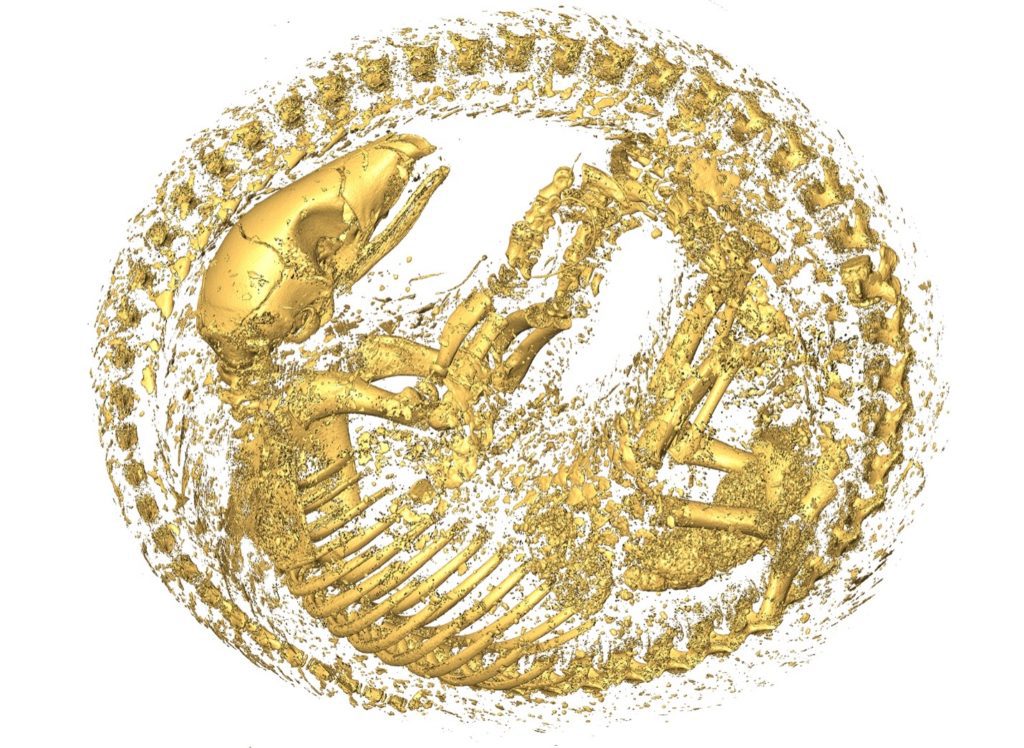
CT scan of a pangolin curled up in a ball.
From CT scan of Phataginus tricuspis, Yale Peabody Museum of Natural History 014708; https://www.morphosource.org/concern/parent/000S26328/media/000091605

This image is from a CT scan of a preserved specimen from Cameroon in West Africa of the white-bellied pangolin, Phataginus tricuspis, from the Yale Peabody Museum of Natural History. There are eight species of pangolins, four in Africa and four in Asia. Some are dedicated tree dwellers, like the white-bellied pangolin; some are dedicated ground dwellers; and some are a mixture of the two. The existence of all eight species is threatened by some human actions.

The pose of this specimen is one that all living pangolins can readily replicate, rolling up into a ball as a defensive posture. The word pangolin itself is Malay for “roller.” With no teeth, the creature’s rolling posture and scales are its best defenses. Rolling is made possible in part by the aggregate mobility at the articulations between the individual bones of its backbone or vertebral column. And pangolins have a lot of these bones. The human body has 32 to 35 vertebrae, divided into regions: seven cervical, 12 thoracic, five lumbar, five sacral, and three to five tiny caudal vertebrae making the coccyx. And we know how mobile our bodies are! At 72 vertebrae, the white-bellied pangolin is double our count: seven cervical, 12 thoracic, eight lumbar, two sacral, and a whopping 43 caudal vertebrae. The black-bellied or long-tailed pangolin, Phataginus tetradactyla, has even more bones in its tail at 49!

For more about what you can do, visit WorldPangolinDay.org. 

John Wible is the curator of the Section of Mammals at Carnegie Museum of Natural History. Museum employees are encouraged to blog about their unique experiences and knowledge gained from working at the museum.

Related Content

Groundhog as Archaeologist

Humans and Nature: Pangolins

E is for Echidna

Carnegie Museum of Natural History Blog Citation Information

Blog author: Wible, John
Publication date: February 18, 2022

Share this post!

  • Share on Twitter Share on Twitter
  • Share on Facebook Share on Facebook
  • Share on Pinterest Share on Pinterest
  • Share on LinkedIn Share on LinkedIn
  • Share on Reddit Share on Reddit
  • Share via Email Share via Email

Filed Under: Blog Tagged With: Carnegie Museum of Natural History, John Wible, mammals, Science News, We Are Nature 2

February 2, 2022 by Erin Southerland

Groundhog as Archaeologist

by Dr. John R. Wible
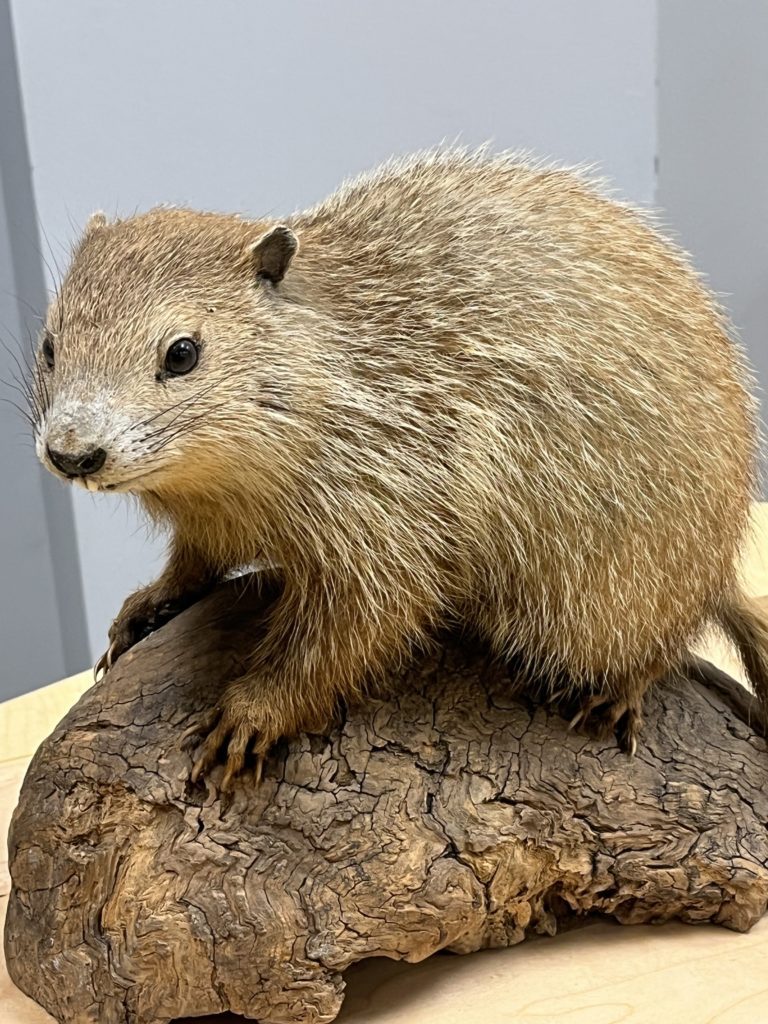
groundhog taxidermy mount

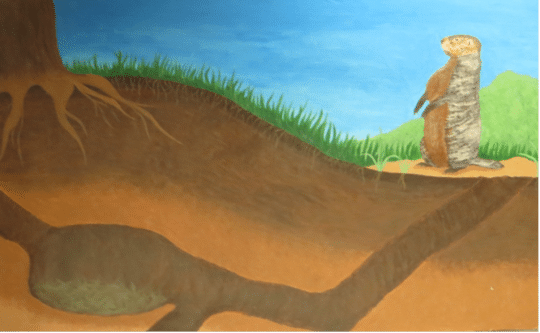
Groundhogs (Latin name: Marmota monax) are mostly solitary; they dig and spend a lot of time in elaborate burrows. There is usually a main burrow entrance, a foot across with a mound of excavated dirt marking it, and several auxiliary exits. The burrow is designed with twists and turns so that it will not flood. Side chambers serve as suitable places to hibernate and as latrine, which when “full” is sealed off. Because of their digging pastime and the holes they create, groundhogs are seen as pests by many homeowners, fearing property damage, and horse owners, fearing injury to their steeds.

illustration of a groundhog standing near the entrance to a groundhog burrow

Once a year, in early February, the pest label for groundhogs is ditched for that of a weather prognosticator, our own Punxsutawney Phil is the prime example. However, for Western Pennsylvanians, the so-called pest activity of one groundhog led to one of the most important scientific discoveries of our region: the renowned archaeological site of Meadowcroft Rock Shelter in Washington County. As a child growing up on the property, Albert Miller believed that Native Americans had been there. But proof did not come until 1955 when he was investigating an animal burrow and discovered stone and ceramic artifacts. The rest is local history so to speak!

Early on, the burrow was said to belong to a badger. But there is only a single record of a badger in Pennsylvania, believed to have been transported by train to Indiana County. Now, a groundhog is the suspected culprit responsible for the true discovery of artifacts at Meadowcroft. Perhaps Meadowcroft marmot would be an appropriate name!

John Wible, PhD, is the curator of the Section of Mammals at Carnegie Museum of Natural History. Museum employees are encouraged to blog about their unique experiences and knowledge gained from working at the museum.

Related Content

The Woodchuck…or Groundhog?

Groundhog Day 2020

Groundhog Architecture

Carnegie Museum of Natural History Blog Citation Information

Blog author: Wible, John
Publication date: February 2, 2022

Share this post!

  • Share on Twitter Share on Twitter
  • Share on Facebook Share on Facebook
  • Share on Pinterest Share on Pinterest
  • Share on LinkedIn Share on LinkedIn
  • Share on Reddit Share on Reddit
  • Share via Email Share via Email

Filed Under: Visitor Info Tagged With: Carnegie Museum of Natural History, John Wible, mammals, Science News

September 15, 2020 by wpengine

Scientist Takeover: Mammals!

What is the largest mammal?

This is an easy one because it is not even close; the blue whale, which is also the largest animal to ever live on Earth, weighs around 100 tons (220,000 pounds) and is about 100 feet long. Females are typically larger than males. Despite their bulk, blue whales are filter feeders subsisting on krill, small crustaceans less than an inch in length.

In 1758, Carl Linnaeus gave the blue whale the Latin name Balaenoptera musculus. The first part, Balaenoptera, the genus name, means winged whale for its long, slender flippers; the second part, the species name, is thought to be a joke by Linnaeus because it is also the species name he gave to the house mouse, Mus musculus.

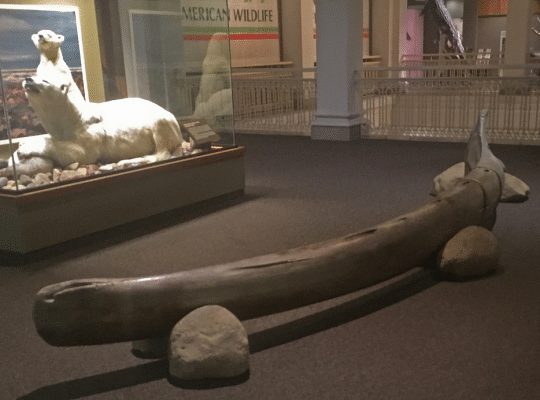
Here is the left mandible (lower jaw) of a blue whale on the second floor in the Carnegie Museum of Natural History. Notice that it dwarfs the adult polar bear behind it.

What is the smallest mammal?

This is harder than the largest one—the blue whale—because there are two mammals considered to be very close in weight: the Etruscan shrew with a Mediterranean and Asian distribution weighs in about 1.8 grams, which is less than the bumblebee bat from Thailand and Myanmar, weighing in around just 2 grams, but the shrew is longer than the bat. Remember there are 28 grams in one ounce and 2 grams is the weight of one paperclip!

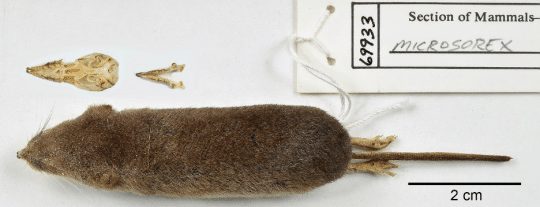
This is the smallest North American mammal, the American pygmy shrew. This example, from the research collections of the Carnegie Museum of Natural History, is under four inches in total length.

What is the fastest land mammal?

The cheetah is hands down the fastest, but it does not sustain speed over a great distance; the cheetah is a burst-predator with a chase lasting typically less than a minute. The cheetah goes from 0 to 60 miles per hour in about three seconds, which is what a good sports car can do! At top speed, the length of one stride is 21 feet and there are four strides per second.

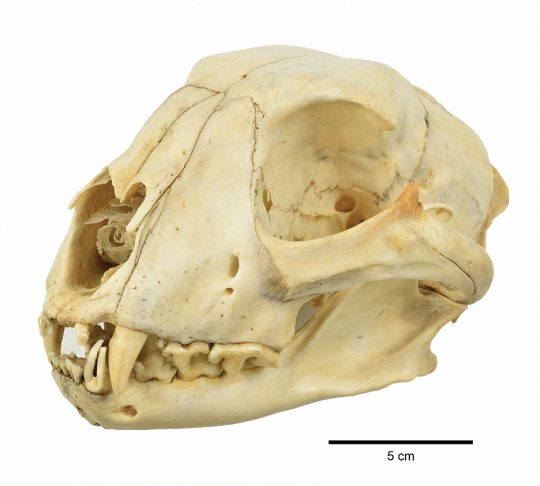
Everything about the cheetah is built for speed and hunting. This view of a skull in the research collection of Carnegie Museum of Natural History shows enormous orbits for its large eyeballs providing keen vision and its very large nasal opening, which allows more oxygen to enter the lungs.

What is the slowest land mammal?

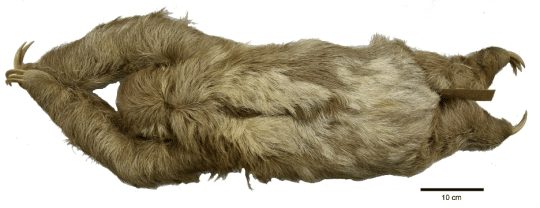
The name says it all…sloth! There are two types of sloths found in the tropics of Central America and northern South America, usually called three-toed and two-toed sloths. This is a misnomer as both types have three toes on their hindfeet; what differs is the number of fingers on the forefeet. So, they really should be called three- and two-fingered sloths. Both sloths live most of their lives in trees on a diet of leaves and move so slowly or so little that algae grow on their fur, providing camouflage. Of the two sloths, the three-digited one is smaller and slower.

This skin of a three-toed sloth from the research collection of the Carnegie Museum of Natural History shows a mammal built for hanging around in trees, with its long arms and hook-like claws on all four limbs.

What is the strongest mammal?

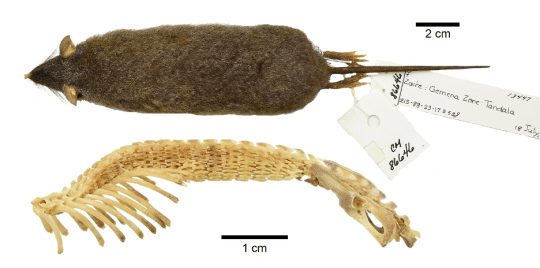
This is just a playful question. It usually isn’t one of the comparisons that scientists try to make.  However, the armored hero shrew seems like a good nominee. This shrew lives in the forested region of central Africa. Its spinal column is unique among mammals. The mid-portion is extremely modified with many interlocking bony tubercles that project forward and backward to fortify the spine. The exact purpose is unknown. However, it has been reported that a full-grown man could stand on the back of an armored shrew without harming the animal.

The skin and partial vertebral column of an armored hero shrew from the research collection of the Carnegie Museum of Natural History shows the beautifully intricate bony structure of the spinal column, which lies hidden inside of a perfectly normal looking long-haired shrew.

John Wible is Curator of the Section of Mammals and Sue McLaren is Collection Manager of the Section of Mammals at Carnegie Museum of Natural History. This post is part of Super Science Days: Scientist Takeover! 

Related Content

Stuffed Animal Safari: Mountain Goats

Meowfest: Oglebay Good Zoo Big Cats

Giraffes at The Wilds

Filed Under: Blog Tagged With: John Wible, mammals, Scientist Takeover, Super Science Days

March 9, 2020 by wpengine

Groundhog Day 2020!

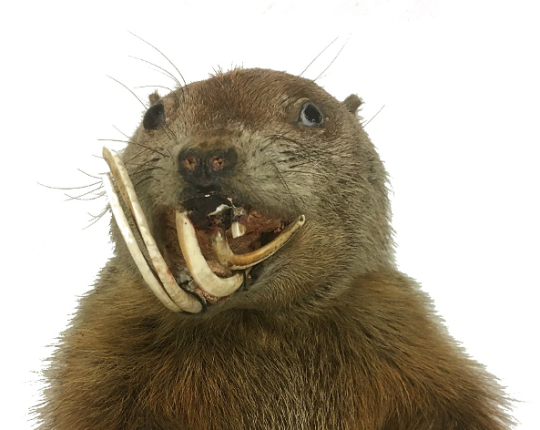
One of my favorite taxidermies in the Section of Mammals, Carnegie Museum of Natural History, is our groundhog with a malocclusion. Say what?

So, in dentistry, a malocclusion is the imperfect positioning of teeth when the jaws are closed, usually a cosmetic issue. If you are a rodent, like our groundhog, a malocclusion is not just cosmetic, but life threatening.

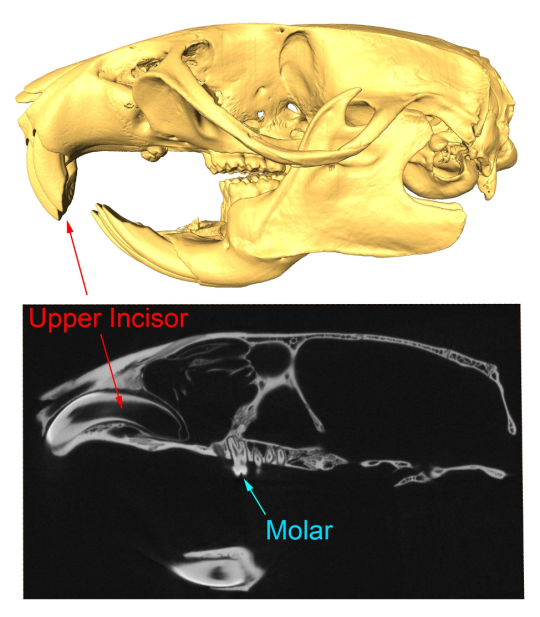
Rodents (including squirrels, beavers, rats, guinea pigs, and capybaras) are the most successful group of living mammals, accounting for about 40% of all species (2,500 out of 6,000). A key innovation that has led to their evolutionary success is their pair of enlarged upper and lower incisors that continue to grow during the life of the individual. Looking at a rat skull (below), you will notice that the incisors are enormous, especially compared to a molar tooth in the CT scan. When the upper and lower incisors occlude (that is, contact), over time they create a sharp, chisel-shaped cutting blade that is, for example, the reason a beaver can cut down a sizeable tree. Their incisors continue to grow and maintain that cutting blade. In contrast, your teeth don’t grow (nor do the molars of the rat or groundhog); in fact, they get smaller as they wear down.

If something goes awry with a rodent’s incisors such that the uppers and lowers get off kilter and don’t meet to create that cutting blade, the incisors will still continue to grow, and grow, and grow, as with our poor maloccluded groundhog. Ultimately, the animal will be unable to eat and starve to death. Ironic that the key innovation leading to the success of the rodent lineage can also be deadly for an individual on the rare occasion that things go wrong.

Rattus norvegicus, brown (Norway) rat, skull in lateral view (above) with sagittal section from CT scan (below).

John Wible, PhD, is the curator of the Section of Mammals at Carnegie Museum of Natural History. John’s research is focused on the tree of life of mammals, understanding the evolutionary relationships between living and extinct taxa, and how the mammalian fauna on Earth got to be the way it is today. He uses his expertise on the anatomy of living mammals to reconstruct the lifeways of extinct mammals. John lives with his wife and two sons in a house full of cats and rabbits in Ross Township.

Filed Under: Blog Tagged With: John Wible, mammals

October 23, 2018 by wpengine

E is for Echidna

by John Wible

The Naming

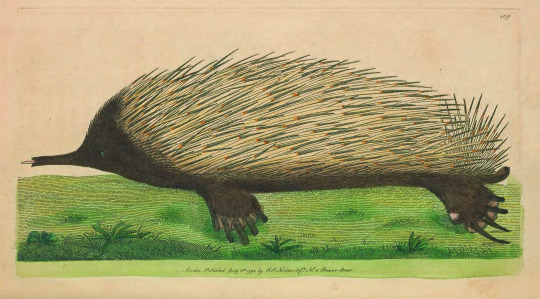
En route to Tahiti in 1792, a ship put into Adventure Bay at Bruny Island off the coast of Tasmania, where the captain’s log made the first written account of an animal that was covered in thick, sharp quills with a pointy bill and small mouth. The ship was the H.M.S. Bounty and the captain was none other than William Bligh. In the same year, a specimen from New Holland (Australia) arrived in the natural history department of the British Museum in London where it was formally described by assistant keeper George Shaw. Shaw conceived of this animal as a cross between an Old World porcupine and a South American giant anteater. He named it Myrmecophaga aculeata, a new species in the same genus as the giant anteater, Myrmecophaga tridactyla, and called it by the common name porcupine anteater; its formal name translates to spiny anteater. The animal, about a foot in length, had been found amid an ant hill. Shaw’s account included the first image of the porcupine anteater.

drawing of a porcupine anteater

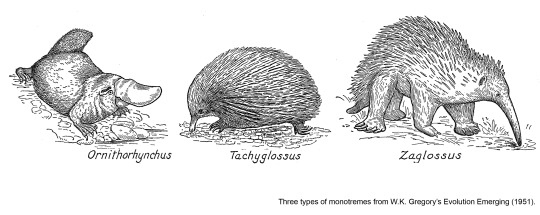
A bewildering number of generic and specific names were applied to the porcupine anteater over the next two decades, reflecting changing views about its taxonomy. The common thread was a realization that this animal had little to do with the South American anteater and, therefore, could not remain as a species of that animal’s genus. Moreover, a second bizarre mammal from New Holland was described by George Shaw in 1799, the duck-billed platypus, Ornithorhynchus anatinus. Most authors recognized a kinship between these two odd forms. Today, we know them to be two types of monotremes or egg-laying mammals.

One of the generic names given to the porcupine anteater was Echidna, proposed by the famous French comparative anatomist Georges Cuvier in 1797. In Greek mythology, Echidna was a hideous, flesh-eating monster with the top half of a beautiful woman and the body of a fearsome snake; Echidna was mother of many other infamous monsters, including Cerberus and Sphinx. For the porcupine anteater, this name was meant to reflect the animal’s mixture of reptilian and mammalian characteristics. However, the generic name Echidna was already occupied, having been given to a moray eel in 1788. So, by the rule of priority, it could not be used for the porcupine anteater. The name Tachyglossus, meaning rapid tongue for the speed with which it ingests ants, was proposed by Johann Karl Wilhelm Illiger of the zoological museum in Berlin in 1811. Thus, was born the formal moniker of Tachyglossus aculeatus for the porcupine anteater. Cuvier’s echidna stuck as the generally recognized common name. A refinement to the common name came later with the description in 1876 of a second kind of echidna from New Guinea. This larger form with an even longer snout was ultimately called Zaglossus, meaning great tongue. These two types have become known as the short-beaked and long-beaked echidnas, which perhaps is unfortunate as we usually think of birds having a beak and there is nothing beaky about the flesh-covered echidna snout.

drawing of three different monotremes

A final word on the spiny anteater as an alternative common name. This should only be applied to the single species of short-beaked echidna, Tachyglossus aculeatus, found today throughout Australia, Tasmania, and southeastern New Guinea, as it is a true eater of ants and termites, projecting its tongue 7 inches into nests to feed. The three species of the long-beaked echidnas, two of which are critically endangered, are primarily earthworm eaters. They use their long, pointy snouts to probe through soil and extend their tongue only about an inch to get their prey. They do have an amazing adaptation to catching worms: the anterior third of the tongue has a deep groove with three rows of backwardly directed, sharp, keratinous spines. When the mouth is opened, the groove opens; the worm is maneuvered into this groove; and when the tongue is retracted, the groove is tightly closed around the worm. Instead of spiny anteaters, let’s just call them fearsome spiny wormeaters!

John Wible is Curator in the Section of Mammals at the Carnegie Museum of Natural History. Museum employees are encouraged to blog about their unique experiences working at the museum.

Filed Under: Blog Tagged With: John Wible, mammals

  • « Go to Previous Page
  • Page 1
  • Page 2
  • Page 3
  • Page 4
  • Go to Next Page »

sidebar

About

  • Mission & Commitments
  • Directors Team
  • Museum History

Get Involved

  • Volunteer
  • Membership
  • Carnegie Discoverers
  • Donate
  • Employment
  • Events

Bring a Group

  • Groups of 10 or More
  • Birthday Parties at the Museum
  • Field Trips

Powdermill

  • Powdermill Nature Reserve
  • Powdermill Field Trips
  • Powdermill Staff
  • Research at Powdermill

More Information

  • Image Permission Requests
  • Science Stories
  • Accessibility
  • Shopping Cart
  • Contact
  • Visitor Policies
One of the Four Carnegie Museums | © Carnegie Institute | Privacy Policy | Terms of Use | Accessibility
Rad works here logo