• Skip to primary navigation
  • Skip to main content
  • Skip to primary sidebar

Carnegie Museum of Natural History

One of the Four Carnegie Museums of Pittsburgh

  • Visit
    • Buy Tickets
    • Visitor Information
    • Exhibitions
    • Events
    • Dining at the Museum
    • Celebrate at the Museum
    • Powdermill Nature Reserve
    • Event Venue Rental
  • Learn
    • Field Trips
    • Educator Information
    • Programs at the Museum
    • Bring the Museum to You
    • Guided Programs FAQ
    • Programs Online
    • Climate and Rural Systems Partnership
  • Research
    • Scientific Sections
    • Science Stories
    • Science Videos
    • Senior Science & Research Staff
    • Museum Library
    • Science Seminars
    • Scientific Publications
    • Specimen and Artifact Identification
  • About
    • Mission & Commitments
    • Directors Team
    • Museum History
  • Tickets
  • Give
  • Shop

John Wible

August 13, 2018 by wpengine

A is for Aardvark

By John Wible

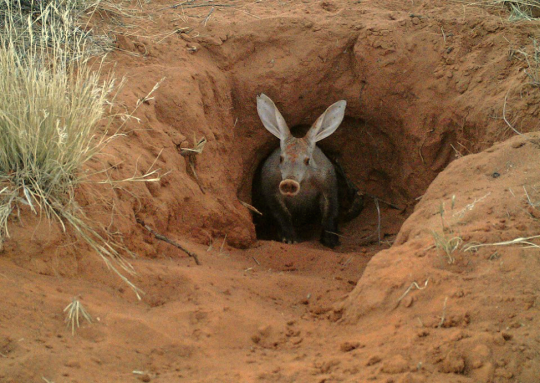
aardvark
Photo by Louise Joubert, SanWild Wildlife Sanctuary

Upon encountering this unusual digging mammal, South African colonists dubbed it aardvark, which is Afrikaans for earth pig or groundhog. With an adult weight of 90 to 150 pounds they dwarf our Western Pennsylvanian groundhog and additionally look nothing like it! Aardvarks (Orycteropus afer) are solitary, nocturnal mammals, which means they live alone and are active almost exclusively at night. They have powerful forelimbs and very sharp, robust front claws perfect for digging large burrows and into the nests of their food prey: ants and termites. Their nostrils, which are vertical slits, can be closed completely and have a fringe of thick hairs that helps to keep soil out while they are rooting for food. They have poor eyesight but a phenomenally keen sense of smell. In fact, aardvarks have the highest number of olfactory turbinal bones of any mammal; these are the fine, scroll-like bones in the nasal cavity that are covered by olfactory epithelium for sense of smell. And given those long rabbit-like ears, they also have a keen sense of hearing. Yet, aardvarks are for the most part silent, using hearing to find prey and avoid predators and not to find each other.

Aardvarks were thought to be related to other myrmecophagous (ant-eating) mammals, namely the South American anteaters and Old World pangolins. However, analysis of their DNA groups aardvarks with other very different looking African mammals in a clade of unlikely bedfellows called Afrotheria, which includes elephants, hyraxes, sengis or elephant shrews, golden moles, and tenrecs, along with manatees and dugongs. Consequently, the dietary and digging adaptations of aardvarks have evolved independently of those in the South American anteaters and pangolins. The earliest aardvark fossils are from African and are roughly 20 million years old. They did expand into southern Europe and into Asia as far east as Pakistan, but today are confined to sub-Saharan Africa in habitats that provide ants, termites, and water. Thankfully, their conservation status is currently of a non-threatened status.

John Wible, PhD, is the curator of the Section of Mammals at Carnegie Museum of Natural History. John’s research is focused on the tree of life of mammals, understanding the evolutionary relationships between living and extinct taxa, and how the mammalian fauna on Earth got to be the way it is today. He uses his expertise on the anatomy of living mammals to reconstruct the lifeways of extinct mammals. John lives with his wife and two sons in a house full of cats and rabbits in Ross Township.
Filed Under: Blog Tagged With: John Wible, mammals

July 17, 2018 by wpengine

Annals of Carnegie Museum

By John Wible

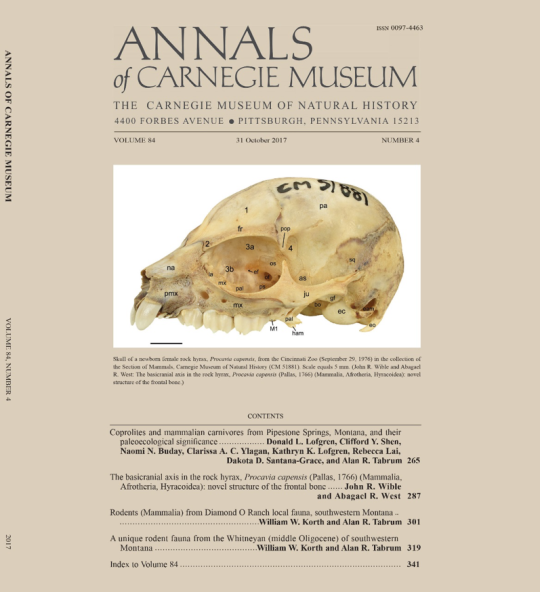
Annals of Carnegie Museum contents page

The Carnegie Museum of Natural History produces a scientific journal entitled Annals of Carnegie Museum that first appeared in print in March 1901. Its purpose is to promote the research and collections of the museum. This issue from October 2017 has the skull of a newborn rock hyrax, Procavia capensis, from the collection of the Section of Mammals on the cover. The image is from an article in the issue on aspects of the skull morphology of hyraxes by myself and Rea Postdoctoral Fellow Abagael West. For more information about the Annals, click here.


John Wible, PhD, is the curator of the Section of Mammals at Carnegie Museum of Natural History and editor of Annals of Carnegie Museum. John’s research is focused on the tree of life of mammals, understanding the evolutionary relationships between living and extinct taxa, and how the mammalian fauna on Earth got to be the way it is today. He uses his expertise on the anatomy of living mammals to reconstruct the lifeways of extinct mammals. John lives with his wife and two sons in a house full of cats and rabbits in Ross Township.
Filed Under: Blog Tagged With: John Wible, Section of Mammals

June 15, 2018 by wpengine

New Mammal Fossil Discovered

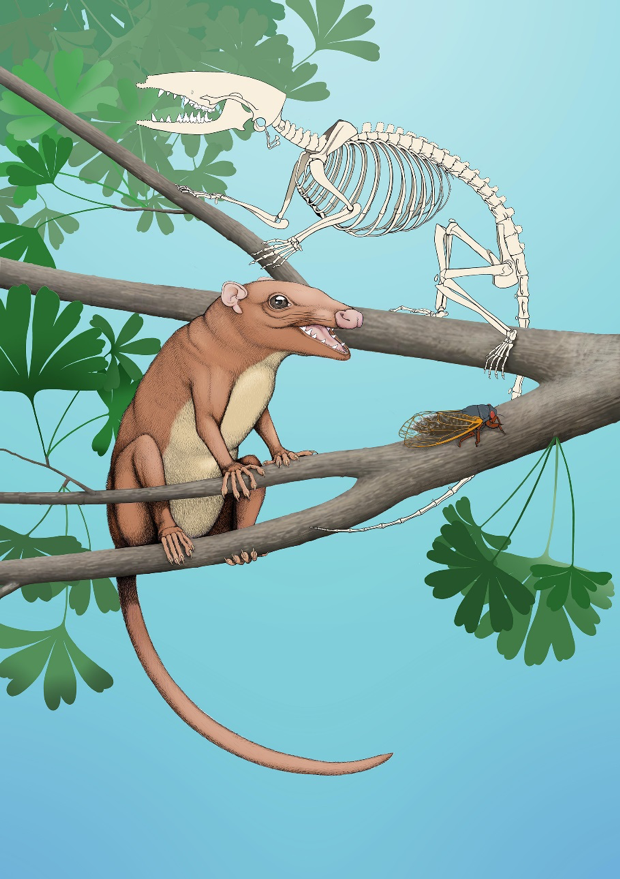
We are thrilled to share that Dr. John Wible, Curator of Mammals, was part of the team that discovered a new mammal fossil, Ambolestes zhoui, which sheds new light on how placental mammals evolved. The 126-million-year-old fossil was found in Inner Mongolia by splitting rocks. The specimen was cleaved in two halves, but nearly every bone was preserved in the fossil.

The skeleton is about ten inches long, making it slightly larger than a chipmunk and slightly smaller than a gray squirrel. Its fingers are long, suggesting it could climb easily. And its teeth are ideal for eating insects.

This illustration by Paul Bowden shows what Ambolestes zhoui may have looked like based on the recently discovered fossil skeleton. Ambolestes zhoui is pictured in a gingko tree about to eat a cicada, both the gingko tree and cicada were found in the same fossil formation as Ambolestes zhoui.

Ambolestes zhoui drawing

Learn more in our press release and in a recent article in the Pittsburgh Post-Gazette. The full paper is available in Nature.

Filed Under: Blog Tagged With: John Wible

May 21, 2018 by wpengine

What is a Noolbenger?

By John Wible

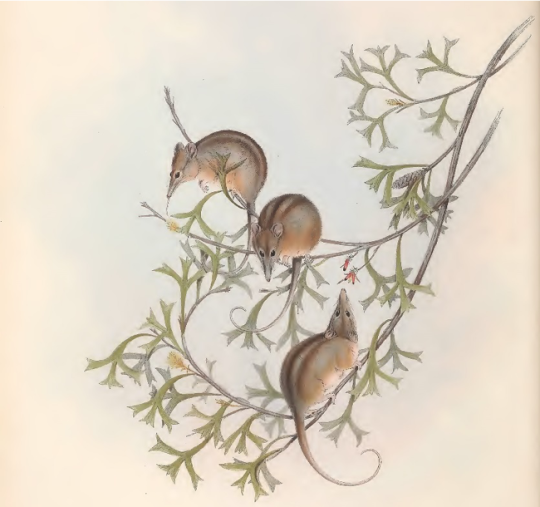
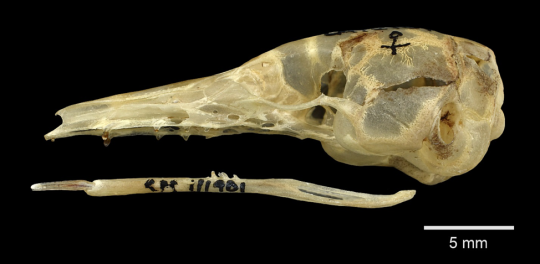
Noolbenger is the Aboriginal name for the honey possum. So, what is a honey possum? A honey possum, Tarsipes rostratus, is a mouse sized marsupial found in the coastal plains of southwestern Australia. It can only survive in environments where flowers bloom 12 months of the year, because it lives entirely on nectar! They are particularly fond of Banksiaor Australian honeysuckle and are important pollinators. Some bats are also exclusively nectivorous, but their mode of locomotion (i.e., flight) allows them to have large home ranges for feeding. The honey possum accomplishes this entirely on foot at night, scampering from plant to plant. Not surprisingly, it is an adept climber with a prehensile tail acting as a fifth limb. A protrusible tongue with a keratinized brush tip is the main nectar collecting organ. Bucking the usual trend in mammals where males are larger than females, the male honey possum is roughly two-thirds the size of the female.

Drawing of honey possums

From John Gould’s The Mammals of Australia (1863).

The Section of Mammals of Carnegie Museum of Natural History has eight specimens of this unusual mammal, which has a very un-mammal-like skull. The bones of the skull are paper thin, reminiscent of a hummingbird skull. It has a long and pointy snout, the better to sniff flowers with. The lower jaw is essentially a thin rod. The upper and lower teeth are reduced in number and size and resemble simple translucent pegs, because you don’t need big complex teeth to grind nectar for digestion. And there is essentially no place on the skull for chewing muscle attachment, again because chewing is not mandatory for feeding.

Honey possum skull

Tarsipes rostratus, CM 111901.

Honey possums are not considered to be endangered or even threatened. So far, the major concern to their continued existence is wildfires.

John Wible, PhD, is the curator of the Section of Mammals at Carnegie Museum of Natural History. John’s research is focused on the tree of life of mammals, understanding the evolutionary relationships between living and extinct taxa, and how the mammalian fauna on Earth got to be the way it is today. He uses his expertise on the anatomy of living mammals to reconstruct the lifeways of extinct mammals. John lives with his wife and two sons in a house full of cats and rabbits in Ross Township. Museum employees are encouraged to blog about their unique experiences and knowledge gained from working at the museum.
Filed Under: Blog Tagged With: John Wible

February 6, 2018 by wpengine

Why Do Some Shrews Have Dark Red Teeth?

skull and jawbone of a shrew with red teeth

By John Wible

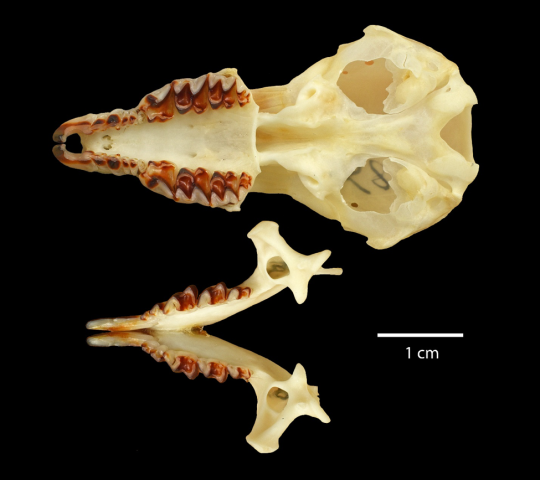
Some shrews have white teeth, while others, including our local northern short-tailed shrew, Blarina brevicauda, have a mixture of dark red and white patches on all their teeth. The dark red marks the presence of iron in the tooth enamel, in contrast to the white without.

Why? It turns out that the concentration of iron is not uniform across all teeth, but is highest on those parts of the teeth that do the most crushing and grinding during chewing. Because of that, the iron in the pigmented enamel is thought to reinforce those high stress surfaces, helping to prolong the life of the tooth. That is important for an animal that is born with its adult (permanent) teeth, having shed its baby (deciduous) teeth in utero. And for an animal with a voracious appetite, where finding the next meal in a hurry is necessary to maintain its high metabolic rate. Interestingly, the shrews that don’t have dark red teeth have a lower metabolic rate than those with. The juxtaposition of dark red and white enamel also helps to keep cutting edges sharp as the softer white enamel wears faster than the dark red. There is only one other group of living mammals that has pigmented enamel, rodents, but unlike the shrews, it is only on their incisors and not all teeth.

No matter what it is for, the shrew’s dark red enamel makes for a mouthful of beautiful, non-pearly white teeth!

John Wible, PhD, is the curator of the Section of Mammals at Carnegie Museum of Natural History. John’s research is focused on the tree of life of mammals, understanding the evolutionary relationships between living and extinct taxa, and how the mammalian fauna on Earth got to be the way it is today. He uses his expertise on the anatomy of living mammals to reconstruct the lifeways of extinct mammals. John lives with his wife and two sons in a house full of cats and rabbits in Ross Township.
Filed Under: Blog Tagged With: John Wible, mammals

December 11, 2017 by wpengine

The Naming of the Shrew

By John Wible

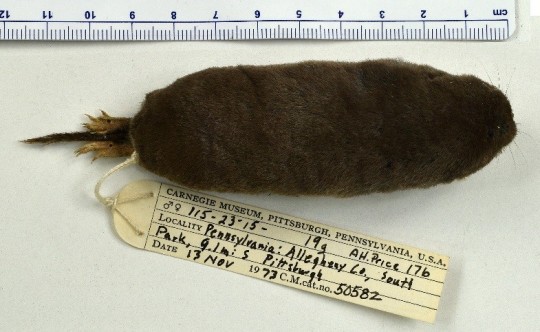
When most people in New England, the Mid-Atlantic states, and the Upper Midwest find this small, brown, tubular mammal in leaf litter in their yard they call it a mole. In fact, it is not a mole, but a relative of a mole called a shrew. More specifically, it is a northern short-tailed shrew, Blarina brevicauda. Like moles, the northern short-tailed shrew has degenerate eyes, spends most of its time in underground burrows, and feasts on earthworms and other invertebrates. Estimates are that it eats its weight per day to maintain its high metabolic rate; food consumption has to increase in winter to survive the cold. Life span is short by our standards, with most not living more than a year. To aid in procuring food, the northern short-tailed shrew has a salivary gland that produces venomous saliva that either kills or paralyzes its prey. Biochemically, it resembles some snake venom and starts the digestive process by breaking down protein. Vision is not this shrew’s forte, but I have seen them successfully cross a busy two-lane road in the North Hills of Pittsburgh! How? They echolocate, using high-pitched clicks, and have a heightened sense of smell.

shrew specimen collected in Pennsylvania

There are more than 350 species of shrews found on all continents except Australia and Antarctica. Not all shrews spend the majority of their time underground. Some tropical shrews in Africa and Asia forage in bushes and small trees and there are even aquatic shrews! They are all small though and with a similar tubular body plan. The largest shrew is about 6 inches long and weighs 100 grams. The smallest, the Etruscan pygmy shrew, Suncus etruscus, is less than an inch and a half in length and weighs only 1.8 grams; it is the smallest living terrestrial mammal by weight.

In Old English, shrews were superstitiously feared and were believed to have a venomous bite, which is not true as shrews in England are not venomous; in fact, our North American Blarina brevicauda is the only venomous shrew species. These small mammals became the source of another usage for the word shrew as an evil or scolding person, used in that sense since at least the 11th century and made immortal by Shakespeare’s The Taming of the Shrew. Despite the intention of the title, Blarina brevicauda cannot be domesticated!

John Wible, PhD, is the curator of the Section of Mammals at Carnegie Museum of Natural History. John’s research is focused on the tree of life of mammals, understanding the evolutionary relationships between living and extinct taxa, and how the mammalian fauna on Earth got to be the way it is today. He uses his expertise on the anatomy of living mammals to reconstruct the lifeways of extinct mammals. John lives with his wife and two sons in a house full of cats and rabbits in Ross Township.
Filed Under: Blog Tagged With: John Wible, mammals

  • « Go to Previous Page
  • Page 1
  • Page 2
  • Page 3
  • Page 4
  • Go to Next Page »

sidebar

About

  • Mission & Commitments
  • Directors Team
  • Museum History

Get Involved

  • Volunteer
  • Membership
  • Carnegie Discoverers
  • Donate
  • Employment
  • Events

Bring a Group

  • Groups of 10 or More
  • Birthday Parties at the Museum
  • Field Trips

Powdermill

  • Powdermill Nature Reserve
  • Powdermill Field Trips
  • Powdermill Staff
  • Research at Powdermill

More Information

  • Image Permission Requests
  • Science Stories
  • Accessibility
  • Shopping Cart
  • Contact
  • Visitor Policies
One of the Four Carnegie Museums | © Carnegie Institute | Privacy Policy | Terms of Use | Accessibility
Rad works here logo
