• Skip to primary navigation
  • Skip to main content
  • Skip to primary sidebar

Carnegie Museum of Natural History

One of the Four Carnegie Museums of Pittsburgh

  • Visit
    • Buy Tickets
    • Visitor Information
    • Exhibitions
    • Events
    • Dining at the Museum
    • Celebrate at the Museum
    • Powdermill Nature Reserve
    • Event Venue Rental
  • Learn
    • Field Trips
    • Educator Information
    • Programs at the Museum
    • Bring the Museum to You
    • Guided Programs FAQ
    • Programs Online
    • Climate and Rural Systems Partnership
  • Research
    • Scientific Sections
    • Science Stories
    • Science Videos
    • Senior Science & Research Staff
    • Museum Library
    • Science Seminars
    • Scientific Publications
    • Specimen and Artifact Identification
  • About
    • Mission & Commitments
    • Directors Team
    • Museum History
  • Tickets
  • Give
  • Shop

Leroy Henry

August 20, 2019 by wpengine

A day late, but thanks for your Impatiens!

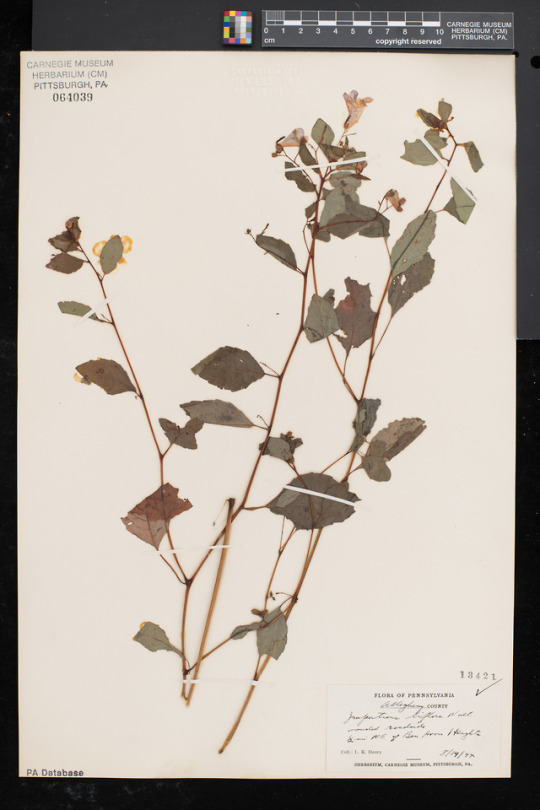
impatiens specimen
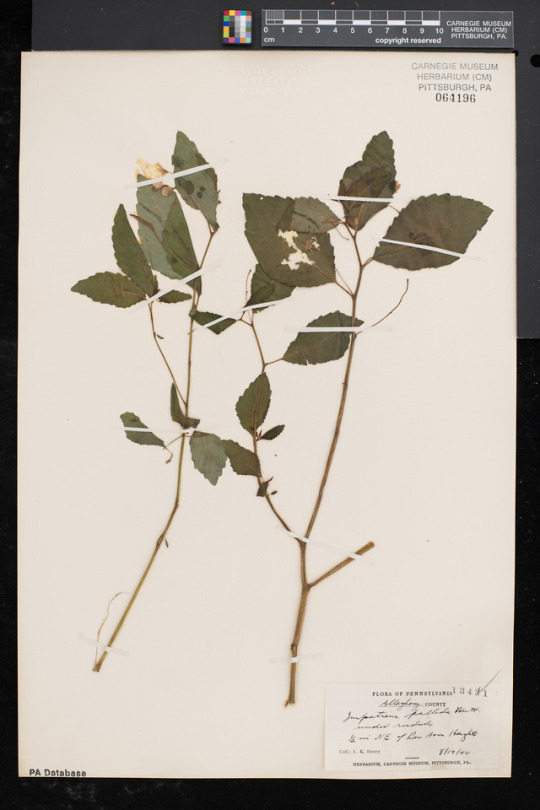
impatiens specimen

Two specimens of jewelweed, Impatiens, collected on this day (well, yesterday) by Carnegie Museum curator Leroy Henry in 1944 in Ben Avon Heights, near Pittsburgh.

There are two species of jewelweed commonly found in Pennsylvania and in relatively wet, partly shady habitats across eastern North America. They can form dense stands along wet roadside ditches at edge of woods and in floodplain forests. Henry collected both species in the same location, as they commonly grow together.
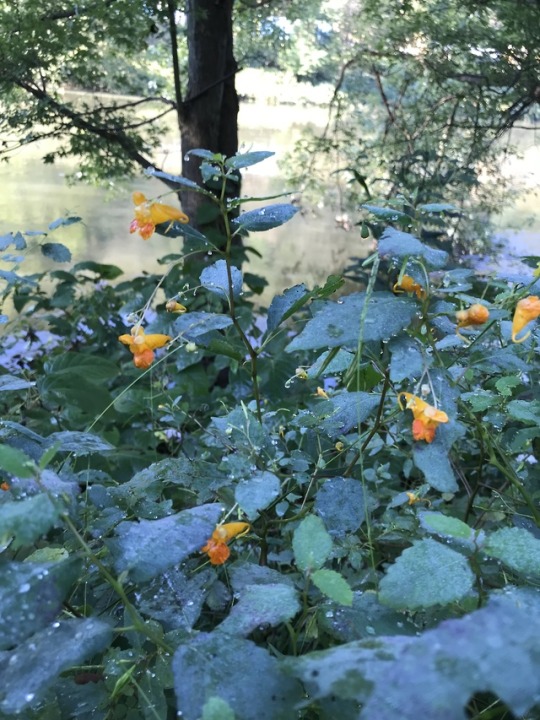
orange jewelweed

What’s the difference between these two specimens?  Though less obvious in specimen form, the most noticeable difference is flower color. Common jewelweed (Impatiens capensis), also called spotted or orange jewelweed, has orange flowers. In contrast, the flowers of yellow jewelweed (Impatiens pallida), also called pale jewelweed, are…well, yellow.  Flowers of both species have distinctive nectar spurs that jut out of the back of the flower. It is entertaining to watch bumblebees go from flower to flower in a stand of jewelweed.
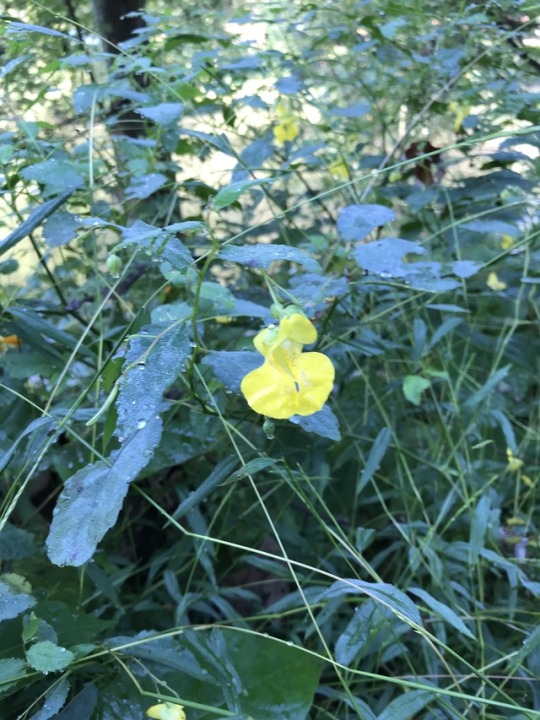
yellow jewelweed

Jewelweeds are herbaceous, annual plants with juicy stems that can range in size, from short to very tall.  A widespread story is that jewelweed can treat skin irritations, and in particular, helps prevent poison ivy rash by rubbing jewelweed on skin after contact with poison ivy.  I don’t know of this being supported with data.

Jewelweed is also often called “touch-me-not” because the developed seed pods eject seeds out when touched. It can be a fun activity for kids (and adults).

Jewelweed flowers open mid-summer and the plants continue to flower until killed by autumn frost.

Jewelweed produces two types of flowers – the obvious ones with nectar spurs that are visited by bees and also, tiny inconspicuous flowers that do not open.  These small flowers are self-pollinating (cleistogamous).

Deer often eat jewelweed. A recent study found that some populations of the species that have historically received a lot of deer browsing have evolved greater tolerance to herbivory.

I’m always amazed how sensitive jewelweed leaves are to the sun. When exposed to direct sun, their leaves get very droopy. But they seem to quickly bounce back.

Impatiens commonly planted in gardens are related (in the same genus) but are not the same species.

Check out these specimens (and more!) here.

Check back for more! Botanists at the Carnegie Museum of Natural History share digital specimens from the herbarium on dates they were collected. They have embarked on a three-year project to digitize nearly 190,000 plant specimens collected in the region, making images and other data publicly available online. This effort is part of the Mid-Atlantic Megalopolis Project (mamdigitization.org), a network of thirteen herbaria spanning the densely populated urban corridor from Washington, D.C. to New York City to achieve a greater understanding of our urban areas, including the unique industrial and environmental history of the greater Pittsburgh region. This project is made possible by the National Science Foundation under grant no. 1801022.

Mason Heberling is Assistant Curator of Botany at the Carnegie Museum of Natural History. Museum employees are encouraged to blog about their unique experiences and knowledge gained from working at the museum.

Filed Under: Blog Tagged With: Botany, collected on this day, flowers, Leroy Henry, Mason Heberling, plants

July 12, 2019 by wpengine

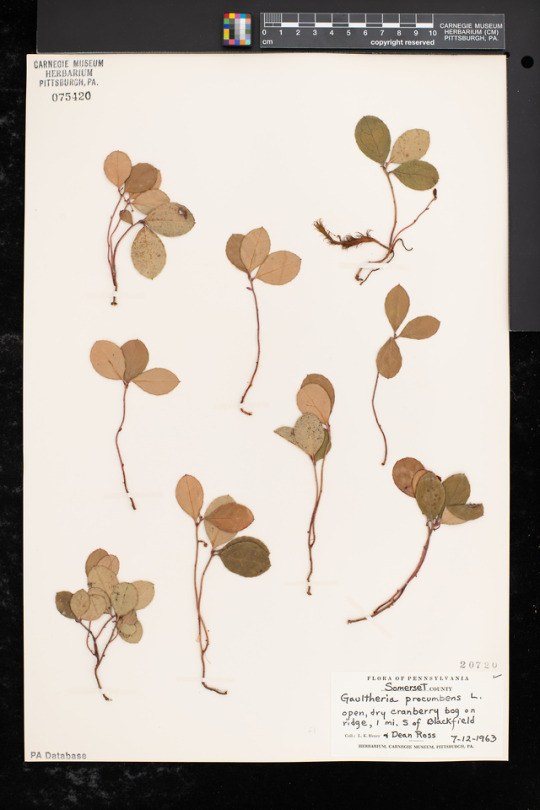
Who Likes Teaberry? Collected 56 Years Ago

teaberry specimen

This specimen of eastern teaberry (Gaultheria procumbens), also called American wintergreen, was collected on July 12, 1963 by Leroy Henry (Carnegie Museum Curator of Botany at the time) and Dean Ross in a cranberry bog in Somerset county, Pennsylvania.

It is perhaps best known by many as a unique wintergreen flavor of chewing gum and ice cream, especially in Pennsylvania. Atlas Obscura says Teaberry ice cream: “sometimes looks like Pepto-Bismol and smells like Bengay.” Penn State Berkey Creamery calls it  the  “best treat of a bygone era.”

Teaberry is in the heath (blueberry) family, Ericaceae.  It is a small shrub growing along the ground, found across the Eastern US and has distinctive evergreen leaves.

Find a high resolution image of this teaberry specimen (and more) online at midatlanticherbaria.org.

Check back for more! Botanists at the Carnegie Museum of Natural History share digital specimens from the herbarium on dates they were collected. They have embarked on a three-year project to digitize nearly 190,000 plant specimens collected in the region, making images and other data publicly available online. This effort is part of the Mid-Atlantic Megalopolis Project (mamdigitization.org), a network of thirteen herbaria spanning the densely populated urban corridor from Washington, D.C. to New York City to achieve a greater understanding of our urban areas, including the unique industrial and environmental history of the greater Pittsburgh region. This project is made possible by the National Science Foundation under grant no. 1801022.

Mason Heberling is Assistant Curator of Botany at the Carnegie Museum of Natural History. Museum employees are encouraged to blog about their unique experiences and knowledge gained from working at the museum.

Filed Under: Blog Tagged With: Anthropocene, Botany, collected on this day, Leroy Henry, Mason Heberling, plants

sidebar

About

  • Mission & Commitments
  • Directors Team
  • Museum History

Get Involved

  • Volunteer
  • Membership
  • Carnegie Discoverers
  • Donate
  • Employment
  • Events

Bring a Group

  • Groups of 10 or More
  • Birthday Parties at the Museum
  • Field Trips

Powdermill

  • Powdermill Nature Reserve
  • Powdermill Field Trips
  • Powdermill Staff
  • Research at Powdermill

More Information

  • Image Permission Requests
  • Science Stories
  • Accessibility
  • Shopping Cart
  • Contact
  • Visitor Policies
One of the Four Carnegie Museums | © Carnegie Institute | Privacy Policy | Terms of Use | Accessibility
Rad works here logo