• Skip to primary navigation
  • Skip to main content
  • Skip to primary sidebar

Carnegie Museum of Natural History

One of the Four Carnegie Museums of Pittsburgh

  • Visit
    • Buy Tickets
    • Visitor Information
    • Exhibitions
    • Events
    • Dining at the Museum
    • Celebrate at the Museum
    • Powdermill Nature Reserve
    • Event Venue Rental
  • Learn
    • Field Trips
    • Educator Information
    • Programs at the Museum
    • Bring the Museum to You
    • Guided Programs FAQ
    • Programs Online
    • Climate and Rural Systems Partnership
  • Research
    • Scientific Sections
    • Science Stories
    • Science Videos
    • Senior Science & Research Staff
    • Museum Library
    • Science Seminars
    • Scientific Publications
    • Specimen and Artifact Identification
  • About
    • Mission & Commitments
    • Directors Team
    • Museum History
  • Tickets
  • Give
  • Shop

Nicole Heller

June 12, 2020 by wpengine

The inequity of summer heat

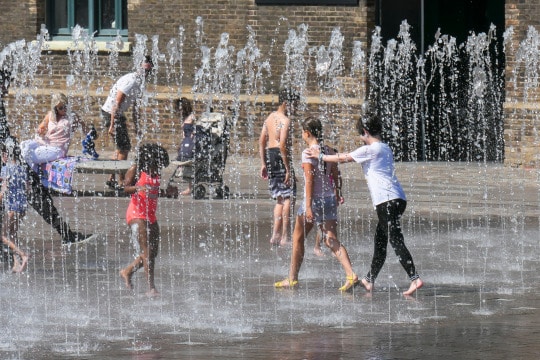
photo of kids playing in a fountain

Ah, summertime! In Pittsburgh, after months of cold, grey days, the warm temperatures and sunshine bring a collective sigh of relief. Plants are roaring back, coloring the world green. Animals are out and about singing and foraging; people are picnicking, barbequing, gardening. Life feels abundant. But summer can quickly become oppressive, even deadly, if it gets too hot. Extreme heat is among the deadliest weather-related phenomena in the US, and cities are most at risk for this hazard.

The concentration of impervious surfaces and low-rise buildings in cities raises temperatures significantly, creating what is termed the urban heat island effect. Temperatures in a single urban area can vary as much as 18 F depending on the density of the grey stuff (buildings, sidewalks, roadways, and parking lots) relative to the green stuff (trees, parks). The urban heat island effect also interacts with global climate change. Rising temperatures due to emissions of heat-trapping gases from the extraction and burning of fossil fuels is making urban communities increasingly vulnerable to extreme heat. And like so many other pressing issues in the early summer of 2020, namely the coronavirus pandemic and police violence, extreme heat is experienced inequitably.

In the US, communities of color and resource limited communities are both disproportionately exposed and sensitive to extreme heat. One recent study explores this climate inequity and its relationship to the historic racially discriminating housing policy, called ‘redlining’. In an analysis published in the journal Climate in January 2020, Jeremy Hoffman, Chief Scientist at the Science Museum in Virginia, and colleagues ask: “do historical policies of redlining help to explain current patterns of exposure to intra-urban heat in US cities? and how do these patterns vary by geographic location of cities?” As the study describes, in the 1930s, redlining distinguished neighborhoods that were considered “best” (outlined in green) and “hazardous” (outlined in red) for investment by the Home Owner’s Loan Corporation, a federally funded program. Categorization on a scale from A (best) to D (hazardous) was based largely on racial makeup. The program prioritized white neighborhoods for economic investment and access to credit. While the practice ended in 1968 with passage of the Fair Housing Act, its legacy has persisted in structuring the social-economic and ecological landscape of US cities today. The study examines the pattern of land surface temperatures in cities today in relation to historic housing policy.

The results for 108 urban areas in the United States can be explored in an open access article, and also shared through an explorable map. Overall, Hoffman and colleagues found that yes, for 94% of US cities, historical policies of redlining track surface land temperatures. Historically redlined neighborhoods are about 5 degrees F warmer on average today than historically greenlined neighborhoods. While temperature patterns within a city are complex and influenced by microclimates and other factors, the authors argue that the heat burden in redlined neighborhoods has been aggravated by housing policy. Redlined neighborhoods have significantly fewer trees, and an abundance of public highway projects and large building projects that create especially high asphalt to vegetation ratios.

Examining the map of the analysis in Pittsburgh, shows a complex relationship between redlining and land surface temperature, part of which I would guess reflects our extremely variable topography and a complex history of shifting neighborhood demographics associated with the boom and bust of the steel industry. I encourage you to investigate the results yourself.

Hoffman’s research demonstrates how structural inequities and institutional racism in the US affects people’s differential experience with the Anthropocene. Anthropocene challenges, like global warming and global pandemics, reveal the coupled dynamics among human social-economic-political systems and ecological-climate systems. They reveal the way that discriminatory race-based policies from the past animate the present. The experience of the pandemic, the experience of summer heat, the experience of poor air quality, the experience of police violence, the list goes on, are not evenly felt across communities. In the US, research shows time and time again that low resource communities and communities of color are disproportionately suffering. In the processes of doing sustainability and adaptation to address the Anthropocene, the work of undoing injustice is essential. In the case of increasing urban heat, as cities adapt, an important research and practice will involve work to ensure greening policies undo racial discriminatory neighborhood investing practices, while also ensuring protection from gentrification and displacement.

Putting research into practice, Hoffman in his role at the Science Museum of Virginia, is collaborating with youth community organization, Groundwork RVA, to build solutions to urban heat that are both low-cost and high impact. At CMNH’s Center for Anthropocene Studies we are inspired and motivated by the role that museums are playing in empowering communities to understand global change and build social equity and resilience.

Nicole Heller is Curator of Anthropocene Studies at the Carnegie Museum of Natural History. Museum employees are encouraged to blog about their unique experiences working at the museum.
Filed Under: Blog Tagged With: Anthropocene, Anthropocene Living Room, Anthropocene Section, Anthropocene Studies, Museum from Home, Nicole Heller, Science News

March 9, 2020 by wpengine

I love this interspecies friendship!

I confess I am not big on social media, but occasionally I see something that I can’t stop watching. This short clip caught on a wildlife camera in San Jose, California shows a coyote leading a badger though a culvert under a highway. And I am not alone in appreciation as this post has gone viral with millions of views! Simply put, this duo is absurdly cute. I can’t stop watching. While it is well established scientifically that coyotes and badgers hunt together, this video conveys so much more. The way the coyote leaps playfully, tail wagging, beckoning his short-legged little friend to follow conveys friendship. It conveys two buddies out for an adventure. 

View this post on Instagram

🐾 Our wildlife cameras spotted this coyote and badger traveling together through a culvert (tunnel) under a highway in the South Bay. We believe this is the first observation of its kind documenting these two together. Studies have shown that a badger and coyote hunting together can be beneficial for both species, as they pursue favorite prey such as ground squirrels. Maybe that’s where they’re headed? See what else our wildlife cameras have spotted with the link in our profile or at openspacetrust.org/blog/wildlife. Video: @peninsulaopenspacetrust / @pathways_for_wildlife . . . #Coyote #Badger #Wildlife #BayAreaWildlife #WildlifeCameras #WidlifeMovement #CuteAnimals #Animals #CoyoteAndBadger

A post shared by POST – Open Space For All (@peninsulaopenspacetrust) on Feb 4, 2020 at 10:25am PST

There are so many examples of non-human animals, individuals of the same species and of different species, interacting in complex ways that reveal their unique personalities, friendships, kindness, and dare I say, love. Traits or expressions we tend to confer only to humans for fear of anthropomorphizing, a big no-no in science. (For example, see this national geographic blog about this coyote-badger video). And yet I would argue that the most apt description of these behaviors is to describe them with the same words we would use to describe them in humans. Our brains are similar. These arguments are well developed by ecologist Carl Safina, in his best-selling book Beyond Words, and summarized here in this powerful TEDX talk.

A recent study about African grey parrots also captured the surprise of scientists. African grey parrots were very helpful in sharing tokens to other parrots so that parrot could exchange the token for food. The helping parrots did this without any direct reward for themselves. This type of helping behavior, most simply described as generosity or kindness, is surprising to scientists and many expressed doubt that it is real. Why? Other creatures are our close kin. We share the same nervous systems. It makes sense that we also share feelings and thoughts, emotional and social lives too. I think this is obvious to anyone who has a pet. For this badger and coyote pair, why shouldn’t we all, scientists alike, call it a friendship? Which raises another question: if we start calling these behaviors friendship, without fear of anthropomorphizing, might this help us to better empathize with our fellow animal kin and take better care of them and the Earth?  

I wonder.

Nicole Heller is Curator of the Anthropocene for Carnegie Museum of Natural History. Museum employees are encouraged to blog about their unique experiences working at the museum.
This video was captured by Peninsula Open Space Trust (POST), a land trust nonprofit where Heller worked as the Director of Conservation Science prior to joining the museum. POST is doing terrific conservation work to make the busy San Francisco Bay Area safe for wildlife to move around, find habitat, and successfully reproduce in the face of daily human traffic and long-term urban growth and climate change.

Filed Under: Blog Tagged With: Anthropocene, Nicole Heller, Science News, We Are Nature 2

October 16, 2019 by wpengine

Buried histories, alternative histories, toward a clean and just future

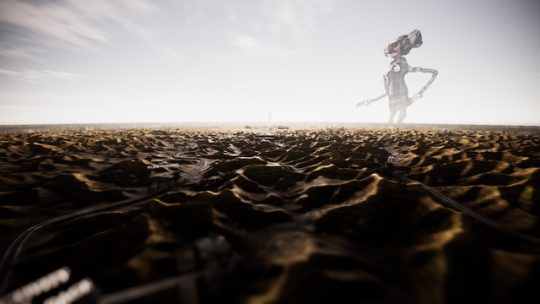
Image from Fire Underground, Nick Crockett, 2019

As part of ongoing Anthropocene engagement at the Carnegie Museum of Natural History, we aim to support transdisciplinary conversations about urgent issues facing our community. Through dialogue we hope to spur creative exploration about the interconnectivity of nature and people across time, and thinking towards a clean and just future.

Toward this goal, we are super excited to host our inspiring colleagues from The Natural History Museum next week, October 23 – 26, in Pittsburgh as part of their event series, Power Beyond Extraction. The series examines power in terms of both energy and the people power needed to bring about the just transition to a clean energy economy.  The Natural History Museum and the House of Tears Carvers of the Lummi Nation collaborated with us two years ago in producing a powerful program and exhibition about indigenous leadership in US struggles to protect land and water, entitled, Kwel’ Hoy: We Draw the Line!

Next week’s event series is organized to coincide with the Shale Insight Conference, an annual convening and conversation about the future of energy that is hosted by the petrochemical industry. Power Beyond Extraction invites community leaders, activists, artists, and scholars to contribute to this conversation of regional, international, and inter-generational importance.

At the Carnegie Museums of Art and Natural History, we are co-hosting two events in the series.

First, on Thursday evening, October 24 in the CMOA theater from 6 – 8:30 p.m. join us in a free community conversation. A Buried Conversation is planned to kick-off with a selection of coal mining songs performed by labor leader and professional musician Joe Uehlein. Then Uehlein along with a selection of other coal scholars and activists will join together for a panel discussion about the joint history of coal and the history of labor. Exploring how the long struggle for work with dignity can inform a just transition that supports both clean energy and good jobs.

Second, please join us from 2 – 4 p.m. on Saturday October 26, for another free event and special dialogue held in the CMOA theater. We will be screening Fire Underground, a feature length fantasy animation presenting an alternative history of coal. After the screening, the artist, Nick Crockett will be there to discuss the film in dialogue with CMNH’s Director of Science and Research, Steve Tonsor, and art historian and member of The Natural History Museum, Steve Lyons.

I was especially inspired to share Fire Underground at our museum after Nick told me about his time hanging out in the galleries and the influence that the experience had in spurring his imagination and making this film. You can spot the inspired critters and landscape in the eerily familiar and unfamiliar world Crockett animates to journey through layers of deep time from ancient carboniferous forests to the speculative present.

Nicole Heller is Curator of the Anthropocene for Carnegie Museum of Natural History. Museum employees are encouraged to blog about their unique experiences working at the museum.

Filed Under: Blog Tagged With: Anthropocene, Nicole Heller, We Are Nature

January 24, 2019 by wpengine

Anthropocene Living Room

Welcome to the Anthropocene Living Room, a new space in the museum inspired by how humans have and will continue to shape natural history and nature. Hear Dr. Nicole Heller, Curator of the Anthropocene, share her vision for the space and introduce its various elements including items from our collections, books, and other tools for reflection and learning.

Filed Under: Blog Tagged With: Anthropocene, Anthropocene Living Room, climate change, nature, Nicole Heller

October 1, 2018 by Kathleen

Scientists Live: Nicole Heller

How can a jar of sand illustrate the impact of humans on the Earth?Nicole Heller, Curator of the Anthropocene, will do a broadcast on Facebook Live to share items in the Carnegie Museum of Natural History collections that relate to the essay collection Future Remains: A Cabinet of Curiosities for the Anthropocene. Dr. Heller co-wrote the lead essay “Anthropocene in a Jar” with Assistant Professor in Anthropology at the University of Pittsburgh, Dr. Tomas Matza. The essay mediates on the blurry boundaries, and often vexed relationship, between human development and natural processes through the lens of a jar of curiously patterned sand and shells collected at Wrightsville Beach.
The broadcast will begin at 10:30 a.m. and will include a question and answer segment.

Tune in at facebook.com/carnegiemnh. A recording will be posted later for those unable to watch live.


Tagged With: Anthropocene, Nicole Heller, Scientists Live

July 13, 2018 by wpengine

Migrate or Die

By Dr. Nicole Heller

Becoming Migrant was this year’s theme for the Carnegie Nexus. The series explored the science and art of passage through creative programming. Migration is a very important issue for wildlife conservation in the Anthropocene. Roads and building developments heavily fragment landscapes, leading more animals to be hit by cars or run into trouble with people. Movement is especially hard for animals that don’t fly and need large home ranges to gather sufficient food, such as American Black Bears and bobcats, two large mammal species that live here in Allegheny County.

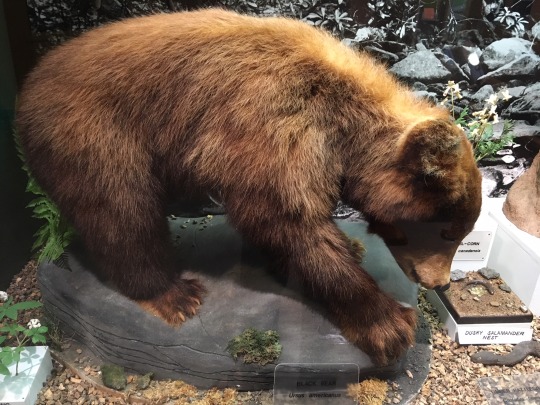
baby black bear taxidermy
Baby black bear, Ursus americanus, on display at Powdermill Nature Reserve.

Conservation has long recognized the need to create connectivity between protected areas to support the movement of large mammals in the landscape, but with climate change, connectivity has become paramount to the long-term success of protected areas and species in general.  As the climate changes, plants and animals must migrate to track suitable climate conditions.  This means that more species are becoming migrant, and their long-term survival depends on it.

Prioritizing connectivity planning and making sure we do it in ways that are climate-smart is a leading edge of conservation science.  There are many different types of corridor projects, from building crossings over particularly dangerous roads, such as the Liberty Canyon Wildlife Crossing in Los Angeles, CA. Or large-landscape connectivity projects to create continental migration pathways such as Y2Y project.

I first wrote about climate adaptation 10 years ago. In this research, I identified that the most impactful thing we could do to help species survive climate change is to create habitat connectivity in the landscape. Recently, I published two scientific articles, with a group of colleagues, further exploring the issue of climate change and connectivity. In one paper, published in Environmental Research Letters, we explore the best models and methods for incorporating climate change into connectivity conservation planning. And in the other paper, published in Conservation Biology, we consider best practices to take corridors from idea to implementation on the ground.

We hope this information will be helpful to conservation groups around the world who are working to make sure the landscape supports wildlife today and into the future.

Dr. Nicole Heller is Curator of the Anthropocene for Carnegie Museum of Natural History. Museum employees are encouraged to blog about their unique experiences working at the museum.

Filed Under: Blog Tagged With: Anthropocene, climate change, Nicole Heller, We Are Nature, We Are Nature: Living in the Anthropocene

  • « Go to Previous Page
  • Page 1
  • Page 2

sidebar

About

  • Mission & Commitments
  • Directors Team
  • Museum History

Get Involved

  • Volunteer
  • Membership
  • Carnegie Discoverers
  • Donate
  • Employment
  • Events

Bring a Group

  • Groups of 10 or More
  • Birthday Parties at the Museum
  • Field Trips

Powdermill

  • Powdermill Nature Reserve
  • Powdermill Field Trips
  • Powdermill Staff
  • Research at Powdermill

More Information

  • Image Permission Requests
  • Science Stories
  • Accessibility
  • Shopping Cart
  • Contact
  • Visitor Policies
One of the Four Carnegie Museums | © Carnegie Institute | Privacy Policy | Terms of Use | Accessibility
Rad works here logo