• Skip to primary navigation
  • Skip to main content
  • Skip to primary sidebar

Carnegie Museum of Natural History

One of the Four Carnegie Museums of Pittsburgh

  • Visit
    • Buy Tickets
    • Visitor Information
    • Exhibitions
    • Events
    • Dining at the Museum
    • Celebrate at the Museum
    • Powdermill Nature Reserve
    • Event Venue Rental
  • Learn
    • Field Trips
    • Educator Information
    • Programs at the Museum
    • Bring the Museum to You
    • Guided Programs FAQ
    • Programs Online
    • Climate and Rural Systems Partnership
  • Research
    • Scientific Sections
    • Science Stories
    • Science Videos
    • Senior Science & Research Staff
    • Museum Library
    • Science Seminars
    • Scientific Publications
    • Specimen and Artifact Identification
  • About
    • Mission & Commitments
    • Directors Team
    • Museum History
  • Tickets
  • Give
  • Shop

plastics

May 7, 2018 by wpengine

Is Plastic Natural?

By Rachael Carlberg

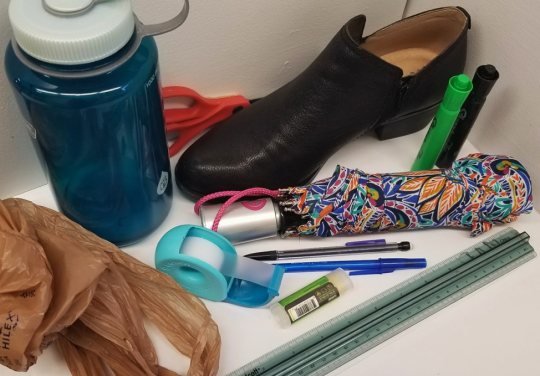
Items made with plastic: water bottle, shoe, scissors, umbrella, pens, chapstick, grocery bag, tape dispenser.

Nothing seems more man-made than plastic.  It surrounds us everywhere, indoors and out. How many of the things around you right now have plastic in them?  Do your clothes, electronic devices, furniture, and other everyday objects have plastic parts?  All of us can answer “yes” to that.  At first thought, the only connection plastic has with nature is that it often mistakenly ends up in nature.  So does plastic have any connection to the earth besides the one that humans so frequently create by creating waste?

What many of us don’t realize is that the production of plastic has beginnings in nature.  To begin making plastic, companies harvest crude oil, a naturally occurring fossil fuel from the earth.  That oil (or sometimes natural gas) is converted through different processes into chemicals that are used to make products we recognize and rely upon.

It may seem unlikely that plastic, which looks and feels like it should have no connection to nature, has its beginnings in natural substances.  But, like many other aspects of our lives, it is intertwined with and dependent on nature for its existence.

As an intern in the Education department of Carnegie Museum of Natural History, Rachael Carlberg wrote blog posts related to ideas presented in We Are Nature. Museum employees are encouraged to blog about their unique experiences of working at the museum.
Filed Under: Blog Tagged With: Anthropocene, plastics, We Are Nature, We Are Nature: Living in the Anthropocene

April 6, 2018 by wpengine

Do Animals Use Plastic?

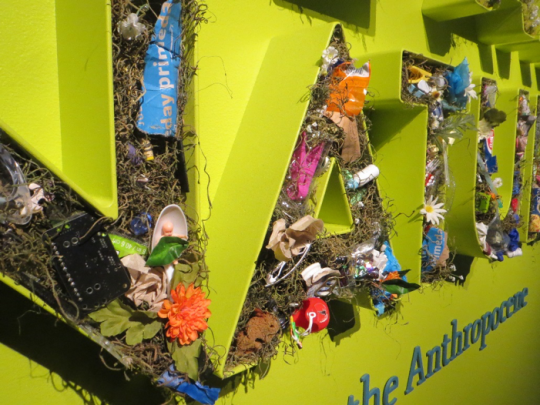
A colorful wall with 3D letters spelling We Are Nature
An array of plastic items adds color to the entrance gallery of We Are Nature.

In this age of the Anthropocene, people are beginning to recognize our lasting impacts on the natural world.  Plastic litter is infamous for its negative effects on the environment, but a sometimes-forgotten consequence is the changes to animal behavior that plastic elicits.

Now that plastic exists as a readily available substance in the environment, birds and nest-building mammals such as squirrels and opossums, frequently incorporate plastic materials into their nests.  In terms of size, weight, and flexibility, items like straws, string, rope, and plastic bags resemble the varieties of moss, twigs, leaves, and even snakeskin pieces that many nest-building species have long used.

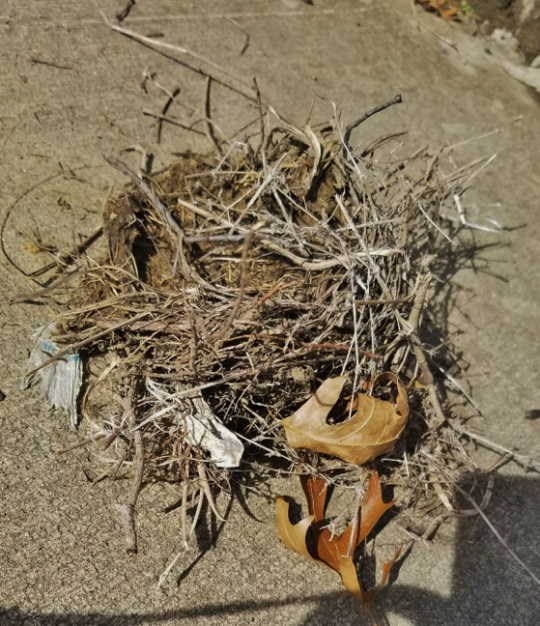
nest made mostly from twigs but mised with plastic
American Robin nest featuring plastic bag pieces (lower left-hand corner) woven into natural materials.

Hal H. Harrison, author of the Peterson Field Guide to Bird’s Nests, mentions the presence of a Baltimore Oriole nest made entirely of fishing line in Allegheny County’s North Park, and the “nest of a Wood Thrush made entirely of paper napkins, Kleenex, toilet paper gathered from a nearby picnic area” in Clarion County’s Cook Forest.  These observations, and possibly your own, reveal how local birds sometimes substitute human-made materials for natural ones.

It’s still unclear if the incorporation of plastic into nests has long-term consequences for nest-builders and their offspring.  The widespread availability of plastic pieces as nesting material, however, does serve as an indicator of the extreme prevalence of plastic litter in the environment.


Rachael Carlberg is an intern in the Education Department of Carnegie Museum of Natural History. Museum employees are encouraged to blog about their unique experiences of working at the museum.

Filed Under: Blog Tagged With: plastics, We Are Nature, We Are Nature: Living in the Anthropocene

March 1, 2018 by wpengine

Allie Frownfelter, Bottle Thread

woman modeling sustainable clothing

In May 2017, Allie Frownfelter launched Bottle Thread, a sustainability company in Pittsburgh that designs and sells clothing made from recycled plastic. She loves Pittsburgh and wants to give back to a city that is solving its own environmental problems. Inspired by her own mother’s kitchen and bath remodeling company while leaving
in Reading, Penn., she saw first-hand what it meant to provide a high quality service to customers.

“When I was ten my mom renovated a house and sold it for a profit,” says Frownfelter. “My brothers and I would be alongside her helping lay tile, replace cabinets, and update the electric. Learning all that at such a young age let me know that creating a business wasn’t as scary as it needed to be.”

Frownfelter would eventually go to college and settled into Chatham University as a sustainability major. In her last year, she created a business plan for Bottle Thread and researched ways to raise capital. She graduated in 2017 and set out to make a difference in a world overrun with plastic waste.

“I found a problem, I wanted a solution for it, and the company came from there,” says Frownfelter. “I’m just one of the first to make an essential point of using sustainable materials.”

According to a recent National Geographic report, the world amassed 6.3 million metric tons of plastic waste and only 9% was recycled. This leaves an environmental question of what to do with the remaining waste that is left in landfills or finding their way into the oceans.

Bottle Thread has three basic clothing designs: a tailored button down shirt for women and men and a dress. The pieces are wrinkle free and moisture wicking. The shirts are made from up to 50 plastic bottles and does not require ironing.

“I just wanted to make the best possible button up top for women. With 10 cents more per unit, I was able to move into different types of fabric. It was everything I was looking into for a fabric but it’s a lot more sustainable.”

Frownfelter is proud to have her clothing line made in America. The fabric and shirts are produced by California-based companies that offer ethical wages to their employees. That is key to Bottle Thread’s business ethos which requires all levels of business to be ethical, equitable, and sustainable.

She says, “The three pillars of sustainability are economics, environment, and ethics. So we have to ask ourselves, ‘Is it affordable? How does it affect the planet? And, who’s making it and how do we treat them?’”

So, how does plastic become a textile? Once plastic bottles find their way to a recycling facility, they get melted down into small pellets and stretched into fibers. According to Frownfelter, it is a form of polyester and the fibers get pulled into threads and used to make materials like canvas and athletic performance attire.

The fashion industry is taking note of sustainable fashion and making efforts to use data to support business decisions such as product design and supply chain. Using a Life Cycle Assessment, designers like Frownfelter can lessen the impact of the production of their product on the environment.  With these unique challenges and advantages, consumers must be educated about their clothing options and how it’s related to the environment. For now, she sees her business model as more than just a recycling effort but a lifestyle change.

“I’m just about making the best quality product for the environment,” she says. “Sustainability is about scalability.”

Bottle Thread is currently in the production phase and expect their first shipment of products for sale the beginning of March.  Frownfelter is primarily focused on fulfilling orders, reordering, and promoting the idea of sustainable fashions. Over the next month, Bottle Thread will be in several photo shoots and building their social media strategy.

Bottle Thread will be a part of a sustainable fashion show at Chatham University on March 22 in the Mellon Boardroom. For more information, contact Allie Frownfelter at A.Frownfelter@chatham.edu.

________________________________________________________________

In the spirit of recognizing all we are already doing in Pittsburgh, we have started a new blog series to compliment We Are Nature: Living in the Anthropocene, the exhibition about the complex relationship between humans and nature currently on display at Carnegie Museum of Natural History. We are featuring Pittsburghers who are committed to improving the environment in which we live. Each blog features a new individual and shares some of the ways in which they are helping issues of sustainability, conservation, restoration, climate change, or helping Pittsburgh to be an even more beautiful place to live.

Filed Under: Blog Tagged With: plastics, We Are Nature, We Are Nature: Living in the Anthropocene

sidebar

About

  • Mission & Commitments
  • Directors Team
  • Museum History

Get Involved

  • Volunteer
  • Membership
  • Carnegie Discoverers
  • Donate
  • Employment
  • Events

Bring a Group

  • Groups of 10 or More
  • Birthday Parties at the Museum
  • Field Trips

Powdermill

  • Powdermill Nature Reserve
  • Powdermill Field Trips
  • Powdermill Staff
  • Research at Powdermill

More Information

  • Image Permission Requests
  • Science Stories
  • Accessibility
  • Shopping Cart
  • Contact
  • Visitor Policies
One of the Four Carnegie Museums | © Carnegie Institute | Privacy Policy | Terms of Use | Accessibility
Rad works here logo
