• Skip to primary navigation
  • Skip to main content
  • Skip to primary sidebar

Carnegie Museum of Natural History

One of the Four Carnegie Museums of Pittsburgh

  • Visit
    • Buy Tickets
    • Visitor Information
    • Exhibitions
    • Events
    • Dining at the Museum
    • Celebrate at the Museum
    • Powdermill Nature Reserve
    • Event Venue Rental
  • Learn
    • Field Trips
    • Educator Information
    • Programs at the Museum
    • Bring the Museum to You
    • Guided Programs FAQ
    • Programs Online
    • Climate and Rural Systems Partnership
  • Research
    • Scientific Sections
    • Science Stories
    • Science Videos
    • Senior Science & Research Staff
    • Museum Library
    • Science Seminars
    • Scientific Publications
    • Specimen and Artifact Identification
  • About
    • Mission & Commitments
    • Directors Team
    • Museum History
  • Tickets
  • Give
  • Shop

pollution

October 1, 2018 by wpengine

A Day at the Beach: The Anthropocene on Vacation

by Bob Jones

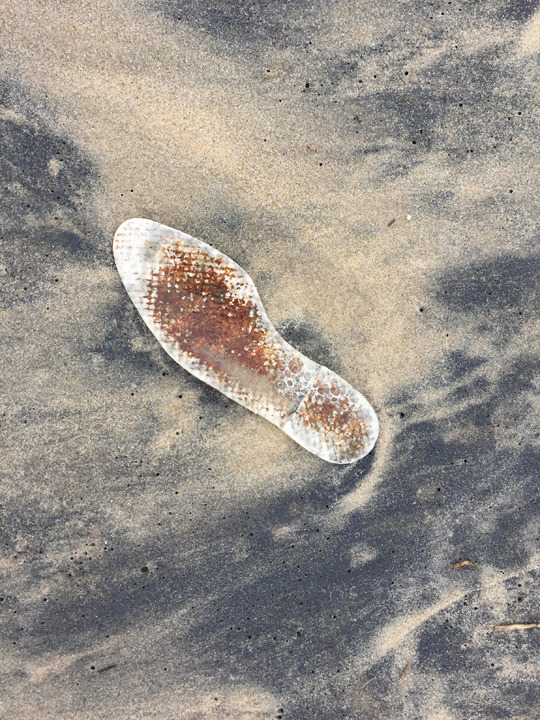
shoe insole on the beach

While on vacation, my wife and I took a morning walk on the beach to enjoy the sights and sounds of the surf while getting some exercise. The beach was mostly empty this morning and the sky was grey with the storm warnings of Hurricane Florence approaching to the south of our location in Delaware. It didn’t take long to notice a disturbing sight as we made our way on the sand. Plastic trash and lots of it. Bottles, bottle caps, beach toys, cups, straws, food containers, shoes, insoles, cigar tips and lots more. From a distance things look fine. Some clumps of seaweed on the sand. Just another day at the beach. Upon closer inspection, there are a wide variety of multi-colored bits of debris mixed throughout the tangles.
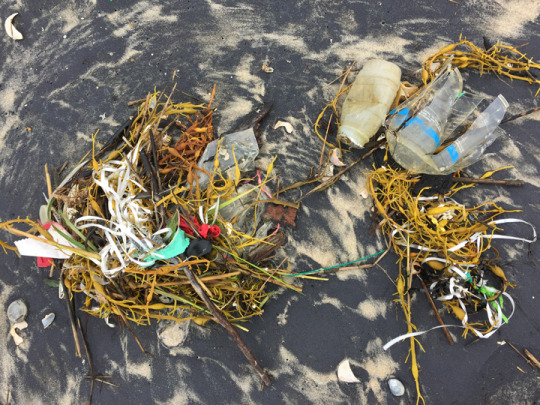
litter and seaweed on the beach

Since participating in the recent exhibition We Are Nature: Living in the Anthropocene at the Carnegie Museum of Natural History my awareness of our impact on the world that we inhabit has been raised to a new level. Of course, I’ve noticed trash on the beach in years past but the gradual increase over time is insidious in its’ nature. It creeps up on you slowly, so you hardly notice. It’s a bit like the metaphor of boiling a frog. The premise is that if a frog is put suddenly into boiling water, it will jump out, but if the frog is put in tepid water which is then brought to a boil slowly, it will not perceive the danger and will be cooked to death. I used to be more aware of avoiding stepping on jagged seashells, but now I find myself avoiding treading on the trash left on and washed up on the beach.

Don’t get me wrong, it’s not yet at an epidemic proportion at this location, but why wait until it reaches that point to act? To be honest, I couldn’t tell you if it was this bad last year or if I’m more conscious of it now. Either way, I want to share my experience and hopefully encourage others to make improvements wherever we can. After taking pictures to document the situation I felt the need to grab a trash bag and start collecting the debris for disposal. I realize that this is a big problem and it is easy to become overwhelmed. My first response is disgust and anger at the lack of care and respect that people give to the environment. My next response is, “What’s the use? Even If I bag this up it’s just sending the problem to another location.” My best response is to act with a purpose. I know that I’m just one person, but if one person can influence one other, ten others, a hundred others, to make a positive change then we have the potential to create a movement. With enough momentum, we can hold back the tide of trash and plastic that is choking our oceans and rivers.
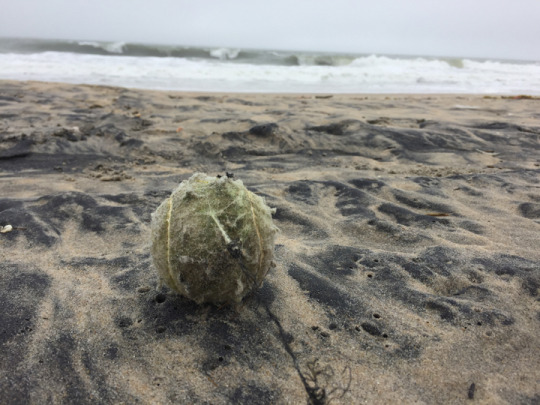
tennis ball on the beach

I am old enough to remember when the air in Pittsburgh was so bad that it was impossible to see 100 feet ahead in the morning because of all the pollution released from the mills during the night. As a boy, I used to think that the buildings in downtown and Oakland were constructed with black stone because of the amount of soot built up on their surface. I was amazed when they were sandblasted in the 1980s and 90’s to reveal the brightness of the granite that lay beneath the layer of grime. The Monongahela River was thick with sludge and garbage being dumped into the water rendering it unsafe to swim in. My brother and I used to fish from the shore in the SouthSide snagging way more old tires and junk than fish. The only fish in the rivers were carp and catfish. Today, they hold tournaments to catch bass in the three rivers. That is a phenomenal improvement. In the last forty years, we have made tremendous improvements by addressing what the problem is and taking corrective action.

It is up to each one of us to not only recognize the problems that we face, but to seek and apply solutions to put things right. I was taught that when spending any time in nature I should leave things in better condition than I found them. The simple act of picking up trash and erasing any signs that I had been there is a step in the right direction. The importance of leaving the environment in good shape so the next person can enjoy the wonders of nature, as it is intended. Working together we can make a difference.

Bob Jones is the Print Shop Manager at the Carnegie Museum of Natural History. Museum employees are encouraged to blog about their unique experiences and knowledge gained from working at the museum.
Filed Under: Blog Tagged With: Anthropocene, Bob Jones, climate change, pollution

September 4, 2018 by wpengine

Smoke Scenery

by Pat McShea

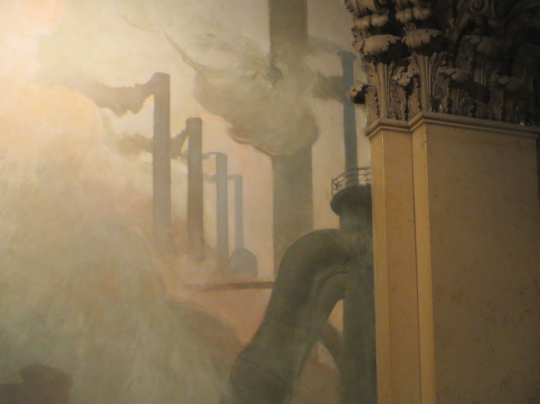
Detail from The Apotheosis of Pittsburgh mural by John White Alexander

A museum educator from Norway offered a novel way to interpret We Are Nature: Living in the Anthropocene. “This should be part of the story.” explained Bergsveinn Thorssonas he gestured at century-old steel industry scenes depicted in second-floor portions of the multi-level grand staircase mural painted by John White Alexander.

Thorsson, a PhD student who is studying how museums present current environmental issues, was fascinated by the smoky scenes and their marble pillar frames. “Owning our industrial history is important to understanding our current situation.” he added before conceding that he didn’t have advice for accomplishing such a task.

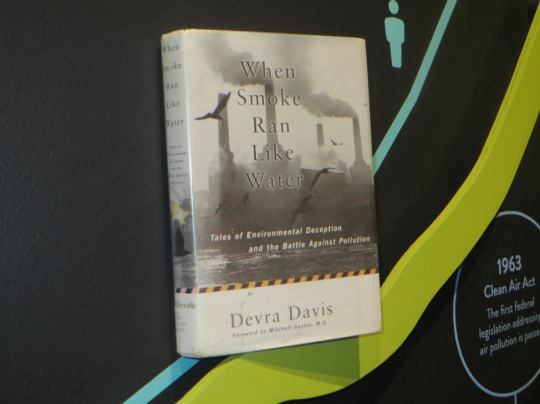
A copy of When Smoke Ran Like Waterpositioned at the 1948 mark on the population and atmospheric carbon level graph in We Are Nature
A copy of When Smoke Ran Like Water positioned at the 1948 mark on the population and atmospheric carbon level graph in We Are Nature

Since 2002, an excellent book-form model of industrial acknowledgement has existed in When Smoke Ran Like Water, by Donora, Pennsylvania native Devra Davis. The book, which Davis summarizes as an argument for “a fundamentally new way of thinking about health and the environment,” begins with a recounting of the most significant air pollution disaster in the United States – the build-up in Donora, some 25 miles southeast of Pittsburgh, during a five-day period in late October 1948, of a toxic fog of steel and zinc industry emissions that resulted in 20 deaths and 600 hospitalizations.

In Davis’s account, family histories, with all their hopes, accomplishments, and compromises, are central to the tragedy. A quote from her mother captures a common attitude toward the smoky scenery: “Look, today they might call it pollution. Back then it was just a living.”

Patrick McShea works in the Education and Visitor Experience department of Carnegie Museum of Natural History. Museum employees are encouraged to blog about their unique experiences and knowledge gained from working at the museum.
Filed Under: Blog Tagged With: Anthropocene, Pittsburgh, pollution, We Are Nature, We Are Nature 2, We Are Nature: Living in the Anthropocene

January 22, 2018 by wpengine

What’s a Nurdle?

by Rachael Carlberg

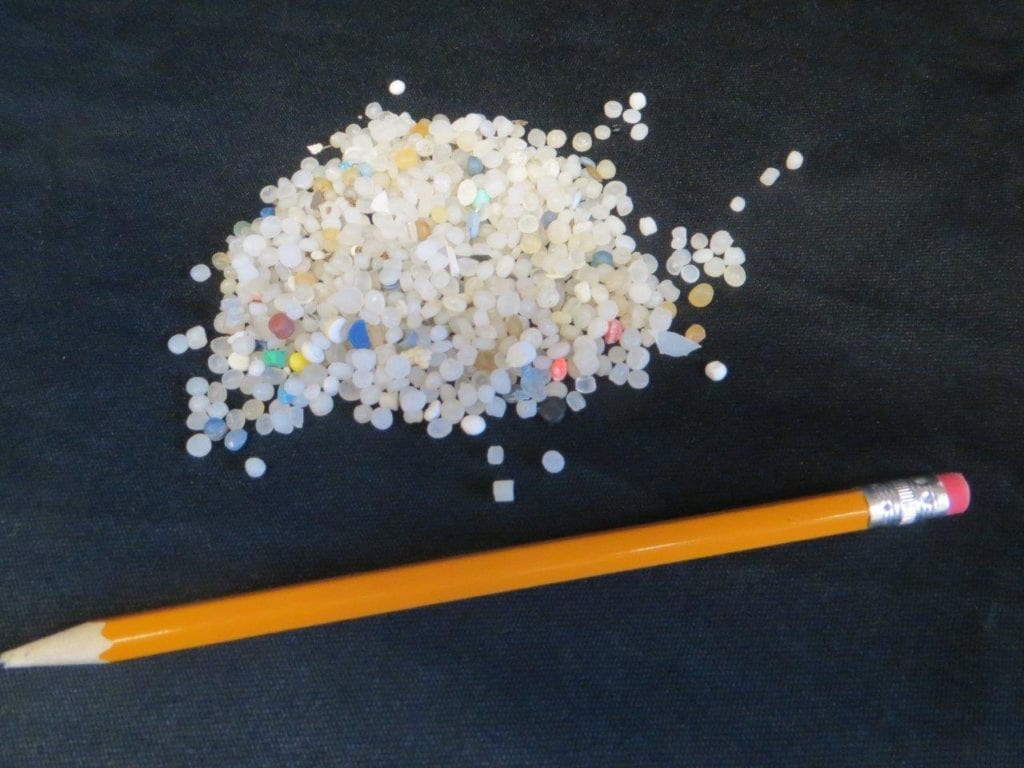
small plastic balls about the size of a pencil eraser
Example of nurdles

Nurdle is a silly word for a product with not-so-silly effects. Nurdles are small pellets that are the first step in the process of making any plastic thing.  Your plastic containers, bags, and bottles were all once nurdles.

Every nurdle is created to be melted down and turned into a product used by humans.  But, that often isn’t the case. Through leaks, spills, and other storage or transportation errors, nurdles end up in the environment, eventually making their way to the ocean.

So, what’s the big deal?  Little plastic pellets can’t really cause any harm, right?

Wrong. Once in the ocean, nurdles can cause a myriad of issues.  For one, many pollutants are attracted to the surface of nurdles, causing higher rates of toxicity in the water around them. Nurdles also are eaten by many organisms mistaking them for plankton or other food.  Once in the ocean, nurdles don’t go away.  Over time, they will break up into smaller and smaller particles, but will always be out in the environment unless removed by humans.

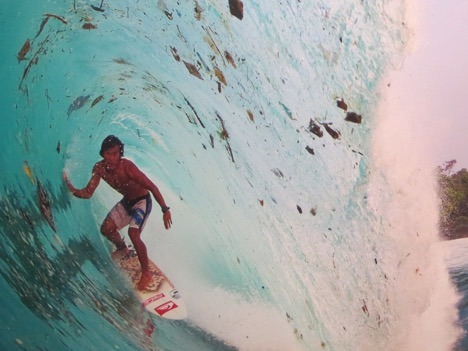
man surfing in a wave full of trash
(Plastic pieces are among the debris depicted in this photo mural in We Are Nature: Living in the Anthropocene.)

The good news is people can do something about the problem.  Reusing plastic containers or switching to alternatives (for example, using a refillable water bottle instead of disposable ones) reduces the need for new plastic products to be made.  If you live near a body of water where nurdles or any plastic waste are present, you can join in on cleanup efforts or start your own cleanup of the area.

Rachael Carlberg is an intern in the Education department of Carnegie Museum of Natural History. Museum employees are encouraged to blog about their unique experiences of working at the museum.

Filed Under: Blog Tagged With: pollution, Rachael Carlberg, We Are Nature, We Are Nature: Living in the Anthropocene

January 1, 2018 by wpengine

Humans and Nature: River Otters

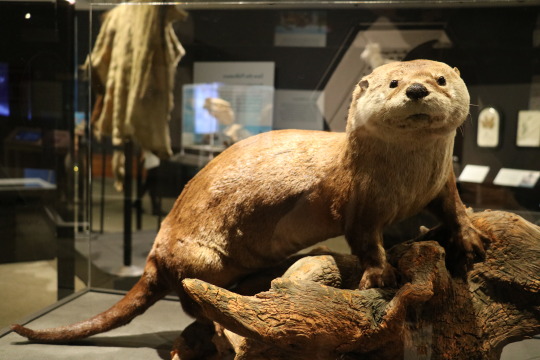
river otter specimen in We Are Nature

Usually, we hear about how human activity negatively impacts wildlife populations, but the inverse can also be true when conservationists make a concerted effort.

One local example is river otters in the state of Pennsylvania, which were in decline in the 20th century because of habitat destruction and river pollution. Conservationists recognized the problem and spent decades restoring their habitat and eventually reintroduced river otters in 1982. Their population have since thrived, and the project is heralded as one of the greatest success stories of modern conservancy.

Learn more about population rehabilitation in We Are Nature: Living in the Anthropocene, a new exhibition at Carnegie Museum of Natural History that explores the interconnectedness of humanity and nature in the Anthropocene.


The Anthropocene is the current geological era in which humans are making a profound impact on the geological strata. While the term itself is still being debated by geologists, the museum is embracing it as a social and cultural tool for exploring the broad sum effect humans are having on the planet in the exhibition We Are Nature: Living in the Anthropocene—open now through summer 2018.

Filed Under: Blog Tagged With: pollution, We Are Nature, We Are Nature: Living in the Anthropocene, western pennsylvania

sidebar

About

  • Mission & Commitments
  • Directors Team
  • Museum History

Get Involved

  • Volunteer
  • Membership
  • Carnegie Discoverers
  • Donate
  • Employment
  • Events

Bring a Group

  • Groups of 10 or More
  • Birthday Parties at the Museum
  • Field Trips

Powdermill

  • Powdermill Nature Reserve
  • Powdermill Field Trips
  • Powdermill Staff
  • Research at Powdermill

More Information

  • Image Permission Requests
  • Science Stories
  • Accessibility
  • Shopping Cart
  • Contact
  • Visitor Policies
One of the Four Carnegie Museums | © Carnegie Institute | Privacy Policy | Terms of Use | Accessibility
Rad works here logo