• Skip to primary navigation
  • Skip to main content
  • Skip to primary sidebar

Carnegie Museum of Natural History

One of the Four Carnegie Museums of Pittsburgh

  • Visit
    • Buy Tickets
    • Visitor Information
    • Exhibitions
    • Events
    • Dining at the Museum
    • Celebrate at the Museum
    • Powdermill Nature Reserve
    • Event Venue Rental
  • Learn
    • Field Trips
    • Educator Information
    • Programs at the Museum
    • Bring the Museum to You
    • Guided Programs FAQ
    • Programs Online
    • Climate and Rural Systems Partnership
  • Research
    • Scientific Sections
    • Science Stories
    • Science Videos
    • Senior Science & Research Staff
    • Museum Library
    • Science Seminars
    • Scientific Publications
    • Specimen and Artifact Identification
  • About
    • Mission & Commitments
    • Directors Team
    • Museum History
  • Tickets
  • Give
  • Shop

Tim Pearce

April 15, 2016 by wpengine

Scientists on Specimen ID

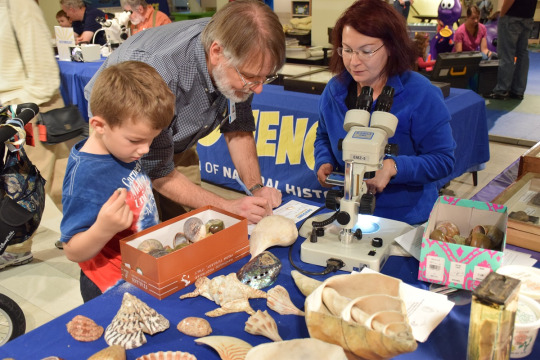
Scientists with child helping to identify shells
Above: Timothy Pearce, Assistant Curator of Mollusks, helps identify a specimen.

Can you stump the scientist?

Carnegie Museum of Natural History’s scientists will be available on Saturday, April 16 to identify objects that visitors have found in nature for Super Science: Specimen ID Day. 

These events are a unique experience for visitors, but also an interesting way for our scientists to interact with the public and test their knowledge!

Albert Kollar, Section of Invertebrate Paleontology, said that the number of places that people bring in specimens from is the part of Specimen ID Day that he finds most intriguing.

Kollar said he helped identify specimens collected from Pennsylvania, Ohio, western New York, Virginia, Maryland along the Chesapeake Bay, South Carolina and North Carolina’s underwater shoreline, Indiana, Missouri, and Colorado.

“That was fun and a challenge to review my knowledge,” he said. “Some of it was easy as it worked to my experiences of conducting research in many of those states excluding North and South Carolina.”

He said a little girl who collected fossils from the Falls of the Ohio rocks of Indiana was one of the best specimens brought to him at a Specimen ID Day.

Timothy Pearce, Assistant Curator of Mollusks, said someone brought in a fist-sized shell that looked like a cowry (appealingly shaped, attractive, shiny sea shells), but not like any cowry he had ever seen at a similar event.
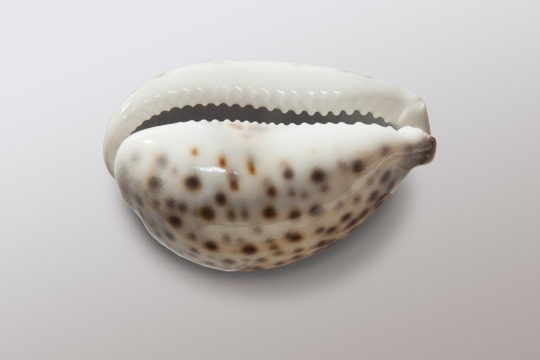
A cowry shell
A cowry

“We finally determined that it is actually the earbone of a whale, which is, interestingly, shaped very much like a cowry!” Pearce said. “This was way before we had Google Images, so it took a bit of sleuthing to track it down.”
Filed Under: Blog Tagged With: Albert Kollar, invertebrate paleontology, museums, Tim Pearce

February 24, 2016 by wpengine

Snail eating snails: two species become one

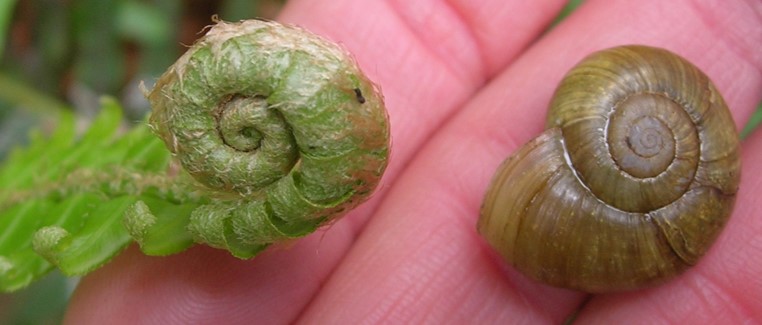
Two land snails Land snail
by Timothy Pearce

The land snail family Haplotrematidae is widespread in North America. They are omnivorous, eating other snails as well as plants. Western North America hosts most (16 of 18) species of this family that occur in the
United States and Canada. Some species are found under sword ferns where they might gain protection by mimicking fern fiddleheads (see figure of Haplotrema vancouverense beside a fiddlehead).

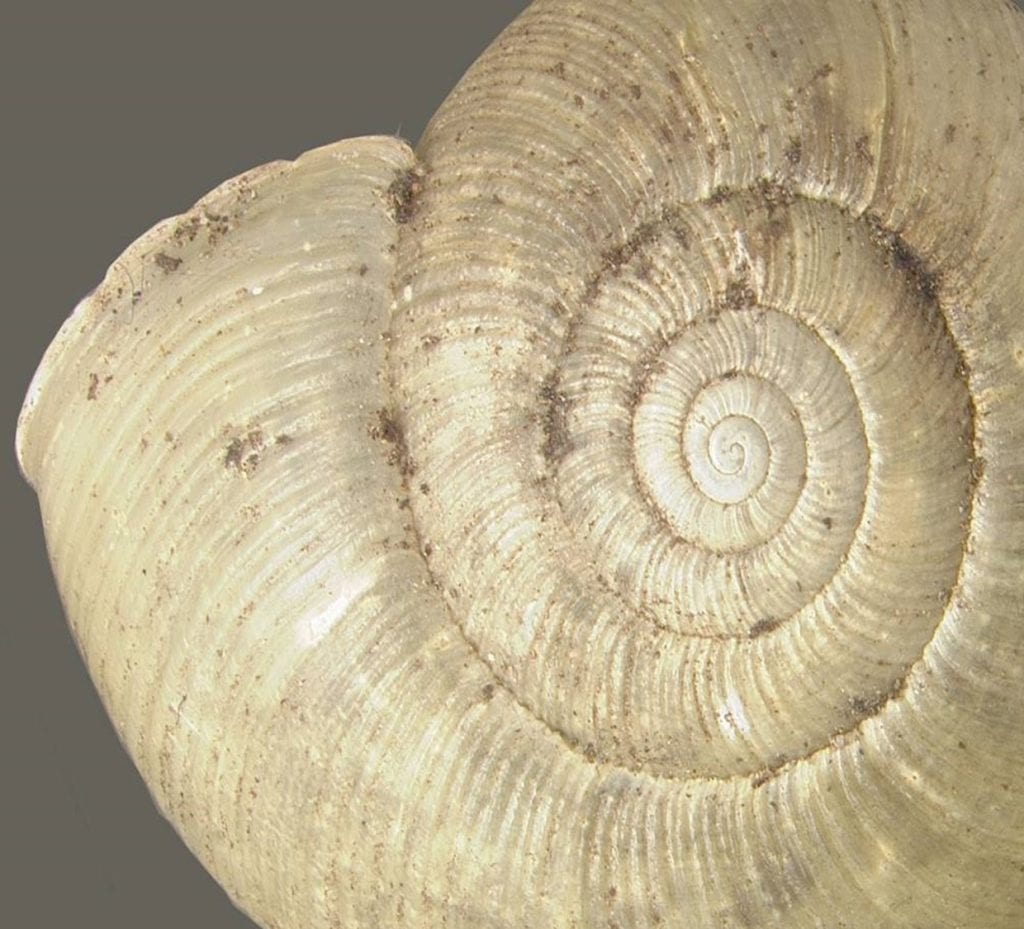
Two related species, Ancotrema hybridum and Ancotrema sportella, are sometimes difficult to separate. Their beautiful shell sculpture includes ridges radiating outward like bicycle spokes, and finer spiral grooves cutting across the tops of the ridges, looking like beads (see figure of Ancotrema with beaded sculpture). The beaded sculpture extends to the end of growth in A. sportella, but the sculpture becomes smooth on the last, largest whorl in A. hybridum. They are easy to tell apart until you find one that is smooth on only half, or a quarter, of the last whorl.

Two things made us suspect that they might really be one species. First, some shells were difficult to classify. Second, the ranges of both species coincide from northern California to Alaska.

To address whether they are two species or one, we examined 311 museum specimens. If they are two species, we expected to see a two-humped curve (bimodality) in amount of smooth sculpture on the last whorl. We expected
many specimens without smooth sculpture at the end, many specimens with smooth sculpture on the entire last whorl, and very few specimens having smooth sculpture on just half the last whorl.

Instead, we saw continuous variation, with no hint of bimodality. That result is consistent with their really being one species. Furthermore, we discovered on every shell the sculpture became smooth around whorl number 5. If shell growth stopped before whorl 5, then it resembled A. sportella. If it grew beyond whorl 5 before becoming adult, then it gained the smoother sculpture of A. hybridum.

Next, we looked for reproductive differences. When new species arise, reproductive structures are sometimes the first to change. These changes might help individuals to recognize the correct mate. We found no consistent differences in the reproductive parts.

These (and most land snails) are hermaphrodites (one individual is both male and female), so we know we were not looking at male – female differences. Also, we knew we had adults only because the upper lip dips
downward at the end of growth, so we were not comparing adult – juvenile features.

Finding continuous variation in the feature traditionally used for separating the two species, no differences in the reproductive parts, coincidental geographical ranges, and discovering that the sculpture always
diminished about whorl 5, all led us to conclude that they are one species. A. sportella was named first, so by the law of priority, that is the name we will use.

Scientists get more glory for naming new species, not sinking a name as we did here, but this taxonomic cleanup work is important, too.

For more details, please review Pearce, T.A. & Fields, M.C. 2015. Shell and genital morphology fails to separate Ancotrema hybridum (Ancey, 1888) and A. sportella (Gould, 1846) (Gastropoda: Haplotrematidae). Malacologia, 59(1): 21-32.

Tim Pearce is assistant curator of mollusks at the Carnegie Museum of Natural History. He studies ecology and systematics of land snails.

Filed Under: Blog Tagged With: mollusks, snails, Tim Pearce

  • « Go to Previous Page
  • Page 1
  • Interim pages omitted …
  • Page 9
  • Page 10
  • Page 11

sidebar

About

  • Mission & Commitments
  • Directors Team
  • Museum History

Get Involved

  • Volunteer
  • Membership
  • Carnegie Discoverers
  • Donate
  • Employment
  • Events

Bring a Group

  • Groups of 10 or More
  • Birthday Parties at the Museum
  • Field Trips

Powdermill

  • Powdermill Nature Reserve
  • Powdermill Field Trips
  • Powdermill Staff
  • Research at Powdermill

More Information

  • Image Permission Requests
  • Science Stories
  • Accessibility
  • Shopping Cart
  • Contact
  • Visitor Policies
One of the Four Carnegie Museums | © Carnegie Institute | Privacy Policy | Terms of Use | Accessibility
Rad works here logo
