• Skip to primary navigation
  • Skip to main content
  • Skip to primary sidebar

Carnegie Museum of Natural History

One of the Four Carnegie Museums of Pittsburgh

  • Visit
    • Buy Tickets
    • Visitor Information
    • Exhibitions
    • Events
    • Dining at the Museum
    • Celebrate at the Museum
    • Powdermill Nature Reserve
    • Event Venue Rental
  • Learn
    • Field Trips
    • Educator Information
    • Programs at the Museum
    • Bring the Museum to You
    • Guided Programs FAQ
    • Programs Online
    • Climate and Rural Systems Partnership
  • Research
    • Scientific Sections
    • Science Stories
    • Science Videos
    • Senior Science & Research Staff
    • Museum Library
    • Science Seminars
    • Scientific Publications
    • Specimen and Artifact Identification
  • About
    • Mission & Commitments
    • Directors Team
    • Museum History
  • Tickets
  • Give
  • Shop

Tim Pearce

January 8, 2018 by wpengine

Ask a Scientist: Why are slugs so slimy?

Ask a Scientist: Why are slugs so slimy?

Assistant Curator and Malacologist Dr. Timothy Pearce explains why slugs are slimy and talks about the incredible and useful properties of slug slime.


Ask a Scientist is a new short video series where we ask our research staff questions about the millions of amazing objects and specimens stored in our collection. Tune in on YouTube, and submit your own questions via Twitter @CarnegieMNH.
Filed Under: Blog Tagged With: Ask a Scientist, mollusks, slugs, Tim Pearce

December 11, 2017 by wpengine

How Scallop Eyes Relate to Human Uniqueness

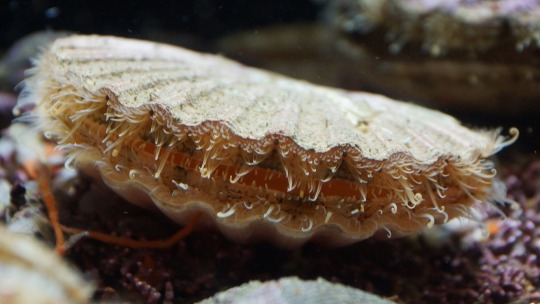
sea scallop resting on the bottom of the ocean

by Timothy A. Pearce

We humans like to think we are special among all creatures. To support that notion, we claim unique traits such as language, tool use, consciousness, etc. Oops, all of those traits have now been shown to occur in other species. Do not fear, though, for I have found a trait that seems to be unique to humans: a fondness for 90 degree angles (aka right angles). You heard it here first! I don’t know where on the evolutionary lineage to modern humans we acquired this fondness for right angles, but evidence of this fondness is all around us in the modern built environment.

What does fondness for right angles have to do with scallop eyes? First let me tell you about the amazing eyes of scallops. They have up to 200 eyes along the mantle margin, and those eyes contain concave mirrors. Instead of being similar to cameras (as our, and most, eyes are), scallop eyes are similar to reflecting telescopes, and each eye has two retinas so they can see clearly in both narrow and peripheral views at the same time.

New research published this week in Science (and described in the New York Times ) demonstrates that the concave mirror of each scallop eye is tiled with more than 100,000 square mirror tiles. Did you get that? They are squares! Outside of the human built environment, right angles are scarce. So to find squares in the eyes of scallops is remarkable. The properties of the tiles making up the mirror has implications for the scallop’s ability to see in the particular wavelengths of light in its surroundings and can inspire improved human optical devices. Future studies will have to examine why a scallop needs to have such amazing vision. But for now, I am amazed to know that scallop eyes contain square mirrors.


Timothy A. Pearce, PhD, is the head of the mollusks section at Carnegie Museum of Natural History. Museum employees are encouraged to blog about their unique experiences and knowledge gained from working at the museum.

Filed Under: Blog Tagged With: mollusks, Tim Pearce

August 18, 2017 by wpengine

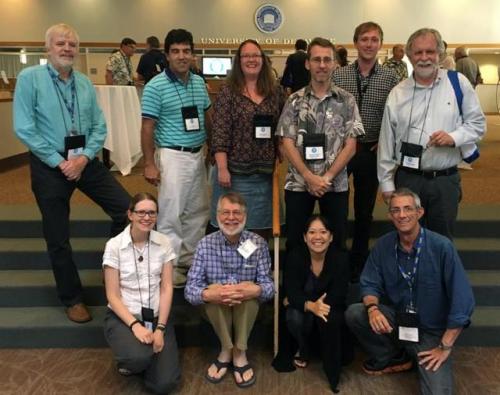
83rd Meeting of the American Malacological Society

Researchers gathered in a hotel meeting room
Participants of Mollusks in Peril 2017 session at the 83rd Meeting of the American Malacological Society. Top row, from left: Rüdiger Bieler (Field Museum of Natural History), Jay Cordeiro (AMS Conservation Committee), Amanda Haponski (Museum of Zoology, University of Michigan), Ken Hayes (Howard University), Chris Hobbs (Canterbury Christ Church University, UK), Tim Collins (Florida International University); bottom: Megan Paustian (Howard University), Tim Pearce (Carnegie Museum of Natural History), Norine Yeung (Bernice Pauahi Bishop Museum), José H. Leal (Bailey-Matthews National Shell Museum, organizer). Not in photo: Dan Hua (Tennessee Wildlife Resources Agency).

Dr. Tim Pearce, assistant curator and Head of Section of Mollusks, was recently featured in the Curator’s Corner—a newsletter from Dr. José H. Leal, science director and curator at the Bailey-Matthews National Shell Museum—after he participated in the 83rd Meeting of the American Malacological Society at the University of Delaware.

“Some of the highlights of the meeting included a special workshop sponsored by iDigBio (Integrated Digitized Biocollections) on mollusks collections online, Digitizing the 2nd Largest Invertebrate Phylum: Mollusks; the President Symposium, Mollusk research in a digital world: creating, integrating and mining large datasets; and Mollusks in Peril 2017 (MIP 2017, organized by yours truly), a follow-up to the successful Mollusks in Peril 2016 Forum, held in May 2016 at the Shell Museum and sponsored by Smoky and Stephanie Payson.”

-Dr. Leal

Filed Under: Blog Tagged With: mollusks, Tim Pearce

July 26, 2017 by wpengine

Exploring Intergalactic Natural History

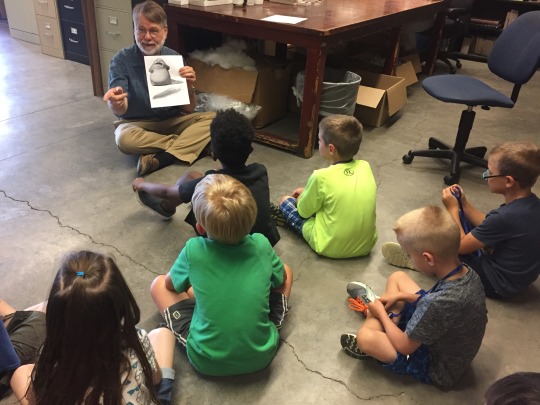
Researcher Tim Pearce sitting on the floor talking to a group of campers

What can the science of natural history teach us about the Star Wars universe? In a new week-long summer day camp at Carnegie Museum of Natural History, kids ages 6 and 7 had a chance to find out first hand. By comparing Mesozoic ferns to plants in the forest of Endor and conducting condensation experiments to prepare for survival in the desert of Tatooine, campers activated their imaginations and honed their observation skills.

Museum scientists also joined in on the fun. Dr. Tim Pearce, assistant curator and head of the Section of Mollusks, helped campers investigate a critical question—is Jabba the Hut a slug? After learning about slug features with Dr. Pearce, one camper gave a scientific rationale for the answer— “No. Jabba does not have eye stalks, but slugs do!”

Due to popular demand, a second session of Star Warriors has been added July 31–August 4. Register online by July 27 to join in on the fun.

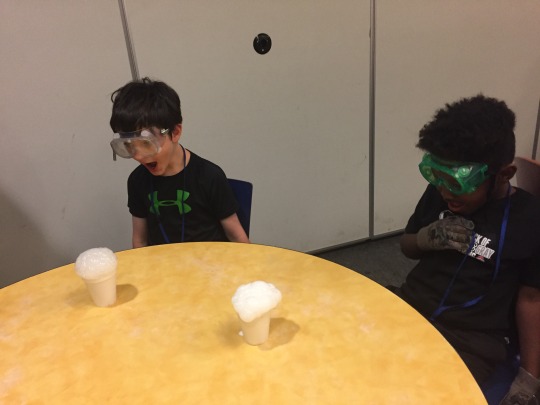
On Hoth Day, Star Warriors experimented with water and ice, making ice cream with solid carbon dioxide (dry ice) and building model igloos. “The ice cream was bubbling like crazy,” campers observed.

campers making ice cream
campers making excited faces at their bubbling ice cream

Campers wrapped up the week by making their own costumes and solving a Star Wars quest in the museum galleries. Visit camps.artandnaturalhistory.org to sign up for the next session!

three campers dressed up in costumes that they made

Filed Under: Blog Tagged With: Pittsburgh, Summer camps, Tim Pearce

March 27, 2017 by wpengine

Snail Foils Trump’s Plan for Wall on an Irish Golf Course

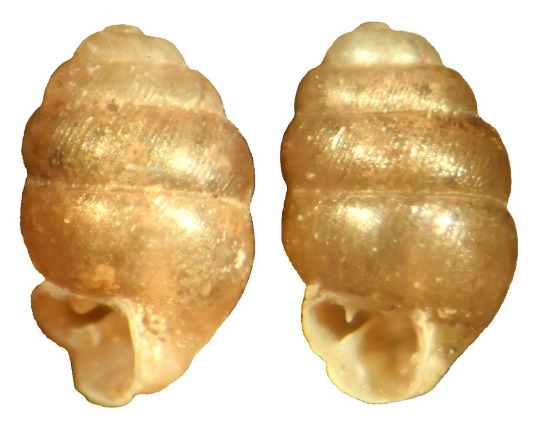
Vertigo angustior, CM62.27772 from Switzerland. (Photo by Charles F. Sturm). Golden snail shells.
Vertigo angustior, CM62.27772 from Switzerland. (Photo by Charles F. Sturm)


by Timothy A. Pearce

What can stop a wall that the president of the United States wants to build? Snails of course!

At least that was the case on a golf course in Ireland owned by President Donald Trump’s company, Trump International Golf Links.

According to The Washington Post, the company’s plans to build a huge, two-mile sea wall on its Irish golf course were recently withdrawn and replaced with a proposal for two smaller walls.

A tiny, 2 millimeter snail, Vertigo angustior, living in the adjacent Carrowmore Dunes, a special area of conservation, could be harmed if the wall were to change the hydrology of the area. The Carrowmore Dunes site is specially designated for conservation due to its three different dune types and the presence of Vertigo angustior.

Trump’s company submitted an initial wall proposal that cited rising sea levels as a result of climate change as the reason it needed the wall, according to BBC News.

Concerns over the snail and the special dunes delayed a decision about the proposed wall, so Trump International Golf Links resubmitted a proposal for smaller walls just before Christmas 2016, according to the Washington Post. The Clare County Council will carefully consider the revised proposal for its conservation objectives and the impact on the protected snail. A decision is expected in March 2017.

The European snail Vertigo angustior is unusual for coiling the opposite direction of most land snails and occurs in wetlands and low areas among coastal dunes. It is legally protected under the European Union’s Habitats and Species Directive due to declining populations and because wetlands are difficult to protect. According to the International Union for Conservation of Nature, the main threat to this species is the modification of site hydrology, which could occur with the building of sea walls.

Some people feel that business endeavors are more important than species extinctions, while others argue that it is unfair for one species, humans, to cause the complete extinction of another species. Endangered species laws recognize the importance of allowing species to persist.


Timothy A. Pearce, PhD, is the head of the mollusks section at Carnegie Museum of Natural History. Museum employees are encouraged to blog about their unique experiences and knowledge gained from working at the museum.

Filed Under: Blog Tagged With: mollusks, snails, Tim Pearce

March 20, 2017 by wpengine

Discover the science of snails!

Discover the science of snails with Scientists Live!

Tim Pearce, assistant curator of the Section of Mollusks, showed off pieces of Carnegie Museum of Natural History’s hidden collection and answered questions in a live broadcast this month on Facebook!

This broadcast is part of the new web series Scientists Live. Check the museum’s Facebook page for more broadcasts featuring different scientists and topics.

Filed Under: Blog Tagged With: mollusks, Scientists Live, Tim Pearce

  • « Go to Previous Page
  • Page 1
  • Interim pages omitted …
  • Page 7
  • Page 8
  • Page 9
  • Page 10
  • Page 11
  • Go to Next Page »

sidebar

About

  • Mission & Commitments
  • Directors Team
  • Museum History

Get Involved

  • Volunteer
  • Membership
  • Carnegie Discoverers
  • Donate
  • Employment
  • Events

Bring a Group

  • Groups of 10 or More
  • Birthday Parties at the Museum
  • Field Trips

Powdermill

  • Powdermill Nature Reserve
  • Powdermill Field Trips
  • Powdermill Staff
  • Research at Powdermill

More Information

  • Image Permission Requests
  • Science Stories
  • Accessibility
  • Shopping Cart
  • Contact
  • Visitor Policies
One of the Four Carnegie Museums | © Carnegie Institute | Privacy Policy | Terms of Use | Accessibility
Rad works here logo