• Skip to primary navigation
  • Skip to main content
  • Skip to primary sidebar

Carnegie Museum of Natural History

One of the Four Carnegie Museums of Pittsburgh

  • Visit
    • Buy Tickets
    • Visitor Information
    • Exhibitions
    • Events
    • Dining at the Museum
    • Celebrate at the Museum
    • Powdermill Nature Reserve
    • Event Venue Rental
  • Learn
    • Field Trips
    • Educator Information
    • Programs at the Museum
    • Bring the Museum to You
    • Guided Programs FAQ
    • Programs Online
    • Climate and Rural Systems Partnership
  • Research
    • Scientific Sections
    • Science Stories
    • Science Videos
    • Senior Science & Research Staff
    • Museum Library
    • Science Seminars
    • Scientific Publications
    • Specimen and Artifact Identification
  • About
    • Mission & Commitments
    • Directors Team
    • Museum History
  • Tickets
  • Give
  • Shop

We Are Nature: Living in the Anthropocene

January 8, 2018 by wpengine

Avocad-oh-no

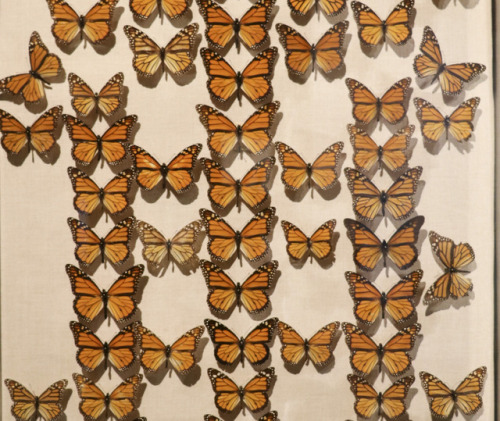
monarch butterfly speciemens

Avocad-oh-no

In the last couple years, avocados have been hailed as a “superfood” that is delicious with pretty much everything. However, as the demand increased, the seasonal home of migrating monarch butterflies has been cut down for more avocado farmland.

It’s a prime example of how the actions of humans inadvertently impacts other species, which is a core theme of Carnegie Museum of Natural History’s new exhibition We Are Nature: Living in the Anthropocene.


The Anthropocene is the current geological era in which humans are making a profound impact on the geological strata. While the term itself is still being debated by geologists, the museum is embracing it as a social and cultural tool for exploring the broad sum effect humans are having on the planet in the exhibition We Are Nature: Living in the Anthropocene—open now through summer 2018.
Filed Under: Blog Tagged With: We Are Nature, We Are Nature: Living in the Anthropocene

January 8, 2018 by wpengine

According to the International Union for Conservation of…

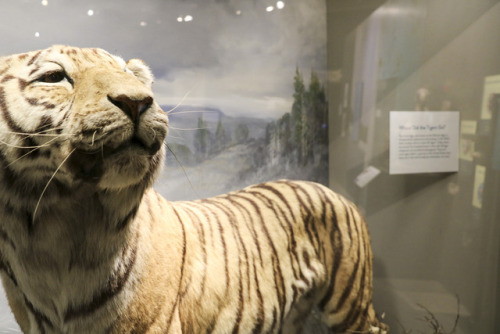
Siberian (Amur) tiger taxidermy found in We Are Nature exhibition

According to the International Union for Conservation of Nature’s red list, the Siberian (Amur) tiger population dropped to as low as  20-30 individual tigers in Russia in the 1930s. Today, conservation efforts have helped the population rebound to about 360 in Russia (as of 2005). Despite the positive progress, all tiger subspecies are still considered endangered due to human activity.

We Are Nature, the new exhibition at Carnegie Museum of Natural History, explores how humans are positively and negatively impacting other species like Siberian tigers in The Anthropocene.


The Anthropocene is the current geological era in which humans are making a profound impact on the geological strata. While the term itself is still being debated by geologists, the museum is embracing it as a social and cultural tool for exploring the broad sum effect humans are having on the planet in the exhibition We Are Nature: Living in the Anthropocene—open now through summer 2018.
Filed Under: Blog Tagged With: We Are Nature, We Are Nature: Living in the Anthropocene

January 1, 2018 by wpengine

Humans and Nature: River Otters

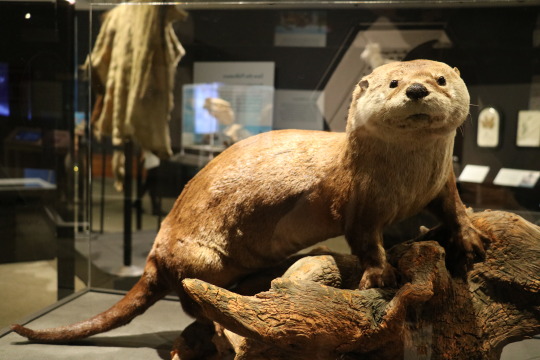
river otter specimen in We Are Nature

Usually, we hear about how human activity negatively impacts wildlife populations, but the inverse can also be true when conservationists make a concerted effort.

One local example is river otters in the state of Pennsylvania, which were in decline in the 20th century because of habitat destruction and river pollution. Conservationists recognized the problem and spent decades restoring their habitat and eventually reintroduced river otters in 1982. Their population have since thrived, and the project is heralded as one of the greatest success stories of modern conservancy.

Learn more about population rehabilitation in We Are Nature: Living in the Anthropocene, a new exhibition at Carnegie Museum of Natural History that explores the interconnectedness of humanity and nature in the Anthropocene.


The Anthropocene is the current geological era in which humans are making a profound impact on the geological strata. While the term itself is still being debated by geologists, the museum is embracing it as a social and cultural tool for exploring the broad sum effect humans are having on the planet in the exhibition We Are Nature: Living in the Anthropocene—open now through summer 2018.
Filed Under: Blog Tagged With: pollution, We Are Nature, We Are Nature: Living in the Anthropocene, western pennsylvania

January 1, 2018 by wpengine

Did you know that coral is expected to be the first casualty?

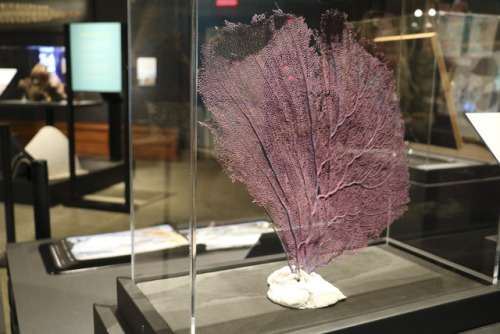
purple specimen of coral

Did you know that coral is expected to be the first casualty of the age of humanity (also known as the Anthropocene)?

In the last 30 years alone, half of the world’s coral has died.

When ocean water warms due to higher CO2 levels, the algae that live in the coral branches can’t survive, leaving the coral without a food source. The Great Barrier Reef experiences more and more coral bleaching daily, as can be seen on this specimen in the new exhibition We Are Nature: Living in the Anthropocene at Carnegie Museum of Natural History.


The Anthropocene is the current geological era in which humans are making a profound impact on the geological strata. While the term itself is still being debated by geologists, the museum is embracing it as a social and cultural tool for exploring the broad sum effect humans are having on the planet in the exhibition We Are Nature: Living in the Anthropocene—open now through summer 2018.
Filed Under: Blog Tagged With: climate change, global warming, We Are Nature, We Are Nature: Living in the Anthropocene

December 22, 2017 by wpengine

Conservation Costume

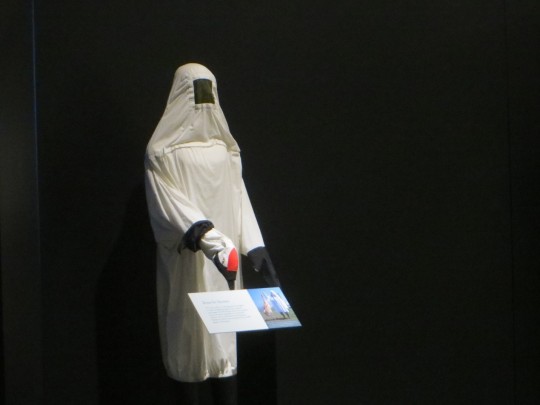
costume from We Are Nature which looks a little like a hazmat suit

by Pat McShea

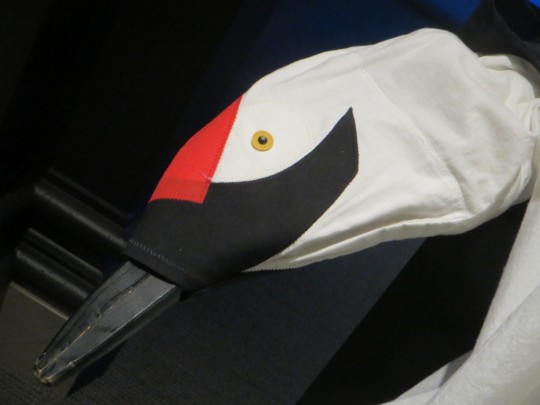
A ghostly looking outfit in the exhibition We Are Nature: Living in the Anthropocene is a symbol of hope. The costume is an authentic conservation tool, a care-giver disguise critical to the success of captive rearing programs for North America’s most elegant endangered bird, the Whooping Crane.

The costume is on loan from the International Crane Foundation, the Baraboo, Wisconsin-based
organization devoted to the conservation of our planet’s 15 crane species and the ecosystems, watersheds, and flyways on which they depend.

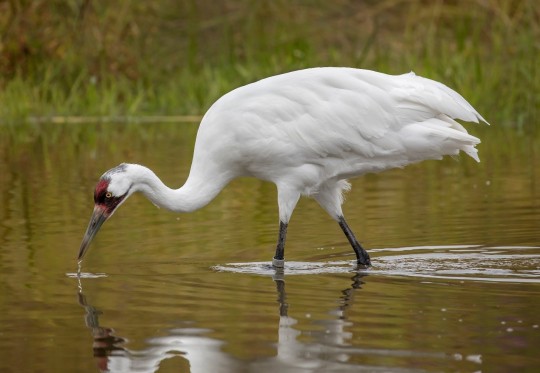
white Whooping Crane
International Crane Foundation, “Whooping Crane Wading in Exhibit Pond,” Crane Media Collective.

According to author Peter Matthiessen, whose book, The Birds of Heaven (North Point Press, 2001) documents the status all 15 crane species at the dawn of the 21st Century, Whooping Cranes were never
abundant. From an estimated population of 15,000 at the time on European contact, crane numbers plummeted due to over-hunting, egg collecting, and dramatic landscape changes associated with expanding agriculture and industry. Some 1,400 scattered birds remained in the latter half of the 19th
Century, and by the middle of the 20th Century the number of the big birds dipped as low as 21.

Today, thanks to far-sighted legislation and tireless work by US and Canadian wildlife agencies and organizations such as the National Audubon Society and International Crane Foundation, there are more than 600 Whooping Cranes. This figure includes a captive population of 161 birds, and four separate free-living flocks numbering between 10 and 300 birds.

The captive breeding and captive rearing efforts that helped bolster Whooping Crane numbers rely heavily upon a working understanding of the biological phenomenon called imprinting. In ground-nesting birds, the term refers to the establishment of behavior patterns that lead young to follow and direct their interests to adults of their species. Because Whooping Crane chicks bond with the first big object they see after hatching, the skilled and devoted humans who take on rearing responsibilities utilize the deception provided by the bright white costume, its hand puppet head, and a carefully-concealed Mp3 player loaded with recorded crane calls. If the disguise works, captive-reared birds will know they are Whooping Cranes when released into the wild.

wooden beak and cloth head of the puppet
Close-up of the hand puppet head


Patrick McShea works in the Education and Visitor Experience department of Carnegie Museum of Natural History. Museum employees are encouraged to blog about their unique experiences and knowledge gained from working at the museum.


Filed Under: Blog Tagged With: We Are Nature, We Are Nature: Living in the Anthropocene

December 21, 2017 by wpengine

We Are Nature: Repurposing Old Furniture

By Jaron Keener

The design philosophy for We Are Nature: Living in the Anthropocene was grounded in reuse and being mindful of our environmental impact. Working this way meant we didn’t rely on new, off-the-shelf materials. We had to be more imaginative and creative with what we used to build the exhibit.

One of the ways we reduced our energy footprint was by repurposing old furniture. We partnered with Construction Junction, a local retailer that promotes conservation through the reuse of building materials, to find furniture we could refurbish for the exhibit.

By refinishing and painting old pieces we were able to use them in a different way and give them a new life.

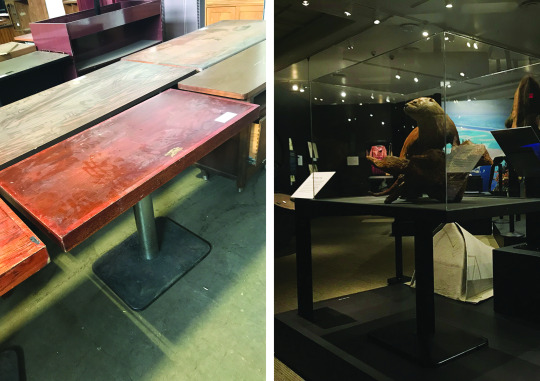
repurposed table now being displayed in We are Nature
We transformed this old bar table into a case for the Pennsylvania River Otter. The base safely supports the large specimen while maintaining a light and open feel.


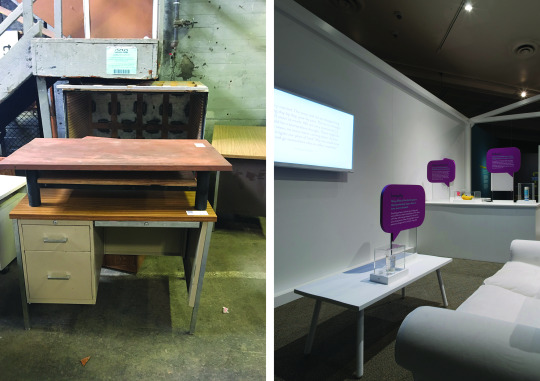
white coffee table and couch in We Are Nature
By attaching new legs to a refinished tabletop, we produced a stylish coffee table for the Human Diorama.


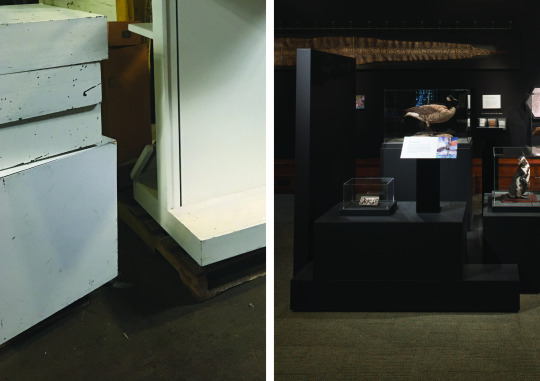
cleaned an painted furnature put to reuse in We Are Nature
Stacking, spackling, and painting three old drawers made a sturdy base for the Zebra Mussel display. The final product looks like a basic platform, but we didn’t have to use any new material to build it.


Jaron Keener is an Exhibition Designer and Production Manager at Carnegie Museum of Natural History. Museum employees are encouraged to blog about their unique experiences of working at the museum.

Filed Under: Blog Tagged With: Jaron Keener, We Are Nature, We Are Nature: Living in the Anthropocene

  • « Go to Previous Page
  • Page 1
  • Interim pages omitted …
  • Page 3
  • Page 4
  • Page 5
  • Page 6
  • Page 7
  • Go to Next Page »

sidebar

About

  • Mission & Commitments
  • Directors Team
  • Museum History

Get Involved

  • Volunteer
  • Membership
  • Carnegie Discoverers
  • Donate
  • Employment
  • Events

Bring a Group

  • Groups of 10 or More
  • Birthday Parties at the Museum
  • Field Trips

Powdermill

  • Powdermill Nature Reserve
  • Powdermill Field Trips
  • Powdermill Staff
  • Research at Powdermill

More Information

  • Image Permission Requests
  • Science Stories
  • Accessibility
  • Shopping Cart
  • Contact
  • Visitor Policies
One of the Four Carnegie Museums | © Carnegie Institute | Privacy Policy | Terms of Use | Accessibility
Rad works here logo