by Patrick McShea
Just when our interest in a previously overlooked creature has been effectively sparked, we are abruptly informed of dire threats to the species’ continued existence. As a museum educator, it is sometimes hard to avoid such set-ups, particularly when the looming threat to the featured wildlife is global climate change.
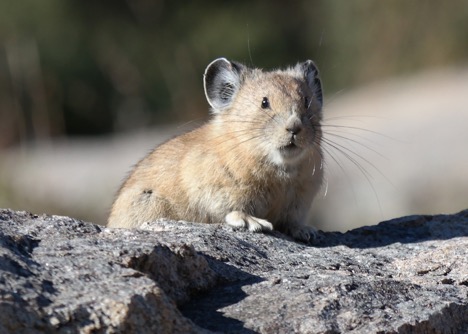
Consider the situation of the American Pika. These Guinea pig-sized creatures occur across the more mountainous areas of western North America in a range that progressively increases in elevation as it stretches southward from British Columbia to New Mexico. Pikas rank high on any scale of visual appeal. In several national parks, the sight of a pika barking its “squeaky toy” alarm call from a boulder top lookout is one of the hard-earned rewards for hiking above the timberline.
Habitat requirements for these rabbit-relatives include piles of sheltering rocks and boulders, flowers and other nourishing vegetation as a food source, and consistently cool temperatures. Within the Hall of North American Wildlife, these habitat elements are depicted in a diorama featuring three Stone Sheep.
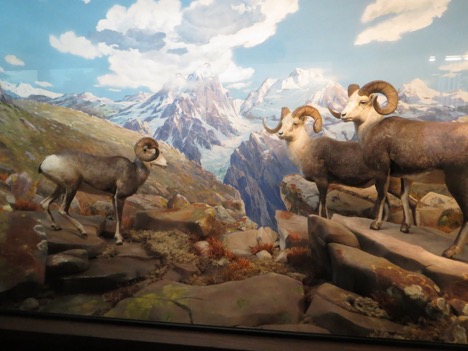
Two partially concealed pikas share the three-dimensional alpine scene with the trio of larger and far more mobile hoofed mammals. First-time viewers must survey the landscape to spot the pikas, an action that visually inventories the critical habitat threatened by a changing climate.
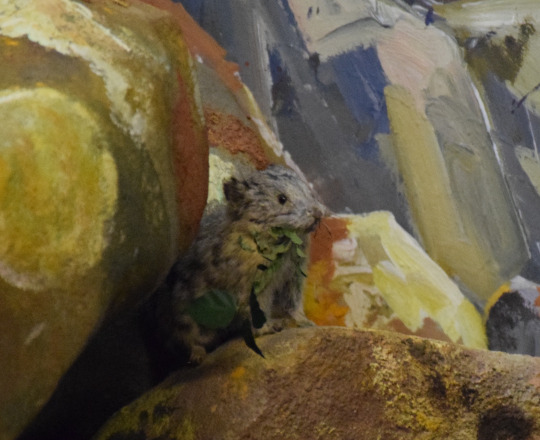
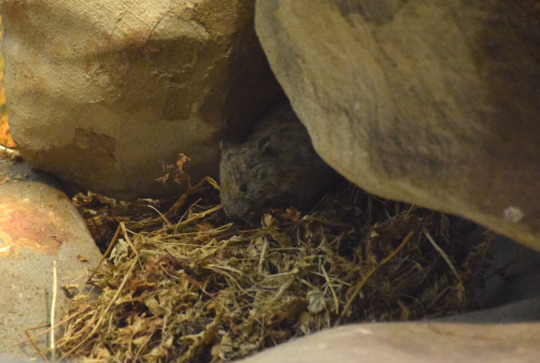
The fresh plant stem in the mouth of one pika and the winter food supply of dried plants guarded by another grew in limited zones of adjacent soil. These micro-meadows, which could be traversed by the sheep in a dozen strides, are critical home range for the pikas.
A changing climate threatens to disrupt such delicately balanced pika living arrangements in a least two ways. If warmer daytime temperatures force pikas to forage more at night, predation rates will likely rise, and as snow packs are reduced, the creatures lose a critical winter insulation blanket. For pika populations on mountaintop “sky islands,” there are no good relocation options.
Since 2009 a team of National Park Service staff and academic researchers have collaborated on a research project to both assess climate change threats to pikas and develop strategies to address those threats. More information about this initiative can be found at: https://science.nature.nps.gov/im/units/ucbn/monitor/pikas_in_peril.cfm
Patrick McShea works in the Education and Visitor Experience department of Carnegie Museum of Natural History. Museum employees are encouraged to blog about their unique experiences of working at the museum.
