By Bob Androw
In 2014, while processing a light trap sample from the Dominican Republic, I came across a series of Phyllophaga that I could not identify. At first, this wasn’t too unusual – this one genus of scarab beetles contains over 500 named species. Upon closer examination, I was thrilled to determine that I was looking at a species new to science. I specialize in Cerambycidae, the long-horned beetles, and dabble with scarab beetles on the side – so I like to refer to Phyllophaga as one of my “mistress groups.” While I already had one species named after me, Phyllophaga androw, this would become the first new Phyllophaga I had personally discovered and would have the opportunity to describe.
When describing a new species, one of the challenges, and the joys, is choosing a name. With millions of insect species known, more than a few names are already taken. There are lots of options – naming it after one of its traits – color, size, shape; after the place it was found; after some factor of its biology; after a notable person in one’s life or after a renowned colleague; or, just maybe, after the shape of its genitalia. Hmmm… let’s clarify that…
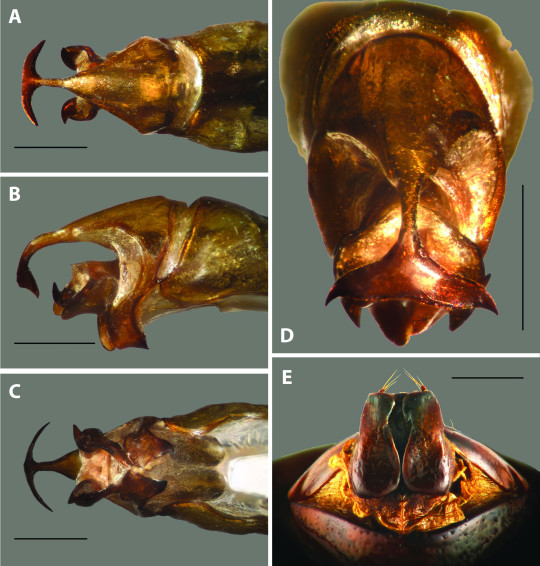
Many species of Phyllophaga are nearly inseparable by their outward appearance, but the genitalia can vary drastically between species. The male genitalia in beetles are usually strongly sclerotized, meaning that they are hard, rigid structures – hence the shape is fixed in any given species.
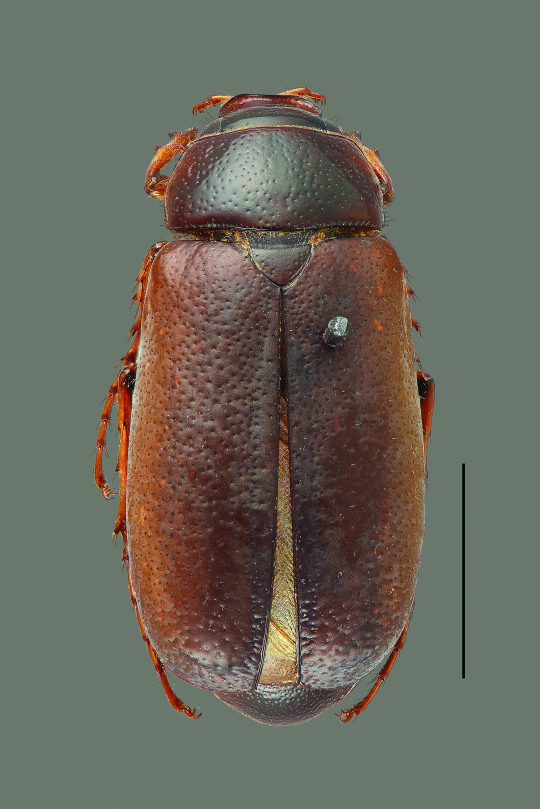
The new species was no exception – externally it closely resembled a number of other species but the genitalia were remarkable – having a delicate fluke-like structure arising from the upper surface. It so resembled a dolphin’s tail that the name was inevitable – Phyllophaga delphinicauda – the Phyllophaga with “the tail of a dolphin.” In 2016, I published the description in the Annals of Carnegie Museum, and, in doing so, reduced by one more the naming options available for species discovered in the future.
Access the original publication for Phyllophaga delphinicauda Androw here.
Bob Androw is a Scientific Preparator in Invertebrate Zoology. Museum employees are encouraged to blog about their unique experiences and knowledge gained from working at the museum.
