By Steve Rogers
The National Taxidermists Association met at Seven Springs in early June 2016 and Carnegie Museum of Natural History Collection Manager Stephen Rogers was invited to give a seminar on the early history of taxidermy in the United States.
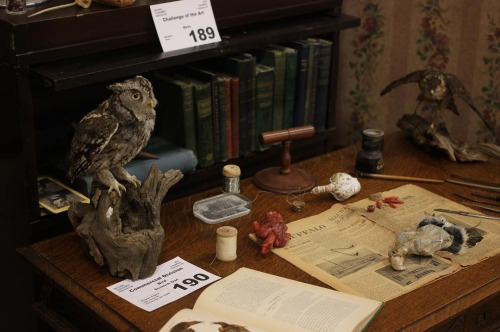
On a whim he decided to create a piece for the competition held at this meeting. Since he is an historical taxidermy buff and collects old publications, tools, as well as antique furniture, he created a taxidermists’ work table as it may have been circa 1898.
The table held a skinned out flicker made to look fresh (coated with glycerin), a faux carcass and bits of flesh made of wax, a hand-wrapped artificial body which would have been put inside the skin, a book on the Birds of Pennsylvania opened to a hand-colored plate on flickers, and then eyes and tools that might be used in the process.
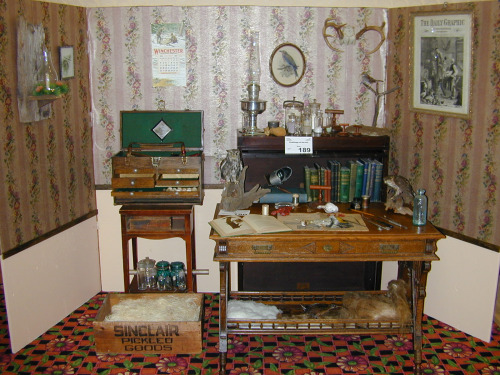
Behind the table was a re-created room with antique looking wallpaper with various decorations on the wall, deer antlers, an 1898 poster of a Winchester calendar, and a framed 1873 newspaper with a woodcut depicting a taxidermist and an ornithologist.
Assorted other birds, a tool chest with period tools, and supplies to mount birds (excelsior, tow, cotton, glass eyes of different sorts, etc.) were also present. A library of 15 taxidermist and naturalist books published between 1874 and 1898 were in a lawyer’s glass-front bookshelf alongside a Stereoviewer with a handful of stereophotographs depicting taxidermy.
Glass jars containing what appeared to various noxious chemicals were set on top of the bookshelf. A number of people asked about the green chemical in one jar. Was it arsenic? – No, just some powdered lime Jell-O.
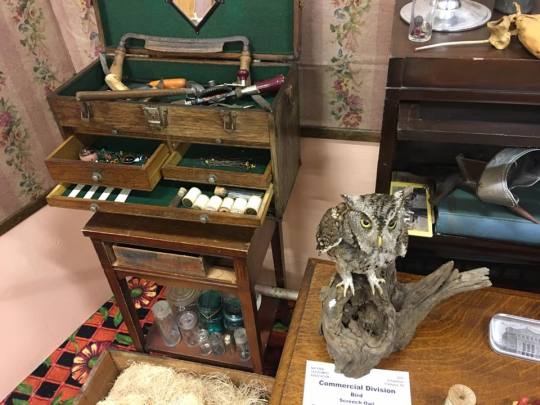
The public as well as the taxidermists who attended the convention were able to vote for pieces in the competition. The exhibit won ‘People Choice – Original Art’. But more importantly, it gave people and appreciation for history and reference for those that came before.
Steve Rogers is a collections manager at Carnegie Museum of Natural History. Museum employees are encouraged to blog about their unique experiences and knowledge gained from working at the museum.
Carnegie Museum of Natural History Blog Citation Information
Blog author: Steve RogersPublication date: June 24, 2016
