• Skip to primary navigation
  • Skip to main content
  • Skip to primary sidebar

Carnegie Museum of Natural History

One of the Four Carnegie Museums of Pittsburgh

  • Visit
    • Buy Tickets
    • Visitor Information
    • Exhibitions
    • Events
    • Dining at the Museum
    • Celebrate at the Museum
    • Powdermill Nature Reserve
    • Event Venue Rental
  • Learn
    • Field Trips
    • Educator Information
    • Programs at the Museum
    • Bring the Museum to You
    • Guided Programs FAQ
    • Programs Online
    • Climate and Rural Systems Partnership
  • Research
    • Scientific Sections
    • Science Stories
    • Science Videos
    • Senior Science & Research Staff
    • Museum Library
    • Science Seminars
    • Scientific Publications
    • Specimen and Artifact Identification
  • About
    • Mission & Commitments
    • Directors Team
    • Museum History
  • Tickets
  • Give
  • Shop

Dinosaurs

April 27, 2016 by wpengine

New Discovery Lets Researchers Get Inside a Dinosaur’s Head

Sarmientosaurus musacchioi fossil
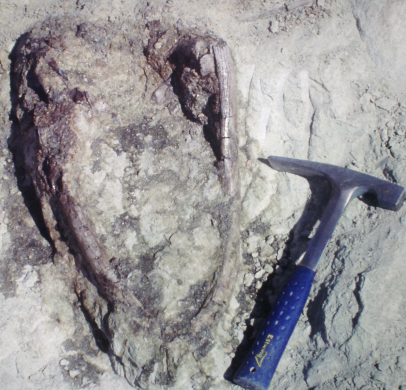
The skull of Sarmientosaurus musacchioi at the discovery site in Argentina. (photo by Rubén Martínez)

In some areas of the world, the fossils of sauropod dinosaurs are so common that paleontologists literally trip over the bones of these huge, long-necked, long-tailed plant-eaters that many people think of when they hear the word “dinosaur.”

While some kinds of sauropod bones are common, others such as skulls are more elusive – which makes a new discovery that was coauthored by a Carnegie Museum of Natural History paleontologist very exciting.

A skull discovered in a rural area of southern Chubut Province, Argentina, will give a face and name to a ten-ton sauropod that plodded around the southern hemisphere about 95 million years ago – Sarmientosaurus musacchioi.

Assistant Curator of Vertebrate Paleontology Matt Lamanna worked on a team that named the new species of dinosaur, which he said will yield a wealth of insights into the biology and behavior of titanosaurs, a group of sauropods that includes the most massive land animals that have ever existed. The fossil was originally discovered by the team leader Rubén Martínez of the Universidad Nacional de la Patagonia San Juan Bosco in Chubut.

The skull  Martínez and his team discovered is arguably the most complete and well-preserved titanosaur skull ever found. It provides scientists with their first good look at the head of an
anatomically primitive titanosaur.

Scientists from Ohio University Heritage College of Osteopathic Medicine were able to reconstruct a model of what the dinosaur’s brain would have looked like. Despite the colossal size of the animal, its brain was probably only the size of an orange!

Lamanna said that Sarmientosaurus is one of the most exciting discoveries he’s worked on in his career and will provide researchers with information on the origins and evolutionary relationships of titanosaurs.
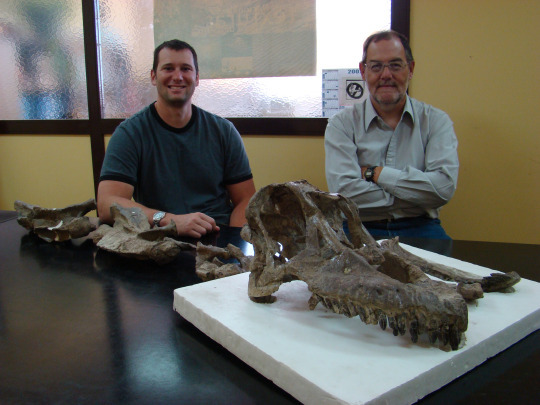
Matt and paleontologist with sarmientosaurus skull

Above: Research team members Dr. Rubén Martínez (Universidad Nacional de la Patagonia San Juan Bosco, Comodoro Rivadavia, Argentina, right), and Dr. Matt Lamanna (Carnegie Museum of Natural History, Pittsburgh, USA, left) with the skull and neck skeleton of the new titanosaurian dinosaur species Sarmientosaurus musacchioi.

Further information and resources:

http://dx.plos.org/10.1371/journal.pone.0151661
Still images, animations, and interactive 3D digital model for download (with captions and credits): https://www.dropbox.com/sh/in3tupno91h0haw/AACJmvc05hB7fk5tkeNcwgCBa?dl=0
YouTube animation of the Sarmientosaurus skull and brain endocast: https://www.youtube.com/watch?v=Zb8e5ffEC74
Interactive Sketchfab animation of the Sarmientosaurus skull: https://skfb.ly/MKOP
Interactive Sketchfab animation of the transparent Sarmientosaurus skull showing the brain endocast inside: https://skfb.ly/MKLO
Interactive Sketchfab animation of the Sarmientosaurus brain endocast: https://skfb.ly/MKKH
Filed Under: Blog Tagged With: dinosaurs, discovery, Matt Lamanna, paleontology

April 23, 2016 by wpengine

Protoceratops andrewsi

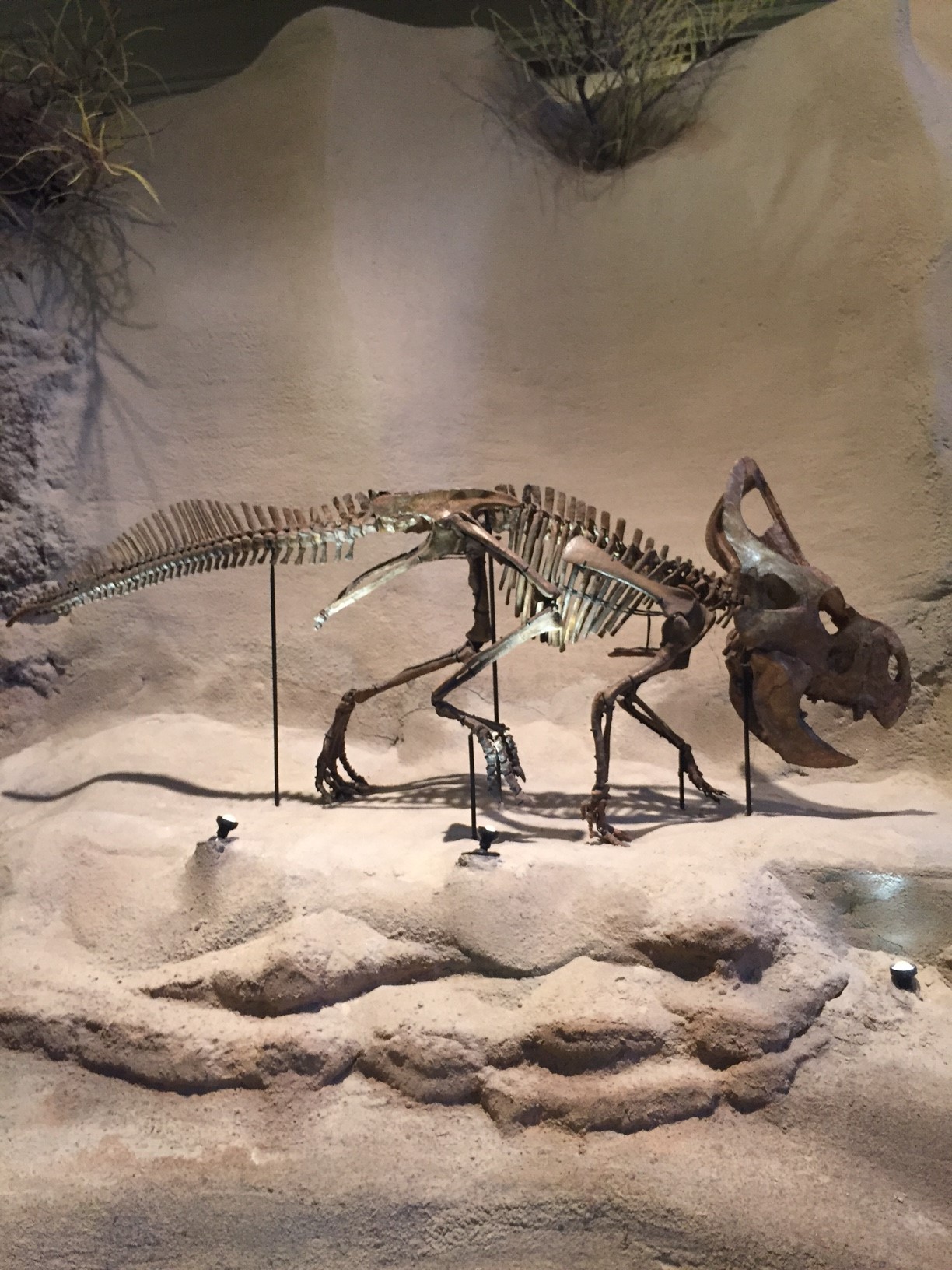
male Protoceratops andrewsi fossil

Protoceratops andrewsi lived about 80 million years ago in what is now Mongolia and China. These horned dinosaurs stood only about two and a half feet tall and were an earlier relative of the famous Triceratops.

Seen above is a immature male Protoceratops andrewsi on display at Carnegie Museum of Natural History in Pittsburgh.

Filed Under: Blog Tagged With: dinosaurs, Pittsburgh

March 22, 2016 by wpengine

Prehistoric Egg Hunt

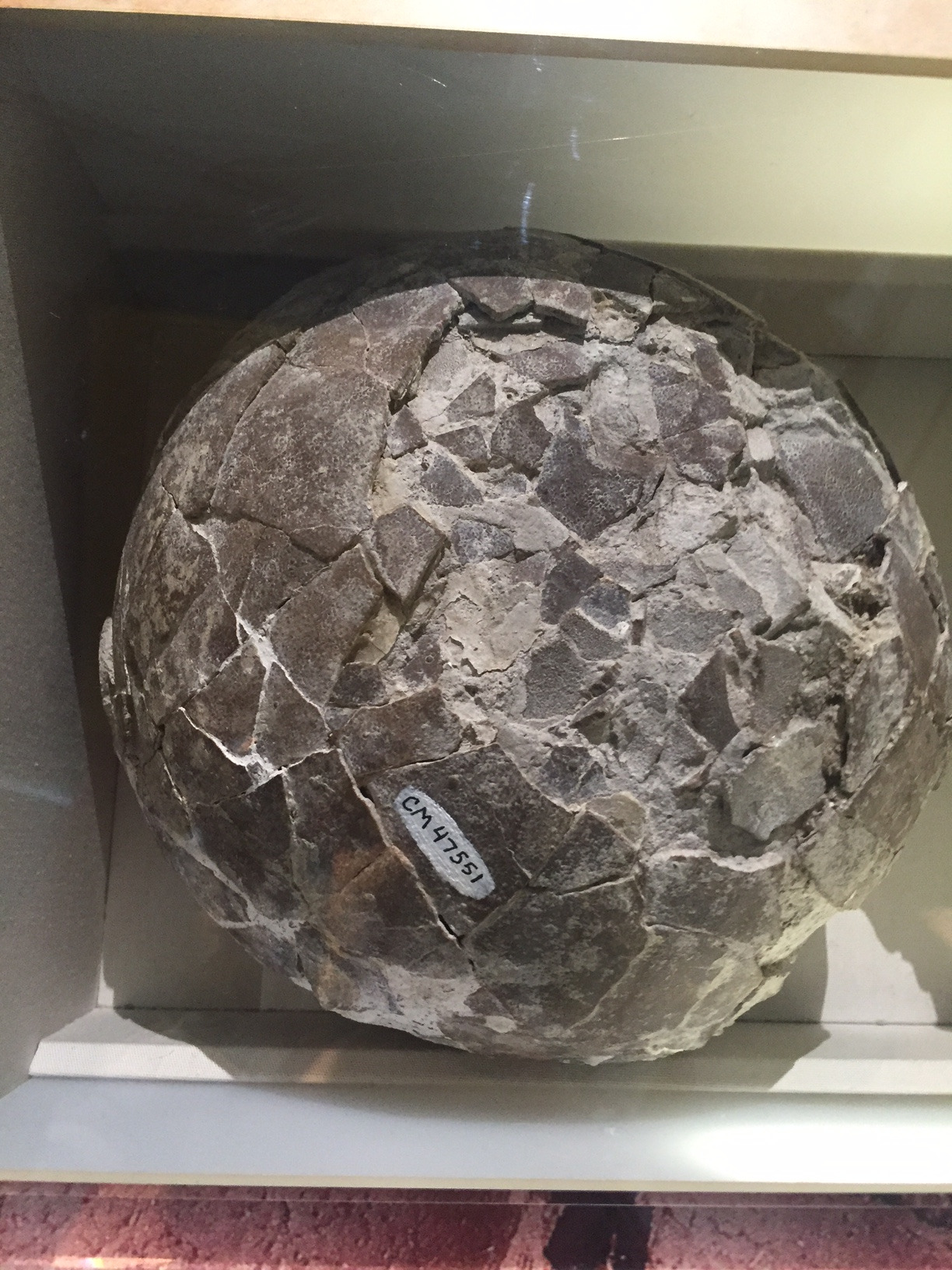
fossilized sauropod eggskeleton of a baby Apatosaurus
For many years, Paleontologists were on an egg hunt that extended way beyond Easter.

Until 1997, scientists did not know much about the way sauropods (herbivore dinosaurs with long necks and tails) reproduced and grew. A fossilized sauropod nesting ground with thousands of dinosaur eggs found in Argentina gave paleontologists answers about how sauropods nested and what baby sauropods looked like and how they grew.

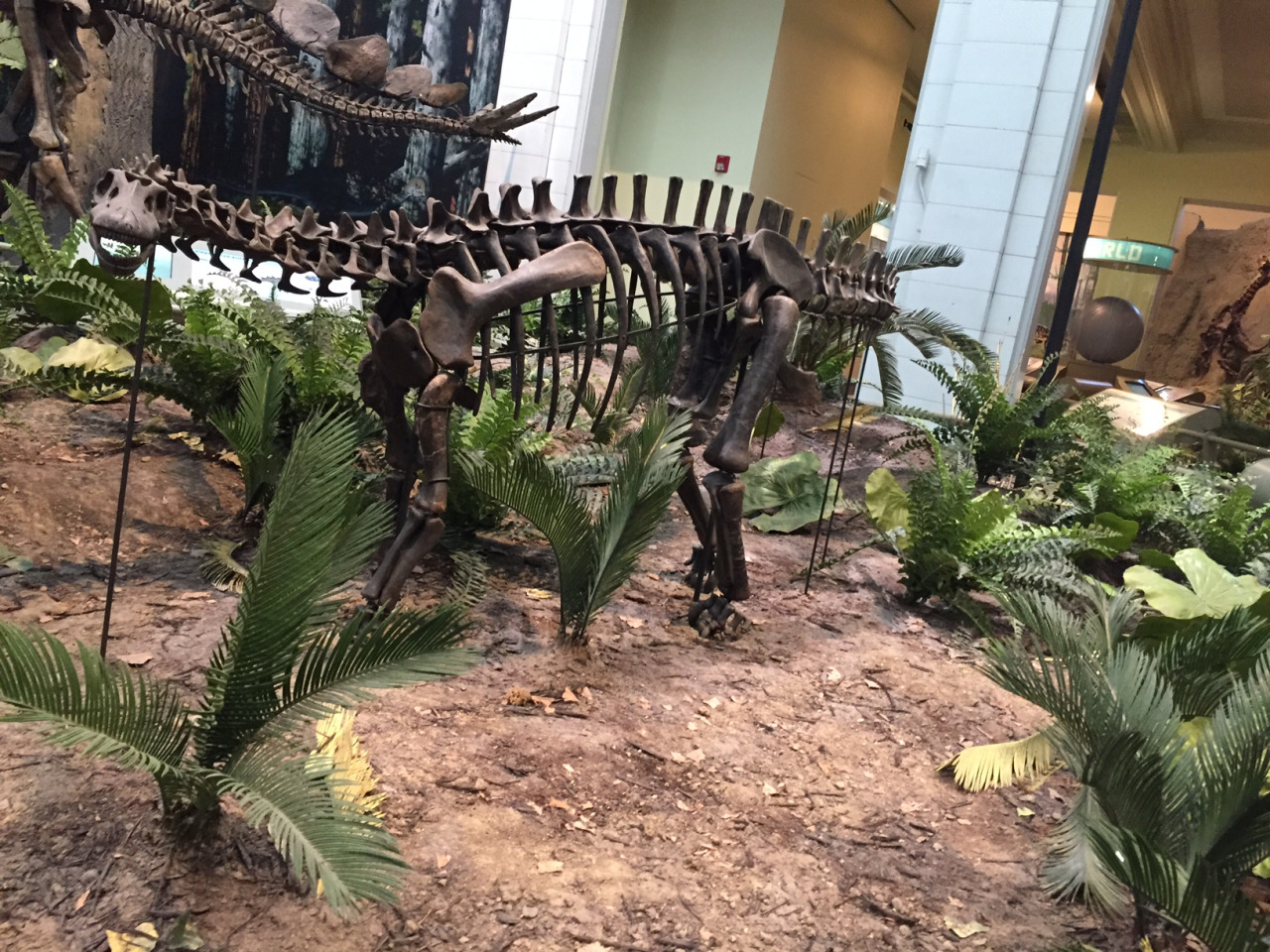
Carnegie Museum of Natural History’s Dinosaurs in Their Time features a sauropod egg and the reconstructed skeleton of a baby Apatosaurus, originally believed to be a different type of dinosaur entirely.

Filed Under: Blog Tagged With: dinosaur eggs, paleontology

  • « Go to Previous Page
  • Page 1
  • Interim pages omitted …
  • Page 3
  • Page 4
  • Page 5

sidebar

About

  • Mission & Commitments
  • Directors Team
  • Museum History

Get Involved

  • Volunteer
  • Membership
  • Carnegie Discoverers
  • Donate
  • Employment
  • Events

Bring a Group

  • Groups of 10 or More
  • Birthday Parties at the Museum
  • Field Trips

Powdermill

  • Powdermill Nature Reserve
  • Powdermill Field Trips
  • Powdermill Staff
  • Research at Powdermill

More Information

  • Image Permission Requests
  • Science Stories
  • Accessibility
  • Shopping Cart
  • Contact
  • Visitor Policies
One of the Four Carnegie Museums | © Carnegie Institute | Privacy Policy | Terms of Use | Accessibility
Rad works here logo