By Suzanne McLaren and Stephen Rogers
We recently received word about the passing of former Carnegie Museum of Natural History Taxidermist Otto Epping at the age of 90 in Winchester, Virginia. In 1964, Otto Epping came to work in the Museum’s Exhibit department as a preparator and within a year his title had become ‘taxidermist.’
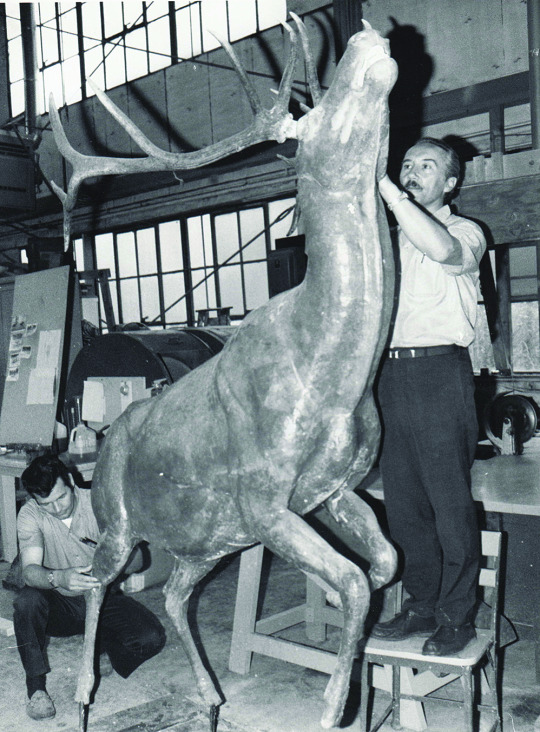
Over the next 17 years, he completed many projects and with his passing, Otto leaves behind a legacy of well-crafted taxidermy that has now been enjoyed by several generations of visitors to Carnegie Museum of Natural History.
Not long after he arrived at the museum, a series of small dioramas were created, featuring some of Epping’s taxidermy, his wife Christine’s work on the plants in the foreground, and background paintings by Ottmar von Fuehrer or C. E. Smith. Among these dioramas is a snow leopard currently on view in the Museum Store. Individual mounts by Epping were used in the taxidermy areas of the “M is for Museum” exhibit as well as other displays that augment traveling, temporary shows that come to the Museum.
Some of Otto Epping’s craftsmanship can also be found in permanent displays on the second floor. His first large project was the elk diorama, which occupies the entire east end of the Hall of North American Wildlife.
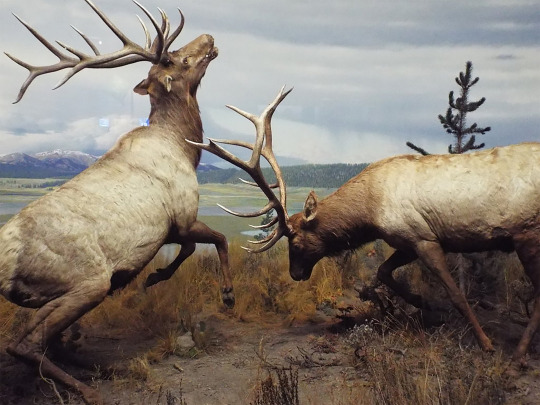
This exhibit draws the visitor in with two male elk sparring for mates in the foreground and the Hayden Valley of Yellowstone National Park behind them. If you have ever been to Yellowstone, you might recognize this exact location as a place where you can stop for an expansive view of the Valley.
Epping collaborated with fellow taxidermist Ed McGuire on a display that depicts a male and female white-tailed deer on an October morning at the Museum’s Powdermill Nature Reserve.
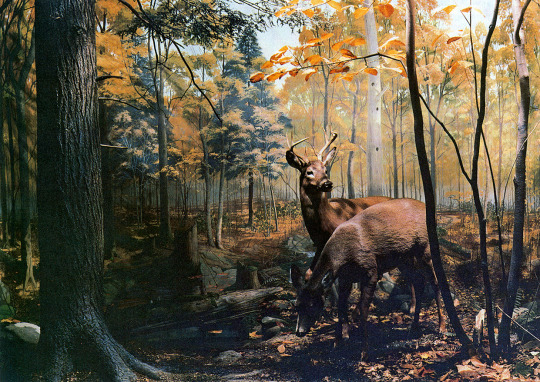
In this diorama, the male is alert to the presence of another male somewhere just out of view. Well-done taxidermy captures an aspect of behavior that a viewer would expect to see in nature. Take a close look the next time you are in the Hall of North American Wildlife. Does this exhibit capture a vision that you have seen in Penn’s Woods?
Perhaps the most well-known of Epping’s taxidermy mounts is the adult male Lowland Gorilla found in the tropical forest section of the Hall of African Wildlife.
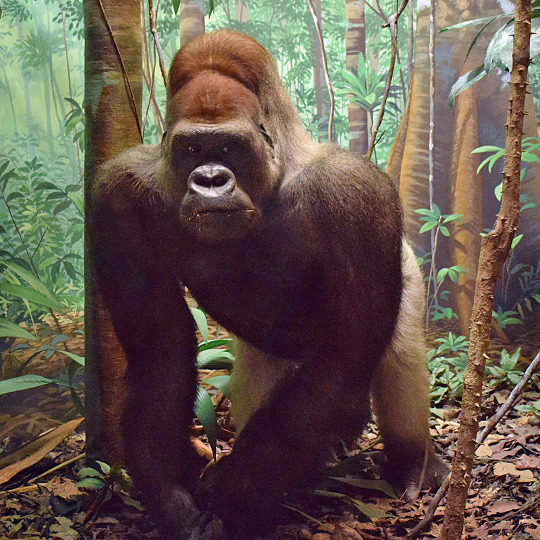
This silver-back had been a popular attraction at the Pittsburgh Zoo for nearly 15 years. When he died in 1981, “George” was offered to the Museum and we quickly agreed to make him part of our planned changes in African Hall. Epping collaborated with Danny Oplinger, using a method developed by renowned Field Museum taxidermist Leon Walters, to realistically portray the bare flesh and sparsely dispersed hairs on the face and feet of this primate. The final result is a world class rendering of a species that has always been a challenge for taxidermists.
Suzanne McLaren is the collection manager for the Section of Mammals and Stephen Rogers is the collection manager for the Section of Amphibians & Reptiles Carnegie Museum of Natural History. Museum employees are encouraged to blog about their unique experiences and knowledge gained from working at the museum.
