• Skip to primary navigation
  • Skip to main content
  • Skip to primary sidebar

Carnegie Museum of Natural History

One of the Four Carnegie Museums of Pittsburgh

  • Visit
    • Buy Tickets
    • Visitor Information
    • Exhibitions
    • Events
    • Dining at the Museum
    • Celebrate at the Museum
    • Powdermill Nature Reserve
    • Event Venue Rental
  • Learn
    • Field Trips
    • Educator Information
    • Programs at the Museum
    • Bring the Museum to You
    • Guided Programs FAQ
    • Programs Online
    • Climate and Rural Systems Partnership
  • Research
    • Scientific Sections
    • Science Stories
    • Science Videos
    • Senior Science & Research Staff
    • Museum Library
    • Science Seminars
    • Scientific Publications
    • Specimen and Artifact Identification
  • About
    • Mission & Commitments
    • Directors Team
    • Museum History
  • Tickets
  • Give
  • Shop

Turtle Bottoms

by Patrick McShea

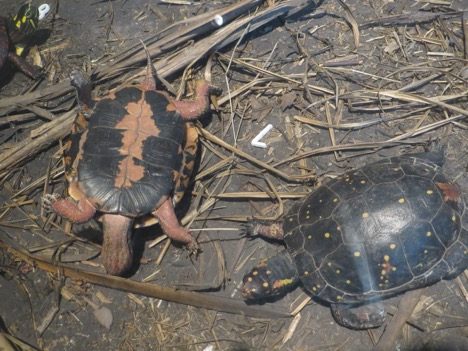
Spotted turtles in a display case, one is on its back and the other is on its belly
Spotted turtles

Upside down is an unnatural state. Yet within the museum’s display of Pennsylvania turtles, four of 14 taxidermy mounts are bottom side up. With strained necks and legs positioned in frozen flail, the four reptiles, each representing a different
turtle species, appear in perpetual effort to right themselves.
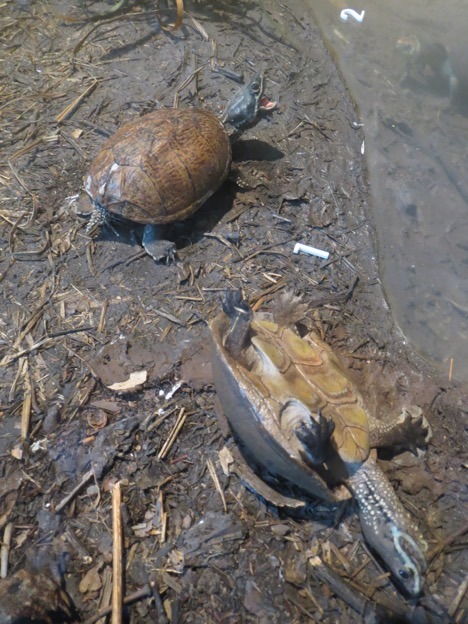
taxidermy Stinkpot turtles
Stinkpot turtles

Their awkward stance reveals clever exhibit design. A turtle’s bottom shell, or plastron, differs drastically from its upper shell, or carapace, in size, shape, color pattern, and surface texture. The overturned turtles instantly convey this visual information to attentive viewers.
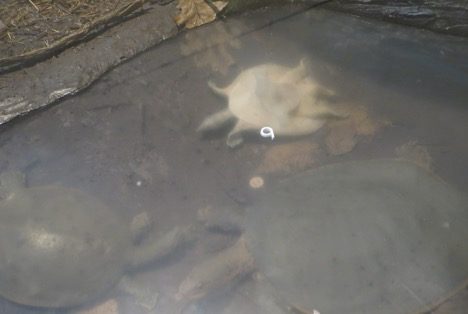
Beneath the simulated surface of a clear shallow pool, a trio of eastern spiny softshell turtles shows the contrast between the species’ carapace and plastron.

At Carnegie Museum of Natural History, displays of Pennsylvania’s amphibians and reptiles can be found on the Daniel G. and Carole L. Kamin T. rex Overlook.

For addition species information visit: http://www.fishandboat.com/Resource/AmphibiansandReptiles/Pages/default.aspx
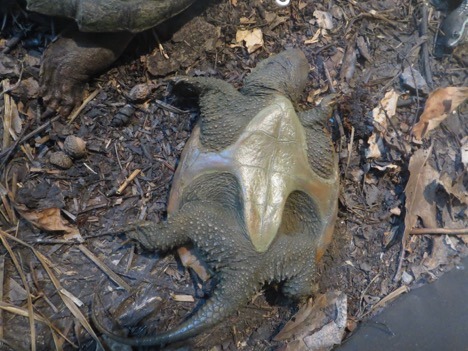
Common snapping turtle, underside view.


Patrick McShea works in the Education and Visitor Experience department of Carnegie Museum of Natural History. Museum employees are encouraged to blog about their unique experiences of working at the museum.

Related Content

Wood Turtle at Powdermill

Ocean Lessons

A Steeler Prayer

Carnegie Museum of Natural History Blog Citation Information

Blog author: McShea, Patrick
Publication date: July 14, 2017

Share this post!

  • Share on Twitter Share on Twitter
  • Share on Facebook Share on Facebook
  • Share on Pinterest Share on Pinterest
  • Share on LinkedIn Share on LinkedIn
  • Share on Reddit Share on Reddit
  • Share via Email Share via Email

Share this post!

  • Share on Twitter Share on Twitter
  • Share on Facebook Share on Facebook
  • Share on Pinterest Share on Pinterest
  • Share on LinkedIn Share on LinkedIn
  • Share on Reddit Share on Reddit
  • Share via Email Share via Email

sidebar

About

  • Mission & Commitments
  • Directors Team
  • Museum History

Get Involved

  • Volunteer
  • Membership
  • Carnegie Discoverers
  • Donate
  • Employment
  • Events

Bring a Group

  • Groups of 10 or More
  • Birthday Parties at the Museum
  • Field Trips

Powdermill

  • Powdermill Nature Reserve
  • Powdermill Field Trips
  • Powdermill Staff
  • Research at Powdermill

More Information

  • Image Permission Requests
  • Science Stories
  • Accessibility
  • Shopping Cart
  • Contact
  • Visitor Policies
One of the Four Carnegie Museums | © Carnegie Institute | Privacy Policy | Terms of Use | Accessibility
Rad works here logo
