By: Pat McShea
Although activities in the Future Thinking Lab section of We Are Nature seldom focus on the past, historic examples of the process are important. Some 50 miles southeast of Pittsburgh, travelers on the Pennsylvania Turnpike pass steel and concrete proof of regional future thinking dating back to at least the 1960s.
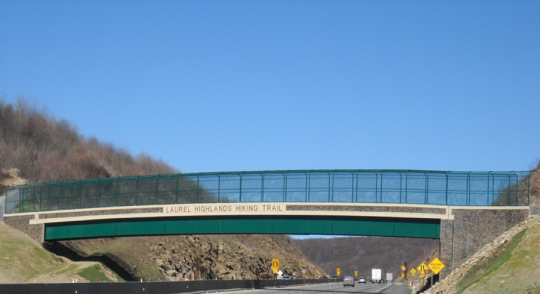
Photo credit: Gibson-Thomas Engineering
At mile mark 100.5, where the busy east/west route crosses over the crest of the mountain fold known variously as Laurel Hill, Laurel Mountain, and Laurel Ridge, the highway passes under the Laurel Highlands Hiking Trail.
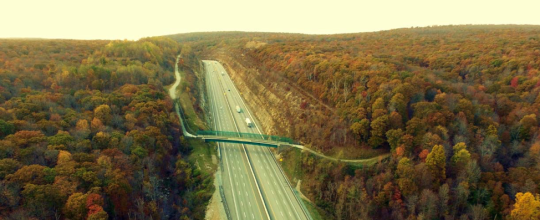
Photo: Gibson-Thomas Engineering
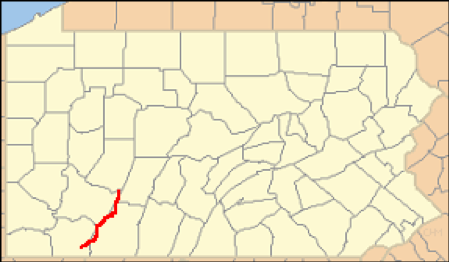
This 70-mile long footpath winds along the ridge crest between water gaps carved by the Conemaugh River on the north, and the Youghiogheny River on the south. The turnpike crossing is located between mile posts 36 and 37, as measured from the trail’s southern terminus in Ohiopyle.
Credit for this recreational resource, which was officially dedicated in 1976, rests largely with the Western Pennsylvania Conservancy and Pennsylvania’s Bureau of State Parks. The WPC, an 86-year-old Pittsburgh-based conservation organization, began acquiring key tracts on the ridge in the 1960’s for state parks, game lands, and forests. The Bureau of State Parks, which constructed the trail across the resulting patchwork of public and private land, has maintained the path under the auspices of Laurel Ridge State Park.
The trail is but one “product” from decades of future thinking, future planning, and future actions by many organizations and individuals. Far-sighted land conservation efforts on Laurel Hill, which include the establishment and operation of the Museum’s Powdermill Nature Reserve, also protect water supplies and biodiversity, and create recreational opportunities ranging from bicycling to downhill skiing.
Patrick McShea works in the Education and Visitor Experience department of Carnegie Museum of Natural History. Museum employees are encouraged to blog about their unique experiences and knowledge gained from working at the museum.
