• Skip to primary navigation
  • Skip to main content
  • Skip to primary sidebar

Carnegie Museum of Natural History

One of the Four Carnegie Museums of Pittsburgh

  • Visit
    • Buy Tickets
    • Visitor Information
    • Exhibitions
    • Events
    • Dining at the Museum
    • Celebrate at the Museum
    • Powdermill Nature Reserve
    • Event Venue Rental
    • Gift Cards
  • Learn
    • Field Trips
    • Educator Information
    • Programs at the Museum
    • Bring the Museum to You
    • Guided Programs FAQ
    • Programs Online
    • Climate and Rural Systems Partnership
  • Research
    • Scientific Sections
    • Science Stories
    • Science Videos
    • Senior Science & Research Staff
    • Museum Library
    • Science Seminars
    • Scientific Publications
    • Specimen and Artifact Identification
  • About
    • Mission & Commitments
    • Directors Team
    • Museum History
  • Tickets
  • Give
  • Shop

Whale Bone Bench

By Pat McShea

whale bone bench

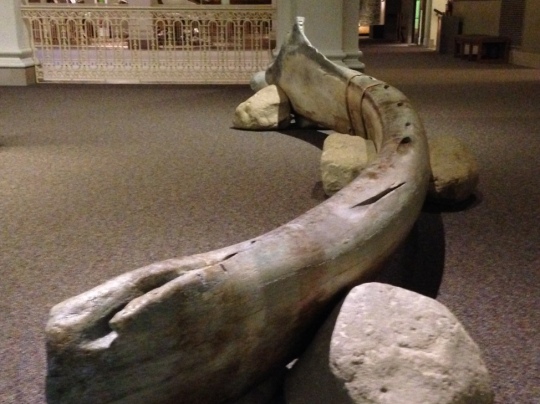
An unusual bench within the Hall of North American Wildlife inspires grand scale thinking.

If you sit upon a level-topped portion of the nearly 20-foot-long great blue whale lower jaw, it’s easy to imagine your seat’s travel history as part of a living ocean-dwelling giant.

Jaw bone sitters now have much more to consider because of Information shared by the curator of fossil marine mammals at the Smithsonian Institution’s National Museum of Natural History.

In a recent essay in The New York Times titled, Wrap Your Mind Around a Whale, paleobiologist Nick Pyenson discusses evolutionary forces that limit whale size.

For great blue whales, Pyenson explains, jaw size reflects a delicate balance. These enormous mammals, whose total body length has been known to reach 109 feet, must be able to close their jaws rapidly enough to capture moving prey. They also must gain enough calories from each gulp to make-up for energy spent powering the required muscle movements.
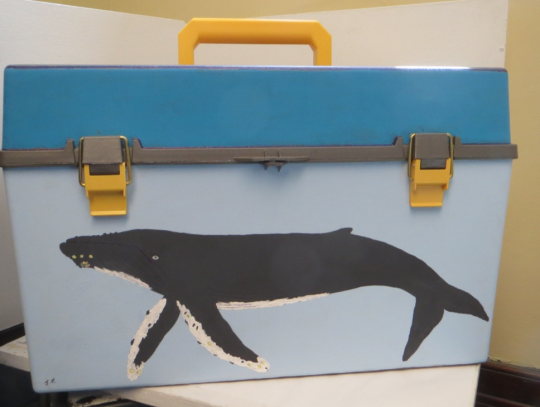
whales toolbox

For any museum visitors who require visual and tactile assistance to imagine how the bone bench was once part of a swimming creature, a stop in Discovery Basecamp is recommended.
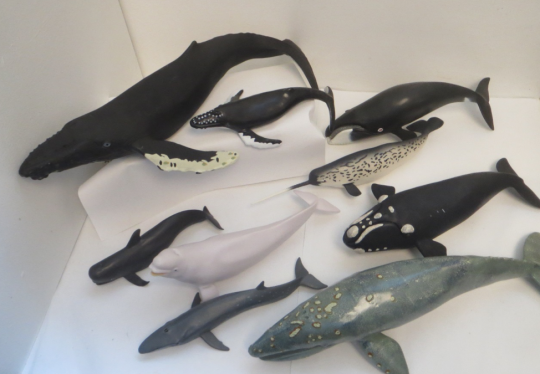
plastic whale models

Although there’s not a great blue whale replica in the Whales Toolbox, examining the plastic models of eight featured species is a good way to begin learning about whale diversity.

Patrick McShea works in the Education and Visitor Experience department of Carnegie Museum of Natural History. Museum employees are encouraged to blog about their unique experiences and knowledge gained from working at the museum.

sidebar

About

  • Mission & Commitments
  • Directors Team
  • Museum History

Get Involved

  • Volunteer
  • Membership
  • Carnegie Discoverers
  • Donate
  • Employment
  • Events

Bring a Group

  • Groups of 10 or More
  • Birthday Parties at the Museum
  • Field Trips

Powdermill

  • Powdermill Nature Reserve
  • Powdermill Field Trips
  • Powdermill Staff
  • Research at Powdermill

More Information

  • Image Permission Requests
  • Science Stories
  • Accessibility
  • Shopping Cart
  • Contact
  • Visitor Policies
Stay in the loop! Sign up for our newsletter(s).
One of the Four Carnegie Museums | © Carnegie Institute | Privacy Policy | Terms of Use | Accessibility
Rad works here logo