By Mason Heberling
[Professor Snape]: “What is the difference, Potter, between monkshood and wolfsbane?“
“I don’t know,” said Harry quietly. “I think Hermione does, though, why don’t you try asking her?”
[Professor Snape]: “For your information, Potter, asphodel and wormwood make a sleeping potion so powerful it is known as the Draught of Living Death. A bezoar is a stone taken from the stomach of a goat and it will save you from most poisons. As for monkshood and wolfsbane, they are the same plant, which also goes by the name of aconite. Well? Why aren’t you all copying that down?”
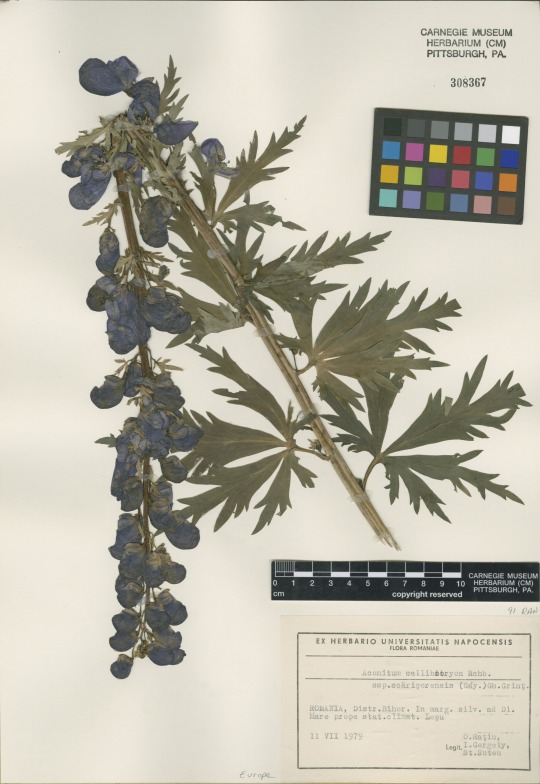
As every Harry Potter fan should know (or Snape would want you to know!), monkshood and wolfsbane are the same plant. But what is it, exactly?
Wolf’s bane (also known as monkshood or aconite) can refer to many different species, but in particular those in the genus Aconitum. These perennial plants in the Buttercup family (Ranunculaceae) are native to the mountains across the Northern Hemisphere. Most are very poisonous and deadly. Poison darts have been made with the high concentrations of poisonous alkaloids in their roots. Despite that, these chemicals have also been used in traditional Chinese medicine, as well as in ancient times in Rome and Greece. This group of plants have a rich cultural history, from traditions and religions to myths and works of fiction. It was mentioned in the 1931 horror movie Dracula, with wolf’s bane being used to protect from vampires. Folklore has long associated this plant as keeping vampires away.
In the Harry Potter wizarding world, wolf’s bane potion was used to treat lycanthropy – that is, turning into a werewolf. Professor Lupin took wolf’s bane potion during a full moon.
This specimen of wolf’s bane (Aconitum callibutryon) was collected in 1979 – in Romania no less, where werewolves are a well-known part of regional folklore. Maybe Ron Weasley’s brother, Charlie, encountered this species during his time in Romania?
Learn more about Potions, Herbology, Care of Magical Creatures, and more at our upcoming 21+ Potterfest After Dark and brand new all ages Potterfest Theme Night.
