by Joann Wilson
“What if one of us discovers the missing boat?” The full-voiced question arose from a group of fourth-grade students eagerly pointing to an ancient Egyptian funerary boat, a school bus-sized wooden craft over 3,800-years-old. On this frosty January morning, twenty teachers and students from a consortium of four Mercer County schools delighted in their return for in-person tours to Carnegie Museum of Natural History. The COVID-19 pandemic led to a two-year absence, a gap that Megan Shreves, a gifted student teacher at St John Paul/Kennedy Catholic School, emphasized by gently tapping a notebook bearing the date of the group’s last visit, October 2, 2019.
Katie Olive, a gifted student teacher from Sharon School District, explained that the cultural groups presented in several museum exhibitions, including the Tlingit, Hopi, Lakota, Iroquois, Inuit, and ancient Egyptian Peoples, are also presented in their curriculum. Olive added, “The museum is a fantastic environment to learn in a hands-on setting. We love our Interpreters, year after year, because they are experts in the field!” Her comment is a near textbook recognition of the collective aspirations shared by Museum interpreters. The National Association of Interpretation defines interpretation as “a purposeful approach to communication that facilitates meaningful, relevant, and inclusive experiences that deepen understanding, broaden perspectives, and inspire engagement.”
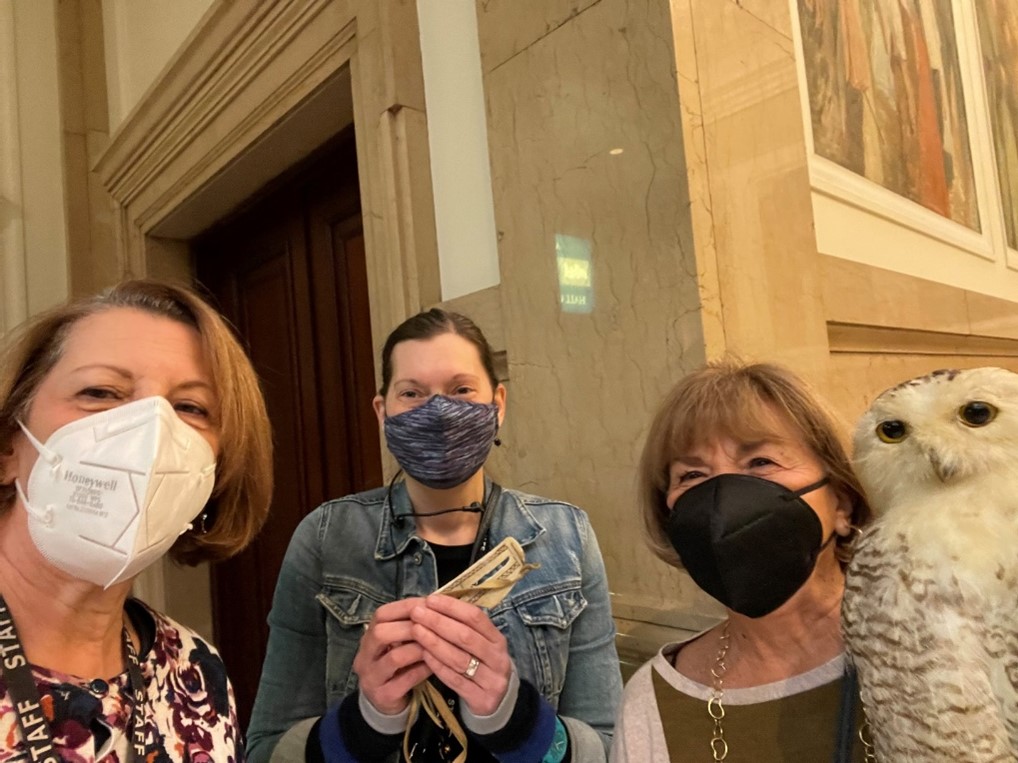
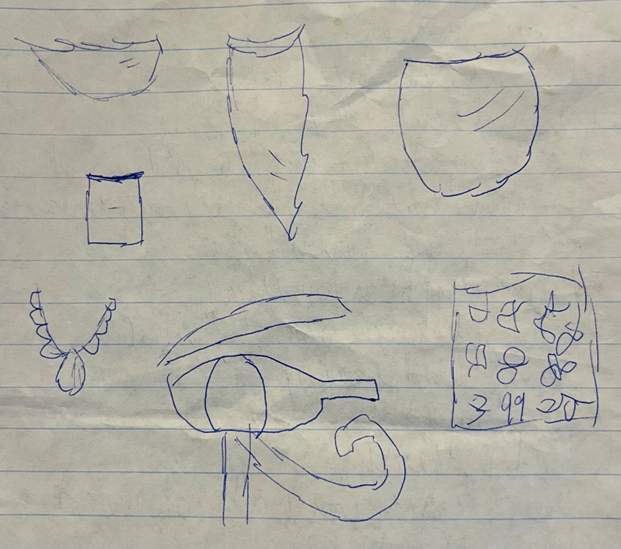
Pat Howe, Carnegie Museum of Natural History’s Group Program’s Coordinator, revealed that between the fall of 2021 and this visit in January 2022, the museum had welcomed back over 300 students for guided tours. Guided tours routinely include hands-on activities, observation, and inquiry. On this day, tours also included a few moments to sketch objects inspiring fascination.
Which gets us back to that funerary boat. In 1894-1895, during excavation of the tomb of the ancient Egyptian pharaoh Senwosret III, French archeologist Jacques de Morgan discovered five, or perhaps even six, boats buried alongside the structure. However, today, the whereabouts of only four vessels are definitively known. Two boats reside at the Egyptian Museum in Cairo, one is under the stewardship of the Carnegie Museum of Natural History, and another is under the care of the Field Museum in Chicago. Perhaps one day, a student scholar will transport wonderment full circle, and unearth the story of the missing funerary boat or boats.
Thanks to Katie Olive, Sharon gifted teacher, Megan Shreves, St John/Kennedy Catholic gifted teacher, Lindsay Ramage, Hermitage gifted teacher, and June Allenbaugh, Farrell gifted teacher. Joann Wilson is an Interpreter in the Education Department at Carnegie Museum of Natural History. Museum employees blog about their unique experiences and knowledge gained from working at the museum.
Related Content
March Mammal Madness and Middle School Science Class
Learning From Misinterpretations
Carnegie Museum of Natural History Blog Citation Information
Blog author: Wilson, JoannPublication date: April 14, 2022
