By John Wenzel
As we enter 2019, I start my ninth year here, and Powdermill Nature Reserve grows cold and quiet. The summer woodland is easy to appreciate, full of sounds of birds in the day, and frogs and insects at night, but for me the forest is most elegant in winter.
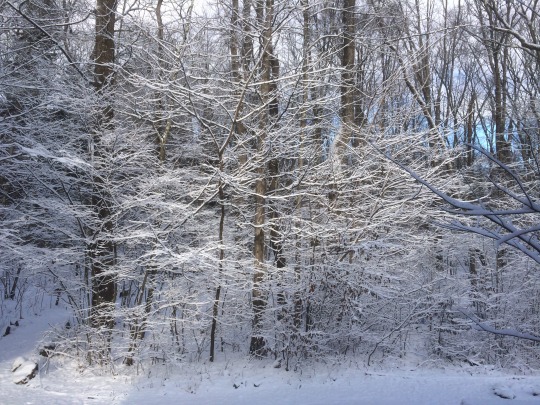
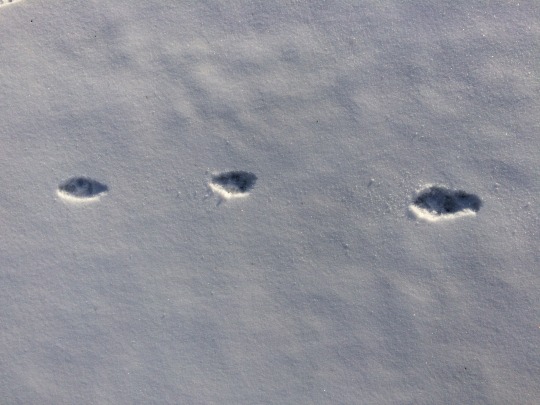
I moved to Powdermill in January, and at first I lived alone at the reserve. My first season was one of snow and solitude, of beauty and discovery. The woods are never as striking as when every dark twig is lined in white, creating a world of infinite fragile lace. The naked branches let the explorer see much farther than when the woods are heavy with leaves. We see deep into the forest, and through it entirely across a hilltop or when we are above the wooded valley. Animal tracks in the snow allow us to feel the presence of the unseen wildlife more than we do in summer. Wet seeps from mountain springs melt away spots of snow and provide the occasional soothing view of bright green moss, which is very welcome and more readily admired in the starkness of winter.
Noise of the outside world is nearly absent when a blanket of snow covers the landscape. This makes the bubbling flow of Powdermill Run all more distinct, and more focal in the outdoor experience. In daylight, we see the million crystal reflections beneath a bright blue sky. At night, far from town, we marvel at the inestimable number of brilliant stars in the onyx above. Perhaps because visitors to the Nature Center are few in winter, I feel that the reserve is more “mine” than at other times. My Powdermill is the quiet, winter Powdermill, dressed in white and hushed by the cold.
John Wenzel is the Director at Powdermill Nature Reserve, Carnegie Museum of Natural History’s environmental research center. Museum employees are encouraged to blog about their unique experiences and knowledge gained from working at the museum.
