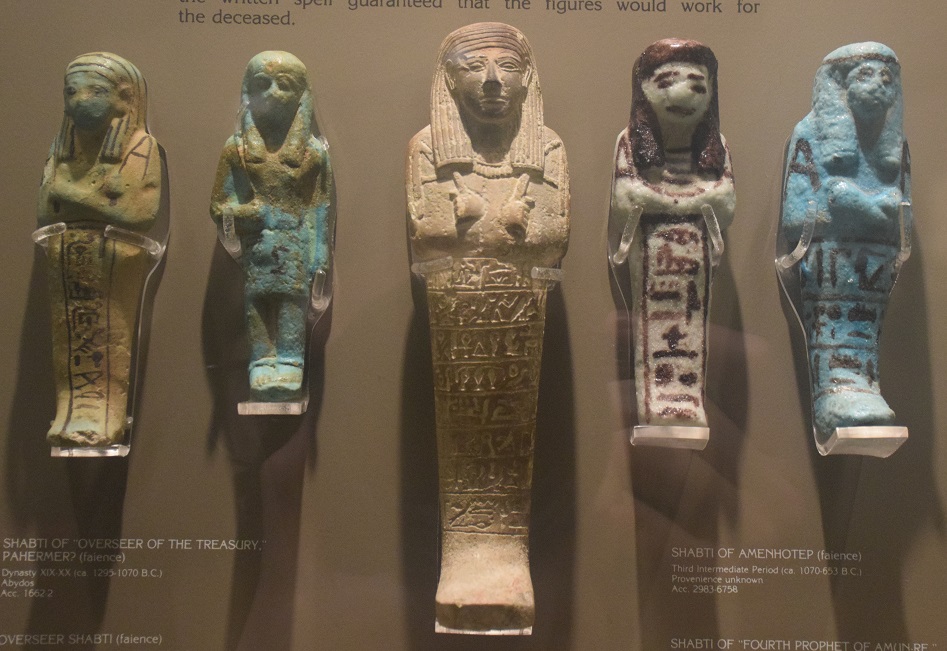
Shabtis in Walton Hall of Egypt
Carnegie Museum of Natural History
One of the Four Carnegie Museums of Pittsburgh
Shabtis in Walton Hall of Egypt
By Marc Wilson
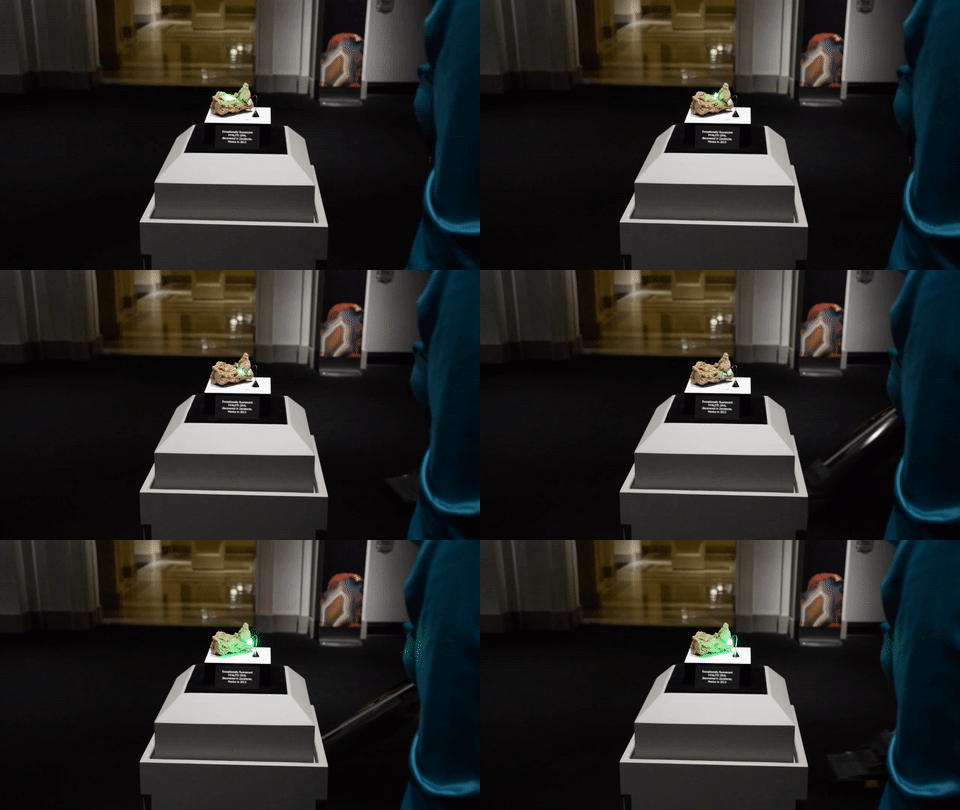
Pictured above, the mineral hyalite is a type of non-precious opal that is usually formed in hot springs environments, like
Yellowstone National Park.
Hyalite often contains traces of uranium as impurities. When there is just the right amount of uranium in the hyalite, it causes it to fluoresce brilliant yellow-green under ultraviolet radiation, more commonly called “black light.”
Most fluorescent hyalite reacts best to the shorter wavelengths of ultraviolet but this specimen has an intense reaction to long wave ultraviolet. This is good for us because short wave ultraviolet is completely filtered out by glass or plastic, but long wave can penetrate through both allowing us to cause it to fluoresce with a UV laser pointer.
This remarkably fluorescent hyalite opal was discovered in Zacatecas, Mexico in 2013. It came from a very small deposit that is now completely worked out. We are very fortunate to have such stunning examples
from this unusual occurrence.
Marc Wilson is the head of the Minerals Section at Carnegie Museum of Natural History. Museum employees are encouraged to blog about their unique experiences and knowledge gained from working at the museum.
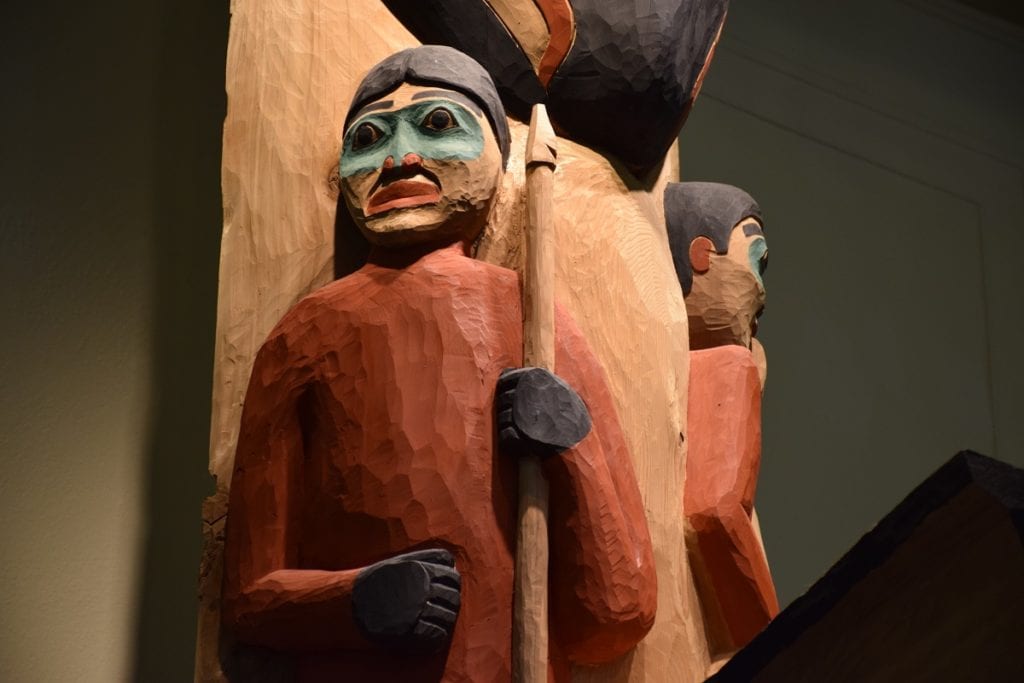
These totem pole carvings show two hunters in a dugout canoe. One hunter holds a
spear, while the other grips a seal, which represents the importance of living
off the land and the respect hunters have for their catch.
 Have you ever noticed two dark squares in the mural on Carnegie Museum of Natural History’s grand staircase?
When you’re taking in the grandeur of three stories of paintings that make up The Crowning of Labor mural the squares are easy to miss.
In the small squares, the paintings colors are darker and less vibrant because they’re covered in a thick layer of soot – a relic from Pittsburgh’s smoggy past.
Pittsburgh was famous for its bad air quality, a result of steel mills that made the city prosperous for decades. Their effects were known to blacken school children’s white uniforms, the façade of buildings, and even art. The entire mural was dark and obscured by soot until it was restored in 1995, by a team of Carnegie art conservators.
The conservators left a small piece of unrestored painting on the second and third floors, as a reminder of Pittsburgh’s past and of the work it took to preserve this amazing piece of art.
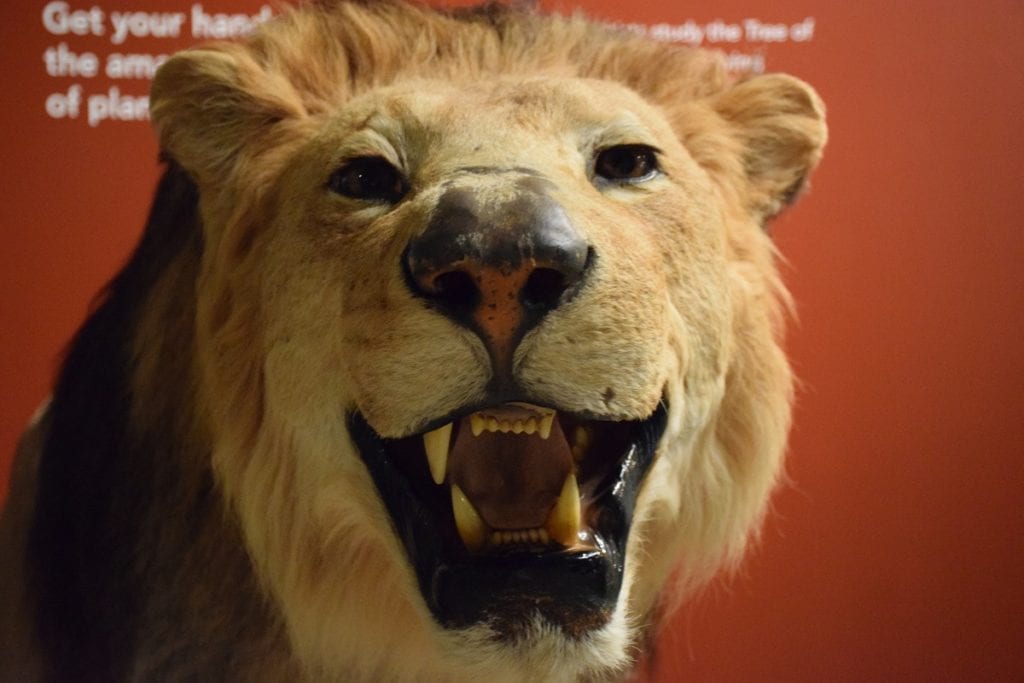
You can pet the mane of this lion at Discovery Basecamp, our new permanent gallery where visitors can explore, touch, and examine specimens from nature up close.
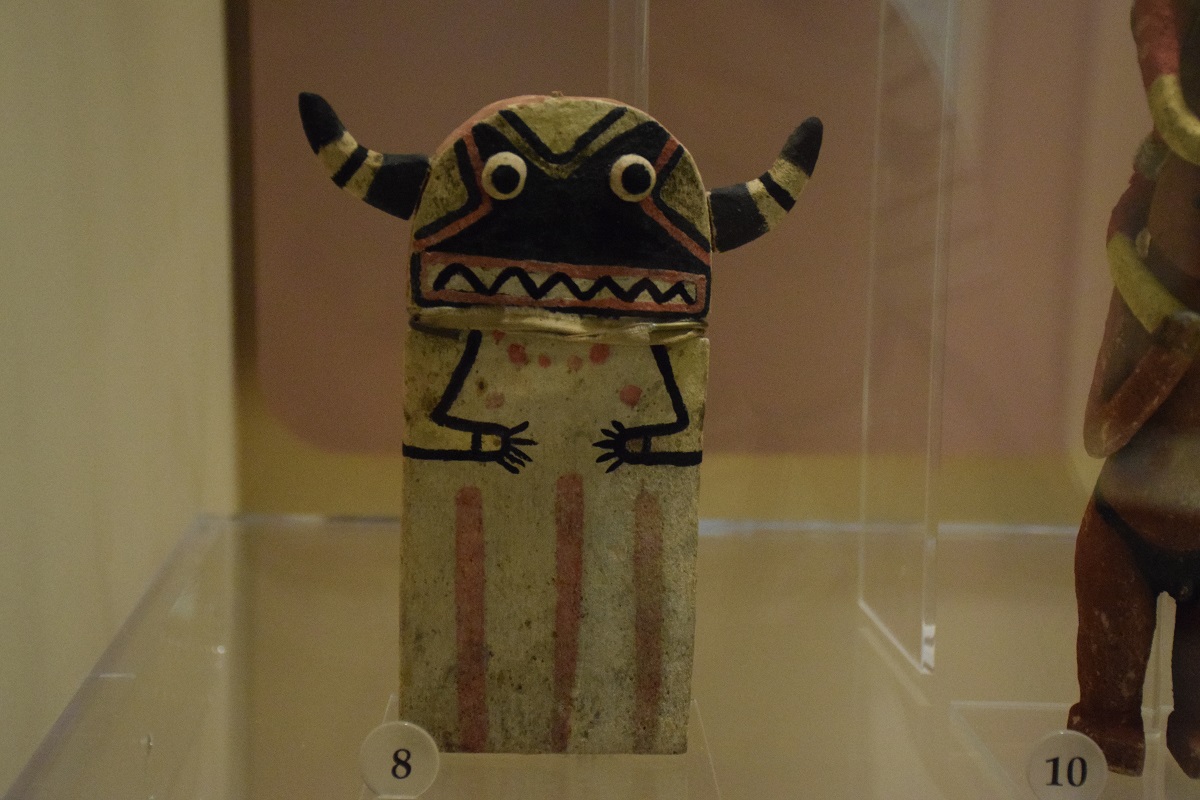
This Hopi Katsina doll was collected in 1900 and is called Whipper. Katsina dolls are representations of benevolent spirits.
