• Skip to primary navigation
  • Skip to main content
  • Skip to primary sidebar

Carnegie Museum of Natural History

One of the Four Carnegie Museums of Pittsburgh

  • Visit
    • Buy Tickets
    • Visitor Information
    • Exhibitions
    • Events
    • Dining at the Museum
    • Celebrate at the Museum
    • Powdermill Nature Reserve
    • Event Venue Rental
  • Learn
    • Field Trips
    • Educator Information
    • Programs at the Museum
    • Bring the Museum to You
    • Guided Programs FAQ
    • Programs Online
    • Climate and Rural Systems Partnership
  • Research
    • Scientific Sections
    • Science Stories
    • Science Videos
    • Senior Science & Research Staff
    • Museum Library
    • Science Seminars
    • Scientific Publications
    • Specimen and Artifact Identification
  • About
    • Mission & Commitments
    • Directors Team
    • Museum History
  • Tickets
  • Give
  • Shop

minerals

February 28, 2025 by Erin Southerland

Michael J. Bainbridge Wins the 2024 Carnegie Mineralogical Award

by Travis Olds, Assistant Curator of Minerals
March 4, 2025

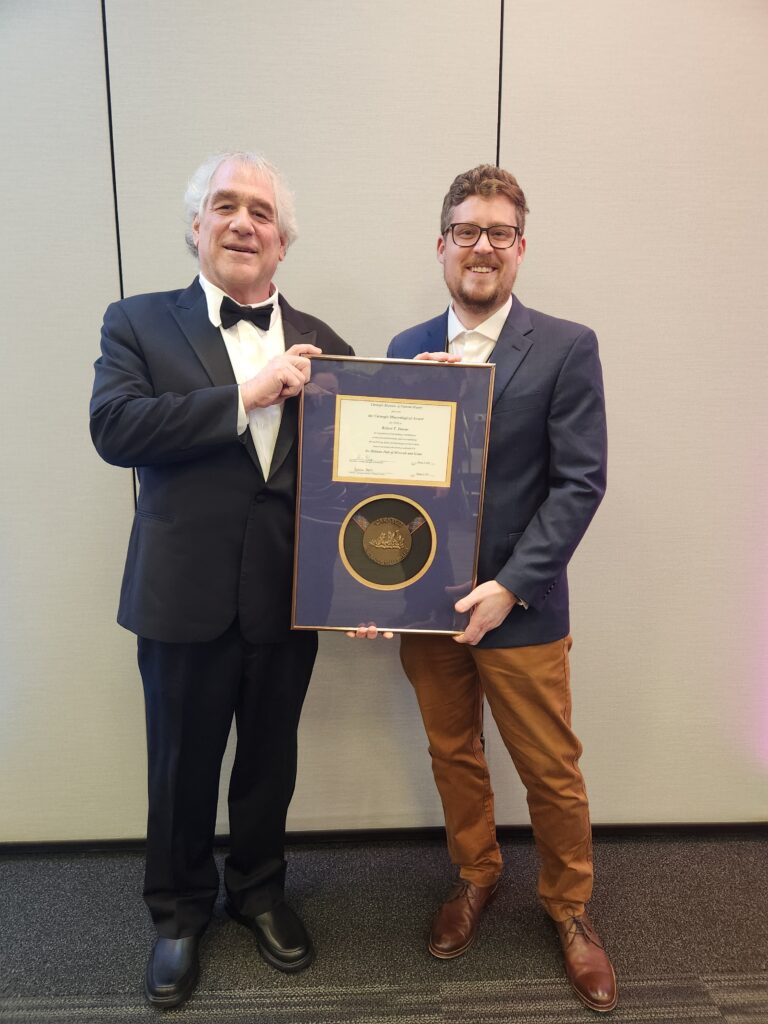
I am pleased to announce Michael J. Bainbridge as the winner of the 2024 Carnegie Mineralogical Award. Established in 1987 through the generosity of The Hillman Foundation Inc., the award honors outstanding contributions in mineralogical preservation, conservation, and education.

Michael is the Assistant Curator of Mineralogy at the Canadian Museum of Nature in Ottawa. Over the course of his career, he has elevated the field of mineral photography, published in leading mineralogical publications, and contributed to groundbreaking works such as Minerals of the Grenville Province: New York, Ontario, and Québec.

Travis Olds and Michael Bainbridge holding the Carnegie Mineralogical Award.
Travis Olds and Michael Bainbridge holding the Carnegie Mineralogical Award at the Tucson Gem and Mineral Show.

Michael has blended art and science to preserve and showcase the beauty of minerals, inspiring collectors and researchers alike. He has immortalized some of the rarest and best-of-species minerals, and this award recognizes the many wonderful contributions he has made to mineral heritage through his lens. 

Among his achievements, Bainbridge’s mineral photography has been featured in important works, such as The Pinch Collection at the Canadian Museum of Nature, and numerous articles in Rocks and Minerals and The Mineralogical Record. His work has ensured that specimens of scientific and cultural significance are preserved and appreciated by future generations. As a co-author of Minerals of the Grenville Province, Bainbridge helped document the mineralogical heritage of one of North America’s most storied geological regions. His contributions to Mindat.org and numerous mineral symposia have further enriched the global mineralogical community.

“I love to teach, and I love to tell stories, but I think both are fueled by a desire to learn for myself,” said Michael, reflecting on his achievements. “I’ve always been technically minded but artistically inclined, so combining my passion for minerals with my love of photography has proven the perfect vehicle for me to pursue and share both the scientific and the aesthetic. It has afforded me access to some of the world’s great collections and sparked collaborations with some of the community’s most influential amateurs and professionals alike.

“Among my proudest accomplishments, the Pinch book stands in high relief. Pushing the boundaries of photomicroscopy in documenting some of the smallest and rarest specimens of Mont Saint-Hilaire has been both challenging and rewarding. Ensuring top-notch reproductions for Lithographie’s publications has proven a similarly worthy endeavor. The significant finds I have made as a field collector are also close to my heart. But seeing new people come to the hobby through doors I have helped to open—whether through the Recreational Geology Project or co-founding the new Ottawa Valley Mineral Club—has perhaps been the most rewarding of all.

“More than anything, I am grateful for the many opportunities to share what I have learned along the way. And now, I look forward to the next chapter in my career as I assist in curating Canada’s national collection at the Canadian Museum of Nature. I am truly honored and humbled by this recognition of my small part in helping to present and preserve the world’s mineralogical heritage for future generations.”

I had the honor of presenting the award to Michael at the Tucson Gem and Mineral Show on February 15, 2025. Congratulations, Michael! 

2025 Carnegie Mineralogical Award

Nominations are now being accepted for the 2025 Carnegie Mineralogical Award, and the deadline is November 15, 2025. Eligible candidates include educators, private mineral enthusiasts and collectors, curators, museums, mineral clubs and societies, mineral symposiums, universities, and publications. For information, contact Travis Olds, Assistant Curator, Section of Minerals & Earth Sciences, at 412-622-6568 or oldst@carnegiemnh.org.

Filed Under: Blog Tagged With: mineralogical award, minerals, minerals and earth sciences, Travis Olds

June 28, 2024 by Erin Southerland

Mineral Gazing

by Debra Wilson

Have you ever gazed up at the sky and noticed a cloud that looks like a face, or an animal, or an object? You can apply the same concept when you visit Hillman Hall of Minerals and Gems! Many minerals on display have nicknames because of how they resemble certain animals, objects, or even characters from movies or TV shows. As you walk through the exhibits, let your imagination wander and search for minerals that look like things. Here are some to get you started.

Silver mineral that looks like an American flag
“The Flag” – Silver in the Native Elements case of the Systematic Mineral Collection
Image of the American flag that says "we here highly resolve that these dead shall not have died in vain...rememeber Dec. 7th!"
Photo credit: Allen Saalburg, Public domain, via Wikimedia Commons.
Nessie silver mineral
“Nessie” – Silver in Minerals from the Former Soviet Union exhibit
Loch Ness monster sculpture in the water
Photo credit: Immanuel Giel, Public domain, via Wikimedia Commons
snowball calcite on quartz
“Snowball” – Calcite on quartz in the Maramures District of Romania exhibit
snowball held in mitten-covered hands
Photo from Shutterstock.
Inch Worm berthierite on quartz
“Inch Worm” – Berthierite on quartz in The Maramures District of Romania exhibit
photo of an inch worm
Photo credit: gbohne from Berlin, Germany, CC BY-SA 2.0, via Wikimedia Commons
The Scream septarian concretion
“The Scream” – Septarian concretion in the Weathering Processes exhibit
"The Scream" painting
Image credit: Edvard Munch, Public domain, via Wikimedia Commons
the oyster natrolite on quartz
“The Oyster” –  Natrolite on quartz in the Deccan Plateau of India exhibit
oyster shell with a pearl
Photo from Shutterstock.
French fries laumontite
“French Fries” – Laumontite in Masterpiece Gallery
cup of French fries
Image by ha11ok from Pixabay.

As you enter Hillman Hall, check out the minerals in the Entrance Cube, their nicknames are on the labels. There are many more minerals on display throughout the hall that have acquired nicknames. Here’s just a handful of other nicknames for minerals in the exhibits, see if you can find them. Good luck and enjoy your mineral gazing!

NicknameExhibit
The BatIgneous Rocks
Polar BearWeathering Processes
Sea SlugThe Maramures District of Romania
The ChariotsThe Maramures District of Romania
Smog MonsterThe Maramures District of Romania
Sea SerpentPennsylvania Minerals and Gems
Pine Trees On a CliffOxides
BBQ ChipsMasterpiece Gallery
Cookies and CreamMasterpiece Gallery

Debra Wilson is Collection Manager for the Section of Minerals at Carnegie Museum of Natural History.

Related Content

How Do Minerals Get Their Names?

What Does Pittsburgh Have in Common with Mount Vesuvius?

Master of Optical Illusion

Carnegie Museum of Natural History Blog Citation Information

Blog author: Wilson, Debra
Publication date: June 28, 2024

Share this post!

  • Share on Twitter Share on Twitter
  • Share on Facebook Share on Facebook
  • Share on Pinterest Share on Pinterest
  • Share on LinkedIn Share on LinkedIn
  • Share on Reddit Share on Reddit
  • Share via Email Share via Email

Filed Under: Blog Tagged With: Deb Wilson, Debra Wilson, Hillman Hall, Hillman Hall of Minerals and Gems, minerals, Science News

February 20, 2024 by Erin Southerland

Robert T. Downs Wins 2023 Carnegie Mineralogical Award 

two people posing for the camera holding a framed award
Robert T. Downs, 2023 Carnegie Mineralogical Award Winner, and Travis Olds, Assistant Curator of Minerals at Carnegie Museum of Natural History. 

Carnegie Museum of Natural History (CMNH) is pleased to announce Robert T. Downs as winner of the 2023 Carnegie Mineralogical Award. The award honors outstanding contributions in mineralogical preservation, conservation, and education. 

Robert T. Downs is Professor Emeritus in the Department of Geosciences at The University of Arizona. Over the course of his career, he has taught thousands of students, published more than 300 peer-reviewed papers, and co-authored three books.  

“In his long career, Bob has influenced countless students and people from all walks of life through his lectures and publications, and as one of his supporters best put it, his influence on the mineralogy community is unique, lasting and profound. Congratulations, Bob,“ said Travis Olds, Assistant Curator of Minerals at Carnegie Museum of Natural History. 

Among his many achievements, Downs developed and continues to curate the RRUFF mineralogical database, one of the most widely used open-access mineral databases in the world, which has fundamentally changed how mineralogical data is kept and shared. The Raman spectra, X-ray diffraction, and chemistry data within RRUFF help mineral researchers identify specimens on Earth and beyond. Downs was a principal investigator on the Mars rover Curiosity, part of the Mars Science Laboratory mission. In 2023, he was second author on a paper in JGR Planets that summarizes a survey of 161 probable or confirmed Martian minerals and suggests that mineral diversity on Mars is an order of magnitude less than on Earth.  

Downs also prioritized making mineral education accessible to the public. He led the development of the popular, new University of Arizona Alfie Norville Gem & Mineral Museum in Tucson. 

“I found that the beauty of minerals was rivaled by the beauty of the math that described their crystal structures and the bonding of their atoms,” said Downs. “I am so thankful for a life in mineralogy that provided me the excitement of discovery and feel honored to receive the award.” 

Olds presented the award to Downs on February 10, 2024, at the Tucson Gem and Mineral Show. 
 
Carnegie Museum of Natural History established the Carnegie Mineralogical Award, funded by the Hillman Foundation, in 1987. 
 
Nominations are now being accepted for the 2024 Carnegie Mineralogical Award, and the deadline is November 15, 2024. Eligible candidates include educators, private mineral enthusiasts and collectors, curators, museums, mineral clubs and societies, mineral symposiums, universities, and publications. For information, contact Travis Olds, Assistant Curator, Section of Minerals & Earth Sciences, at 412-622-6568 or oldst@carnegiemnh.org.  
 
Past recipients include: 

2022 Willliam B. “Skip” Simmons, Jr. 
2021 Barbara Lee Dutrow, PhD. 
2020 John C. Medici, PhD. 
2019 John F. Rakovan, PhD. 
2018 Dudley P. Blauwet 
2017 W. Lesley Presmyk 
2016 Anthony R. Kampf, PhD. 
2015 George Harlow, PhD. 
2014 Bryon N. Brookmyer 
2013 Gloria A. Staebler 
2012 George W. Robinson, PhD. 
2011 Jeffrey E. Post, PhD. 
2010 The Rochester Mineralogical Symposium 
2009 Peter K.M. Megaw, PhD. 
2008 Frank C. Hawthorne, PhD. 
2007 Jeffrey A. Scovil 
2006 Richard C. Whiteman 
2005 June Culp Zeitner 
2004 Joel A. Bartsch, PhD. 
2003 Eugene S. Meieran, Sc.D. 
2002 Terry C. Wallace, Jr., PhD. 
2001 Wendell E. Wilson, PhD. 
2000 F. John Barlow, Sc.D. (honorary)  
1999 Sterling Hill Mining Museum  
1998 Robert W. Jones 
1997 Bryan K. Lees 
1996 Cornelis (Kase) Klein, PhD. 
1995 Marie E. Huizing 
1994 The Mineralogical Record 
1993 Cornelius S. Hurlbut, Jr., PhD. 
1992 Carl A. Francis, PhD. 
1991 Miguel A. Romero Sanchez, PhD. 
1990 Paul E. Desautels 
1989 Frederick H. Pough, PhD. 
1988 John Sinkankas, DHL. (honorary) 
1987 The Tucson Gem & Mineral Society 

Filed Under: Press Release Tagged With: mineralogical award, minerals, Science News, Travis Olds

November 21, 2022 by Erin Southerland

What Does Pittsburgh Have in Common with Mount Vesuvius?

by Debra Wilson

In the mid 18th century, it was popular amongst the wealthy elite of Europe to take a “Grand Tour” of cities like Paris, Rome, Venice, Florence, and Naples. During these tours they traveled with a tutor and would learn about the culture, languages, geography, art, and architecture of the cities. A must-see when passing through Naples was the volcano, Mount Vesuvius, probably because of the fascination of the famous 79 A.D. eruption that destroyed the cities of Pompeii and Herculaneum.

Back then, to reach the top of Vesuvius one had to climb on foot, ride on horseback, or be carried by sedan-chair. And just like modern day travelers, they liked to take home souvenirs. What better souvenir of making it to the summit of a volcano could there be than a piece of lava? And not just any piece, but one that would commemorate your adventure. Thus, the creation of the lava medallion.

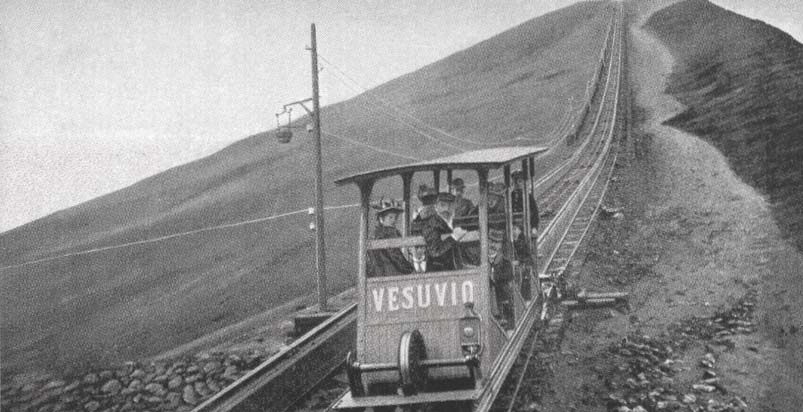
To make a medallion, some brave soul would retrieve molten lava on a stick, which was then molded, stamped out with engraved steel plates, cooled in a bucket of water, and then sold to the tourists. To increase the tourist trade and make it easier and more comfortable for tourists to visit the summit of Mount Vesuvius, it was determined that a funicular should be built on the 4,190-foot-high volcano. So, what’s a funicular you say? It’s a cable railroad designed to transport people and cargo up and down steep slopes. The ascending and descending cars are counterbalanced, meaning both cars are permanently connected to the opposite ends of the same cable, known as a haul rope. This haul rope runs through a system of pulleys at the upper end of the line. The first funicular on Mount Vesuvius opened on June 6, 1880 and ran, with some interruptions, until it was destroyed by the March 1944 Vesuvius eruption. The two cable cars were named “Etna” and “Vesuvio.”

Black and white image of a funicular car named Etna.
Stereokarte: Knackstedt & NätherScan: Claus-Peter Enders im Team mit Bernd Schwabe im Wikipedia-Büro HannoverCropp: Pechristener, Public domain, via Wikimedia Commons
Black and white image of a funicular car named Vesuvio.
Unknown author, Public domain, via Wikimedia Commons

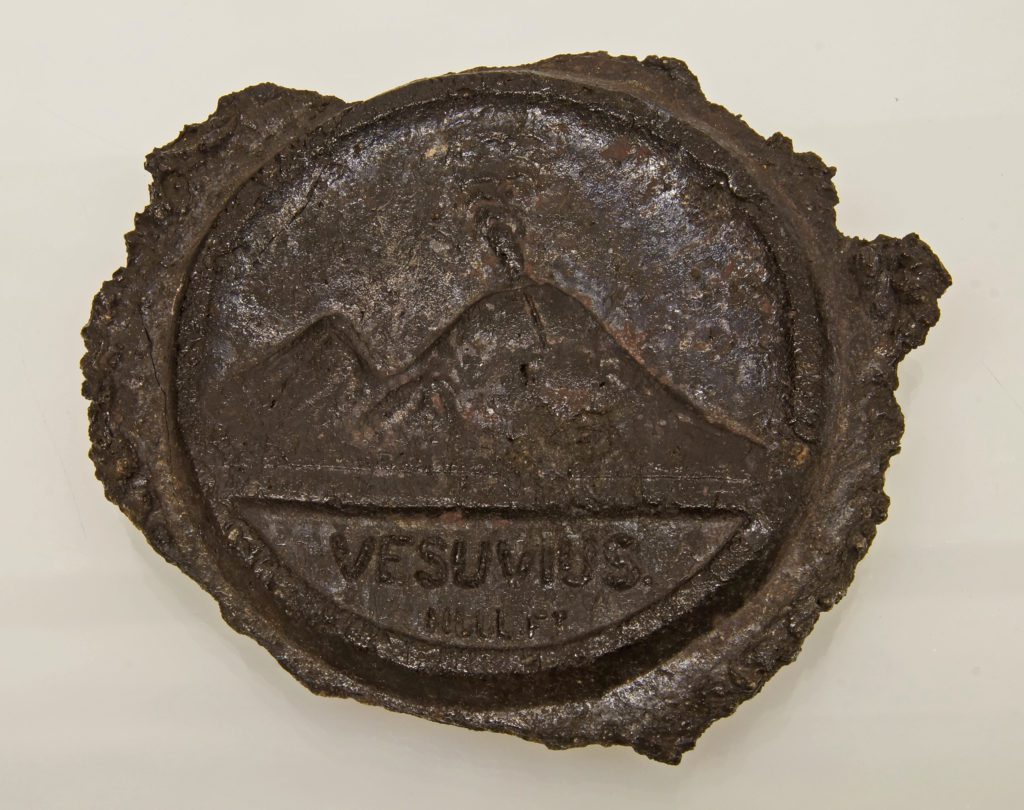
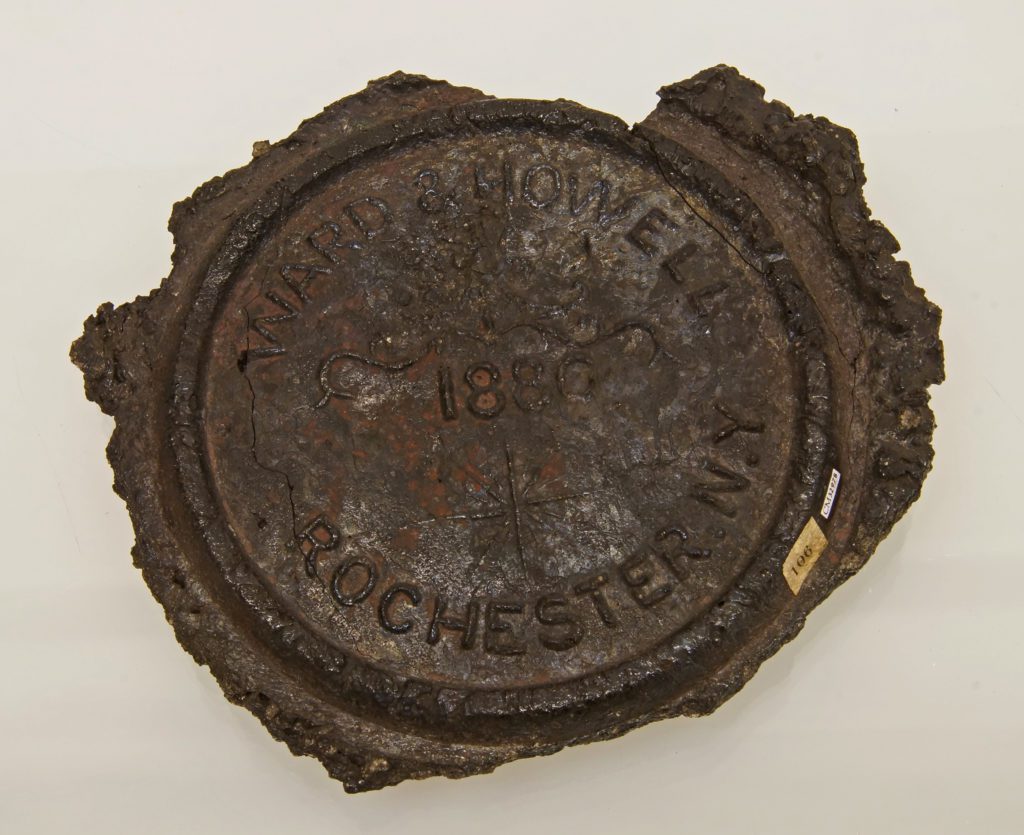
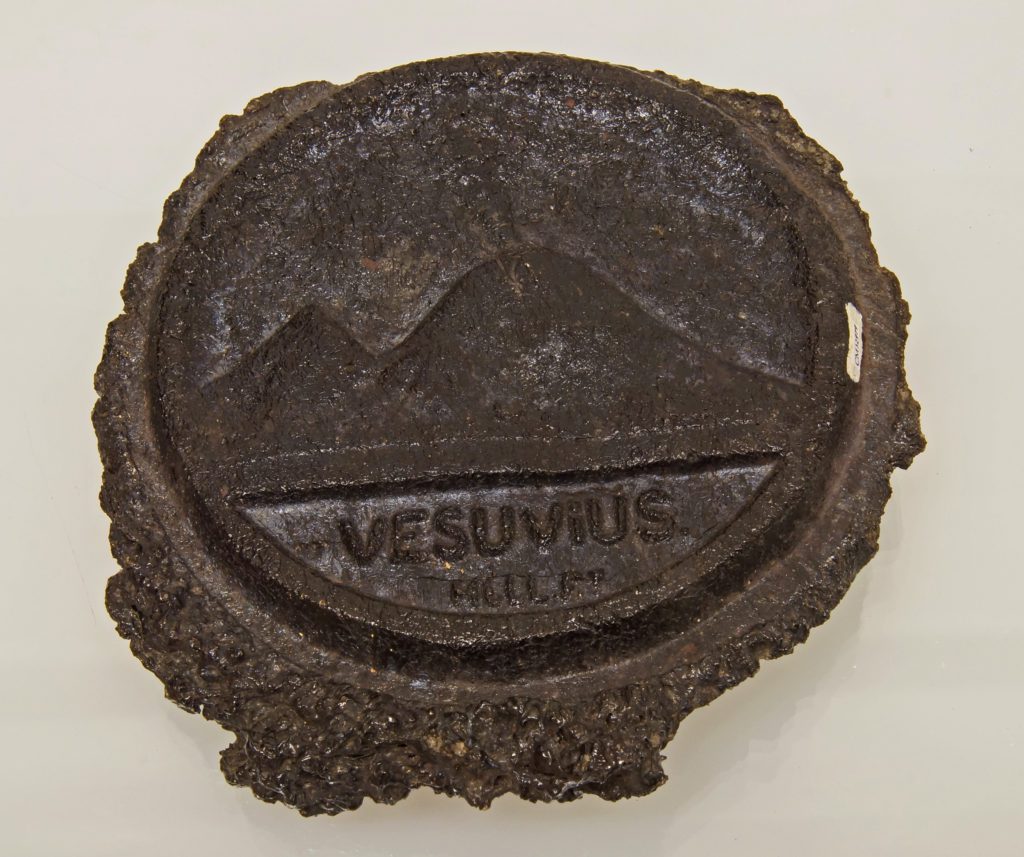
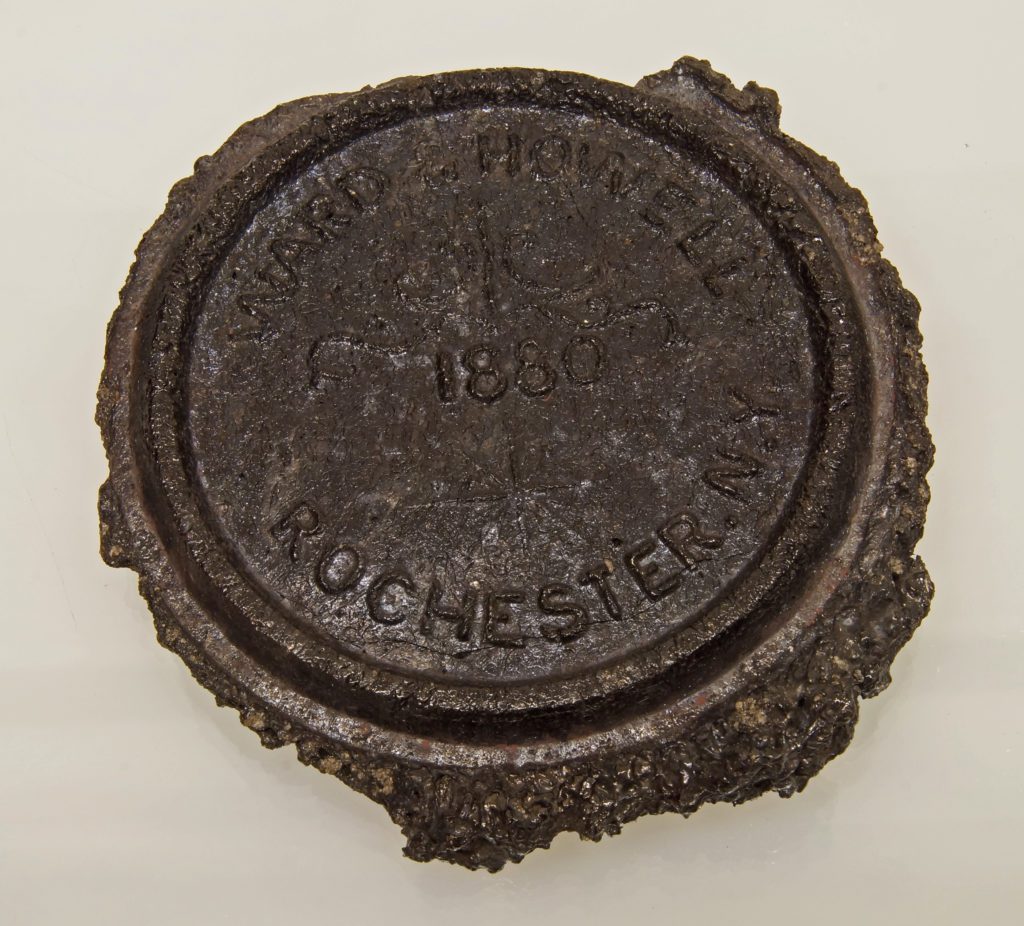
To commemorate the opening, some very special lava medallions were made. Our collection contains two such medallions among the roughly 30,000 specimens not on public view in the museum. These lava medallions were produced by Ward & Howell, the company that sold minerals for Ward’s Natural Science Establishment of Rochester, New York from 1875 to 1891. Each medallion has Mount Vesuvius stamped on the front, and the year 1880 on the back along with Ward & Howell Rochester, N.Y. If you look closely, you can make out the funicular rails on Vesuvius. Notice that no two medallions are alike, depending on how the lava squeezed out between the steel plates.

Mount Vesuvius lava medallion
CM32978 lava medallion, 18.3 x 14.4 x 2.6 cm   
Mount Vesuvius laval medallion
Back of the medallion
CM32979 lava medallion, 16.1 x 14.6 x 3.2 cm
Back of the medallion.

There was something else very special created to commemorate the 1880 opening of the funicular. The famous song “Funiculi, Funiculà” (which means funicular up, funicular down) was written by composer Luigi Denza, with lyrics by Peppino Turco. The Neapolitan tune is about a young man who compares his love for his sweetheart to a volcano and invites her to ride up to the summit on the funicular. As the funicular rises up, so does his courage to ask for her hand in marriage. The song became so popular that by 1881 the sheet music had sold one million copies. If you are unfamiliar with the tune listen to one or both of these:

For those of you who love the popular Girls Und Panzer anime series, which depicts competition between girls’ high schools practicing tank warfare as a sport, you might recognize this tune as one of the theme songs for the Sensha-dō  team of Anzio High School (an Italian-style private academy from Aichi Prefecture in Japan) commanded by “Duce” Anchovy. Here is a video of the Girls Und Panzer version of “Funiculi, Funiculà” with lyrics shown in both the original language and English:

So, what is the Pittsburgh connection?

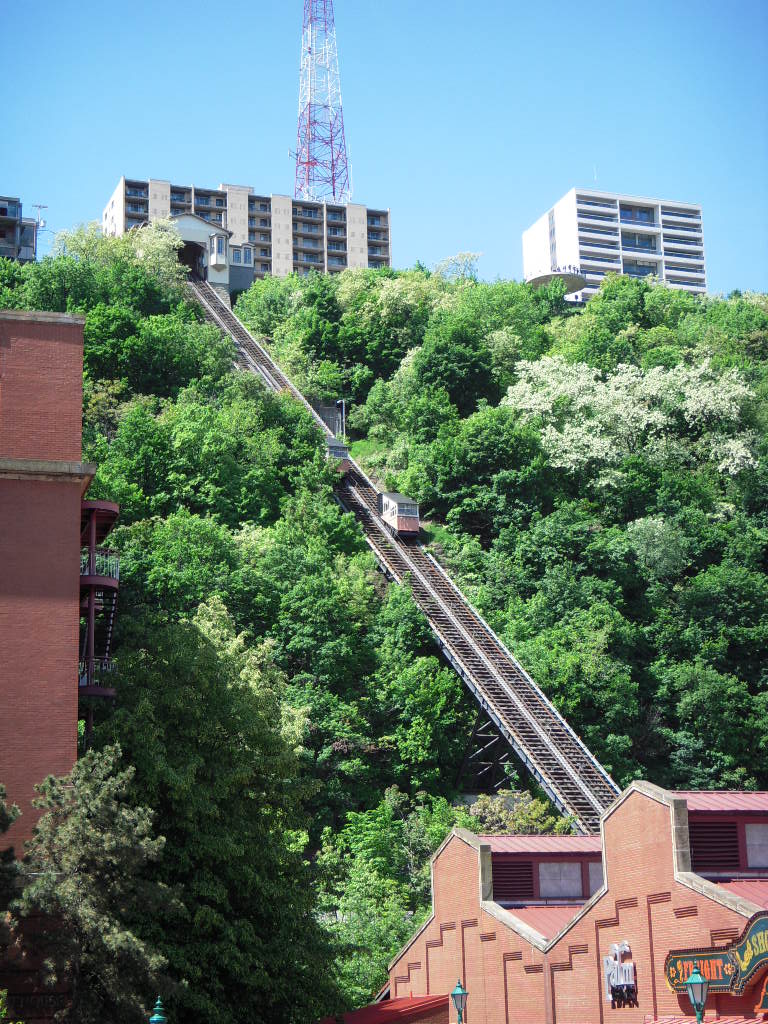
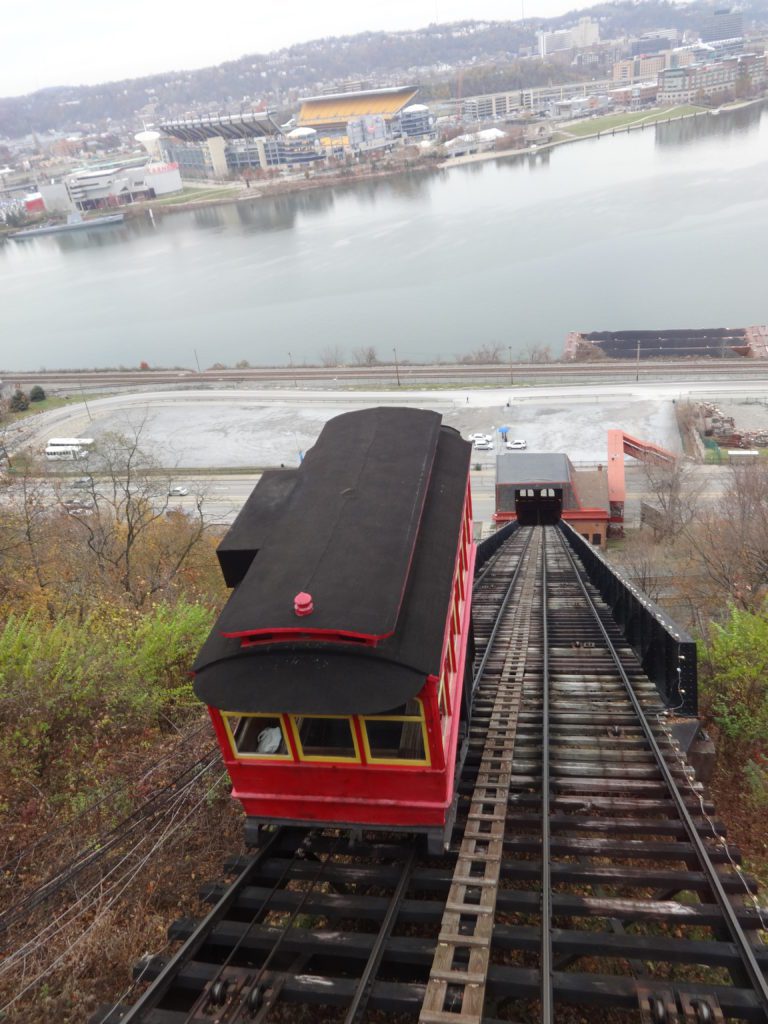
Now you know what a funicular is, but did you know that Pittsburgh has two funiculars? It’s not surprising since here in Pittsburgh we have just a few steep slopes around! We refer to these funiculars as inclines, and at one time there were 17 of them operating on the hilly topography carved by the Monongahela and Allegheny rivers. They were originally built to transport cargo up and down Mount Washington. Then with the influx of workers during the expansion of the coal and steel industries, more inclines were built to transport the employees of the mills and factories to their places of residence up on Mount Washington and other hilltop neighborhoods. Most of these inclines closed as more roads were built and the use of automobiles increased. The two inclines that are still in operation today were both in service on Mount Washington even before the funicular on Mount Vesuvius opened in 1880. The Monongahela Incline opened on May 27, 1870 and is the oldest continually operating funicular in the United States. The Duquesne Incline opened on May 17, 1877. Of course, you can’t get a lava medallion as a souvenir, but the next time you ride up and down one of our inclines, how about breaking out in a song, you know the one I mean…”Funiculi, Funiculà!”

Monongahela Incline. Image credit: pennsyloco, CC BY 3.0, via Wikimedia Commons
Duquesne Incline. Image credit: Bohemian Baltimore, CC BY-SA 4.0, via Wikimedia Commons

Debra Wilson is the Collection Manager for the Section of Minerals at Carnegie Museum of Natural History.

Related Content

Beauty From the Ashes

Manhattan Project Glass

Born to the Purple

Carnegie Museum of Natural History Blog Citation Information

Blog author: Wilson, Debra
Publication date: November 21, 2022

Share this post!

  • Share on Twitter Share on Twitter
  • Share on Facebook Share on Facebook
  • Share on Pinterest Share on Pinterest
  • Share on LinkedIn Share on LinkedIn
  • Share on Reddit Share on Reddit
  • Share via Email Share via Email

Filed Under: Blog Tagged With: Debra Wilson, minerals, minerals and earth sciences, minerals and gems, Science News

September 22, 2022 by Erin Southerland

How to Hunt for Microbes

by Carla Rosenfeld

The definition of microorganism is any organism that is too small to be seen by the naked eye. They can be single-celled, like bacteria and archaea, or multi-celled, like fungi. Though they are extremely tiny as individuals, these organisms have major impacts on every one of our lives and the environment as a whole. For example, if you’ve ever eaten bread, yogurt, pickles, sauerkraut, or cheese, you have various microbes to thank for the distinctive form or flavor of those foods. But have you ever wondered how we study these tiny organisms out in the field? If they are so small, how do we find them? And once we find them, how do we collect them? 

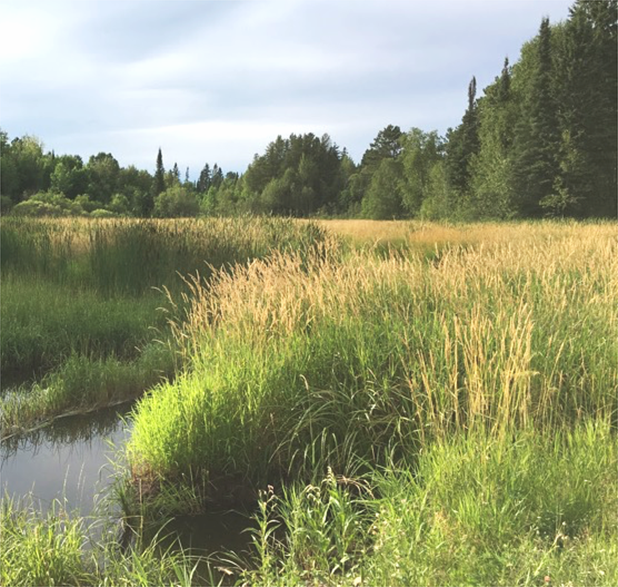
In my research, I try to understand the role microbes play in cycling various elements through the environment. Recently, I’ve been working on a project with a team of people from University of Minnesota School of Earth and Environmental Sciences and Argonne National Lab, to try to understand how microbes influence wetland sediment geochemistry. To do this, a group of us have been trekking around to different riparian wetlands from northern Minnesota to South Carolina. 

Riparian wetland in northern MN in our current studies.

To get our essential equipment to our field sites, we first pack everything we’ll need into giant coolers, and then seal the sturdy containers. If we’re flying to a distant site, we can ship the coolers to a location near our work site. If we’re driving, we just pack the coolers in a van to haul with us. The coolers are packed to the brim with our field equipment, clothing, gear (including waders and snake-proof boots), and lots of sunscreen and snacks. For work at some sites, we also take a canoe!

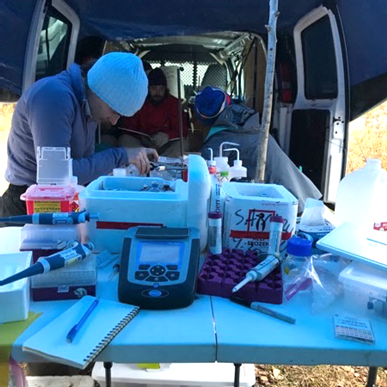
The packed coolers do double duty on our trips, because once we have emptied all our equipment out of them, we can fill them with ice to store the samples collected each day. Upon arrival at the field site, we set up a mobile lab on top of a folding table so that we can process our samples and do any time sensitive analyses. One key component of our mobile lab is a portable glove box, which is essentially a big plastic tent that we fill with nitrogen (yep, you guessed it… we also bring a tank filled with nitrogen gas!). We process our samples inside this tent so that we can cut, scrape, and separate our samples in the absence of oxygen. The controlled atmosphere within the tent is essential because the samples we collect come from underneath the water line, where little to no oxygen is present. Microbes that live below the water line have evolved different metabolic processes that don’t rely on oxygen. So, while we animals are all stuck breathing oxygen, many microbes can use different inorganic molecules like sulfate or nitrate in their respiration. The minerals that form and persist below the water line are also extremely sensitive and may start changing if we expose them to oxygen. 

Mobile lab setup for time-sensitive analyses and sediment core processing.

To collect our samples, we use a coring device…which is a fancy term for something that shoves sturdy 7 cm diameter plastic tubes down into the sediment. The tubes are approximately 60 cm-long sections of clear PVC pipe, and we push them as far down as we can. Then we pull up a sediment-filled core that ranges in length from 30-50 cm (that’s about the length of 2-6 bananas placed end to end). Once the core is removed, the clock is ticking for us to separate all our samples out and do our analyses as quickly as possible.

To buy some extra processing time, the first thing we do is dunk our entire sediment-filled PVC tube into a container of liquid nitrogen. The temperature of liquid nitrogen is -90 ˚C… which is cold enough to immediately freeze our samples on contact! We freeze our samples because it slows down or stops essentially all chemical and biological activity and preserves important molecules like DNA (deoxyribonucleic acid) and RNA (ribonucleic acid) that, once collected, can give us clues into what microbes are present in our system. Once our cores are frozen, we transfer them into our oxygen free tent, and remove the full core and separate sections of it based upon depth below the water line, sediment type, or other distinguishing features. We collect some samples to send off to labs for DNA or RNA sequencing. Other samples are collected to bring back to our labs to determine what minerals are present, and for further analysis of other chemical components present in sediment cores.

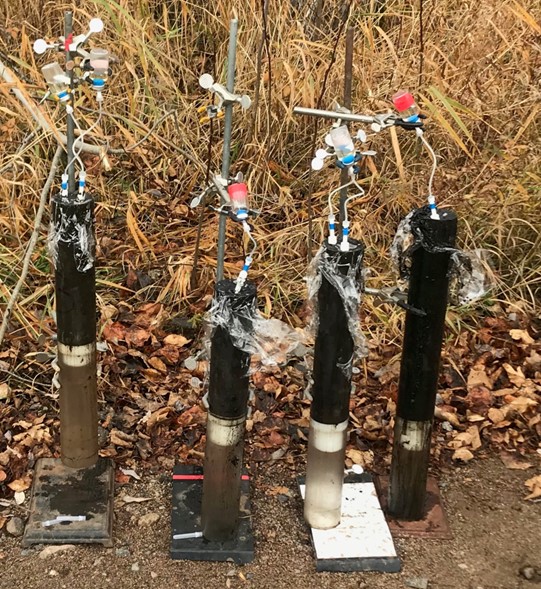
We also collect some cores that we don’t freeze so that we can collect the porewater, the liquid filling all the spaces between sediment grains, and living microbes. The chemistry of the porewater is highly related to sediment microbial activity and geochemistry of the solid sediments. To collect the waters, we stick porous tubes into the sediment cores, and connect those tubes to vials that have a vacuum inside of them, the same mechanical process used when you have your blood drawn at the doctor’s office. To collect living microbes, we take small scoops of sediment and store them in a refrigerator until we get back to the lab and can use the sediment to inoculate microbial growth media. That’s how we eventually add to our microbial culture library, a collection of living microbes with various living strategies and traits that we keep at the museum for research and to lend out to other researchers all over the world. 

Collecting sediment porewaters from cores collected from two different locations within the riparian wetland.

For a comprehensive understanding of how minerals and microbes vary within the riparian wetland, we repeat procedures of collecting and processing core samples throughout the wetland and at intervals along predetermined lines known as transects, that cross streams and intersect important hydrologic features of the ecosystem. Often, we’ll return to field sites many times over the course of a year or multiple years, so we can better investigate how the microbial activity and geochemical processes change over time with the seasons, as a result of major storm events, or with other environmental factors.   

Carla Rosenfeld is Assistant Curator of Earth Sciences at Carnegie Museum of Natural History.

Related Content

Fungi Make Minerals and Clean Polluted Water Along the Way

What Do Minerals and Drinking Water Have To Do With Each Other?

Wulfenite and Mimetite: CMNH’s Crystal Banquet

Carnegie Museum of Natural History Blog Citation Information

Blog author: Rosenfeld, Carla
Publication date: September 22, 2022

Share this post!

  • Share on Twitter Share on Twitter
  • Share on Facebook Share on Facebook
  • Share on Pinterest Share on Pinterest
  • Share on LinkedIn Share on LinkedIn
  • Share on Reddit Share on Reddit
  • Share via Email Share via Email

Filed Under: Blog Tagged With: Carla Rosenfeld, Hillman Hall of Minerals and Gems, minerals, Science News

June 1, 2022 by Erin Southerland

Cryptocurrency and Its Environmental Impact

by Dr. Travis A. Olds

Since the onset of the pandemic, millions of new miners have begun working to uncover raw resources; however, these miners are not the typical rock movers at your local quarry. They are instead making cryptographic calculations that reward newly minted digital currency – cryptocurrency.

You have likely heard a great deal about cryptocurrency lately, but may not understand what it is and may be wondering how something that doesn’t exist physically could hold any value? Gold and silver, as minerals with unique physical properties, have market value beyond that of currency, but consider for a moment the $20 bill. This paper currency itself has little physical value; it costs just under 14 cents to produce it, but the value of the bill is based on the fact that millions of people use and rely on it daily. The situation is similar for cryptocurrency. High demand for use and ownership of cryptocurrency creates its value.

Some cryptocurrencies have experienced a meteoric rise, and recently, an equally dramatic fall in value. The details are complex from a technical perspective, but people find crypto attractive for several reasons: using and owning it is significantly more secure than traditional banking, there are no limits to how much can be moved, and you can move it at any time. All transactions, even those made internationally, can be completed in just seconds and with significantly lower fees than those charged by traditional banks. Additionally, new mining methods, called “proof of stake,” even allow people to invest with crypto and earn interest over time. 

Of course, there are new risks and controversies surrounding cryptocurrency that are not encountered in everyday banking and investing. Because crypto is decentralized, there is no governmental or organizational control, and this has many people questioning how to regulate and protect its use. Only a few vendors accept payments in cryptocurrency because of this. With conventional banking, every purchase, withdrawal, or deposit you make through a bank or credit union with cash or credit is tracked by an electronic ledger to verify and secure your activities. The government helps to regulate and ensure the safety of these required systems. 

Cryptocurrency, on the other hand, uses a shared and system-wide electronic ledger called the “blockchain.” All transactions made through the blockchain are tracked, verified, and securitized using rapid cryptographic calculations made via individual miners. This ongoing electronic verification process ensures the massive digital transaction ledger cannot be controlled or altered by individual users. Crypto miners contribute to the ongoing verification process by operating machines to run the necessary calculations. A fraction of a freshly minted electronic coin is awarded for the cryptography calculations one miner does to help secure a transaction, what is termed the “proof of work” consensus mechanism.

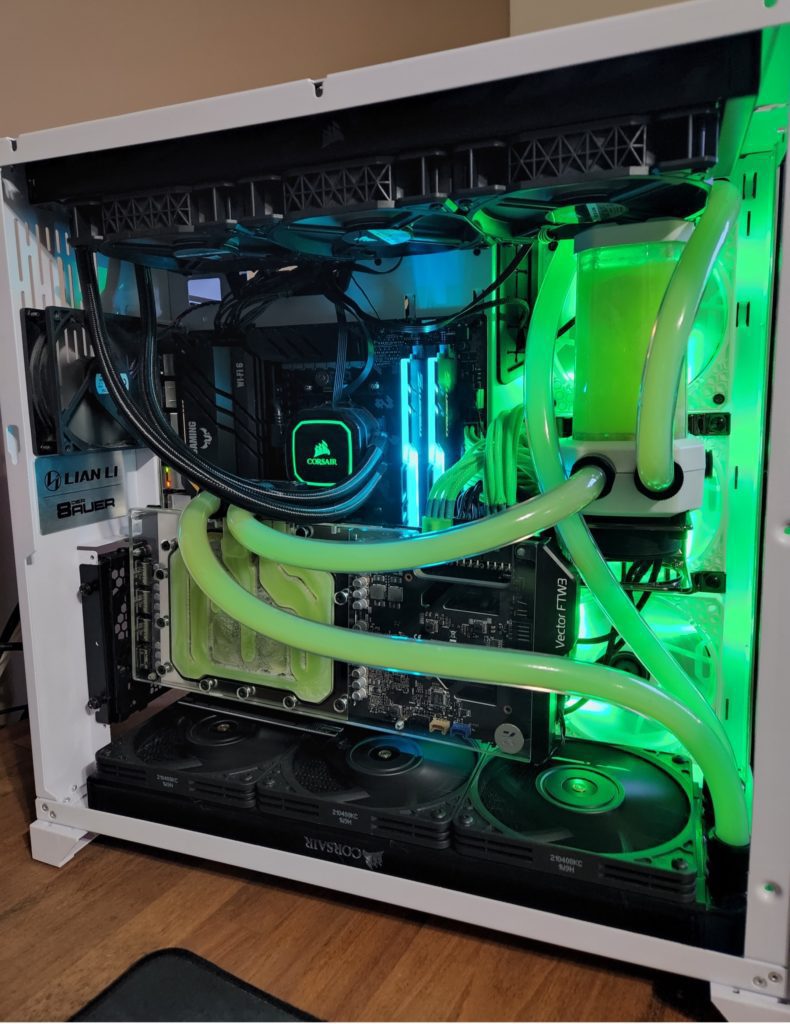
Cryptocurrency mining machine
A water-cooled computer used for mining cryptocurrency. A graphics card, the large rectangular component in the center of the image, makes the cryptographic calculations. 

Performing proof of work calculation consumes electricity. Globally, the amount of electricity used by crypto miners has increased exponentially since its inception and this has drawn controversy regarding its impact on our environment. Some large mining farms use more electricity in one day than most small cities or countries do in several; however, the total electricity used by crypto miners still makes up just a small percentage of that used by the traditional electronic banking and investing systems. In fact, traditional banking and crypto systems are both environmentally unfriendly in places that get their electricity from carbon-based power generation, such as coal, heating oil, and natural gas. In early 2022 here in Pennsylvania, 66% of our power came from carbon-based sources, with 30% from nuclear, and the remaining 3% from hydroelectric and other renewable sources. While that cocktail of energy sources makes electricity cheaper here than in most other states, it also means that Pennsylvanians indirectly emit considerably more carbon to keep their lights on. Coal, oil, and natural gas are the cheapest but also the three least efficient fuels for electricity generation and have collectively done the most harm to the environment. 

Specialized crypto mining hardware, including graphics cards and ASIC units, generates heat while performing rapid calculations, so it helps to mine in areas with cool weather. If the hardware can operate at a cooler temperature, it can perform more calculations, which is measured in hashes/second, and is used to quantify the rewards received. Many miners take advantage of the easy scalability of mining hardware, by building large farms that can contain thousands of graphics cards and make thousands of dollars per day, but that also consume enormous amounts of electricity.

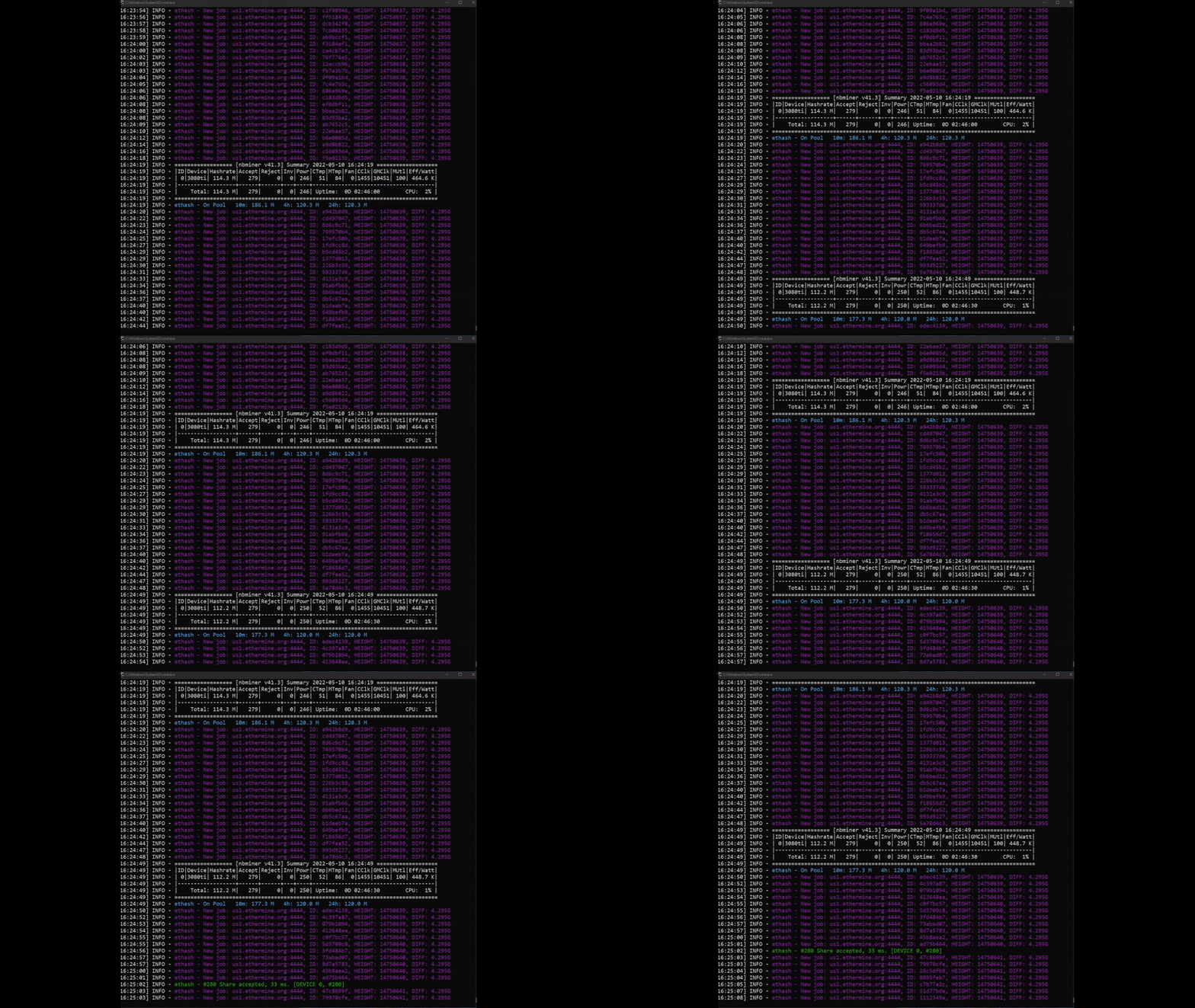
The output from mining software shown in real time. Jobs (in magenta) are sent from the blockchain over the internet to your hardware to make calculations that secure transactions and mint new coins. Sometimes, your work is awarded with a share (green), which is redeemable for coins. 

Electrical inefficiency and negative environmental impact have encouraged some cryptocurrency coin developers to come up with more energy efficient algorithms for rewards, but implementation is a slow and complex process. Many miners focus on whichever cryptocurrency is most profitable on any given day, regardless of its efficiency. Many of the largest mining farms are built in areas where energy is cheapest, or where local governments provide property or other tax incentives. Typically, no consideration of environmental impact is made when establishing new farms. In contrast, small amateur and at-home miners with only a few graphics cards can mine cryptocurrency without much increase to their monthly electrical bill. It is possible to make a small profit if you live in an area with cheap electricity, or if you can offset the use with renewable energy, for example, by using solar panels. With two graphics cards, one can make up to $6 a day mining Ethereum, a currently extremely popular crypto coin. 

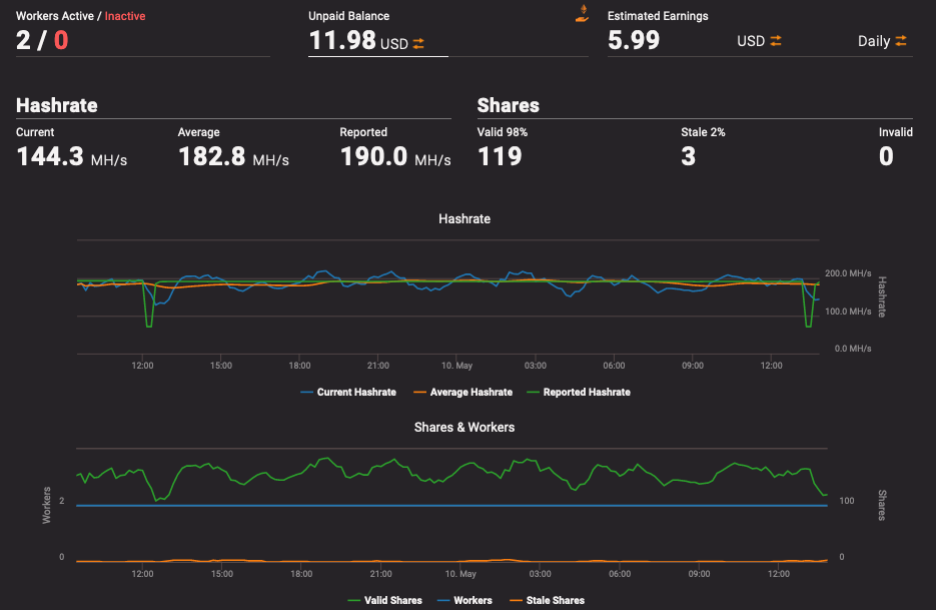
A screenshot with common metrics used to judge performance and profitability while mining Ethereum (ethermine.org). A high computation rate, or hashrate, given in units of Megahash/second, defines the chances for finding shares, which translate roughly to earnings based on the value of the coin that day.

The visible costs to start mining include buying the hardware, which can cost up to several thousand dollars, and paying for the electricity to power it. A mining “rig” with two graphics cards consumes 600 W, and costs $1.50 per day to mine $6 of Ethereum. Put that another way, the electricity needed to realize a $4.50 profit in one day is equivalent to leaving a 60W light bulb on continuously for 10 days. The invisible and usually overlooked cost of that profit is how roughly two-thirds of the electricity needed to profit was generated by burning fossil fuels and has indirectly but significantly contributed to climate change. 

Cryptocurrency is fraught with inefficiency, complexity, and controversy. The framework is constantly evolving and improving, and although it is far from replacing the day to day use of physical currency, many argue that digital currency is here for the long run. The development of less power-intensive mining methods and more energy efficient hardware is helping to offset the carbon footprint of crypto mining. Crypto mining will become more environmentally friendly in the future, as nuclear power and other renewables like solar and wind energy become cheaper, replacing the dirty and archaic coal and natural gas-burning power stations. 

Dr. Travis A. Olds is Assistant Curator of Minerals at Carnegie Museum of Natural History.

Related Content

Understanding Fossil Fuels Through Carnegie Museums’ Exhibits

Unidentified Gold Nugget

Sea Snails from Christmas Island (Money Cowries and Castor Bean Shells)

Carnegie Museum of Natural History Blog Citation Information

Blog author: Olds, Travis A.
Publication date: June 1, 2022

Share this post!

  • Share on Twitter Share on Twitter
  • Share on Facebook Share on Facebook
  • Share on Pinterest Share on Pinterest
  • Share on LinkedIn Share on LinkedIn
  • Share on Reddit Share on Reddit
  • Share via Email Share via Email

Filed Under: Blog Tagged With: climate change, Hillman Hall of Minerals and Gems, minerals, Science News, Travis Olds

  • Page 1
  • Page 2
  • Page 3
  • Interim pages omitted …
  • Page 8
  • Go to Next Page »

sidebar

About

  • Mission & Commitments
  • Directors Team
  • Museum History

Get Involved

  • Volunteer
  • Membership
  • Carnegie Discoverers
  • Donate
  • Employment
  • Events

Bring a Group

  • Groups of 10 or More
  • Birthday Parties at the Museum
  • Field Trips

Powdermill

  • Powdermill Nature Reserve
  • Powdermill Field Trips
  • Powdermill Staff
  • Research at Powdermill

More Information

  • Image Permission Requests
  • Science Stories
  • Accessibility
  • Shopping Cart
  • Contact
  • Visitor Policies
One of the Four Carnegie Museums | © Carnegie Institute | Privacy Policy | Terms of Use | Accessibility
Rad works here logo