• Skip to primary navigation
  • Skip to main content
  • Skip to primary sidebar

Carnegie Museum of Natural History

One of the Four Carnegie Museums of Pittsburgh

  • Visit
    • Buy Tickets
    • Visitor Information
    • Exhibitions
    • Events
    • Dining at the Museum
    • Celebrate at the Museum
    • Powdermill Nature Reserve
    • Event Venue Rental
  • Learn
    • Field Trips
    • Educator Information
    • Programs at the Museum
    • Bring the Museum to You
    • Guided Programs FAQ
    • Programs Online
    • Climate and Rural Systems Partnership
  • Research
    • Scientific Sections
    • Science Stories
    • Science Videos
    • Senior Science & Research Staff
    • Museum Library
    • Science Seminars
    • Scientific Publications
    • Specimen and Artifact Identification
  • About
    • Mission & Commitments
    • Directors Team
    • Museum History
  • Tickets
  • Give
  • Shop

Mystery Spit

spittlebug froth on a leaf
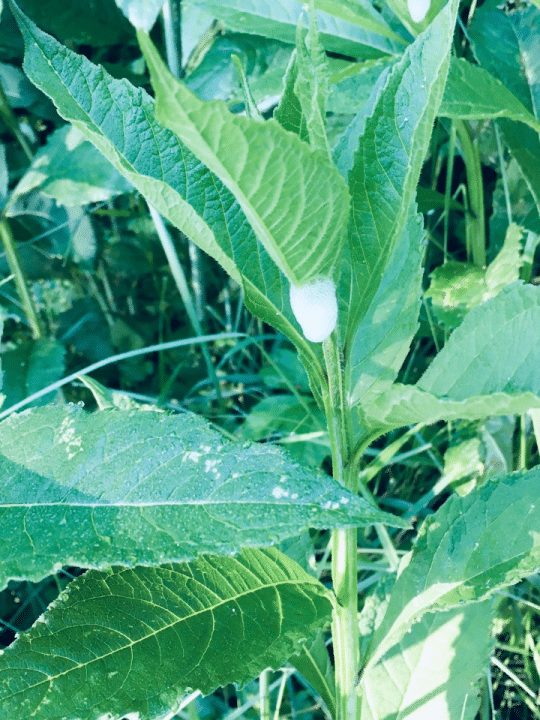
Spittlebug froth on the stalk and leaf stem of a sneezeweed plant.

You’ve likely noticed the stuff at this time of year even if you didn’t have a ready name for it – grape-sized globs of frothy white foam on all kinds of plant stems.

The bubbles are made by the nymph stage of a large group of insects known commonly as frog hoppers, and scientifically as members of the widespread insect superfamily Cercopoidea.

Because the activity of the nymphs is so noticeable, they’ve earned their own common name – spittlebugs.
spittlebug on a leaf
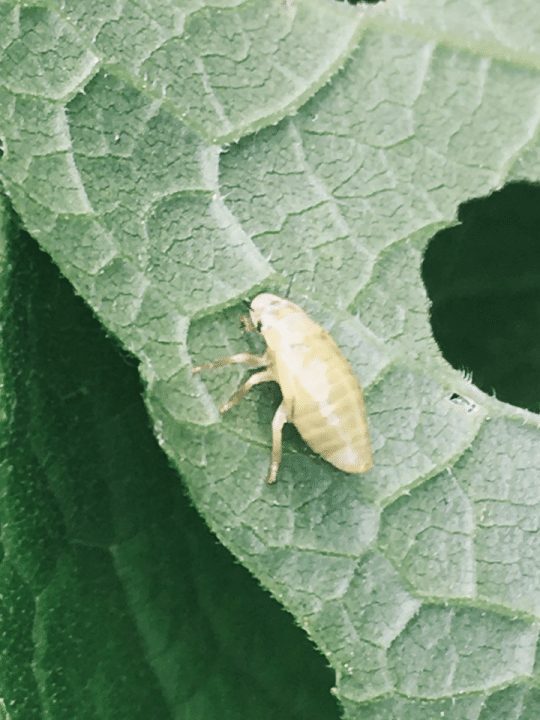
A spittlebug temporarily removed from its frothy shelter.

The nymphs, which hatch in the spring from eggs laid the previous summer, are sap drinkers. They pierce plant stems to access the juices produced by the growing plant, drink deeply, and after processing vital nutrients, turn their waste stream into a protective shelter. Although spittlebug froth visually resembles spit, it contains no saliva. The bubbles are mixture of the tiny creature’s urine and a sticky fluid produced in an abdominal gland.

The frothy layer keeps the soft-bodied insects from drying out and it also serves as a predator barrier. Because spittlebugs produce urine in amounts more than 150 times their own body weight, their bubbly shelters generally offer ample protection.

Research about spittlebugs has been conducted at University of British Columbia. Information about this research, including a short video narrated by New York Times Science Writer James Gorman can be found at:  https://www.nytimes.com/2019/02/19/science/spittlebugs-bubble-home.html

Patrick McShea works in the Education and Visitor Experience department of Carnegie Museum of Natural History. Museum employees are encouraged to blog about their unique experiences and knowledge gained from working at the museum.

Related Content

Is That Snow…in June?

Fourth of July and the Firefly

Educator Spotlight: Christian Shane

sidebar

About

  • Mission & Commitments
  • Directors Team
  • Museum History

Get Involved

  • Volunteer
  • Membership
  • Carnegie Discoverers
  • Donate
  • Employment
  • Events

Bring a Group

  • Groups of 10 or More
  • Birthday Parties at the Museum
  • Field Trips

Powdermill

  • Powdermill Nature Reserve
  • Powdermill Field Trips
  • Powdermill Staff
  • Research at Powdermill

More Information

  • Image Permission Requests
  • Science Stories
  • Accessibility
  • Shopping Cart
  • Contact
  • Visitor Policies
One of the Four Carnegie Museums | © Carnegie Institute | Privacy Policy | Terms of Use | Accessibility
Rad works here logo