• Skip to primary navigation
  • Skip to main content
  • Skip to primary sidebar

Carnegie Museum of Natural History

One of the Four Carnegie Museums of Pittsburgh

  • Visit
    • Buy Tickets
    • Visitor Information
    • Exhibitions
    • Events
    • Dining at the Museum
    • Celebrate at the Museum
    • Powdermill Nature Reserve
    • Event Venue Rental
  • Learn
    • Field Trips
    • Educator Information
    • Programs at the Museum
    • Bring the Museum to You
    • Guided Programs FAQ
    • Programs Online
    • Climate and Rural Systems Partnership
  • Research
    • Scientific Sections
    • Science Stories
    • Science Videos
    • Senior Science & Research Staff
    • Museum Library
    • Science Seminars
    • Scientific Publications
    • Specimen and Artifact Identification
  • About
    • Mission & Commitments
    • Directors Team
    • Museum History
  • Tickets
  • Give
  • Shop

Amanda Martin

July 20, 2022 by Erin Southerland

Scientists Call for New Research Studying the Combined Effects of Climate Change and Urbanization on Body Size Across Species

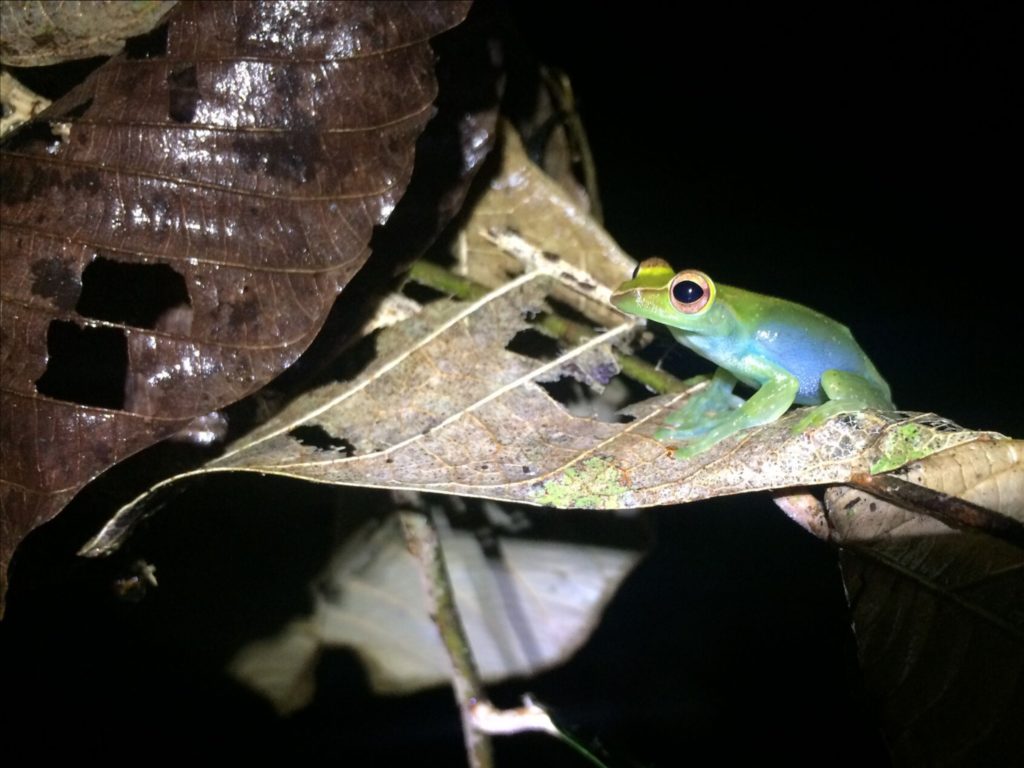
Rhacophorus dulitensis (jade tree frog). Photo by Dr. Jennifer Sheridan, Carnegie Museum of Natural History

Researchers from Carnegie Museum of Natural History have described impacts of climate change and land use on the size of organisms. Dr. Jennifer Sheridan, Assistant Curator of Amphibians and Reptiles, and Dr. Amanda Martin, post-doctoral researcher, review the causes that lead to changes in size as well as ecological interactions, while making the case for more research studying the combined effects of climate change and urbanization. The paper, entitled “Body size responses to the combined effects of climate and land use changes within an urban framework,” was published in in the journal Global Change Biology on June 27. 

Body size is considered one of the most important traits of an organism, affecting thermal regulation, mobility, reproductive output, and capacity to acquire resources. Over many generations, body sizes usually increase within lineages. Recent observations, however, show a decrease in size over relatively short time periods. This could have profound ramifications for individual organisms and ecosystems alike. For example, size-related reproductive success means that interacting populations in the same location will be dominated by smaller species, leading to long-term changes in predator-prey dynamics. Most research suggests climate change as the primary driver of changes in size, but emerging research indicates that land use—especially urbanization—may also contribute.  

Human-induced climate change has significantly altered temperatures since the 1950s, and temperature affects the size of organisms. At roughly the same time, the Earth has experienced rapid urbanization and a tripling of the human population. Unlike climate change, urbanization has been shown to cause an increase in size of some organisms due to the advantage size has on mobility, and the greater availability of food and other resources. Urbanization does not affect all organisms equally; however, and some species—including some birds—are unable to take advantage of food abundance in urban settings and have become smaller.

“There is a gap in the literature,” says Dr. Sheridan. “Given that climate change and urbanization are projected to continue their rapid growth, there is an urgency to understanding how their respective effects may be working in concert. Specimens from museum collections are a unique data source that can shed light on changes in size with respect to climate and land use changes over time.”  

Sheridan and Martin recommend several steps researchers can take to better understand biodiversity loss and ultimately work toward species conservation. These include expanding the taxonomic and geographic scope of research–including the use of museum collections; increasing the use of quantitative data—such as impervious surface area–over categorical data such as urban versus rural zones; and increasing the testing of climate change and land use interactions. Better understanding of the combined effects of climate change and urbanization is imperative for responding to rapid environmental change. 
Filed Under: Press Release Tagged With: Amanda Martin, amphibians and reptiles, climate change, Jennifer Sheridan, Science News

September 3, 2021 by wpengine

Pitfall Traps: Fieldwork Surprises

by Amanda K. Martin

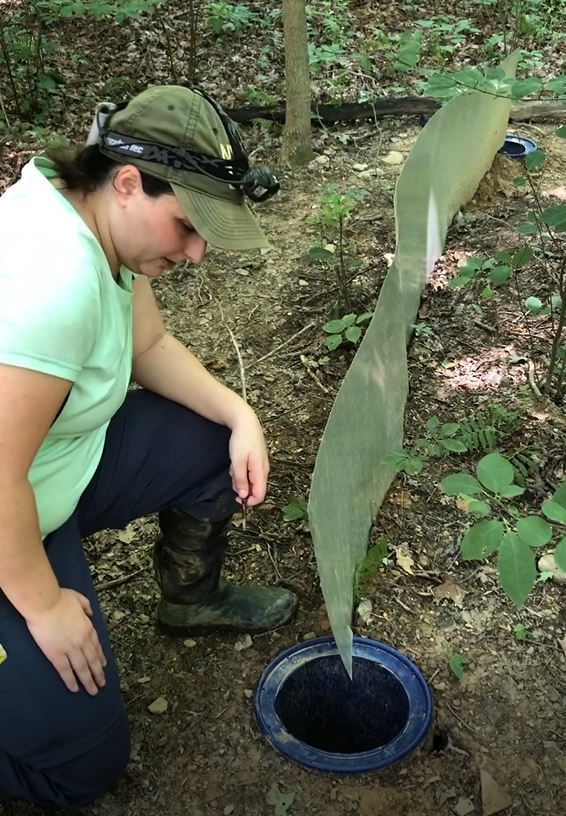
Powdermill Nature Reserve is home to a wide variety of creatures whose presence remains undetected by most human visitors. One way that scientists can explore the animal diversity of an area is by a method called pitfall trapping (Fig. 1A). For research into the Reserve’s amphibian diversity, I was part of a small team who placed pairs of 5-gallon buckets in the ground 8 feet apart, with their rims at surface level. We then set up a low metal fence between each pair of buckets (Fig 1A). Animals moving along the forest floor who encountered the fence would generally follow the barrier, to the left or to the right, and fall into one of our traps.

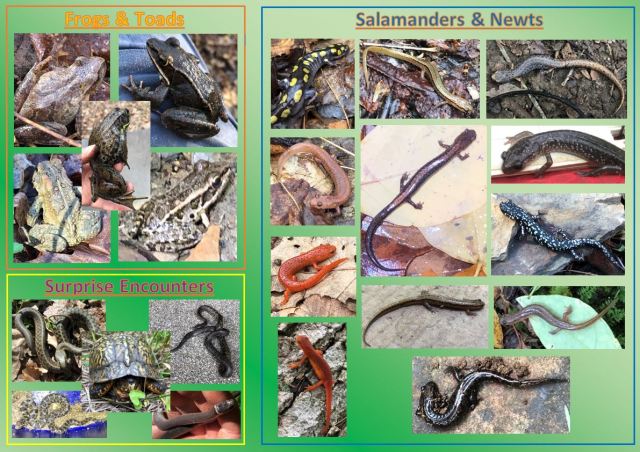
We checked our pitfall traps every morning during the study period, noting which species we had captured, along with their size and weight, before releasing them unharmed. As an amphibian study our trapping targets were frogs, toads, salamanders, and newts, and we were successful in documenting their presence. Across ten sample periods of ten days each, we captured 1,962 individual amphibians representing 17 different species! (Fig. 1B)

Woman looking into a pitfall trap in the woods.
Fig 1A: Dr. Martin inspecting a pitfall trap array for captured amphibians. Photo by P. DeQueiroz.
College of reptile and amphibian photos.
Fig. 1B: Species diversity from captures in traps along with a few surprise reptilian encounters.

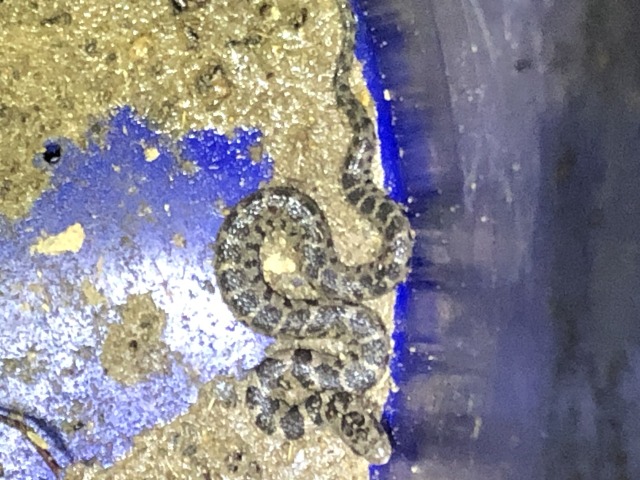
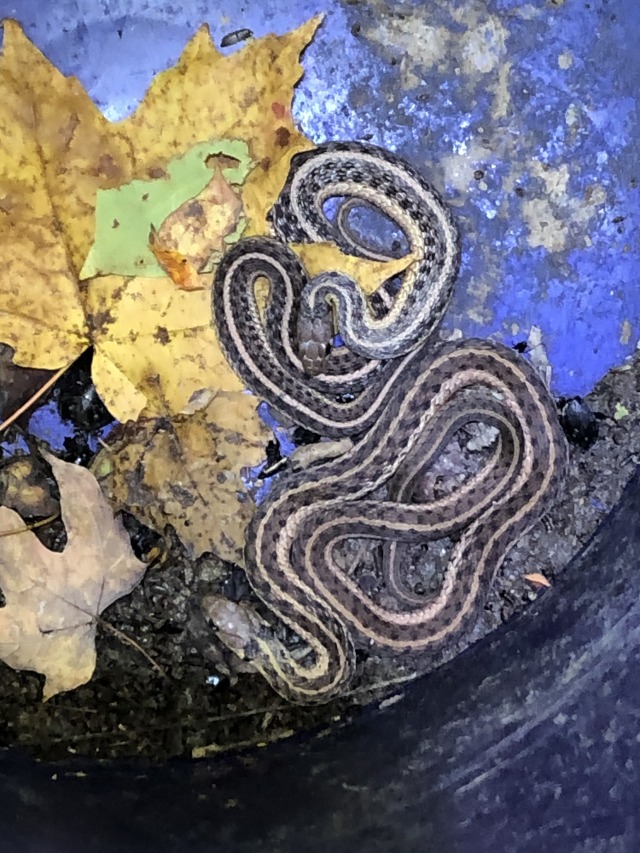
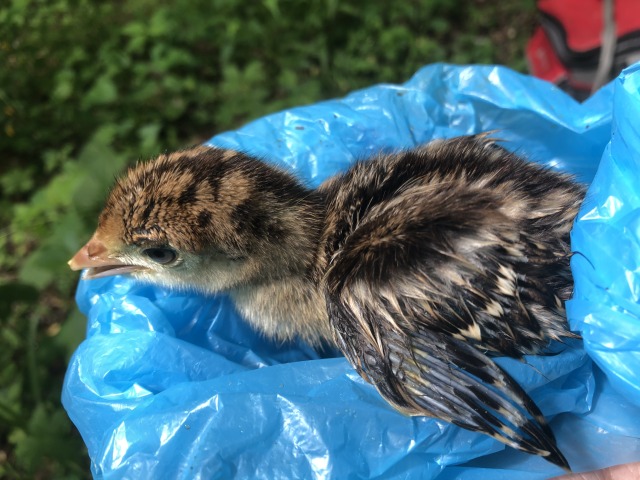
Pitfall traps also capture non-target species, called by-catch, a term that give little indication of the surprising encounters some of these creatures create. Normally I see a wide variety of invertebrate species when I check my traps, including millipedes, large beetles, spiders, crayfish, and even moths. Additionally, this year we captured a Northern water snake (Nerodia sipedon; Fig. 2A) and four eastern garter snakes (Thamnophis sirtalis; Fig. 2B). More surprisingly, one trap briefly detained a fledging Wild Turkey (Meleagris gallopavo, Fig. 2C)!

Northern water snake in a pitfall trap.
Eastern garter snake in a pitfall trap.
Fledgling turkey.
Fig. 2: Captured snakes and a surprise avian, Northern Water (A), Eastern Garter (B), and a fledgling turkey (C).

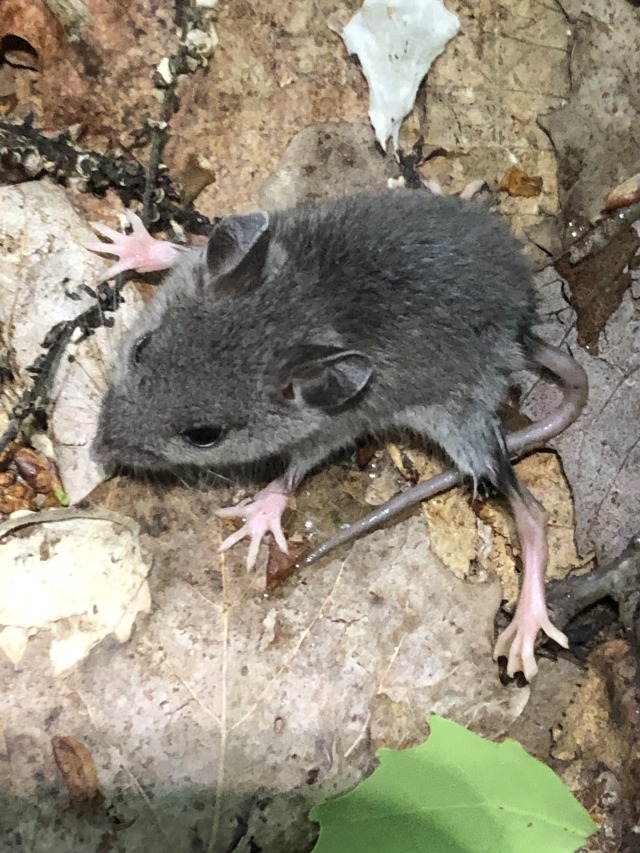
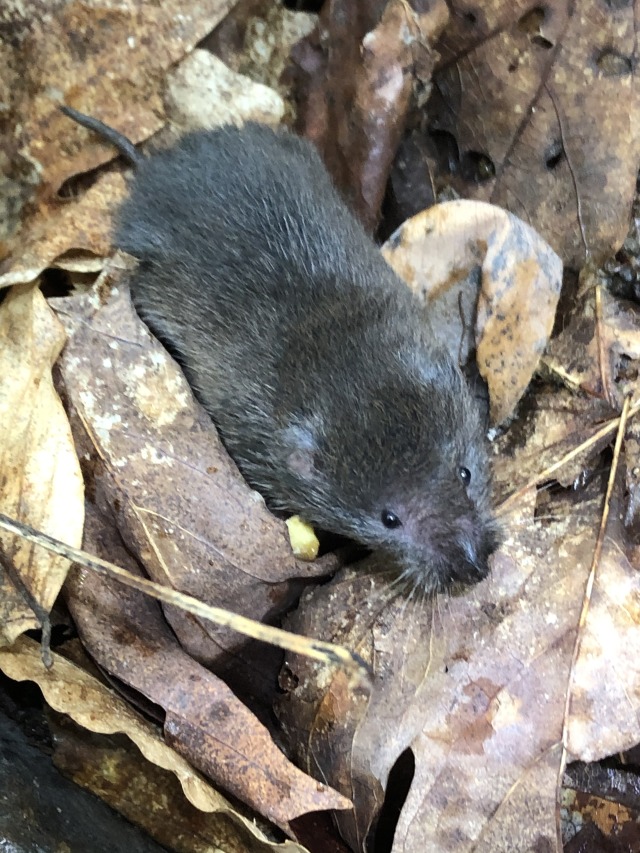
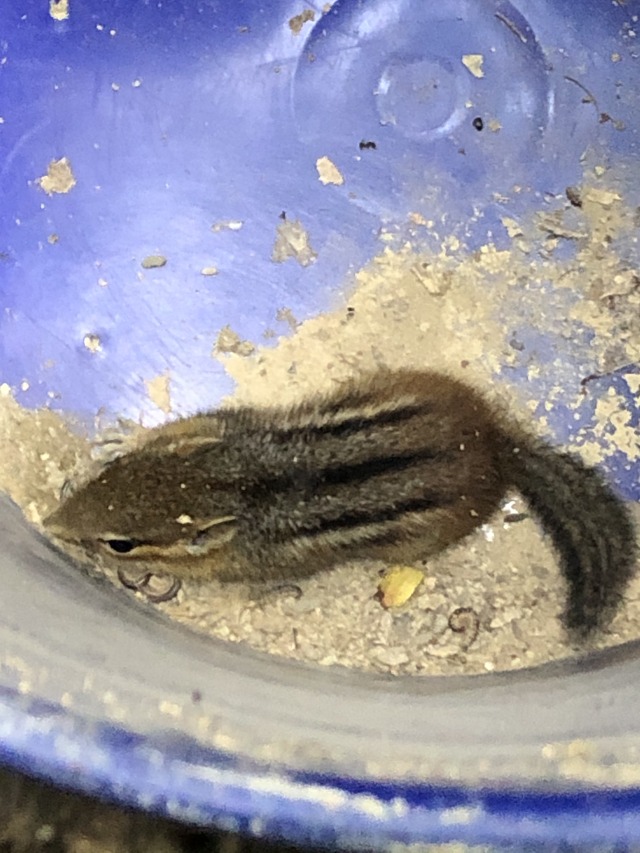
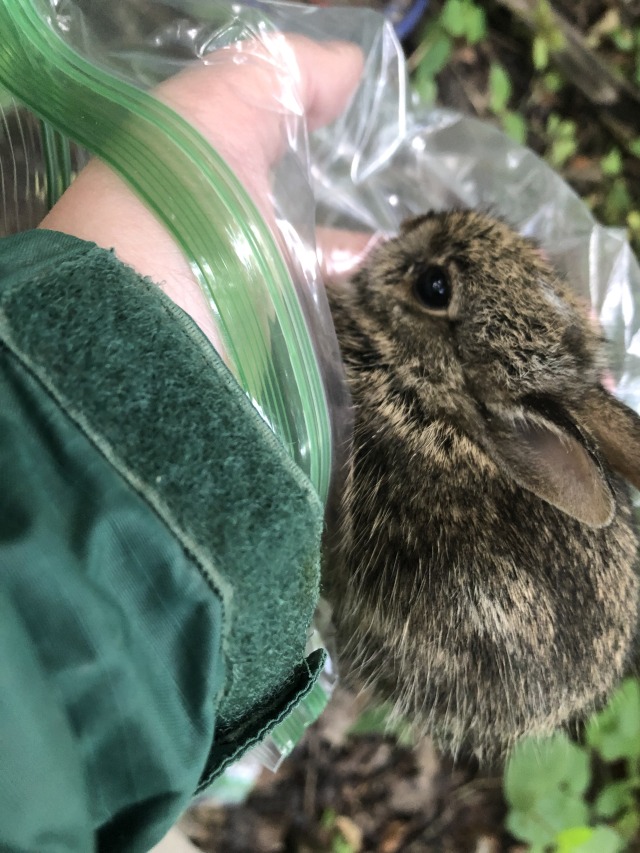
Our study’s pitfall trap by-catch also included several different mammals that scurry across the forest floor: We caught different species of mice (Fig. 3A), shrews, voles (Fig. 3B), and on single occasions a chipmunk (Fig. 3C), mole, or even an opossum! Our traps contained moist sponges to provide water for these small mammals, along with small sections of PVC pipe for shelter. We also found that anchoring a jute string to the bucket edge overhang, with knots tied every 50 – 60 mm, reduced small mammal by-catch. The string provided a means for small mammals to climb up to the ground surface and escape on their own—except for a tiny eastern cottontail rabbit (Fig. 3D), which was safely released after we encountered it.

Mouse on leaf litter.
Vole on leaf litter.
Chipmunk in a pitfall trap.
Bunny in a human hand.
Fig. 3: Small mammal encounters with a mouse (A), vole (B), chipmunk ©, and a bunny (D).

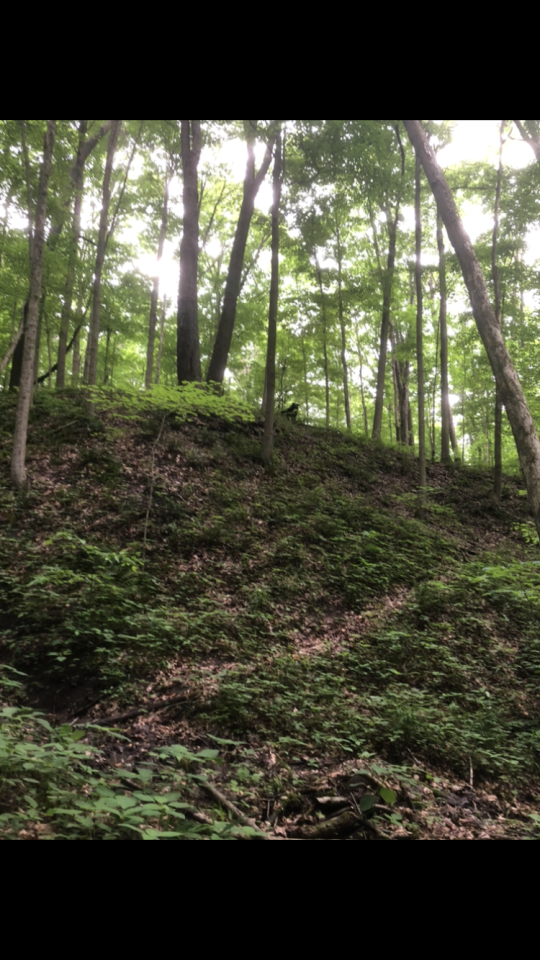
In addition to encounters with the animals caught in our pitfalls, the time we spent checking the traps provided opportunities to observe other wildlife passing through the forest. On one occasion while my field assistant and I were measuring an Allegheny dusky salamander (Desmognathus ochrophaeus) we heard a loud noise. When we both looked up a wooded slope in the direction of the sound we were shocked to see a black bear (Ursus americanus) approaching. I took a quick photo (Fig. 4), released the salamander, and we cautiously watched the bear come down the hill and walk off. The incident was nerve-wracking in the moment, but very exciting in retrospect! Also, while relaxing outside my cabin one day after a long fieldwork session, I was lucky enough to spot a bobcat walking past —a great bonus to spending so much time in the forest!

Forested area with a black bear in the distance.
Fig. 4: A surprise black bear encounter while checking pitfall traps.

All research was conducted under approved permits. Photos by A.K. Martin.

Amanda K. Martin is the Rea Postdoctoral Fellow in the Section of Amphibians and Reptiles. Museum employees are encouraged to blog about their unique experiences and knowledge gained from working at the museum.

Related Content

How To Catch 311 Amphibians in 10 Days

The Search for the Near Threatened Green Salamander, Aneides aeneus

Overwintering for Amphibians and Reptiles

Carnegie Museum of Natural History Blog Citation Information

Blog author: Martin, Amanda K.
Publication date: September 3, 2021

Share this post!

  • Share on Twitter Share on Twitter
  • Share on Facebook Share on Facebook
  • Share on Pinterest Share on Pinterest
  • Share on LinkedIn Share on LinkedIn
  • Share on Reddit Share on Reddit
  • Share via Email Share via Email

Filed Under: Blog Tagged With: Amanda Martin, amphibians and reptiles, Science News

April 20, 2021 by wpengine

An Illuminating Tale of Tracking Turtles

by Amanda K. Martin

*All research was conducted under approved permits from by IACUC, ODNR, and Metroparks. Do not try this at home with local wildlife. Photos by A. Martin unless noted otherwise.

Where do eastern box turtles go? When I started my graduate schooling in Dr. Karen Root’s lab at Bowling Green State University in Ohio, I was quite intrigued by this question. To address it, I conducted a study of box turtle movements in the Oak Openings Region, the distinctive landscape of oak savannas, woodlands, and wet prairies that stretches across seven counties in Northwest Ohio and Southeast Michigan.

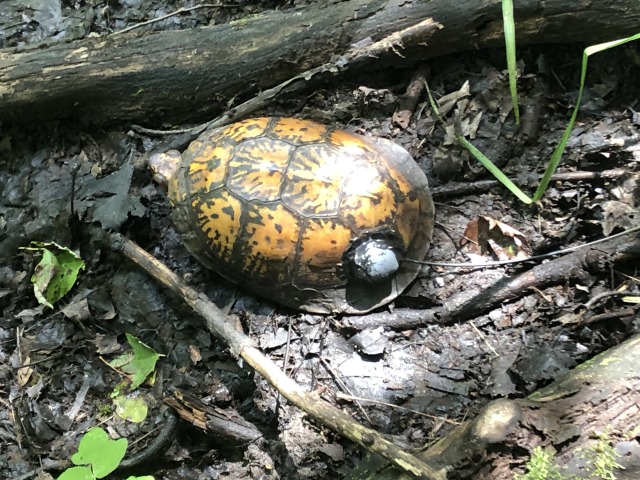
A method called radio telemetry was vital to my work. I walked around under the forest canopy searching for individuals (female or male) and whenever I found one, typically sitting still on the ground, I would pick it up while wearing gloves. In order to track its movements, I attached a radio transmitter onto the carapace (upper shell) using a special type of glue (Fig. 1A). After about a month of searching, I was able to track box turtles at two locations in the Toledo Metroparks system, six individuals in Oak Openings Preserve, and three individuals in Secor Metroparks.

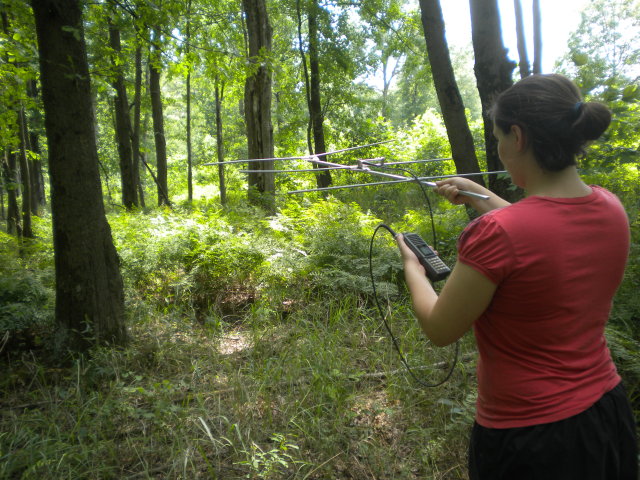
Two to three times a week, I would travel to these local parks and track each turtle using a silver three-pronged antenna and attached receiver. This portable combination detects the signal frequency produced by the transmitter on the tagged turtles, generating a “beeping” sound as it receives the electronic pulse. Guided by “beeps” I could re-find each turtle within an hour (Fig. 1B) depending on how dense the forest understory was. If I walked in the wrong direction, the noise would fade away and become quieter, but as I moved closer to the turtle’s location, the “beeping” sound would get louder and more frequent until I reached the turtle. Sometimes I would walk right past an individual sitting quietly in the leaf litter or under a log as their shell is often highly camouflaged to blend with the sunlit and shadowed patterns of a forest floor. One nice aspect of tracking box turtles with radio telemetry is that they do not run away very quickly, so they are easy to follow!

turtle on the ground among sticks and leaves
woman holding an antenna and receiver in the woods
Fig. 1A (top) and Fig. 1B (bottom): A box turtles with a transmitter (A) tracked by A. Martin using radio telemetry (antenna and receiver; B) in Oak Openings Region, Ohio, USA. Photo by S. Martin (B).

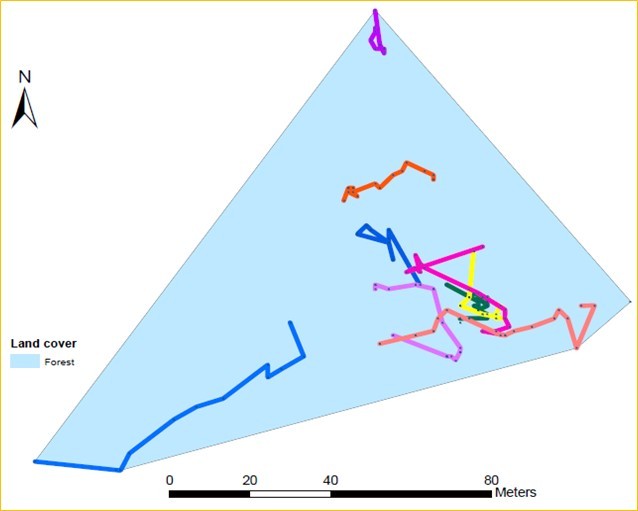
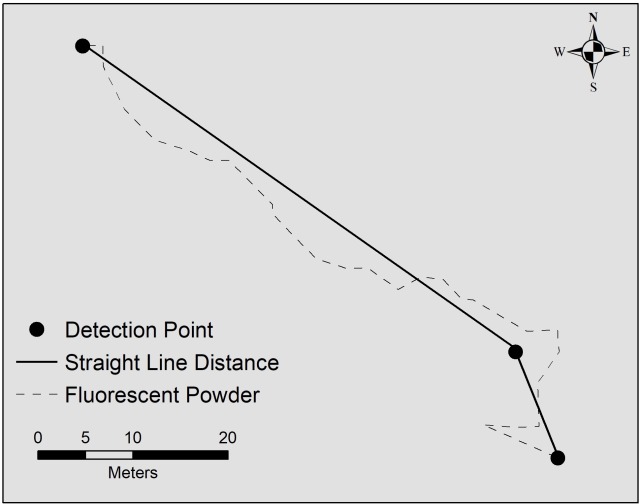
Radio telemetry is an excellent method for re-locating individuals, and provides a snapshot of where the individual is at a given time. With long-term tracking over the active season (mid-March to early November), researchers can better understand movements within a turtle’s home range, the area the animal regularly travels to meet its daily requirements, including food, shelter, and thermoregulation. Home ranges are estimated by drawing an outline around the outermost locations where a turtle was detected throughout the year, and assuming that the individual uses the area inside this boundary (Fig. 2A). Each time a turtle was found, I recorded the GPS coordinates of its location, and could then measure how far the turtle traveled by drawing a straight line between each location point. However, turtles may not always travel in a straight line, but rather follow an indirect route between detection points (Fig. 2B), so this method likely underestimates actual travel distance.

blue diagram showing box turtle home range
diagram showing box turtle distance traveled
Fig. 2A (top) and Fig. 2B (bottom): Box turtle home range (blue area) with daily movements (each color represents one day of travel) using fluorescent powder (A) and an example of an estimated distance traveled (solid black straight line) and actual distance traveled (dotted black curvier line) between location points (black circles; B).

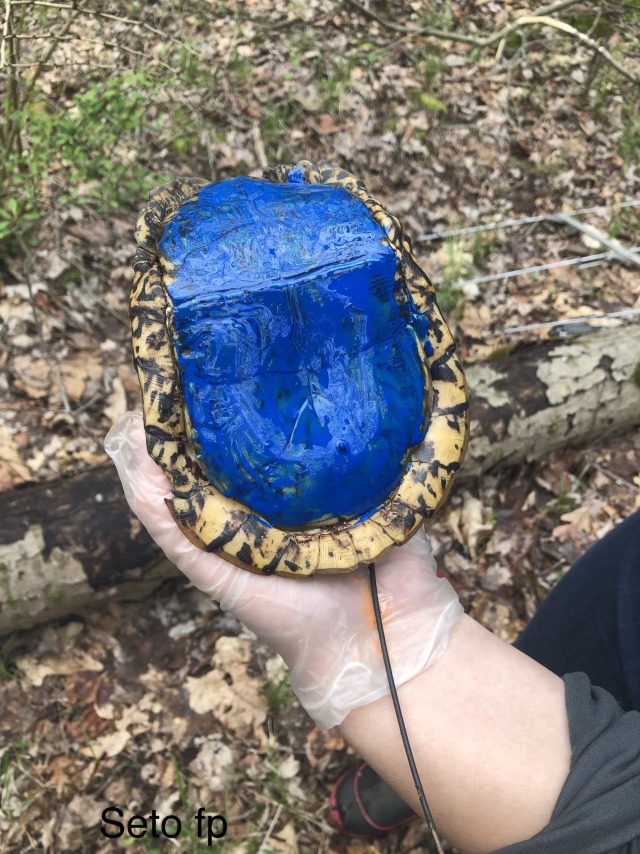
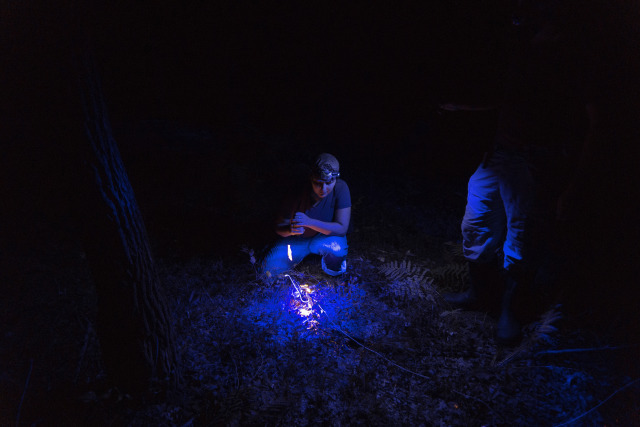
A research technique involving fluorescent powder can produce a far more accurate picture of daily box turtle movements. Non-toxic fluorescent powder is applied to the turtle’s plastron (underside; Fig. 3A) which then leaves a distinct trail as the turtle travels throughout its environment. At night, with the use of an ultraviolet light (Fig. 3B) these trails can then be illuminated, traced, and mapped. Since box turtles tend to travel near or over the same pathways, and because individual home ranges frequently overlap, multiple powder colors are required for some tracking studies.

I used multiple colors (red, blue, yellow, orange) for different days and individuals. The results of my tracking work using this technique demonstrated that box turtles traveled 32 meters per day, with females traveling slightly less than males, and that 95% of movements were less than 6 meters.

box turtle held in a person's hand
two people at night in the forest illuminated by blue light
woman with a ruler in the forest
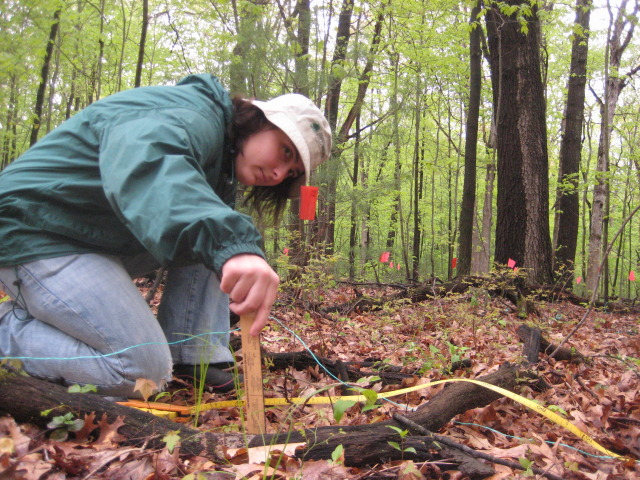
Fig. 3A (top), Fig. 3B (middle), and Fig. 3C (bottom): A freshly painted plastron of a male box turtle (A), A. Martin with a field assistant illuminating the fluorescent powder trail with an ultraviolet light (B, photo by A. Kappler), and A. Martin measuring leaf litter along a box turtle’s pathway (C).

Tracking animals with fluorescent powder is more laborious than radio telemetry but demonstrates fine scale movement patterns not detected by radio telemetry. The frequent use of short movements, for example, is likely related to thermoregulation requirements (the need to move in and out of cool, shady patches), or encounters with multiple obstacles ranging from small to large logs, dense shrubs, and trees. Radio telemetry provides an estimation of home range size, while fluorescent powder tracking provides details on how that home range is utilized. In tandem, these research tools can provide important information on habitat use for local land managers, who can facilitate preservation of these reptiles.

For more information on this project, including data on eastern garter snake movements, check out Chapter 4 of my dissertation.

Amanda K. Martin is a Post-doctoral Researcher in Section of Amphibians and Reptiles. Museum employees are encouraged to blog about their unique experiences and knowledge gained from working at the museum.

Related Content

Turtle Bottoms

A Wood Turtle at Powdermill

Ask a Scientist: How does climate change affect turtle behavior?

Carnegie Museum of Natural History Blog Citation Information

Blog author: Martin, Amanda K.
Publication date: April 20, 2021

Share this post!

  • Share on Twitter Share on Twitter
  • Share on Facebook Share on Facebook
  • Share on Pinterest Share on Pinterest
  • Share on LinkedIn Share on LinkedIn
  • Share on Reddit Share on Reddit
  • Share via Email Share via Email

Share this post!

  • Share on Twitter Share on Twitter
  • Share on Facebook Share on Facebook
  • Share on Pinterest Share on Pinterest
  • Share on LinkedIn Share on LinkedIn
  • Share on Reddit Share on Reddit
  • Share via Email Share via Email

Filed Under: Blog Tagged With: Amanda Martin, amphibians and reptiles, herpetology, Science News

September 14, 2020 by wpengine

Overwintering for Amphibians and Reptiles

by Amanda Martin

With Autumn upon us, temperatures are dropping, and it is getting colder out. Especially in the northern regions, amphibians and reptiles need to prepare for brumation (essentially, hibernation for ectotherms). Ectotherms like frogs, salamanders, snakes, and turtles are highly sensitive to changes in their environment and need to stay warm by actively moving in and out of areas with heat. When temperatures increase, ectotherm metabolism increases, and when temperatures go down, so does their metabolism. But how do they survive during winter, won’t they freeze?

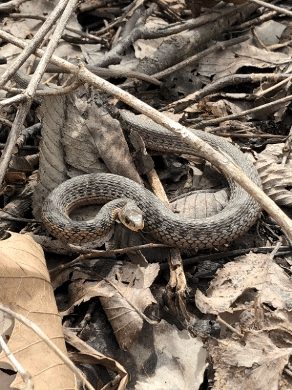
Fig. 1. Eastern garter snake. Photo by A.K. Martin.

Many snakes, like eastern garter snakes (Fig. 1) find shelters called hibernacula and curl up inside, sometimes intermixed with other snake species. These hibernacula are often small mammal burrows, dens, or tunnels below the frost line. During winter, typically between October and March, several hundred individuals will gather in the same den, tightly coiling their bodies together to stay warm enough to survive. They stop eating during this period because it is too cold to properly digest food and will stay hydrated by absorbing moisture through their scaly skin. Even though snakes are awake and sluggishly active, they expend very little energy during this time and do not lose much weight.

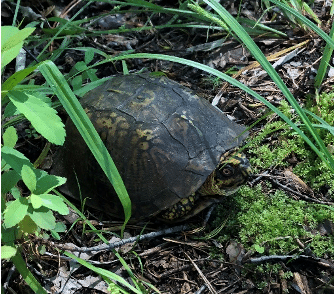
Fig. 2. Eastern box turtle. Photo by A.K. Martin.

Turtles, on the other hand, are a bit different. Aquatic turtles survive winter underwater, and the terrestrial eastern box turtle (Fig. 2) buries itself underground by digging into the soil. One extreme overwintering survivor is the painted turtle, which spends most of its time in ponds and slow-moving freshwater. When these ponds freeze, painted turtles bury themselves up to 45 cm (nearly 18 inches) in mud beneath the pond’s surface. Amazingly, these turtles can survive for months in low or no oxygen environments. During warmer months, they breathe air, but when submerged for overwintering they absorb oxygen through the thin skin of their cloaca, a phenomenon called cloacal respiration.

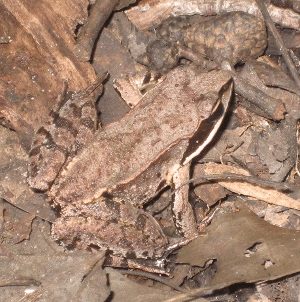
Fig. 3. Wood frog. Photo by A.K. Martin.

Another amazing overwintering feat is the freeze tolerance of wood frogs (Fig. 3) which can become frogsicles! Wood frogs are unable to bury themselves completely, like turtles, so part of their body is often exposed when trying to stay underneath the mud. This is beneficial for obtaining oxygen through their skin. However, they still need to avoid freezing and will move around to warmer areas as needed. Many frogs stay in burrows or under leaf litter to escape the frost, but wood frogs will stay at shallower depths because they have high concentrations of glucose, which produces an “antifreeze” effect. This protects their organs when over two-thirds of their body freezes!

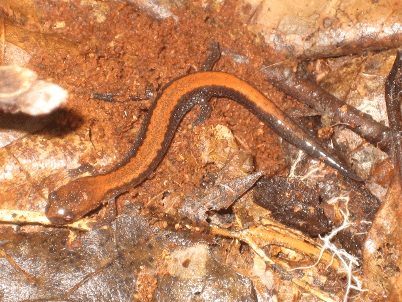
Fig. 4. Red-backed Salamander. Photo by A.K. Martin.

Other amphibians, like salamanders, do not have freeze tolerance like the wood frog. Red-backed salamanders (Fig. 4) are one of the most abundant species in the eastern United States. They are typically found underneath logs and leaf litter at shallow depths, but during winter when temperatures drop below 30°F, they travel as much as 15 inches under the ground in animal burrows. Other species, like spotted salamanders, will also look for deep burrows that are below the frost line.

In early spring when temperatures warm, amphibians and reptiles emerge from overwintering to look for basking sites, sunny spots to warm themselves. With warmer temperatures, the prey of many of these species also become more available. Garter snakes will look for slugs, earthworms, amphibians, minnows, and rodents, for example, and red-backed salamanders will eat a wide variety of invertebrates, such as spiders, worms, snails, and insects. The exact timing of emergence for amphibians and reptiles depends on a given year’s weather, resulting in variable emergence times from year to year that correspond to temperature. Not every individual makes it to the spring, but it is amazing that species that are so dependent on the temperature of their environment are capable of surviving up north!

Written by Amanda Martin, Post-doctoral Researcher in the Section of Amphibians and Reptiles at Carnegie Museum of Natural History. Edited by Jennifer Sheridan, Assistant Curator in the Section of Amphibians and Reptiles at Carnegie Museum of Natural History. Museum employees are encouraged to blog about their unique experiences and knowledge gained from working at the museum.

Related Content

An Illuminating Tale of Tracking Turtles

How to Catch 311 Amphibians in 10 Days

Pitfall Traps: Fieldwork Surprises

Carnegie Museum of Natural History Blog Citation Information

Blog author: Martin, Amanda
Publication date: September 14, 2020

Share this post!

  • Share on Twitter Share on Twitter
  • Share on Facebook Share on Facebook
  • Share on Pinterest Share on Pinterest
  • Share on LinkedIn Share on LinkedIn
  • Share on Reddit Share on Reddit
  • Share via Email Share via Email

Filed Under: Blog Tagged With: Amanda Martin, amphibians and reptiles, herpetology, Jennifer Sheridan, Science News

July 14, 2020 by wpengine

Meet Amanda Martin, New Post-Doctoral Researcher in the Section of Amphibians and Reptiles

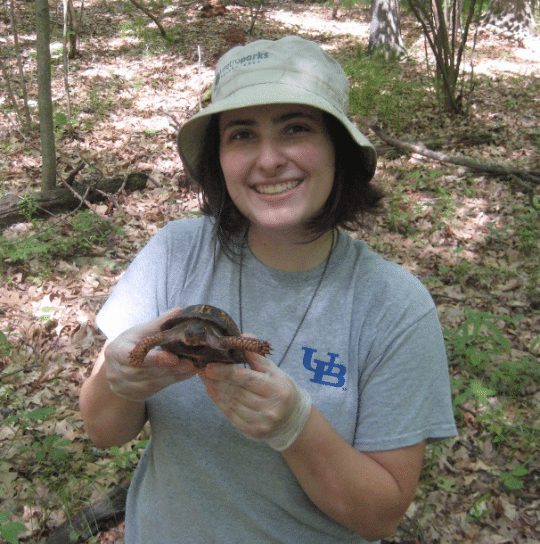
photo of woman holding a turtle

Hello everyone, my name is Amanda Martin and I’m a new post-doctoral researcher in the Amphibians and Reptiles section. I received both my Ph.D. and M.S. in Biological Sciences from Bowling Green State University, and my B.S. in Psychology and Interdisciplinary Studies from the State University of New York at Buffalo.

My herpetological career all started after watching Anaconda, the movie, when I was about six years old. I did not like the depiction of this wonderful creature, and since then I have been passionate about conserving and reducing other’s fear of snakes. During graduate school, I discovered that I really enjoy other amphibians and reptiles, especially the abundant red-backed salamanders which I found under logs almost every day during my research surveys. Even though I love studying snakes, I spent most of my time working with eastern box turtles using radio telemetry. One of my favorite aspects of working with these turtles is that they are easy to catch! I did, however, have some ninja turtles that liked to hide from my volunteer research assistants. Finding amphibians and reptiles can be quite challenging. I love this kind of treasure hunt because it is incredibly rewarding when you do find them!

Check out my website for more information about my previous research at: https://amandkm.wixsite.com/martin

Conservation in Action: Exploration of Changes in Land Cover over Time

In northwestern Ohio and southeastern Michigan lies a dynamic and diverse landscape, the Oak Openings Region which has been the focus of large ongoing conservation by the Green Ribbon Initiative. Over ten years ago, a land cover map was created to facilitate the enhancement and restoration of critical natural areas. Since then, local conservation partners have been changing the landscape to increase the area of natural habitats, such as upland prairie and savanna. But to see whether these efforts worked or not, they needed a new map to see these changes on the landscape. We, Martin and Root 2020, worked together with our local partners to build an updated map for region and explored these changes in land cover over a 10-year period.

We used satellite imagery and trained our model with confirmed ground sites for 14 different land cover types, including five communities of concern (swamp forest, floodplain forest, deciduous forest, upland savanna/prairie, and wet prairie). We then examined change over time by comparing total area or number of patches per land cover between the 2016 map and the 2006 map. We found that natural land covered 33% and human-modified land covered 67% of the total region. Over 10 years, natural classes increased, and cultural classes decreased in total area by 5.8%, although not all types of natural habitat increased (e.g., forest habitat decreased) and much of the natural habitat was found in small isolated pieces rather than large blocks of similar habitat. Many of these changes are likely a result of natural recovery and disturbance, and conservation efforts by the Green Ribbon Initiative. This large-scale view for conservation is needed to create conservation initiatives for different species and their natural habitats and illustrates the challenges that land managers face in restoring natural lands as humans continue to modify their surroundings.

Scientists use these types of land cover maps to better understand the interaction between species and their habitats. One aspect of this interaction is the creation of habitat suitability models, where you identify potential new habitat locations for species using occurrence data (where you find an individual) and environmental layers (land cover, elevation, distance to streams or roads, etc.). We did this for 15 target species focused on the 5 major communities of concern for Oak Openings Region using this land cover map. As Dr. Martin starts her new work with Dr. Sheridan in the amphibian and reptile section, they will be exploring this type of research utilizing the museum’s vast collection!

Link to article: https://doi.org/10.1007/s00267-020-01316-2

Journal: Environmental Management

Title: Examining Land Use Changes to Evaluate the Effects of Land Management in a Complex, Dynamic Landscape

Abstract: Anthropogenic alterations to landscapes have increased as the human population continues to rise, leading to detrimental changes in natural habitats. Ecological restoration assists in recovery by altering habitats to improve conditions and foster biodiversity. We examined land cover changes over time within a complex, dynamic region in the Midwest to assess the long-term effects of conservation. We used Landsat 8 bands for a 15-class land cover map of Oak Openings Region using supervised classification. We validated our map and achieved an overall accuracy of 71.2% from correctly classified points out of total visited points. Change over 10 years, from 2006 to 2016, was explored by comparing class statistics from FRAGSTATS between our map and original land cover map. We found that natural land, i.e., forest and early successional, covered 33%, with 10% permanently protected, while human-modified land, i.e., agricultural and developed, covered 67% of the region. Over 10 years, natural classes increased, and cultural classes decreased by 5.8%. There were decreases for the three forest communities and increases for the two early successional communities. These changes are likely the result of natural recovery and disturbance, and conservation efforts by the Green Ribbon Initiative. Changes in habitat also came with distribution changes, e.g., increased fragmentation for some classes, which was readily visible. Our useful method measured functionality by emphasizing changes in composition and configuration. Our approach provides a tool for assessing cumulative regional-scale effects from site-level management and conservation. This large-scale view for conservation is needed to effectively mitigate future changes.

Filed Under: Blog Tagged With: Amanda Martin, herpetology, Science News

sidebar

About

  • Mission & Commitments
  • Directors Team
  • Museum History

Get Involved

  • Volunteer
  • Membership
  • Carnegie Discoverers
  • Donate
  • Employment
  • Events

Bring a Group

  • Groups of 10 or More
  • Birthday Parties at the Museum
  • Field Trips

Powdermill

  • Powdermill Nature Reserve
  • Powdermill Field Trips
  • Powdermill Staff
  • Research at Powdermill

More Information

  • Image Permission Requests
  • Science Stories
  • Accessibility
  • Shopping Cart
  • Contact
  • Visitor Policies
One of the Four Carnegie Museums | © Carnegie Institute | Privacy Policy | Terms of Use | Accessibility
Rad works here logo