• Skip to primary navigation
  • Skip to main content
  • Skip to primary sidebar

Carnegie Museum of Natural History

One of the Four Carnegie Museums of Pittsburgh

  • Visit
    • Buy Tickets
    • Visitor Information
    • Exhibitions
    • Events
    • Dining at the Museum
    • Celebrate at the Museum
    • Powdermill Nature Reserve
    • Event Venue Rental
  • Learn
    • Field Trips
    • Educator Information
    • Programs at the Museum
    • Bring the Museum to You
    • Guided Programs FAQ
    • Programs Online
    • Climate and Rural Systems Partnership
  • Research
    • Scientific Sections
    • Science Stories
    • Science Videos
    • Senior Science & Research Staff
    • Museum Library
    • Science Seminars
    • Scientific Publications
    • Specimen and Artifact Identification
  • About
    • Mission & Commitments
    • Directors Team
    • Museum History
  • Tickets
  • Give
  • Shop

Blogs about the Anthropocene

Scientists use fossils and other traces to understand how the planet changed over time. In the past these changes were caused by forces like volcanic eruptions and shifts in oceans currents. Now there’s a new force of nature shaping the planet: humans. The effects on air, land, and water are significant enough that scientists propose we are a new geological time – the Anthropocene – or age of Humans.

These blogs are about the many facets of human impact on the Earth, documenting this new age.

June 19, 2018 by wpengine

Collected on this Day: Alopecurus  myosuroides

By Mason Heberling

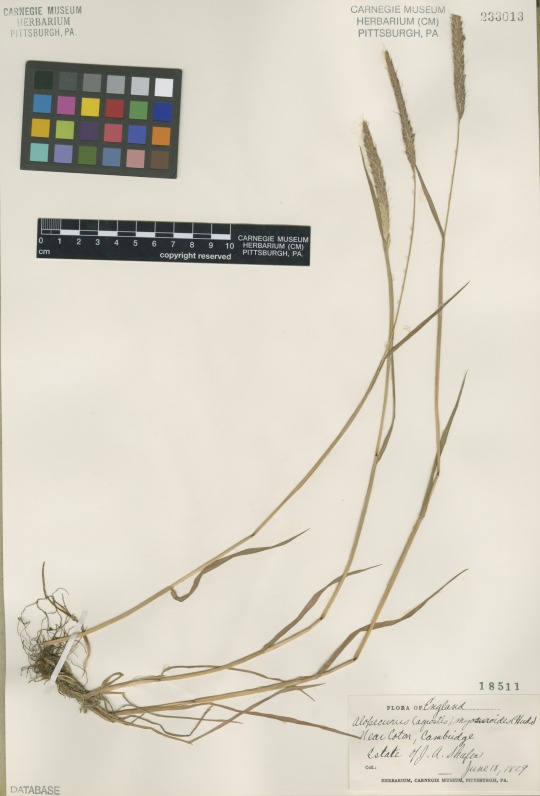
Alopecurus  myosuroides specimen

Herbarium specimens provide key insights into the Anthropocene.  In many cases, natural history collections are the only baseline we have to understand the widespread, complex effects of human activities on the earth systems over the past century.

This grass species shown here is of particular interest. This specimen was collected in Cambridge, England on June 18, 1829.  This grass species (Alopecurus myosuroides), commonly known as “slender meadow foxtail” or “black-grass,” is a major weed in farm fields (especially wheat and barley), and can significantly reduce crop yields.

Unwanted plants (“weeds”) have been an ongoing fight for humans since the dawn of agriculture.  The  “Green Revolution” (1930s-1960s) was a point in human history when agricultural production increased at an enormous rate and at unprecedented scales, aided  by technological developments in crop breeding, pesticides, herbicides, and fertilizers.  It has been one time point suggested to mark the “official” start of the Anthropocene, a proposed geological era defined by human activities.

Herbicides are commonly used to control weeds to increase crop yields.  With the increase of herbicides, some plant species have evolved resistance to these herbicides. In a cool study in PLoS ONE in 2013, Délye et al. did a DNA analysis of herbarium specimens collected from 1788 to 1975 to show that some individuals of this grass species already possessed the gene mutations associated with herbicide resistance well before herbicides were widely used!  They show that the use of herbicides selected for these individuals, such that those individuals with herbicide resistance are now more abundant.

Who would have thought these specimens would be used this way. There are so many known and yet to be known uses of herbaria.

The collector of this specimen back in 1829 certainly didn’t think it could be used to understand the evolution and effects of herbicide use over 175 years later!

Botanists at Carnegie Museum of Natural History share pieces of the herbarium’s historical hidden collection on the dates they were discovered or collected. Check back for more!

Filed Under: Blog Tagged With: Anthropocene, Botany, collected on this day, Mason Heberling

June 12, 2018 by wpengine

Bard Birds

By Pat McShea

Statue of William Shakespeare along Forbes Avenue entrance to Carnegie Music Hall

Visitors to We Are Nature are challenged to make connections between short-sighted human actions and a range of persistent wide-ranging negative impacts.

If the displays profiling the unintended consequences of such practices create interest in an example with literary connections, the William Shakespeare statue outside the museum building and a Common Starling taxidermy mount within the exhibit provide requisite props.

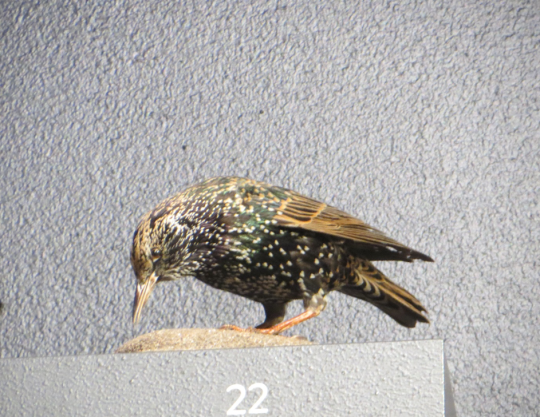
Common Starling on display

The Common Starling, also known as the European Starling, is number 22 in a wall-mounted array of 33 creatures whose assemblage celebrates the diversity of wildlife found in Pittsburgh.

Unlike most of its display neighbors, however, the starling is not native to North America. The species was deliberately introduced to the continent, beginning in New York City’s Central Park, during the 1890s through the efforts of the American Acclimatization Society. Members of this group attempted to introduce every bird mentioned, more than two centuries earlier, in the works of William Shakespeare. The starling was their only “success.”

The species’ population in territory ranging from Alaska to Mexico is now measured in hundreds of millions, and starlings, which frequently congregate in enormous flocks, are considered agricultural pests and airport navigation hazards.

Ironically, although Shakespeare’s works frequently mention nightingales and several other bird species, starlings are only mentioned once, in the play Henry IV Part I.

Patrick McShea works in the Education and Visitor Experience department of Carnegie Museum of Natural History. Museum employees are encouraged to blog about their unique experiences and knowledge gained from working at the museum.

Filed Under: Blog Tagged With: Anthropocene, Pat McShea, We Are Nature

May 23, 2018 by wpengine

Pittsburgh Environmentalist Group Meetup Makes Eco-Friendly Activities Fun

Rethinking your impact on the environment, or carbon footprint, could be as simple as eating less barbecue or not choosing a green cleanser over your favorite fragrant household cleaner. Bonnie Siefers of the Pittsburgh Environmentalist Group Meetup started a group to help make the process of becoming more environmentally friendly fun and social.

“I feel like a lot of people are anxious to find groups of people that are like-minded in this space,” Siefers said. “I used to live in the suburbs of Pittsburgh and when I moved into the city, I found more like-minded people here because they are younger and more mindful. They are growing up and talking about climate change.”

Bonnie Siefers

Pittsburgh Environmentalist Group Meetup was founded in July 2013 and quickly gained 30 members in a few days. Today, it has 738 members and a number of meetups under its belt on topics such as eco-stewardship training, the future of recycling, and veganism.

“People are glad to have community and that was the number one thing I found. You don’t join a Meetup like this if you are not a stakeholder in this process, and people feel isolated,” Siefers said.

Members of the Meetup are encouraged to go back to their communities as “The Green Team” and lead conversations and corrective actions to lessen their neighborhood’s carbon footprint. Siefers said this is the type of outreach that can build personal fulfillment for those wanting to do their part for the environment.

“One of our members was very vocal to get people to change their energy option to renewable energy and encouraged their neighbors to go to Penn Power and select 100% renewable energy. It’s a personal choice,” she said.

She added: “I want to be a change activist. I want to inspire those that I meet to think about things deeply and differently. Lots of people are interested in sustainability in Pittsburgh and it has been the most livable city many, many years in a row, I think there is a trend to build in a sustainable manner and keep the green space alive that we have.”

Siefers is encouraged by the increasing number of universities offering degree programs in sustainability and the impact the next generation of students can have on the environment.

“It’s certainly a growing field. Almost every business or organization you can think of has a sustainability department and its main focus is to save the organization money,” she said. Her own sustainability work has afforded her opportunities to help large organizations rethink their footprint.

“I did a sustainability action plan for the Pittsburgh YMCA that included an audit of their larger buildings. It was already sustainable, and I gave them ways to save even more money,” Siefers said. “They wanted an ROI in three years and I made that possible. Just changing your light bulbs can save you a lot of money.”

So, what are five practical ways people can reduce their footprint? Here is what Siefers recommended:

●     Carpool to destinations with co-workers or with friends.

●     Offset carbon use when traveling by purchasing carbon offsets on plane tickets.

●     Purchase organic food and fabric to help minimize the amount of pollutants entering aquifers.

●     Be mindful about your energy and chemicals at home by turning off lights when leaving a room, using surge protectors on appliances, placing electronics in sleep mode when not in use, and selecting non-toxic cleaning products.

●     Tell somebody. Create a community to discuss and exchange information on how to personally change your home and neighborhood for the sake of the environment.

Siefers’ work is an excellent example of how you can apply the concepts and ideas about the human impact on the environment to your daily life. At the Carnegie Museum of Natural History,  we hope that our exhibition We Are Nature: Living in the Anthropocene inspires more people to take action and join groups like Pittsburgh Environmentalist Group Meetup.

Learn more about beneficial sustainability practices and ideas at Bonnie Siefers website eco Couture.

________________________________________________________________

In the spirit of recognizing all we are already doing in Pittsburgh, we have started a new blog series to compliment We Are Nature: Living in the Anthropocene, the exhibition about the complex relationship between humans and nature currently on display at Carnegie Museum of Natural History. We are featuring Pittsburghers who are committed to improving the environment in which we live. Each blog features a new individual and shares some of the ways in which they are helping issues of sustainability, conservation, restoration, climate change, or helping Pittsburgh to be an even more beautiful place to live.

Melonee Gaines is a freelance journalist and writer based in Memphis, TN and has written for MLK50.com and The Crisis Magazine. She is the lead maven and founder of the digital media and public relations firm MPact Media Group. She enjoys foodie adventures, beach excursions, and herb gardening.

Filed Under: Blog Tagged With: Anthropocene, Pittsburgh, We Are Nature, We Are Nature: Living in the Anthropocene

May 23, 2018 by wpengine

Poison Ivy Potency?

By Rachael Carlberg

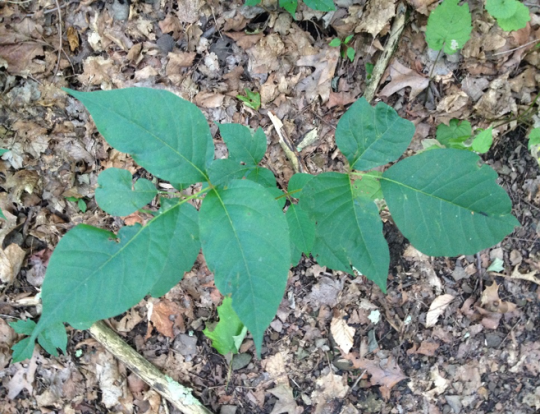
Poison ivy

When prompted with the phrase “climate change,” people often think of increasing temperatures, melting ice, and flooding shores. While global temperatures are on the rise, the story of humanity’s impact on the environment is much more complex.  As carbon dioxide levels in the atmosphere rise, and temperatures increase, we face unanticipated changes to the world around us.

Poison ivy, for example, grows larger in our changing climate. Higher levels of carbon dioxide in the atmosphere cause increases in photosynthesis, allowing plants like poison ivy to grow more and produce larger leaves. In carbon-rich conditions the vine also creates more toxic forms of urushiol, the oil that causes an allergic reaction in people.

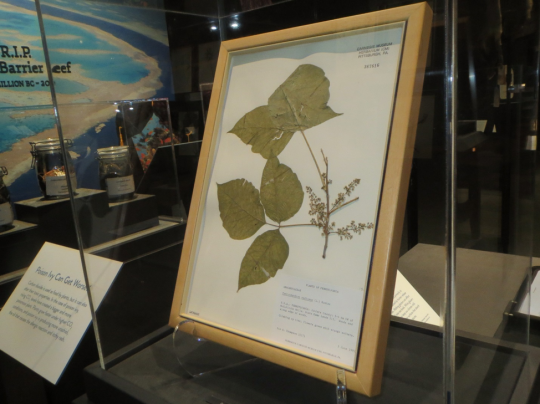
Preserved poison ivy

Preserved poison ivy displayed in We Are Nature.

You might be thinking, if higher levels of carbon dioxide mean higher levels of photosynthesis, won’t all plants benefit?  The problem is that increased levels of carbon dioxide don’t impact all plants in the same way.  Vines like poison ivy can reap the rewards of increased photosynthesis with more leaf area because, unlike upright plants, they don’t need to devote as many resources to structural support like trunks and thick branches.

As an intern in the Education department of Carnegie Museum of Natural History, Rachael Carlberg wrote blog posts related to ideas presented in We Are Nature. Museum employees are encouraged to blog about their unique experiences of working at the museum.    

Filed Under: Blog Tagged With: Anthropocene, Botany, We Are Nature, We Are Nature 2, We Are Nature: Living in the Anthropocene

May 14, 2018 by wpengine

Texas Solar

By Patrick McShea

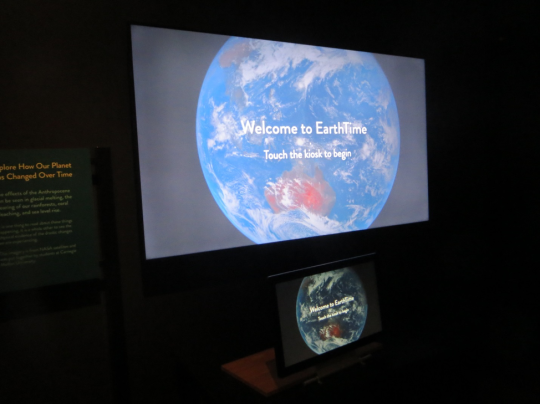
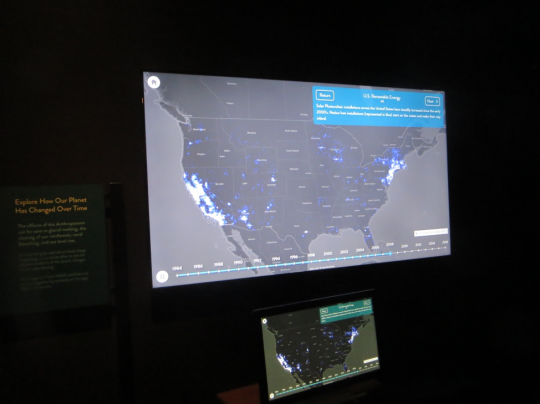
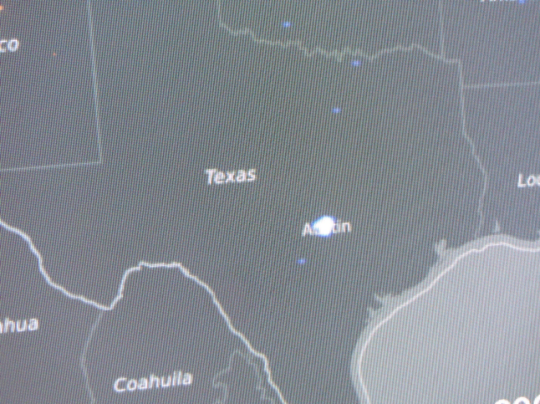
Within We Are Nature an interactive kiosk known as EarthTime documents alarming change over recent decades in glacial melting, the clearing of rainforests, and coral bleaching. The imagery, which was generated by NASA satellites and compiled by students at Carnegie Mellon University, is simultaneously displayed on a table-mounted touchscreen and a towering adjacent display screen.

Literal glimmers of hope appear on both screens when visitors select the digital loop that documents the increase in the installation of solar energy panels across the US between 1984 and 2016. A textbox message directs viewers to, “Notice how installations start on the coasts and make their way inland.”

A recent visitor who replayed the seven-second simulation a few times voiced her state-focused perspective to a companion: “Watch this. Solar energy blooms in Austin before it does in Houston or Dallas.”

Patrick McShea works in the Education and Visitor Experience department of Carnegie Museum of Natural History. Museum employees are encouraged to blog about their unique experiences and knowledge gained from working at the museum.

Filed Under: Blog Tagged With: Anthropocene, Patrick McShea, We Are Nature, We Are Nature: Living in the Anthropocene

May 7, 2018 by wpengine

Is Plastic Natural?

By Rachael Carlberg

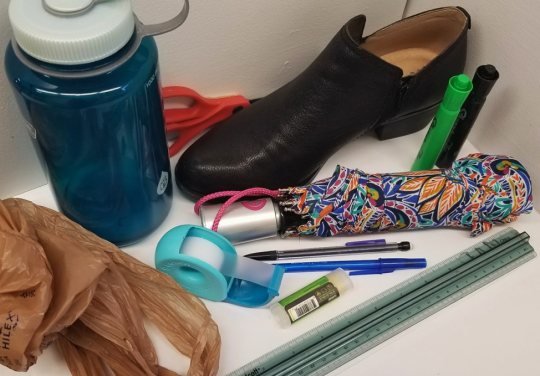
Items made with plastic: water bottle, shoe, scissors, umbrella, pens, chapstick, grocery bag, tape dispenser.

Nothing seems more man-made than plastic.  It surrounds us everywhere, indoors and out. How many of the things around you right now have plastic in them?  Do your clothes, electronic devices, furniture, and other everyday objects have plastic parts?  All of us can answer “yes” to that.  At first thought, the only connection plastic has with nature is that it often mistakenly ends up in nature.  So does plastic have any connection to the earth besides the one that humans so frequently create by creating waste?

What many of us don’t realize is that the production of plastic has beginnings in nature.  To begin making plastic, companies harvest crude oil, a naturally occurring fossil fuel from the earth.  That oil (or sometimes natural gas) is converted through different processes into chemicals that are used to make products we recognize and rely upon.

It may seem unlikely that plastic, which looks and feels like it should have no connection to nature, has its beginnings in natural substances.  But, like many other aspects of our lives, it is intertwined with and dependent on nature for its existence.

As an intern in the Education department of Carnegie Museum of Natural History, Rachael Carlberg wrote blog posts related to ideas presented in We Are Nature. Museum employees are encouraged to blog about their unique experiences of working at the museum.

Filed Under: Blog Tagged With: Anthropocene, plastics, We Are Nature, We Are Nature: Living in the Anthropocene

  • « Go to Previous Page
  • Page 1
  • Interim pages omitted …
  • Page 12
  • Page 13
  • Page 14
  • Page 15
  • Page 16
  • Go to Next Page »

sidebar

About

  • Mission & Commitments
  • Directors Team
  • Museum History

Get Involved

  • Volunteer
  • Membership
  • Carnegie Discoverers
  • Donate
  • Employment
  • Events

Bring a Group

  • Groups of 10 or More
  • Birthday Parties at the Museum
  • Field Trips

Powdermill

  • Powdermill Nature Reserve
  • Powdermill Field Trips
  • Powdermill Staff
  • Research at Powdermill

More Information

  • Image Permission Requests
  • Science Stories
  • Accessibility
  • Shopping Cart
  • Contact
  • Visitor Policies
One of the Four Carnegie Museums | © Carnegie Institute | Privacy Policy | Terms of Use | Accessibility
Rad works here logo