by Pat McShea

In The Stories we Keep: Bringing the World to Pittsburgh, visually rich displays of authentic materials emphasize the depth, breadth, and importance of scientific collections at Carnegie Museum of Natural History. As an introductory panel in the temporary exhibition summarizes, “Every fossil, every animal, every object has a story to tell about our planet, the universe, and our place in it.”
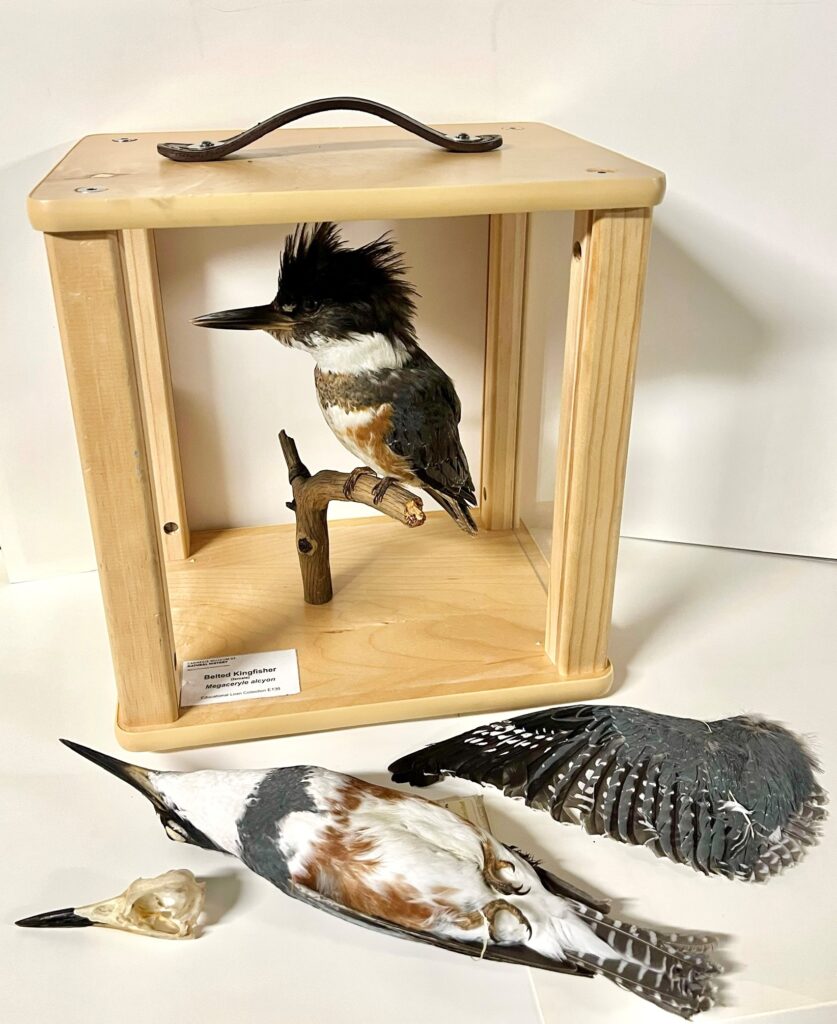
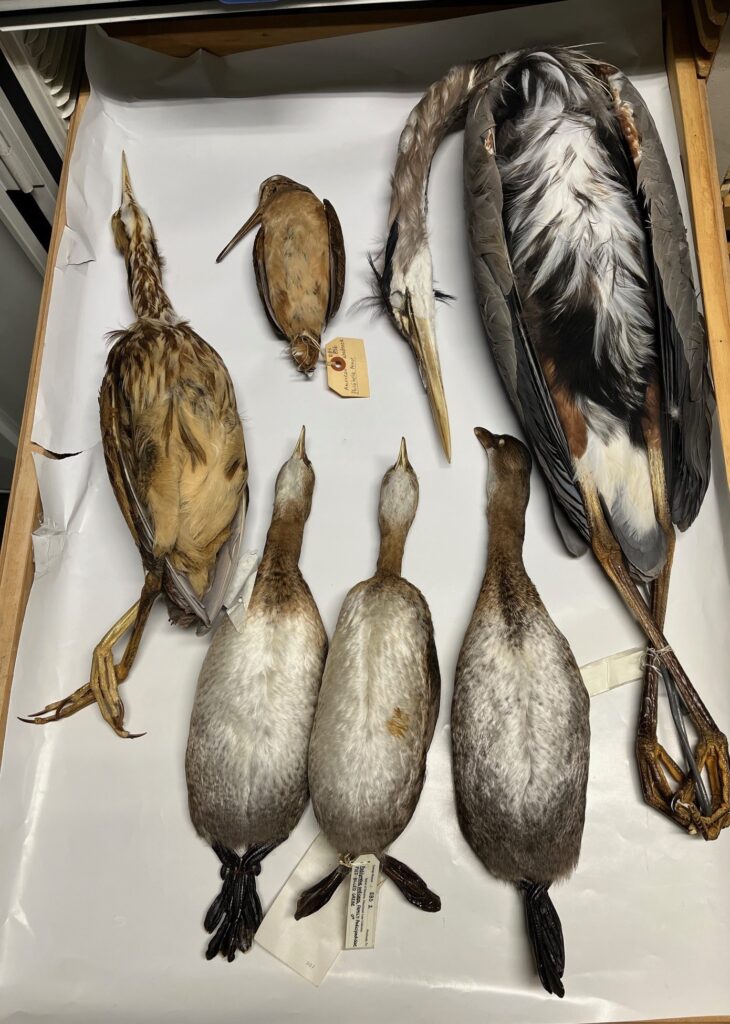
The message flanks a wall section on which the life-sized projection of behind-the-scenes imagery from four of the Museum’s scientific sections plays continuously on a 4.5-minute loop. Titled Footage from Collections, this colorful assemblage invites viewers into collection storage areas holding birds, amphibians and reptiles, insects, and invertebrate fossils. Extraordinary scientific specimens are the rightful stars of the show, but the brief video also includes cameo appearances by some of the people responsible for the care and study of these mission critical materials.
When I first watched the video, scenes in the amphibian and reptile collection awakened a memory from the early 1990s of a curator’s impassioned defense of active collecting. Remarkably, the scientist’s verbal argument was presented to a single student. I was fortunate to be a sideline observer.
Thirty-three years ago, in fulfilling the request of a fellow educator at the Pittsburgh District of the US Army Corps of Engineers, I introduced an undergraduate student who had just completed a summer internship with that federal agency to Dr. C.J. McCoy, then CMNH Curator of Herpetology. The student’s culminating internship project was a survey of amphibian diversity on the Corps of Engineers property surrounding Loyalhanna Dam and Reservoir in Westmoreland County, and following weeks of solo fieldwork, she hoped to share her findings with appropriate Museum staff.
We met in Dr. McCoy’s office, standing around a table that allowed the student to open the thick binder of her survey report and provide a five-minute orientation to the document’s photographs, maps, data tables, and charts. Dr. McCoy then carefully paged through the work, praising the thoroughness of the student’s investigation, admiring many of her frog and salamander photos, and explaining that he was personally familiar with the rugged wooded and wet terrain she had obviously repeatedly traversed. Then he asked if she had collected any voucher specimens, the term for permanently preserved biological samples that serve to verify an organism’s presence at a particular place during a particular time.
A ten-minute discussion ensued, with the student explaining her belief that exacting field techniques and meticulous record keeping made the collection of voucher specimens optional. She maintained that the presence of the species under study could be fully documented without having to kill any of them. By way of example, she flipped her report’s pages to a section where full-color amphibian photographs included scale bars as a check against the recorded figures in measurement tables.

Dr. McCoy’s rebuttal began with a theoretical but sincere offer. He explained to the student that if she had collected voucher specimens, be they bull frogs, spring peepers, redback salamanders, or red efts, he would have been eager to add them to the Museum’s scientific collection, especially with the associated information in the survey report. With properly labelled voucher specimens in a repository such as the CMNH herpetology collection, he continued, the hard-earned findings of her summer fieldwork might well inform future scientific investigations such as studies of a particular species or groups of species, or even studies of changes in landscapes. Under circumstances where land use decisions are made, he argued, the deaths of individual animals in the service of creating a scientific record of their presence, could serve long-term to safeguard the population they represent.
The curator’s closing argument addressed the limits of the photographs he had praised only moments earlier. He spoke of vantage point limits in photography, and the likelihood of any future identification disputes remaining unresolved in the absence of verifying voucher specimens. Finally, he reminded the student that her name would be associated with any vouchers as the collector, and that the preserved remains would undoubtedly increase the survey’s impact.
The meeting ended amicably, but without any concessions from the student. In the decades since, I’ve had occasion to present some of Dr. McCoy’s arguments dozens of times during various educator workshops. Recently, in a Science Story on this site, I came across an encouraging current endorsement for the importance of voucher specimens.
At the conclusion of an account titled, Hopping Into the Bornean Rainforest, Rohan Mandayam, who served as Research Assistant to CMNH Curator Dr. Jennifer Sheridan during fieldwork in 2025, clearly explains his thoughts and actions related to collecting representative samples of the creatures he spent weeks studying:
The final facet of our field work involved collecting a limited number of the frogs we encountered at our study streams. These frogs were anesthetized and prepared as specimens to be taken to either the Carnegie Museum of Natural History or to Sabah Parks, one of our local collaborators. Removing animals from the wild and putting them down definitely weighed on me, and I never took that work lightly. However, there are several reasons for collecting frogs in this manner. Collections-based research on frog body size (one of the most important features of a biological organism), specifically regarding whether the body size of a given species has changed over time, is only possible via analysis of preserved specimens of that species spanning a long time scale.
The record of the voucher specimens, he concludes, “has the potential to be used to answer future biological questions that we don’t even know to ask yet!”
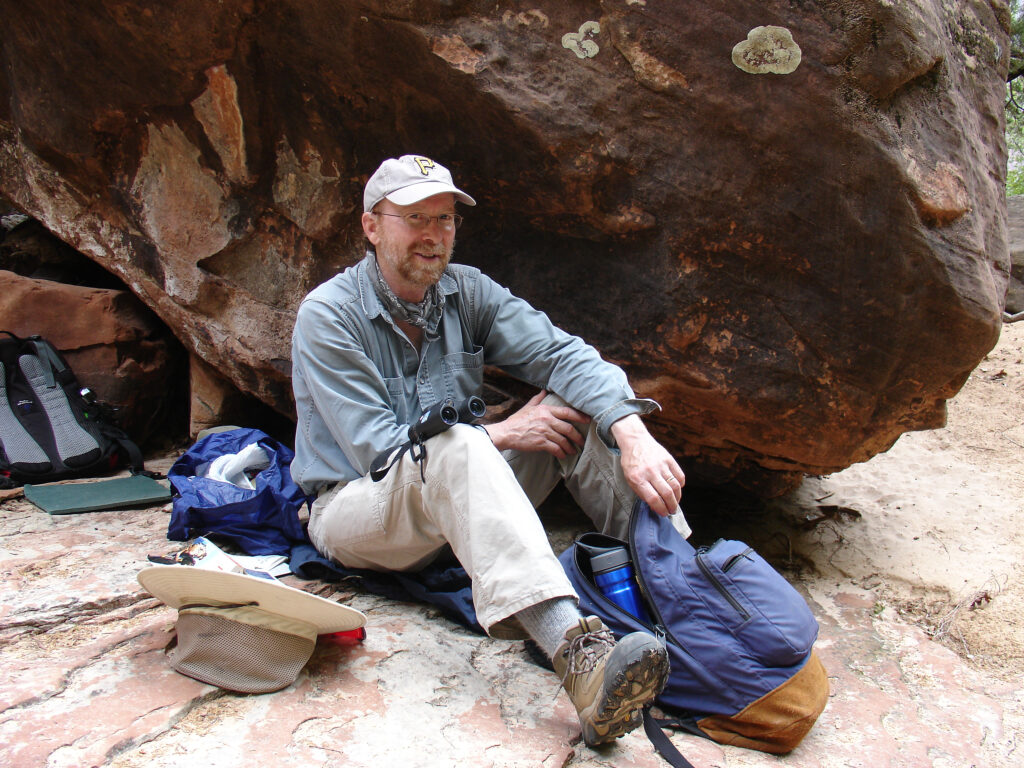
Pat McShea is Educator Emeritus at Carnegie Museum of Natural History.
Related Content
Natural History Collection Managers: The Stewards of Time Travel
Type Specimens: What are they and why are they important?