• Skip to primary navigation
  • Skip to main content
  • Skip to primary sidebar

Carnegie Museum of Natural History

One of the Four Carnegie Museums of Pittsburgh

  • Visit
    • Buy Tickets
    • Visitor Information
    • Exhibitions
    • Events
    • Dining at the Museum
    • Celebrate at the Museum
    • Powdermill Nature Reserve
    • Event Venue Rental
  • Learn
    • Field Trips
    • Educator Information
    • Programs at the Museum
    • Bring the Museum to You
    • Guided Programs FAQ
    • Programs Online
    • Climate and Rural Systems Partnership
  • Research
    • Scientific Sections
    • Science Stories
    • Science Videos
    • Senior Science & Research Staff
    • Museum Library
    • Science Seminars
    • Scientific Publications
    • Specimen and Artifact Identification
  • About
    • Mission & Commitments
    • Directors Team
    • Museum History
  • Tickets
  • Give
  • Shop

Archaeology Extravaganza

March 8, 2021 by Kathleen

Super Science Activity: DIY Sundial

Today we use clocks to help us keep track of time, but in the past, humans relied on the planets, stars, and even our sun to mark significant yearly events. A useful tool different cultures independently invented was the sundial—a flat instrument that uses the position of the sun to accurately track the passage of time. You can use some simple supplies to make your own sundial and learn the science behind it! *This activity requires a grown-up!
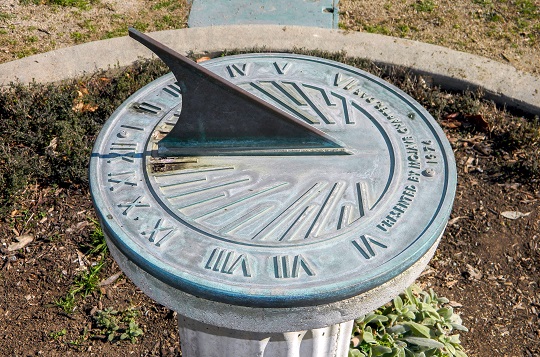
Antique Sundial

What You’ll Need

  • Paper plate
  • Pencil, straw, or a long thin object
  • Tape measure or yardstick
  • Tape
  • Watch or clock
  • Ruler
  • An outdoor space in natural daylight
  • *OPTIONAL* Markers or crayons to decorate

Directions

*For best results, either start earlier in the day or work on this project for multiple days.

  1. Find your test area—this should be an open space with good natural daylight and away from any shadows. Use chalk or a visual marker to mark this area.
  2. Stand in your area and have a grownup trace the outline of your shadow on the ground with chalk. Write the current time at the top of your shadow.
  3. Use a pencil or pen to poke a hole through the center of the paper plate
  4. Write down the time on the edge of your plate. Use a ruler to draw a straight line from the number you wrote to the hole in the center of the plate.
  5. Take your plate and plastic straw outside and place on the ground in your marked area. Slant the straw so that it points to the line you drew on the ground
  6. Rotate the plate so that the shadow of the straw lines up with the line you drew
  7. Place some stones on the plate to keep in place, but be careful not to tip over the straw
  8. Check on your plate every hour. What happened to the shadow of the straw?
  9. Record the position of the shadow of the straw by writing the current time on the edge of the plate where the shadow falls. What shape is your shadow moving in? What does this remind you of?

So, what’s the science behind the dial? Sundials come in many different forms depending on which cultures used them, but they have two key common features—they’re typically made on flat platforms or surfaces and have a thin, upright rod that casts a shadow on the dial called a gnomon. The reason the shadow moves so precisely on the flat platform is due to the Earth’s rotating axis; as the earth rotates around the sun, the shadows on earth change position as well.

Sundials aren’t just a part of ancient history, either; sundials were commonly used as late as the 16th century!

The next time you see a clock, whether a digital or an analog clock on the wall, remember that these inventions and so many others we use day-to-day have very ancient beginnings!
Filed Under: Blog Tagged With: Archaeology Extravaganza, Super Science Days

March 5, 2021 by wpengine

Follow Your Dreams, My 70 Years as an Archaeologist

Archaeology usually conjures up Indiana Jones as an example of the thrills and dangers of archaeological research. Archaeology is a relatively safe occupation, although there are exceptions, such as the archaeologist who stood on top of a Mayan pyramid who was struck by lightning. There are many fields of archaeology that focus on geographic areas and time periods, from hunters and gatherers over hundreds of thousands of years to the last 10,000 years of the rise of civilizations around the world. There are many cultural specialties in archaeology such as Egyptology, Classical archaeology, focusing on the Mediterranean Greek and Roman, Mayan, Inca, U.S. Southwest and so forth. A field represented in Pittsburgh is Biblical archaeology at the Pittsburgh Theological Seminary with its Kelso Museum of Near Eastern Archaeology. At the University of Pittsburgh in the Department of Anthropology there is a focus on Mexico, Central and South America, Eastern Europe, China, and Central Asia with currently over 30 graduate students and faculty conducting research in these regions.

The Section of Anthropology of the Carnegie Museum of Natural History, for over 100 years, has conducted archaeological research in Egypt, Israel, Central Asia, Caribbean, Costa Rica, Peru, the Upper Ohio Valley and holds collections from other areas of the Americas and the world though donations or purchase. The richness of the Section’s collections can be seen in Walton Hall of Ancient Egypt, Polar World: Wyckoff Hall of Arctic Life, and Alcoa Foundation Hall of American Indians.

From an early age I wanted to be an archaeologist. My father was worried that archaeology wouldn’t provide much of a livelihood, so he arranged a visit with the director of the Peabody Museum at Harvard when I was a teenager. My father asked the director J. O Brew if one could make a living as an archaeologist and he answered, “it’s better if you’re independently wealthy.” This didn’t deter me from following my dream of becoming an archaeologist. My archaeological career is filled with luck and serendipity where seizing an offered archaeological opportunity or discovery of a significant artifact, not only guided my research, but where I worked. I have a parallel career in historic colonial sites and in prehistoric maritime adaptations. I became intrigued with archaeology at an early age visiting the Springfield Science Museum and joining a chapter of the Massachusetts Archaeological Society based at the museum. I went out on their excavations at sites in the Connecticut River Valley, one which was in 1957 in South Hadley where I learned how to uncover burials. From summering in the Lake George area of New York State I became interested in historic archaeology due to all the French and Indian War (1754-1763) forts in the region. In 1952 at age 16, I was a crew member for two summers at the excavations of Fort William Henry, made famous by James Fenimore Cooper’s novel The Last of the Mohicans.

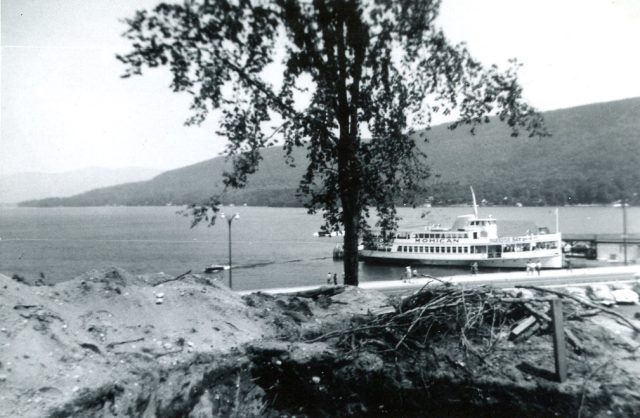
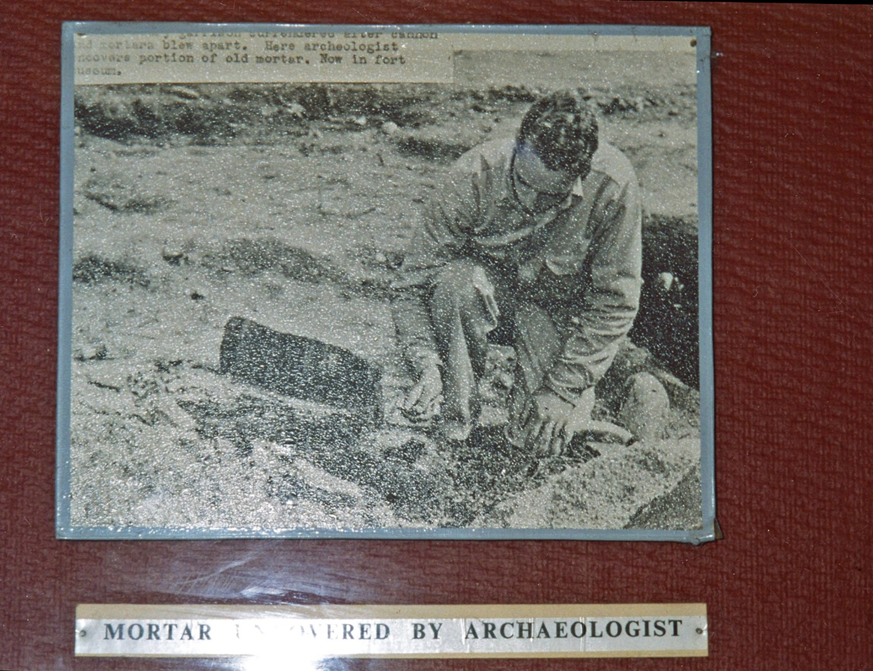
Excavation of Fort William Henry at the Head of Lake George, New York 1952. (Photo Credit Dr. Richardson)

black and white photo of an archaeologist at work in a red frame

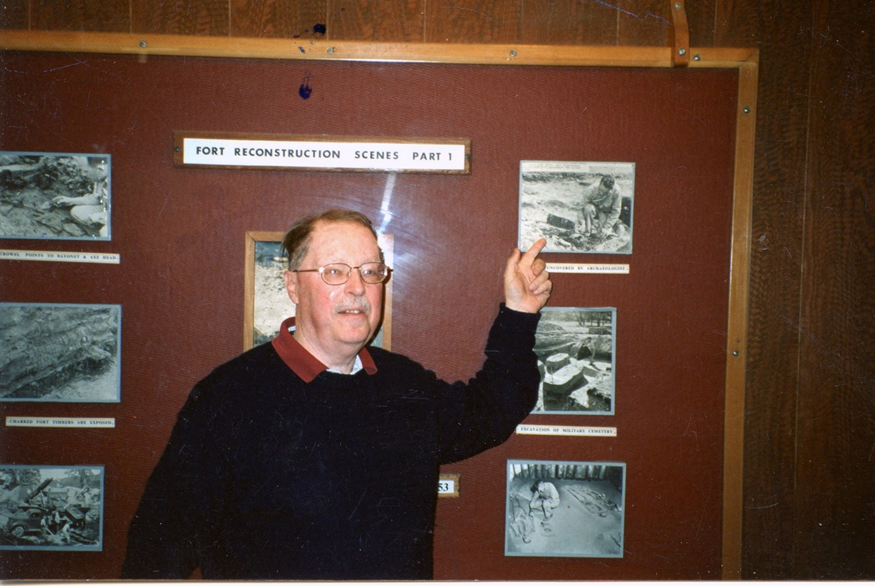
Fort William Henry was destroyed by French and Indian forces in 1757. In 1952, excavations and reconstruction of the fort began on what became a major tourist attraction. Photos show Dr. Richardson pointing to a photo of his 16-year-old self-excavating the site. (Photo Credit: Dr. David Watters)

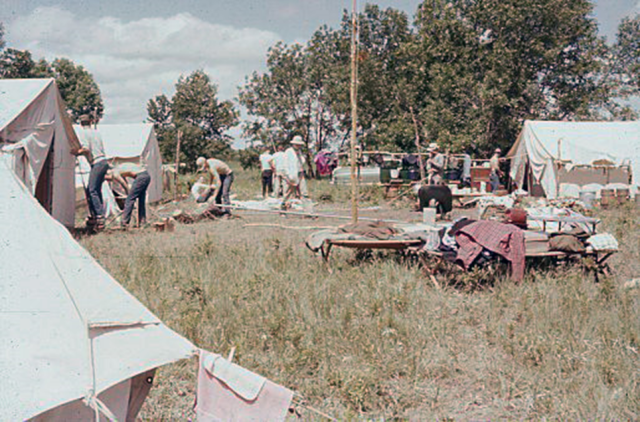
I also summered on Martha’s Vineyard where in 1954 I dug at a coastal site with an associate of the Martha’s Vineyard Museum which stimulated my desire to become a maritime archaeologist. At St. Lawrence University I majored in Sociology and Anthropology and in 1957 I wrote a letter to the Smithsonian Institution asking to go on one of their expeditions and was accepted on a crew that set up a tent camp on the Big Bend of the Missouri River in South Dakota excavating at the Black Partisan village site. While at SLU I also was a crew member in 1959 at the excavations of Johnson Hall in Johnstown, NY, the home of Sir William Johnson, the British Superintendent of Indian Affairs during the French and Indian War.

Smithsonian Institution camp on the Lower Brule Sioux (Lakota) Indian Reservation in South Dakota, 1957. (Photo Credit: Dr. Richardson)
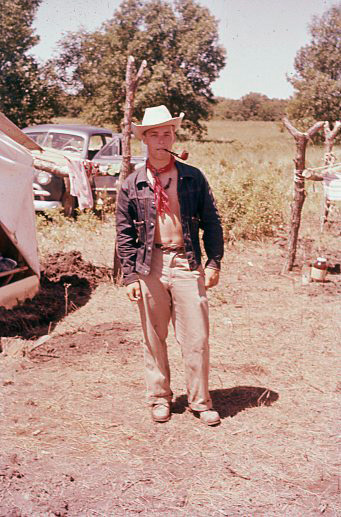
Dr. Richardson in the Smithsonian Camp 1957. (Photo Credit: Warren Caldwell)
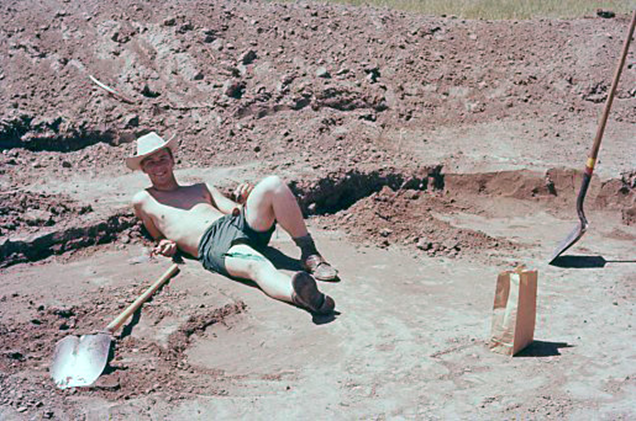
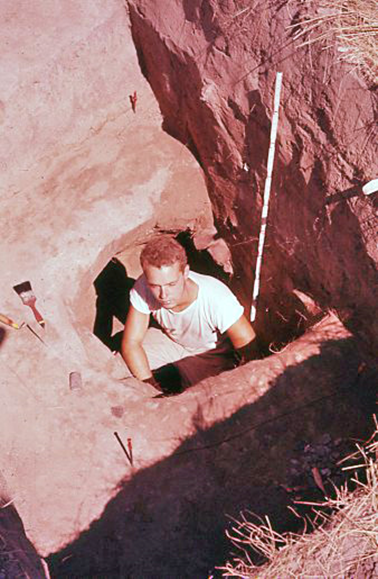
Dr. Richardson lounging at the Black Partisan Site, an excavation of an earth lodge at Lower Brule Reservation. (Photo Credit: Warren Caldwell)
Dr. Richardson excavating a food storage pit at the Black Partisan Site. (Photo Credit: Warren Caldwell)

At Syracuse University for my master’s, I crewed in 1962-63 on 3 sites in up-state New York directed by William A. Ritchie, the State Archaeologist from the New York State Museum. I mentioned to him my interest in maritime archaeology and urged him to develop a research project on Martha’s Vineyard, which he did, excavating 6 sites from 1962-1966 on which I of course I participated. After Syracuse in 1963, I with my wife Judy went to the University of Illinois for my Ph.D. in northeastern U.S. archaeology, focusing on the maritime Vineyard. Here one of my advisors came out of his office and shouted down the hall to me “Jim, do you want to go to Peru?” To which I replied, “of course if you’re paying.” An excellent case of seizing the moment that fit well with my career goal of becoming a maritime specialist. In 1965 my wife Judy and I went to Talara, the second oldest operating oil field in the world after Drake well in western PA. Talara is 100 miles south of the Ecuadorian border and here I located an 8,000-year-old shell midden called Siches, which held evidence from warm and cold ocean fish and shellfish species. Based on the evidence at this coastal fishing and shellfish gathering society and other sites on the coast of Peru I and my colleague Dan Sandweiss, a Research Associate of the Section, developed the theory that this was evidence of a major shift in the change from a warm water to a cold water current washing the Peruvian north coast and the origins of El Niño around 5,800 years ago, the worldwide drought and flood disasters. My doctorate in 1969 was on the changing climate and coastal sites in the Talara region. I also dug in southern Peru at the Ring Site, an 10,500-year-old massive shell midden with cold water fish and shellfish. In addition, my students and I surveyed pyramid centers in the Talara area as well.

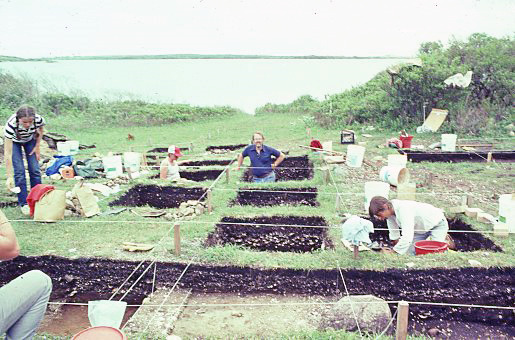
Dr. Richardson excavating Jackie Onassis’s property on Martha’s Vineyard in 1982. This site is called the Hornblower II Site. (Photo Credit: Jim Peterson)
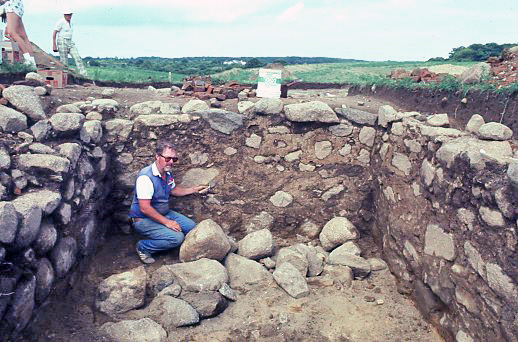
Dr. Richardson in the cellar hole of the John and Experience Mayhew House Site c.1672-1658 on Martha’s Vineyard in 1985. (Phot Credit: Jim Peterson)
The Ring Site Ilo, Peru 1983 a 10,500-year-old Shell Midden. (Photo Credit: Dr. Richardson)
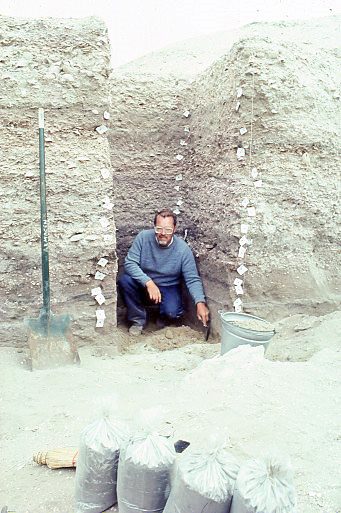
Dr. Richardson in the shell midden profile of the Ring Site, Peru. (Photo Credit: Daniel Sandweiss)
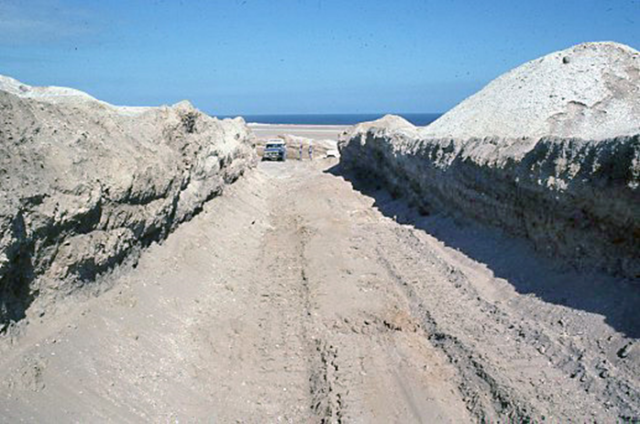
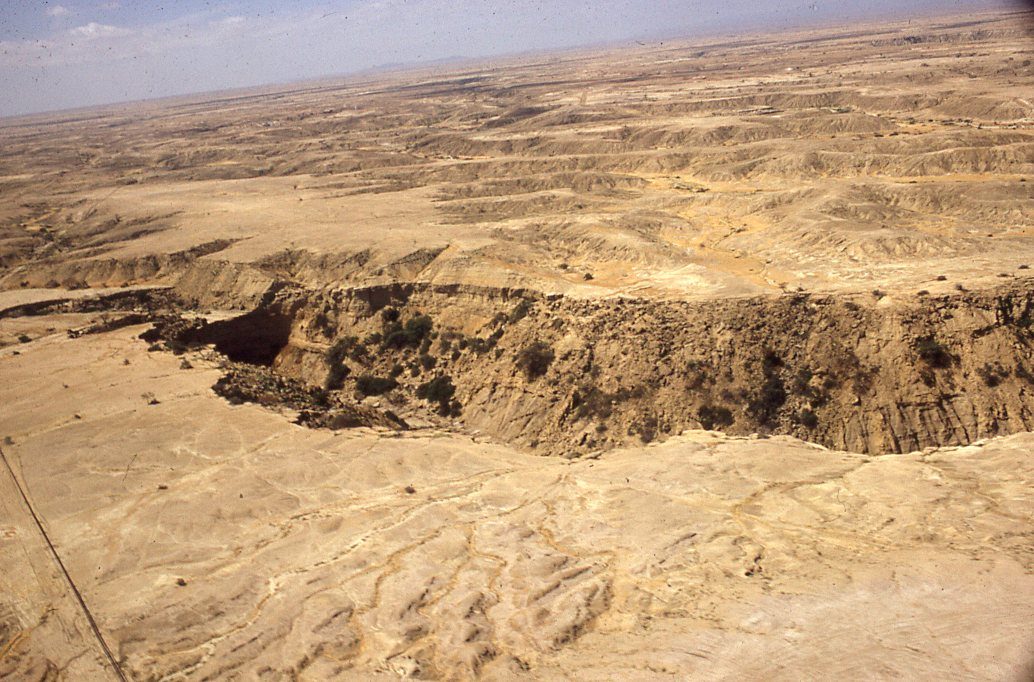
Aerial view of the Siches Site in the lower half of the photo, Talara, Peru (Photo Credit: Dr. Richardson)
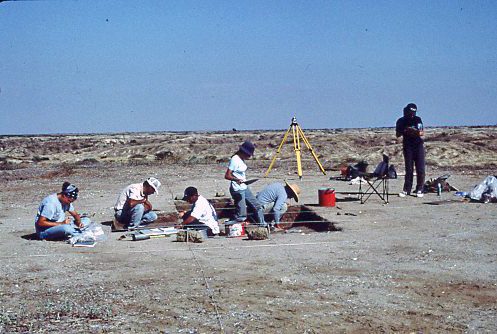
Excavation at the Siches Site, which provided evidence for the origins of the El Niño weather catastrophe in 5800bp (Photo Credit: Dr. Richardson)

I did return to Martha’s Vineyard in the early 80’s excavating 2 shell middens and a Colonial house site of missionaries to the Wampanoag. In western Pennsylvania in 1970 I directed a field school for the University of Pittsburgh at the Revolutionary War site of Hanna’s Town in Westmoreland County, the first County Seat west of the Alleghenies. This town of 30 log cabins and a fort was destroyed by an Iroquois and British attack in 1782. Here we excavated Charles Foreman’s tavern.

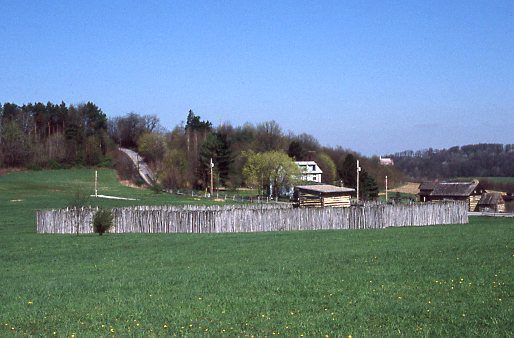
Reconstructed Fort of the Hanna’s Town Site. (Photo Credit: Dr. Richardson)
1970 university of Pittsburgh Field School Excavation of Forman’s Tavern, Hanna’s Town, PA. (Photo Credit: Dr. Richardson)

I came to the University of Pittsburgh in 1967, retiring in 2009. While at Pitt serving as chairman, I was approached by then director Dr. Craig Black to take over the chair of the Section of Anthropology in 1978 and accepted a half-time position as chief curator until my retirement in 2006. The only thing that has changed in my retirements was receiving a salary! I am currently writing up some sites from my Peruvian and Martha’s Vineyard research and have a book in press on a colonial site on Martha’s Vineyard where I am a board member of the museum. I am also still involved with Pitt graduate students and in programs at the Carnegie Museum of Natural History, so little has changed in my archaeological career since I first put a shovel in the ground in 1952.

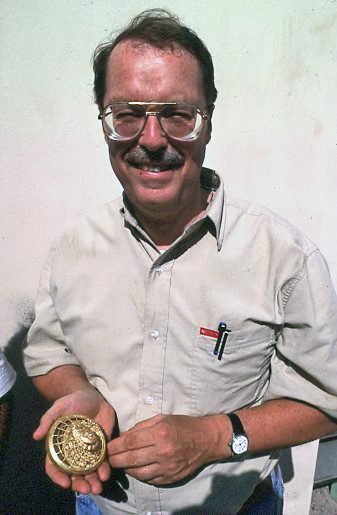
Dr. Richardson holding a gold spider from the Royal Moche Tombs of Sipan in Lambayeque, Peru 1990. (Photo Credit: Daniel Sandweiss)

Dr. James B. Richardson III is Curator Emeritus in the Section of Anthropology at Carnegie Museum of Natural History and University of Pittsburgh Anthropology Professor Emeritus. Museum employees are encouraged to blog about their unique experiences and knowledge gained from working at the museum.

Related Content

How I Became an Archaeologist

Pennsylvania Archaeology and You

Super Science Activity: Natural Paints

Carnegie Museum of Natural History Blog Citation Information

Blog author: Richardson, James
Publication date: March 5, 2021

Share this post!

  • Share on Twitter Share on Twitter
  • Share on Facebook Share on Facebook
  • Share on Pinterest Share on Pinterest
  • Share on LinkedIn Share on LinkedIn
  • Share on Reddit Share on Reddit
  • Share via Email Share via Email

Filed Under: Blog Tagged With: archaeology, Archaeology Extravaganza, James Richardson, Science News, Super Science Days

March 4, 2021 by Kathleen

Super Science Activity: Natural Paints

In the modern world, it’s very easy for us to buy or make clothing, jewelry, makeup, or other decorations in almost any color we want, but we often don’t think about how those colors are made. Typically, items are painted or dyed with artificial or natural colorants—especially clothing or other textiles. But how did our ancestors create beautiful works of art or colorful garments and accessories? Believe it or not, applying color to objects with natural ingredients has been in practice for thousands of years, and is something archaeologists are still learning more about from different cultures at different points in human history.

There are two different types of methods to applying color on an object—either using a pigment, a natural material that is insoluble, orimpossible to dissolve completely, or a dye, a natural material that is soluble and easily dissolves when added to a mixture

Make-Your-Own Watercolor Paints

Natural dyes can also be used to make paint, specifically watercolor paints. The intensity of the color can be affected by adding more of the natural dye than water; adding more water will diminish the color. With the help of a grownup, you can make your own paints from natural ingredients you may have at home! *This activity requires a grown-up! (Although these paints are using natural ingredients, they are not intended for consumption)

*TIP: frozen fruits and veggies give off a lot of color when they’re thawed and mashed!

What You’ll Need

  • 4 Tbsp. white vinegar
  • 5 Tbsp. Corn starch
  • 5 Tbsp. Baking soda
  • Watercolor paper
  • Paintbrushes
  • Water
  • Natural ingredients to make paints (examples down below)
  • Small mesh strainer
  • Mixing bowel
  • Whisk
  • Container(s) to hold watercolor paints (old ice cube trays work great!)
  • Towels/cleaning supplies
  • *OPTIONAL* blender or juicer
  • *OPTIONAL* cheese grater for root vegetables
  • *OPTIONAL* Markers or crayons to decorate
  • *OPTIONAL* Table salt to make unique designs

Directions

*Ingredients can vary depending on what you have or what colors you’d like to use

  1. Combine the vinegar, baking soda, corn starch, and corn syrup in your mixing bowel
  2. Stir or whisk until completely dissolved
  3. Pour mixture into your container(s) to hold watercolor paints until about half-full
  4. Find natural ingredients around your house that are different colors. These can include fruit like raspberries to make red; blueberries to make blue paint, paprika or other spices to make dusty reds and browns; carrots or beets; or even coffee grounds and tea bags! *Make sure to ask a grownup for help*
  5. Place your mesh strainer over your mixing container. Begin placing ingredients into your mesh strainer and either using a whisk or potato masher to smash down your ingredients one at a time
    • OPTIONAL: if you have a juicer or blender, use this to condense your ingredients instead
  6. Once the liquid has been extracted and is in your mixing bowl, pour the liquid into one of the containers that has the vinegar, baking soda, etc. mixture. Use as little or as much to vary the color
  7. Mix colors into the corn starch mixture well
  8. Clean out mixing bowl to ensure no color contamination
  9. Repeat steps 1-8 for other colors
    • If you’re using leaves or root vegetables like beets or carrots, you can grate the roots down and use a muslin cloth to squeeze out juice
  10. Once you have your colors, you’re ready to paint on your watercolor paper
    • OPTIONAL: use markers or colored pencils to enhance your art
    • OPTIONAL: if you have table salt, try putting down some paint on your paper and adding a sprinkle of salt. What happens to the painted area?
  11. Because our combined mixture has corn starch, these paints will dry out quickly, but can be reused by adding a little water, just like artificial watercolors. Keep refrigerated when not in use. Paints will last (refrigerated) for 5-7 days

Filed Under: Blog Tagged With: Archaeology Extravaganza, Super Science Days

March 4, 2021 by wpengine

How I Became an Archaeologist


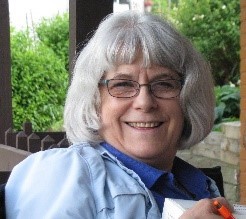
woman with glasses and gray hair sitting outside

If you had told me when I was 15 that I would spend my life as an archaeologist, I probably would have been pretty surprised. I didn’t grow up knowing a great deal about archaeology or even being fascinated by arrowheads. At that time, I might well have asked what an archaeologist really is and what one actually does. I did get to visit the Parthenon and other ruins while on a trip with my aunt when I was sixteen. Even then, I don’t remember having more than a casual interest in what could be learned from these places. I was more interested in the living people and the new food dishes I encountered on that trip, which was my first trip outside the United States.

From talking to other archaeologists, I’ve learned that there are a lot of paths to deciding archaeology is going to be your life’s work. In my case, what led me to archaeology was anthropology, and specifically an elective course I took in the Fall of my senior year in high school that was taught by a Ph.D. student at the University of Massachusetts. Until then I had not been a serious student, although I did well enough in school. Perhaps I was slightly bored by most of my courses, but anthropology was anything but boring! It looked at people elsewhere in the world and over great periods of time. Many of these people lived different lives than my friends and I did, and they sometimes thought very differently about what was important in life than people here in the United States. I was fascinated, and, honestly, I particularly liked the fact that the conventions of American society, which to my teenage self were sometimes a little confining, weren’t after all the only sensible way to approach life. That year, as I chose a college to attend, I specifically looked for anthropology programs. I chose Beloit College in Wisconsin, which to this day has an excellent anthropology program.

Initially, I thought that I was most interested in cultural anthropology, but like most anthropology departments in the United States, Beloit required its anthropology majors to take courses in biological anthropology, linguistic anthropology, and archaeology as well as cultural anthropology. These are what are known as the four fields of American anthropology and together, they give us a more complete picture of humans in both the past and the present. Most people focus their careers in one subfield or another, though we recognize the importance of each one for understanding humans, and in most cases in North America our degrees are in anthropology not one of the subfields. In college, I found all these courses more fascinating than anything I had studied before, and I actually became a good student as I explored anthropology. I was learning so much neat stuff! I also did volunteer work in the Logan Museum at Beloit, which was founded at the end of the nineteenth century and holds some pretty amazing ethnographic and archaeological collections. It was there I first became interested in artifacts and learned to clean and care for them. After a college internship in cultural anthropology convinced me that cultural anthropology was not the most interesting part of anthropology after all, I began to focus on archaeology. I was most intrigued by my courses in Mesoamerican archaeology and North American archaeology, which before college had been completely unknown to me.

When I graduated from college, I still wasn’t sure what I would do with my life. I worked for about two years both in social work and as a tax auditor for the IRS, but decided in 1974 to try graduate school in archaeology because I still found what archaeology had taught me about past people compelling. I lived in Chicago, so I enrolled in the Ph.D. program in North American archaeology at Northwestern University in Evanston, Illinois.

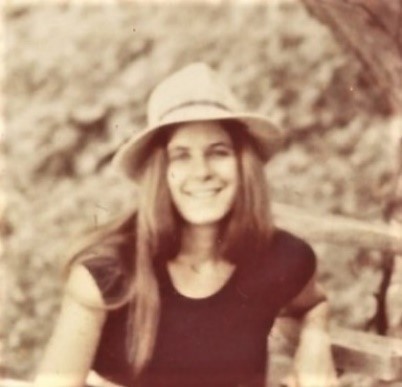
My graduate self in the late 1970s. Photo credit: Phillip Neusius

The biggest shock of graduate school was my professors’ almost immediate insistence that I pick what research I wanted to do. They pushed me to develop an expertise or skill within North American archaeology through my research. It sounds obvious to me now, but I think many beginning graduate students are like I was, lovers of the discipline’s knowledge, but a bit daunted by becoming an independent researcher. Developing an area of focus and specialty skills is part of becoming a professional archaeologist. One reason for this is because contemporary archaeological undertakings rely on teams of researchers, each contributing special skills and knowledge to accomplish the many aspects of excavation, analysis, and interpretation. If you envision archaeology as the solitary pursuit of an elusive artifact or site, you don’t have the picture quite right. Think instead of archaeological fieldwork involving groups of scientists working together to discover and carefully record many different bits of evidence about what the world used to be like and what people did in it. Also think about the many hours these scientists and others will spend not only in the field, but in the laboratory after an excavation is completed cleaning finds, describing artifacts, and analyzing data in order to make meaningful interpretations.

For someone like myself, who loved all aspects of anthropology, not to mention archaeology, and who had only gradually settled on North America as my geographic focus, picking a focus on entering graduate school was a hard task. There was so much that would be interesting to study! However, I did remember especially enjoying a research paper I had done in college on the relatively new interdisciplinary field of zooarchaeology, so under pressure, I told my professors I wanted to pursue this subfield in graduate school. Amazingly, this turned out to be a good choice of specialization for me. I found that I really love to work with collections of animal bone. For me, opening a bag of bone refuse from a site still is exciting. Bone identification work is a little like doing a jigsaw puzzle without all the pieces. It is challenging, and it takes concentration and careful observation to piece together what you can. There is so much to figure out about any single piece of bone! What animal is it? How healthy was the animal? What part of the animal’s body is it? Has it been burned or cut? How was the bone buried and changed after the humans were done with it? Then you have to record this information so it can be combined with other observations on the assemblage of bone you are looking at. After identification, making sense of what a collection of the bones means and correlating these kinds of data with other information from a site and region requires careful analysis, but also insight and creativity. To me it is endlessly fascinating.

Besides finding that I liked the work, choosing zooarchaeology was also serendipitous since my professors were looking for a student to work with them on this aspect of a big project they were undertaking in west-central Illinois centered on the Koster site, which was first inhabited more than 9000 years ago and then reinhabited by people right up into modern times. Most importantly the poorly known Archaic Period levels were numerous, well-preserved, and distinct from each other so we could add a lot of new information through our work. For my dissertation I was able to look at the animal remains from levels of this site dated between approximately 8500 and 6000 years ago, which represent how people used animals at that time.

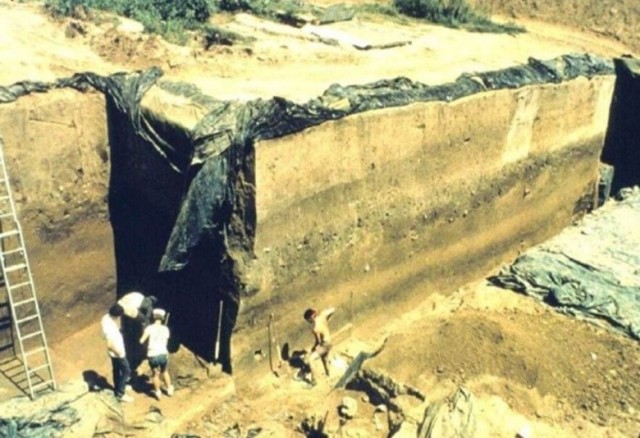
Koster site strata. All those dark layers are from Archaic period camps at the site. Photo credit: Del Bastian, Center for American Archaeology.

Graduate school was intense, but I continued to be fascinated by archaeology’s ability to tell the story of people lost to standard Western history. In those days I was excited to be part of this science that could do so much more than describe and take care of cool artifacts. It was a heady thing to learn that I could contribute to what was known about people who lived thousands of years ago. In later years, I’ve had to think more critically than I did then about what a privilege it is for an archaeologist to learn about the history and lives of other ethnicities. Today’s archaeologists recognize their responsibility to present information about past people for both scholarly and public use in ways that are sensitive to what is considered sacred and private by the descendants of those people. I think this is an important change in perspective, but in the 1970s most archaeologists just wanted to show that people’s stories from the past could be told using the techniques of archaeology. I certainly was happy, if a little naively so, to have found a way to contribute to telling the human story.

If I consider entering graduate school as the start of my professional career as an archaeologist, I have been pursuing this career for more than 45 years! Over the years I have done zooarchaeological and archaeological work in the American Midwest, Southwest, Southeast, and Northeast working on telling the story of people who lived as long as 9000 years ago and as recently as the Sixteenth century. I’ve worked at several universities, in a small museum, and on small and large archaeological projects in the field of Cultural Resource Management (CRM) doing archaeological survey, site excavation, and zooarchaeological identification and analysis. I’ve written scholarly papers and articles as well as a textbook on North American archaeology. However, beginning in the late 1980s, I spent more than 31 years doing research and teaching anthropology and archaeology here in Pennsylvania at Indiana University of Pennsylvania. In this job I taught both undergraduates and graduate students, but, as is typical of university professors, I also spent time doing fieldwork and analysis as part of my research while at IUP. Fortunately, because archaeology is a team undertaking, I’ve been able to involve many students in my research. Working with students in research as they discover what fascinates them has been a highlight of being an archaeologist for me. I’ve now retired from teaching but not archaeology. I’m still working with both physical and digital archaeological collections both through CMNH and elsewhere and writing about archaeology. Who knows what this career still will bring me!

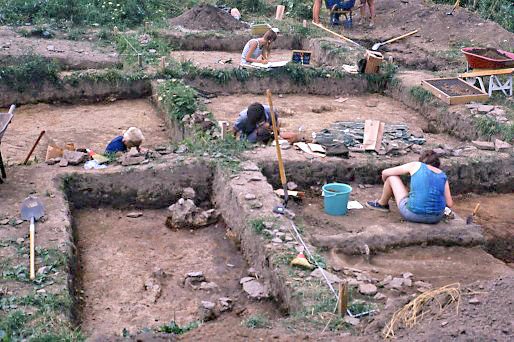
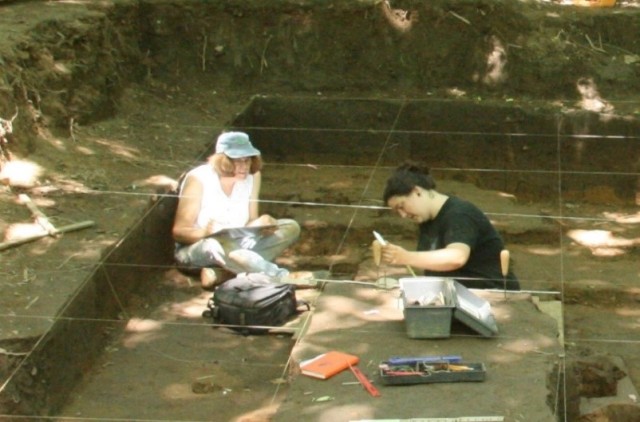
Drawing a profile at the Johnston site with one of my students in 2008. Photo credit: Erica Ausel, IUP Archaeology.
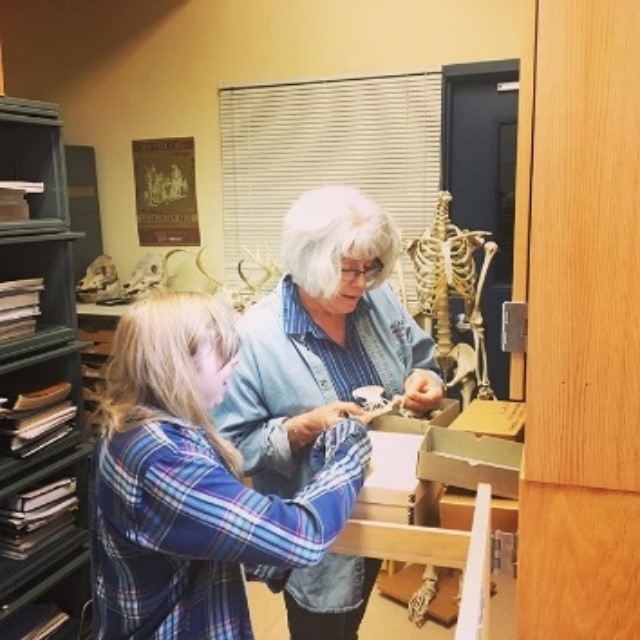
Tracking down a bone identification with one of my students in the Zooarchaeology Lab at IUP. Photo credit: Beverly Chiarulli.

If you are reading this blog because you are thinking about archaeology as either a career or a hobby, I hope you realize that mine is just one story among the many that could be told. Because there are so many aspects of archaeology, people come into it from all sorts of backgrounds and because of all sorts of interests. I think that it is important to remember though that it really is about understanding people and telling their stories through the artifacts and other evidence we find. This is what interested me in archaeology in the first place. Discovering the details of the human story is a giant undertaking. There is no shortage of research problems or work to do, but solving the puzzles presented by sites and collections is both challenging and fun. I’m certainly glad I decided to become an archaeologist and zooarchaeologist so many years ago!

Sarah W. Neusius is a Research Associate in the Section of Anthropology at Carnegie Museum of Natural History and Professor Emeritus, Department of Anthropology, Indiana University of Pennsylvania. Museum employees are encouraged to blog about their unique experiences and knowledge gained from working at the museum.

Definitions of Bolded Terms

anthropology -the study of humans including the physical, cultural and social aspects in the past and present.

cultural anthropology – the study of the cultural aspects of humans especially recent and contemporary social, technological, and ideological behavior observed among living people.

biological anthropology – the study of the biological or physical aspects of humans, including human biological evolution and past and present biological diversity.

linguistic anthropology – the study of the structure , history, and diversity of human languages as well as of the relationship between language and other aspects of culture.

archaeology – the study of past human behavior and culture through the analysis of material remains.

ethnographic – relating to the scientific description of people and cultures especially customs and beliefs.

Mesoamerican archaeology – the archaeology of the area from central Mexico southward through Belize, Guatemala, El Salvador, Honduras, Nicaragua, and northern Costa Rica.

North American archaeology – the archaeology of the area from central Mexico northward throughout the United States and Canada.

zooarchaeology – a subarea of archaeology involves the identification of animal remains from archaeological sites and investigates the ecology and cultural uses of the animals represented.

assemblage -a collection of artifacts from the same archaeological context.

Archaic Period – a time period from approximately 10,000 BP to 3000 BP that is recognized in most of North America.

Cultural Resource Management (CRM) – an applied form of archaeology undertaken in response to laws that require archaeological investigations.

archaeological survey – the systematic process archaeologists use to locate, identify, and record archaeological site distribution on the landscape.

Related Content

Pennsylvania Archaeology and You

Ancient Egypt Through its Pottery

Super Science Coloring Pages

Filed Under: Blog Tagged With: anthropology, Archaeology Extravaganza, Sarah Neusius, Super Science

March 3, 2021 by wpengine

Pennsylvania Archaeology and You

The Pennsylvania Archaeological Council (PAC) is an organization of professional archaeologists from all over the State dedicated to education, consultation, ethics, and advocation of Pennsylvania archaeology. The PAC works to advise policy and legislative interests in the commonwealth as well as provide consultation with the Pennsylvania Department of Transportation. Anyone with a graduate degree in anthropology, archaeology, or a similar subject is encouraged to apply. Recently this membership has been expanded to include those with extensive experience and PAC has taken an interest in student membership. Check out this website for more information.

outline of the state of Pennsylvania with the letters PAC on it diagonally

For anyone interested in local archaeology, the Society for Pennsylvania Archaeology (SPA) exists alongside PAC. Anyone is welcome to join this special interest group that is made up of regional chapters. Established in 1929, the goals of SPA include; promoting the study of archaeological resources in PA, discouraging irresponsible exploration, connecting avocational and professionals, and promoting the conservation of sites, artifacts, and information. To disseminate information, the SPA facilitates one of the oldest State Archaeology Journals, Pennsylvania Archaeologist. 83 years of the publication are available for purchase on the website.

The Society for Pennsylvania Archaeology, Inc., the parent archaeological society, meets annually at announced places. Membership in the SPA is highly recommended. Dues are $30 per year for individuals. Membership entitles one to receive The Pennsylvania Archaeologist twice a year. For those interested in taking an active role, the SPA is made up of many individuals from regional chapters. I’ve decided to highlight two of those chapters in this blog. To find your regional chapter visit pennsylvaniaarchaeology.com/Chapters.htm

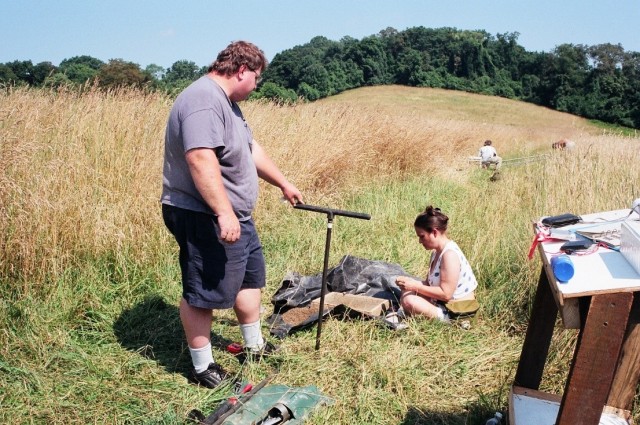
If you live in Pittsburgh, our local chapter is called Allegheny Chapter #1. We meet the first Tuesday of every month at 7:30 p.m. Due to the pandemic, this is currently done virtually. For membership information contact Amanda Valko at amanda@quemahoning.com The chapters take an active approach by conducting investigations of sites in their region. The Allegheny Chapter started working on a local site called the Hatfield site back in July of 2007. The first thing we did was set up a grid and took some geomorphology samples under the direction of Brian Fritz.

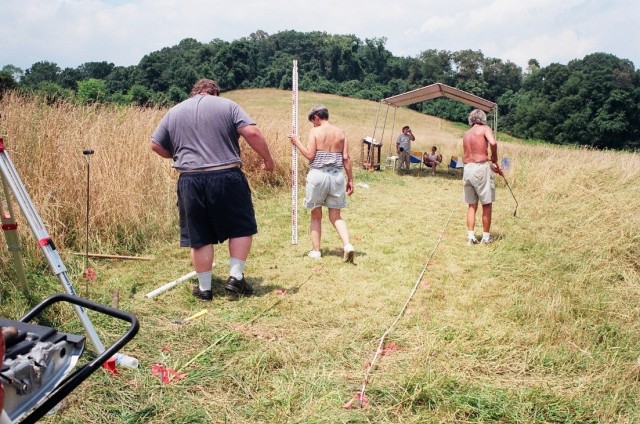
Brian Fritz and Nina Larsen examining a soil core sample at the Hatfield Site. (Photo Credit: Amanda Valko)
Setting up the grid for soil sampling. Chapter members front to back: Brian Fritz, Peggy Sinclair, Ken Fischer. Chapter members under the shade shelter: Don McGuirk, Nina Larsen. (Photo Credit: Amanda Valko)

The Allegheny Chapter is hoping to produce a report of these excavations soon. Hopefully we can get the Chapter together over the summer to work with the artifacts and start the whole report preparation process.

Southeast of Allegheny County, the Westmoreland Archaeological Society Chapter #23 used to meet on Wednesdays, but due to the pandemic are following an erratic schedule. For membership information contact Jim Barno at bar3686@calu.edu (Jim Barno is a dedicated volunteer in the section of Anthropology at CMNH.)

Chapter #23 was actively engaged in 16 years of excavation at the Console Site, which was an important Monongahela Site. They reach out to the students and faculty at the Indiana University of Pennsylvania encouraging them to become involved with the Westmoreland Archaeological Society by participating in various public events such as artifact displays and colloquiums held at the IUP campus, Fort Necessity National Battlefield, Green County Historical Society as well as local community events such the Derry Agricultural Fair.

IUP students are actively involved in continuing excavations at the Bergstrom Hollow Rock Shelter Site (weather permitting). The chapter also publishes a monthly newsletter called The Trowel that has interesting archaeological subject material as well as listings of local archaeological events and now Zoom links for folks interested in these types of activities.

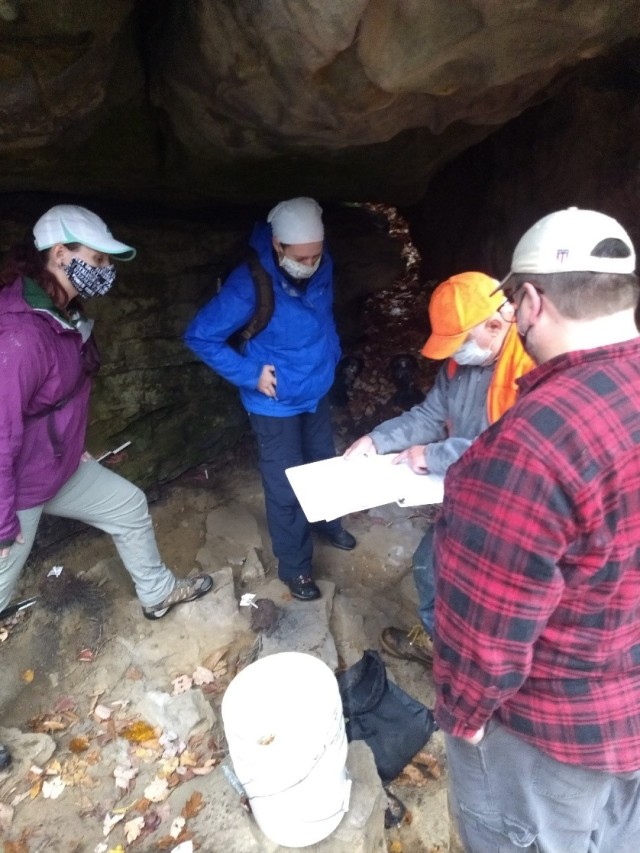
From the left are the following people Stephanie Zellers, Rachael Smith, Bob Oshnock, and Dr. Chadwick at the Bergstrom rock Shelter. (Photo Credit: Jim Barno)
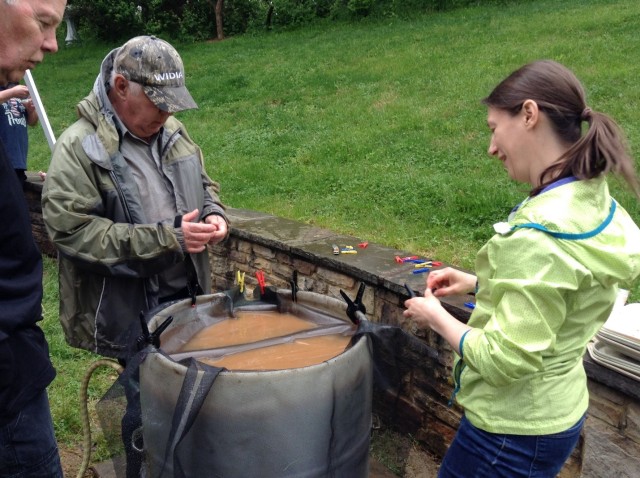
Earth Day Event at St. Vincent College. Bob Oshnock and Dr. Lara Homsey-Messer (IUP) doing flotation. (Photo Credit: Jim Barno)

Remember to always report archaeological finds to the State Historic Preservation Office! Follow the guidelines specified in the links below.

PA SHPO/State Museum of PA: Instructions for Recording Archaeological Sites in Pennsylvania

PA State Historic Preservation Office (PA SHPO): Guidelines for Archaeological Investigations in Pennsylvania

Amy L. Covell-Murthy is Archaeology Collection Manager at Carnegie Museum of Natural History as well as a member of the SPA Allegheny Chapter 1, and a recently elected executive board member of the PAC. Museum employees are encouraged to blog about their unique experiences and knowledge gained from working at the museum.

Related Content

Archaeological Adventures in Egypt

Minecraft Lied to Me?!

Super Science Activity: Hieroglyphs

Filed Under: Blog Tagged With: Amy Covell-Murthy, archaeology, Archaeology Extravaganza, Educators, Super Science

March 2, 2021 by Kathleen

Super Science Coloring Pages!

Have fun coloring images featuring animals from our living collection this week drawn by Gallery Presenter and Floor Captain, Jess Sperdute. You can meet some of the animals in the living collection during our Virtual Live Animal Encounters!

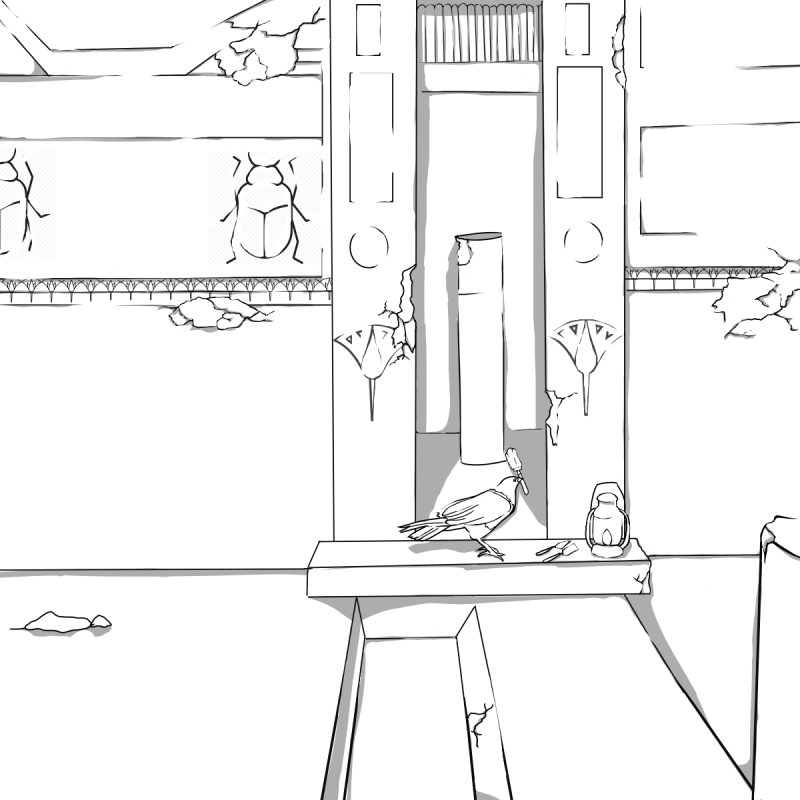
Jon Snow dusting an artifact
Download Jon Snow the Crow Dusting an Artifact Coloring Image
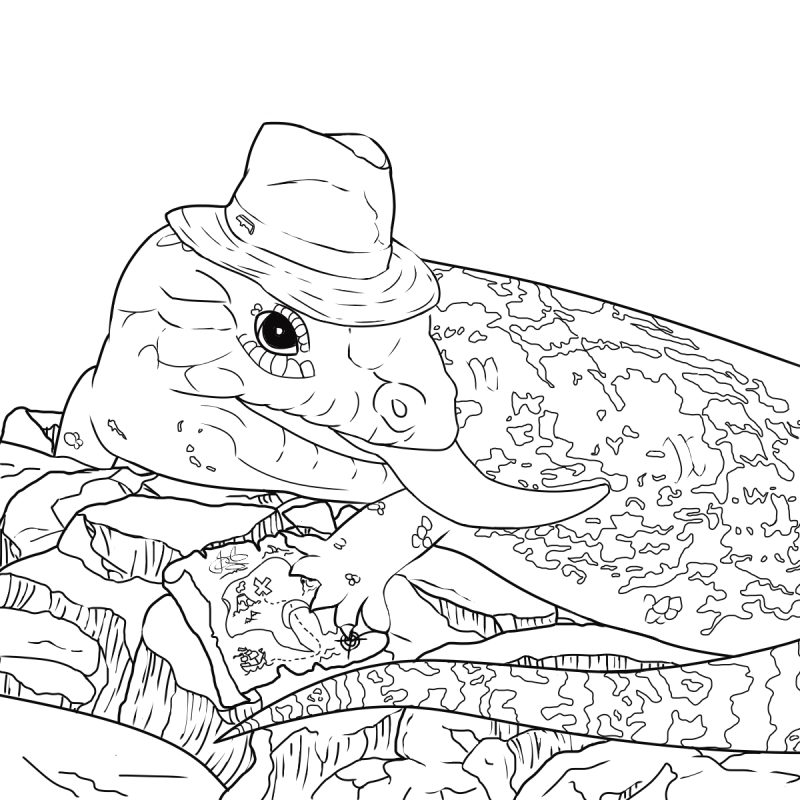
Miley the Skink as Indiana Jones
Download Miley the Skink as Indiana Jones Coloring Image

Filed Under: Blog Tagged With: Archaeology Extravaganza

  • Page 1
  • Page 2
  • Go to Next Page »

sidebar

About

  • Mission & Commitments
  • Directors Team
  • Museum History

Get Involved

  • Volunteer
  • Membership
  • Carnegie Discoverers
  • Donate
  • Employment
  • Events

Bring a Group

  • Groups of 10 or More
  • Birthday Parties at the Museum
  • Field Trips

Powdermill

  • Powdermill Nature Reserve
  • Powdermill Field Trips
  • Powdermill Staff
  • Research at Powdermill

More Information

  • Image Permission Requests
  • Science Stories
  • Accessibility
  • Shopping Cart
  • Contact
  • Visitor Policies
One of the Four Carnegie Museums | © Carnegie Institute | Privacy Policy | Terms of Use | Accessibility
Rad works here logo