• Skip to primary navigation
  • Skip to main content
  • Skip to primary sidebar

Carnegie Museum of Natural History

One of the Four Carnegie Museums of Pittsburgh

  • Visit
    • Buy Tickets
    • Visitor Information
    • Exhibitions
    • Events
    • Dining at the Museum
    • Celebrate at the Museum
    • Powdermill Nature Reserve
    • Event Venue Rental
  • Learn
    • Field Trips
    • Educator Information
    • Programs at the Museum
    • Bring the Museum to You
    • Guided Programs FAQ
    • Programs Online
    • Climate and Rural Systems Partnership
  • Research
    • Scientific Sections
    • Science Stories
    • Science Videos
    • Senior Science & Research Staff
    • Museum Library
    • Science Seminars
    • Scientific Publications
    • Specimen and Artifact Identification
  • About
    • Mission & Commitments
    • Directors Team
    • Museum History
  • Tickets
  • Give
  • Shop

anthropology

March 19, 2024 by Erin Southerland

Celebrating Women in the Natural History Art Collection

by Olivia Buehler

Within the collections of the Carnegie Museum of Natural History, one may be surprised to find more than the biological specimens, fossils, and extensive anthropological and archaeological materials that the museum is best known for. As a major scientific institution that collects and conducts research, the Carnegie Museum of Natural History also has its own “Natural History Art” Collection, formerly known as the M. Graham Netting Animal Portraiture Collection, named after the herpetologist, former CMNH director, and founder of the collection. Consisting mostly of mid-twentieth-century naturalist and scientific illustrations, this collection serves as a useful addition to the museum’s resources that complements its research activities. Naturalist and scientific illustration involves skills beyond image-making and can resemble scientific research in that it requires artists to closely observe, and often travel to, their subjects to fully understand them and render them accurately. 

Within the collection are several women artists and scientific illustrators who each contributed to the genres of naturalist and scientific illustration. In this post I will feature the artists Winifred Austen, Germaine A. Bernier-Boulanger, Florence Malewotkuk, and an artist only identified (for now) as “Deirdre E. L.,” who are all worth celebrating this Women’s History Month. Although greatly outnumbered in the collection by their male counterparts, the women in CMNH’s Natural History Art Collection, and their respective works, speak volumes. With some pieces dating to over one hundred years ago, these artworks are proof that women have always had important roles to play in art and science, and it is just the conditions of patriarchal societies that have limited them. Despite their existence as a minority in the field of naturalist and scientific illustration, and the associated income and opportunity disparities that came with that status, these women persevered to create the beautiful, informative, and humorous art below.

Winifred Austen
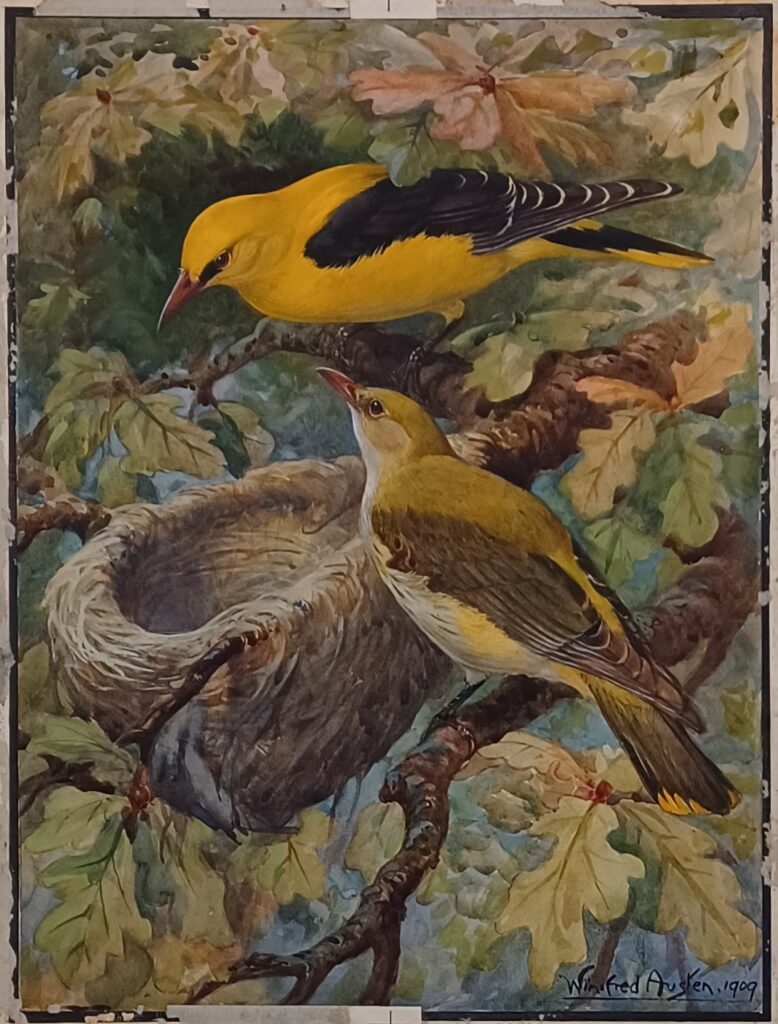
watercolor painting of two golden orioles near their nest in a tree
Winifred Austen, Golden Orioles (1909), Watercolor on board, 20 x 27 in., NHA 28.266 

One such artist is Winifred Austen, an English painter, etcher, and engraver whose work became most popular in the 1940s and 1950s with her wildlife illustrations in books and magazines. Produced as an illustration for F.B. Kirkman’s British Bird Book, Austen’s Golden Orioles (1909) is a lovely example of her expertise in wildlife painting, specifically birds. While the orioles are painted with a thoughtful hand in precise, impressive detail, their surrounding environment is rendered in a far more impressionistic style, emphasizing Austen’s utilization of her formal training in the arts, but also her choice to employ individualistic, stylistic expression and creativity. Even though these watercolors were intended to act as visual references for the texts they were accompanying, Austen still managed to contribute in a manner that was unique to her. Austen’s art can be praised for the dynamism of her subjects, and her portrayal of birds as they would appear in their natural environments, rather than in the static and perfectly poised way some other naturalist illustrators tend to favor.

Austen attended and trained formally at the London County Council School of Arts and Crafts and exhibited her work often with the Royal Society of Painter-Etchers, following a similar trajectory as many of her male contemporaries. With that being said, Austen also made incredible progress despite being a minority in her practice, for example, she was the only woman to be published in the British Bird Book.

Germaine A. Bernier-Boulanger
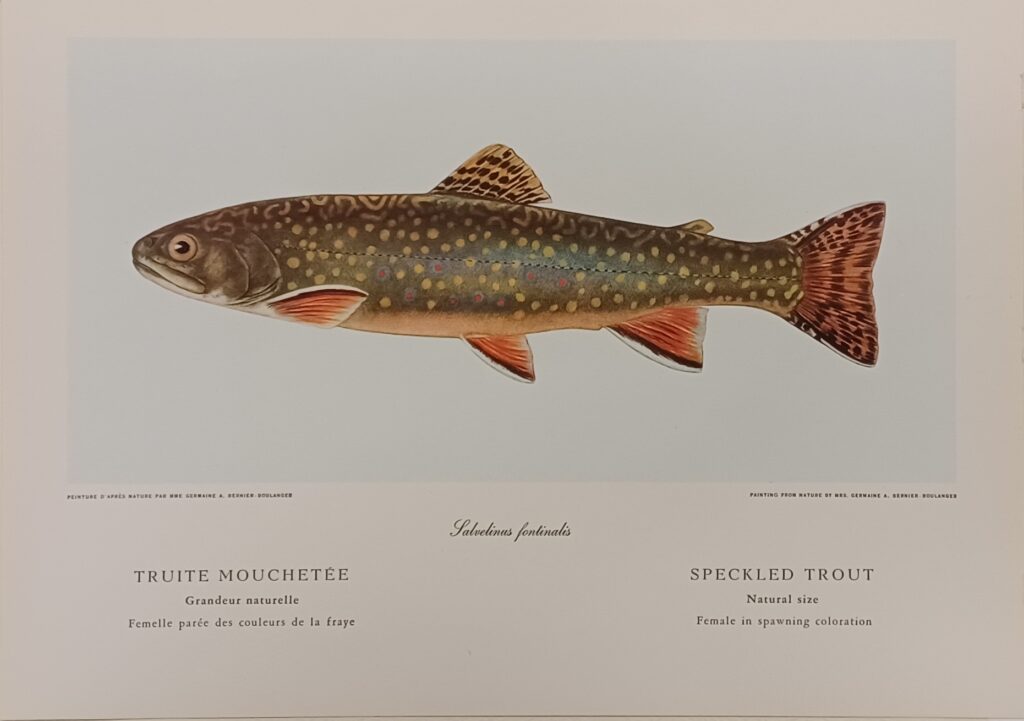
print of a speckled trout
Germaine A. Bernier-Boulanger, Salvelinus fontinalis, female (c. 1953), Print, 14.25 x 19.25 in., NHA 29.136-23 

A prime example of a woman who knew her worth as a scientist, educator, and artist, and settled for nothing less, is Germaine A. Bernier-Boulanger (1909-1989). Salvelinus fontinalis, female (c. 1953), a highly detailed, scientific illustration of a female spotted trout, is one of three prints in the collection by Bernier-Boulanger. Unlike the more painterly quality of Austen’s watercolors, Bernier-Boulanger’s work highlights the more research-intensive, “art for science’s sake” approach to wildlife illustration that contributed greatly to the discipline of non-photographic specimen documentation. Bernier-Boulanger had formally studied embryology and invertebrate zoology and didn’t become a professional illustrator until after the age of forty. Before focusing on her art, Bernier-Boulanger was employed at the Montreal Botanical Institute, and later, the University of Montreal, where she left her post as an educator after experiencing no change in her career trajectory, despite voicing her disapproval of the discrepancies in pay and career advancement between herself and her male colleagues in the natural sciences department. During Women’s History Month, it is especially important to tell the stories of women like Bernier-Boulanger, not only because of their knowledge, skill, and contributions to their respective fields, but also because they challenged long-standing discriminatory practices against women within the institutions they worked for, acting as catalysts for change.

Florence Malewotkuk
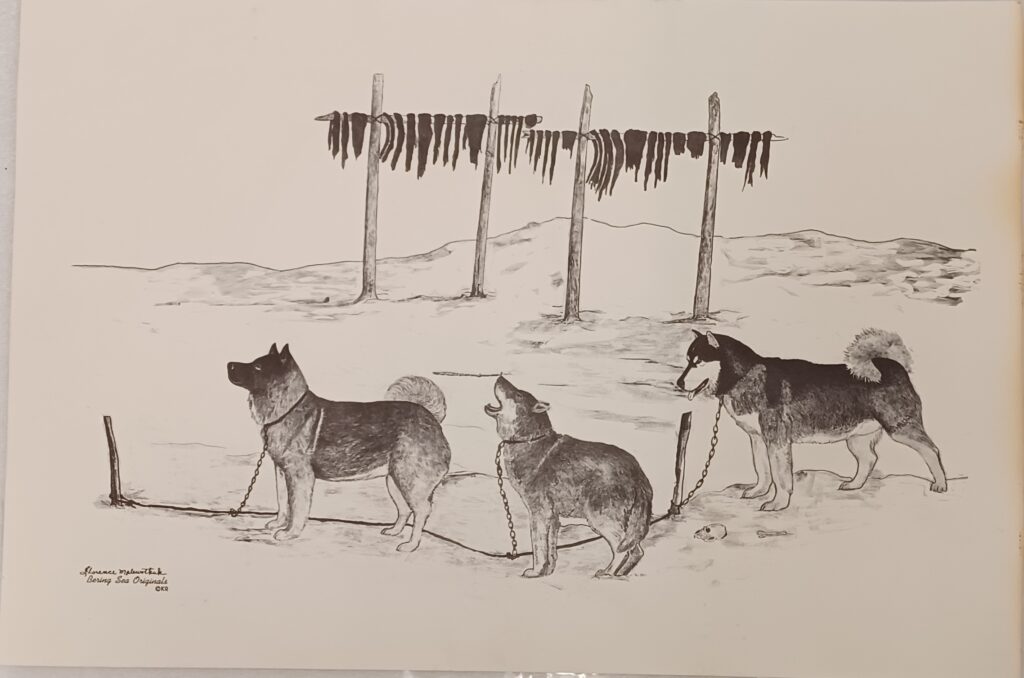
black and white drawing of three huskies
Florence Malewotkuk, Husky Dog Team (c. 1950s-60s), Print, 16 x 10.5 in., NHA 30.115-23 

Florence Malewotkuk (1906-1971) (Yup’ik) was born in a village on St. Lawrence Island on the Bering Sea, which is part of Alaska. Malewotkuk’s Husky Dog Team (circa 1950s-60s) is one of three prints by the artist in the collection by Malewotkuk, each part of a series she titled “Bering Sea Originals.” Depicting husky dogs lined up in front of drying pelts, this print, along with the others in the collection depicting walrus and polar bears, offers unembellished images of local wildlife, and the intersection with nonhuman animals and Yup’ik communities. Showing talent from an early age, Malewotkuk began working as a professional artist in her early twenties when commissioned by Otto William Geist, an archaeologist, to capture everyday scenes of Yup’ik life. Further commissions followed for Malewotkuk later in life, and today her art is housed in collections across North America. Malewotkuk’s story indicates the opportunities that art production offers to women, and the importance of having members of Indigenous groups, especially women, depict their culture from their point of view.

Deirdre E. L.
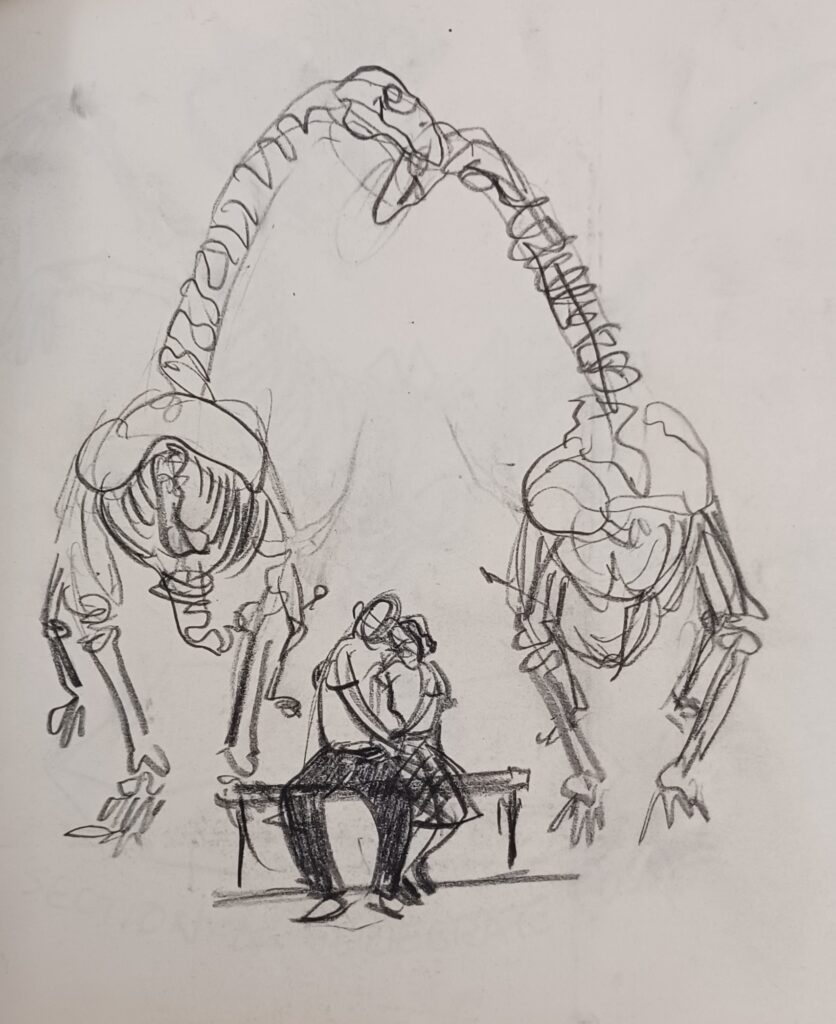
charcoal sketch of two people in front of two sauropod dinosaur fossil skeletons
Deirdre E. L., Untitled Sketch (c. 1940s), Charcoal on paper, 8.5 x 11 in.
Deirdre E. L., Untitled Sketch (c. 1940s), Charcoal on parchment, 9 x 6.5 in.

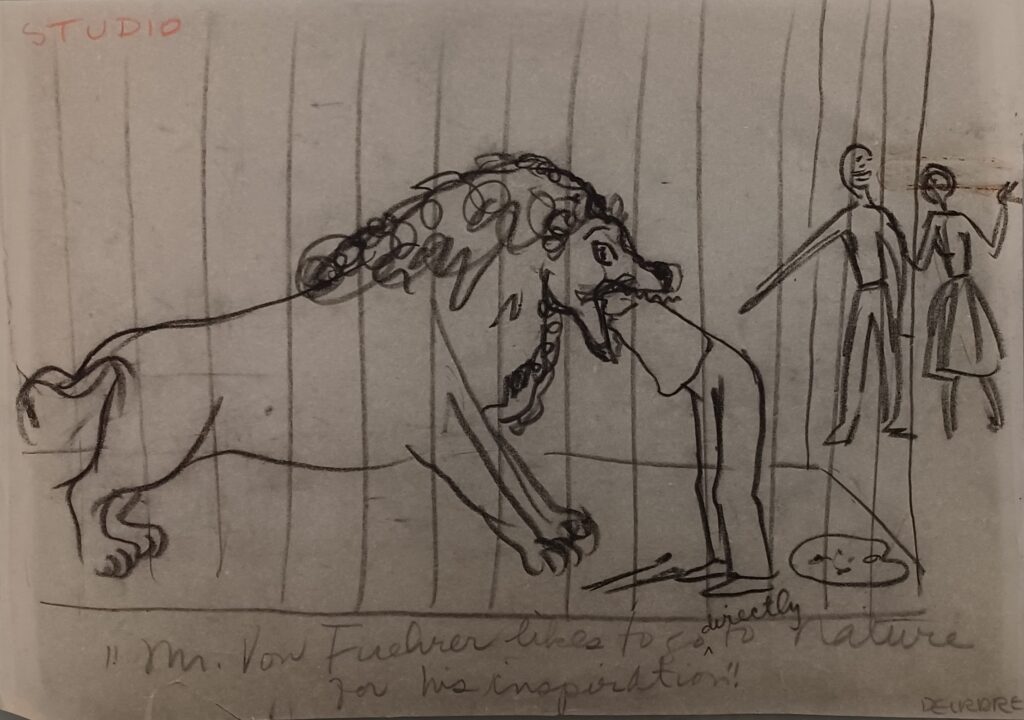
Tucked away in a drawer of archival ephemera in the Natural History Art Collection is a folder of comedic cartoon illustrations by the artist Deirdre E. L. With the signature “Deirdre” at the bottom of the sketches being the only source of information available on the artist, it would seem that we must let her work speak where a biography is absent. Perhaps designed for the amusement of CMNH staff or for print in museum publications, Deirdre’s sketches combine silly captions and quirky caricatures with relevant information about the museum. Her sketch of CMNH chief staff artist Ottmar Von Fuehrer jokes about his going “directly to nature” (by sticking his head in a lion’s mouth) for inspiration, and is a fine example of this fun dichotomy. Her heart-warming sketch of a couple embracing under an equally affectionate pair of dinosaur fossils captures her sketchy, endearing drawing style. 

In this brief survey, I hope to have captured a glimpse of the talented women artists and scientific illustrators in CMNH’s Natural History Art collection. As a History of Art and Architecture and Museum Studies student at Pitt, I have been very interested in exploring the many intersections that exist between the disciplines of art and natural histories, including questions like: What distinguishes a scientific illustrator from an artist, if there is any distinction at all? How do women fit into and contribute to these respective disciplines historically? And how do studies of gender reveal vital information about science and art history? I look forward to discovering new artists as I continue to work with the Natural History Art Collection as an intern, especially women whose presence in the collection inspire me to learn more about those who challenged, and continue to challenge, societal expectations and make lasting contributions to the worlds of art and science. 

Olivia Buehler is an intern in the Section of Anthropology at Carnegie Museum of Natural History.

Related Content

How I Became an Archaeologist

Mary Anning: For the Love of the Blue Lias

Echoes of Freedom in an Owl’s Call

Carnegie Museum of Natural History Blog Citation Information

Blog author: Buehler, Olivia
Publication date: March 19, 2024
Share this post!

  • Share on Twitter Share on Twitter
  • Share on Facebook Share on Facebook
  • Share on Pinterest Share on Pinterest
  • Share on LinkedIn Share on LinkedIn
  • Share on Reddit Share on Reddit
  • Share via Email Share via Email

Filed Under: Blog Tagged With: anthropology, Olivia Buehler, Science News, Women's History Month

February 28, 2024 by Erin Southerland

Carnegie Museum of Natural History presents The Stories We Keep: Conserving Objects from Ancient Egypt

March 9, 2024-March 9, 2025 

Ancient Egyptian Objects Return to View, Museum Invites Visitors to Step Behind the Scenes and Follow the Conservation of More than 80 Ancient Objects

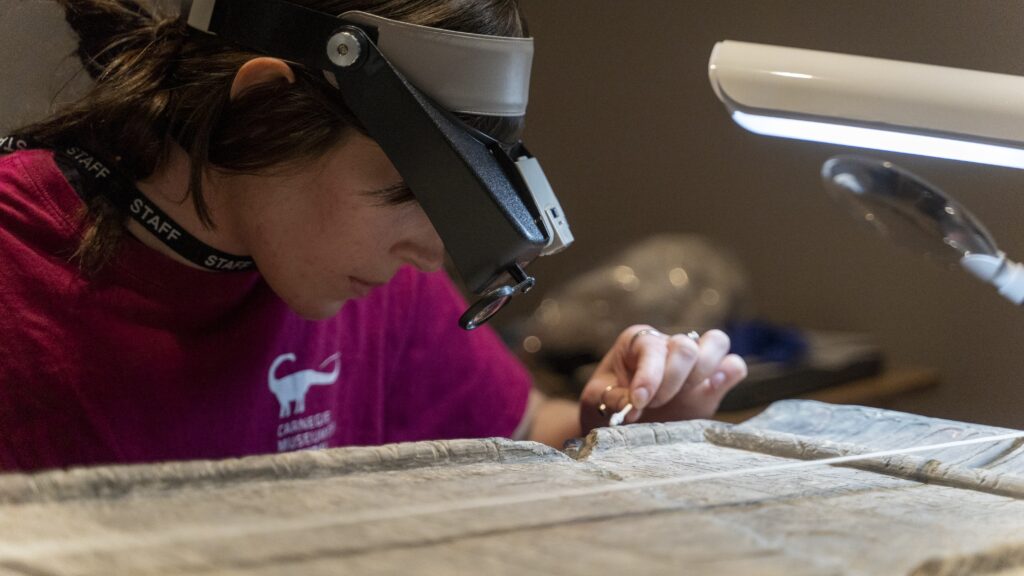
person removing soot from an ancient Egyptian artifact

Carnegie Museum of Natural History presents The Stories We Keep: Conserving Objects from Ancient Egypt. The new exhibition, produced in house, opens the curtain on behind-the-scenes work and puts the art and science of artifact conservation centerstage. It also marks the return to public view of ancient Egyptian objects after the museum closed Walton Hall of Ancient Egypt in 2023 for necessary conservation. Opening March 9th and on view for one year, The Stories We Keep invites visitors to see these objects—cared for by the museum for more than a century—in a new light and to witness the work that will preserve them for future generations. 

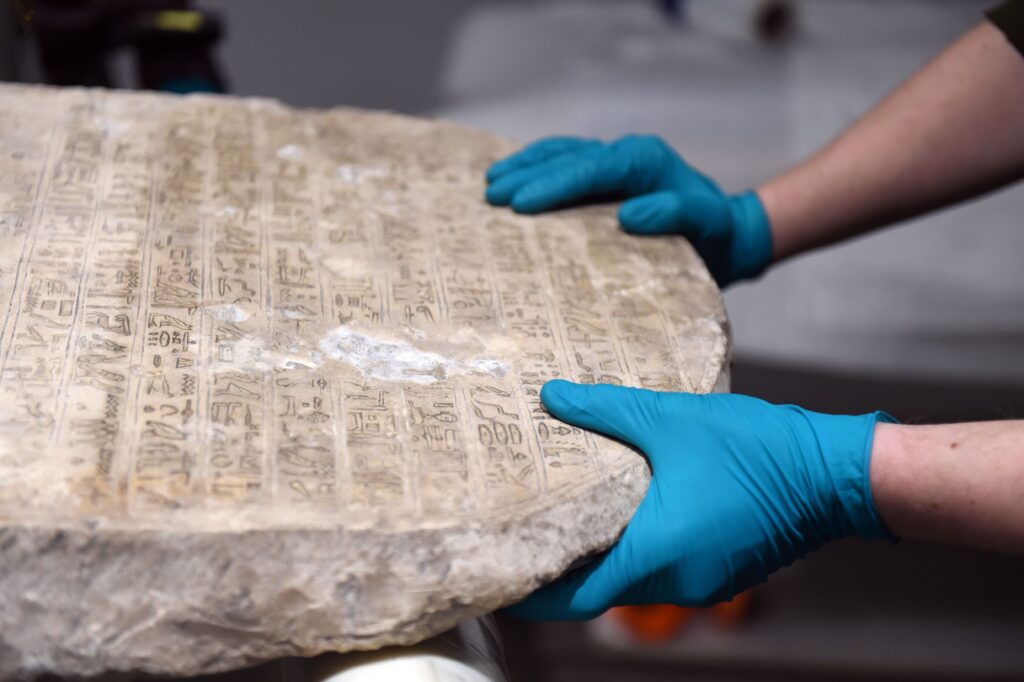
pair of gloved hands holding an artifact

Every object in the museum’s care has stories to tell, about its creation and original use, its journey to Pittsburgh, and about the lives of those in ancient Egypt. The Stories We Keep features more than 80 items from ancient Egypt—including the 4,000-year-old Dahshur boat, one of only four in the world. CMNH invites visitors to engage with these objects like never before, have conversations with museum conservators, observe the care and restoration of objects in real time, and attempt the work themselves by reassembling replicas of ancient objects created with the assistance of 3D scanners.

Museum conservators will hold daily demonstrations and answer visitor questions about the objects and conservation tactics. Visitors can also submit questions by using a QR code, and the conservation team will address select entries in a video series accessible on the museum’s website and social media channels.


“We know how interested visitors are in ancient Egypt,” said Sarah Crawford, Director of Exhibitions and Design. “This exhibition allows visitors to satisfy their curiosity and watch as our Conservation team carries out their vital work caring for these ancient Egyptian items. We hope our fans gain new insights into these beloved objects and an appreciation for the hard work, dedication, and talent of our colleagues who safeguard them.”

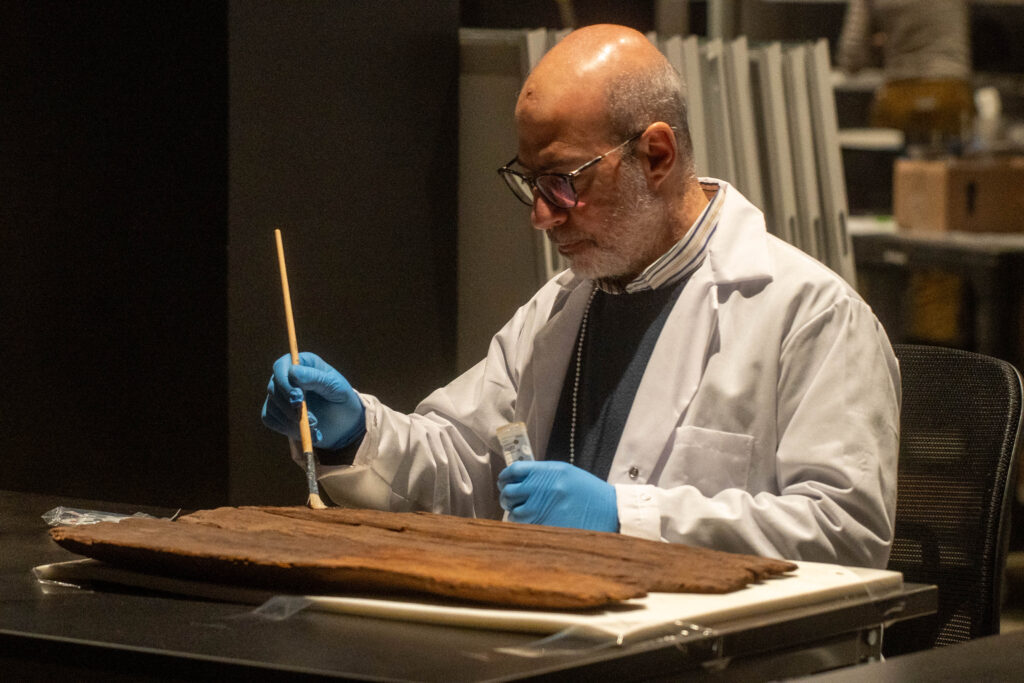
person using a brush on a piece of wood

The exhibition will prominently feature the Dahshur boat, one of four funerary boats still in existence from Egypt’s 12th Dynasty. In 2023, CMNH recruited Egyptian conservator Dr. Mostafa Sherif, an expert on ancient wood restoration, to treat the boat. He joins senior conservator Gretchen Anderson, who oversees the museum’s conservation operations, and project conservator Annick Vuissoz, who arrived at the museum last month to manage the ongoing conservation of 650 ancient Egyptian objects in CMNH’s care.

“This is an entirely new experience for visitors,” said Dr. Lisa Haney, Assistant Curator and Egyptologist. “It connects us to ancient people in a new way, encouraging us to think differently about our own everyday objects and the stories they tell. We hope to create new connections between the past and the present and highlight the science that helps preserve those connecting threads.”

 
The Stories We Keep is free with museum admission and runs until March 9, 2025. General museum admission costs $25 for adults, $20 for adults 65 and older, $15 for children aged 3-18 or students with valid student IDs, and $12 after 3 p.m. on weekdays. Admission is free for members and children aged 2 and younger. More information is available at CarnegieMNH.org.  

Filed Under: Press Release Tagged With: ancient egypt, anthropology, egypt, Science News, The Stories We Keep

November 17, 2023 by Erin Southerland

Tribal Museums Day and Promoting Indigenous Authors

by Amy L. Covell-Murthy 

The Association on American Indian Affairs (AAIA) celebrated its 100th anniversary in 2022, making it the oldest non-profit serving Indigenous Nations in the United States. Founded in 1922 to promote sovereignty and self-sufficiency by halting assimilation, termination, and allotment, the AAIA continues to advocate at a national level, while supporting grassroots level implementation of Tribal programs.

As part of our ongoing repatriation work at CMNH and as a member of AAIA, I attended the annual meeting in Shawnee, Oklahoma last week. I received training in the new regulations of the Native American Graves Protection and Repatriation Act, met Tribal and Institutional representatives who share in the same work that I do, and learned more about how the AAIA is helping to educate and advocate. One thing I am excited to share is that the AAIA declared December 2-9, 2023 as the 2nd Annual Tribal Museums Days and has created an interactive map of where participating museums are located.   If you would like to visit a Tribal Museum in person, the closest to Pittsburgh is the Onöhsagwë:de’ Cultural Center in Salamanca, New York. While the museum might not be open on the weekend, you can support them through their online gift shop. 

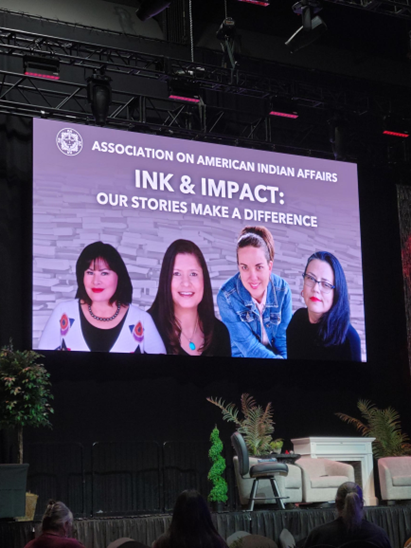
slide above a stage that has a photo of four people and the words: Associtation on American Indian Affairs, Ink & Impact: Our Stories Make a Difference

At the meeting, I was fortunate enough to be able to attend an Indigenous author event called Ink and Impact: Our Stories Make a Difference, which featured Angeline Boulley, Kim Rogers, Andrea L. Rogers, and Sara Elisabeth Sawyer. During the Q&A an audience member asked how we could help spread the word about their amazing books and other Indigenous works. They offered quite a few suggestions, including ordering a set of books to donate to a local library or classroom. My sister happens to be a reading teacher in Franklin, PA, so as a donation to her classroom in honor of Native American Heritage Month (which is in November!) she’ll be receiving Boulley’s Firekeepers Daughter and Warrior Girl Unearthed, and Sawyer’s Anumpa Warrior: Choctaw Code Talkers of World War I, as well as a few other books by Louise Erdrich. Another suggestion was to use our social media platforms to not only elevate Indigenous authors, but to also promote Indigenous owned book sellers.

So…. I am happy to promote Green Feather Book Company of Norman, Oklahoma. They were present all week at the meeting selling the books featured at the event and other Indigenous works. They have an easy online ordering feature, and you can buy all four of these author’s book here along with many others. 

Remember, if you can’t buy a copy, it costs nothing to request to borrow them through your local library. This also benefits the authors and spreads the word. Happy Reading!

Amy L. Covell-Murthy (she/her) is Archaeology Collection Manager/Head of the Section of Anthropology.

Related Content

Celebrating Indigenous Peoples’ Day 2023

Staff Favorites: Dolls in the Museum’s Care

Bringing a Little O-Gah-Pah to Pittsburgh

Carnegie Museum of Natural History Blog Citation Information

Blog author: Covell-Murthy, Amy L.
Publication date: November 17, 2023

Share this post!

  • Share on Twitter Share on Twitter
  • Share on Facebook Share on Facebook
  • Share on Pinterest Share on Pinterest
  • Share on LinkedIn Share on LinkedIn
  • Share on Reddit Share on Reddit
  • Share via Email Share via Email

Filed Under: Blog Tagged With: Alcoa Foundation Hall of American Indians, Amy Covell-Murthy, anthropology, Science News

October 2, 2023 by Erin Southerland

Celebrating Indigenous Peoples’ Day 2023

by Amy Covell-Murthy

Indigenous Peoples’ Day is observed in the City of Pittsburgh alongside Columbus Day, and I would like to suggest some ways to observe the holiday for those who do not claim Indigenous heritage. In a state with no habitable federally recognized Indigenous land, Native people are all too often seen as existing only in the past. While educating yourself on the Indigenous history of the region is an important part of observing the holiday, it’s also important to recognize that many First Nations people live, work, and play in the Greater Pittsburgh Area. Indigenous Peoples’ Day should not be a memorial, but a recognition of the important history and cultural heritage of those who are the past, present, and future caretakers of this land. Here are some things you can do to respectfully celebrate on October 9, 2023. 

Educate Yourself

Learn about the people who have called Pittsburgh home. Many different cultural groups have occupied the Upper Ohio River Valley including but not limited to the Delaware/Lenape, the Haudenosaunee, the Shawnee, and the Wyandotte. The Osage Nation also claims origin in the Ohio River Valley, and you can learn about all these nations on their official websites. I also suggest hitting up your local library to check out books on these groups as well as the cultural traditions and ancestors who came before them. This region was home to those who are often referred to as the Adena, Hopewell, and Monongahela. But keep in mind, we have no idea what they called themselves. Here are some resources: 

Haudenosaunee Confederacy

Delaware Tribe

Eastern Shawnee Tribe of Oklahoma

Wyandotte Nation

Osage Nation

Educate Yourself Some More

Learn about the history that may have been left out of your primary and secondary school curriculums. You may be unaware of the atrocities that Indigenous people faced in the State of Pennsylvania. Many First Pennsylvanians were forced from their homelands and infected with unfamiliar diseases by colonizers. Later the first assimilation school was created in Carlisle, PA and used as a model for 24 more of these institutions whose primary goal was to force Indigenous children to abandon their Native languages and customs. In the 1960s, the building of the Kinzua Dam forced Seneca Nation citizens to move into the State of New York, breaking the 1794 Treaty of Peace and Friendship. Indigenous communities thrive despite these events and institutions, but it is important to recognize and not try to hide these gruesome parts of our shared American history. You can find more information about these examples on these websites: 

Kinzua Dam (Seneca-Iroquois National Museum)

The Lenape and Colonization (Delaware State Parks Adventure Blog)

Carlisle Indian School Project

Support Local Indigenous Groups

The Council of Three Rivers American Indian Center (COTRAIC) is a regional intertribal nonprofit that promotes the socio-economic development of the Native American community and others who experience the same type of economic difficulties in the Greater Pittsburgh metropolitan area. One way to support them is to plan to attend their annual Pow Wow that is held in Dorseyville, just outside of Pittsburgh, in late September. Learn more about their Early Childhood Education, Native American Elders, Veterans, and Employment programs at COTRAIC.org and on their Facebook page.

I’d like to highlight COTRAIC’s Singing Winds Food Pantry this year. Learn more, donate, or sign up to receive help meeting your personal and family food needs.

Honor the Land

Planting Native Pennsylvanian plants is a wonderful way to honor our connection to the Earth and to provide food and shelter for the diverse species who live here. You can learn about how Indigenous People use trees, ferns, flowers, vegetables, fruits, and grasses to enhance their quality of life. The Pennsylvania Department of Conservation and Natural Resources and the Audubon Society of Western Pennsylvania offer suggestions for those who are interested:

Landscaping with Native Plants

List of Western PA Native Plants

Attend an Online or In Person Event

Many cities around the United States hold events to celebrate Indigenous Peoples’ Day. A quick Google search can point you in the right direction. I’m going to be learning from visiting scholar Dr. Jessie Ryker Crawford on October 9 at noon in Carnegie Museum of Natural History’s Earth Theater for the Moriarty Science Seminar. Dr. Ryker-Craford’s program is titled, “Academia and Indigenous Communities: Opening the Doors to Collaborative Research and Community-Driven Projects.” 

You can find a calendar of events hosted by the National Museum of the American Indian here.                                           

Support Indigenous Artists, Authors, Film Makers, and Musicians

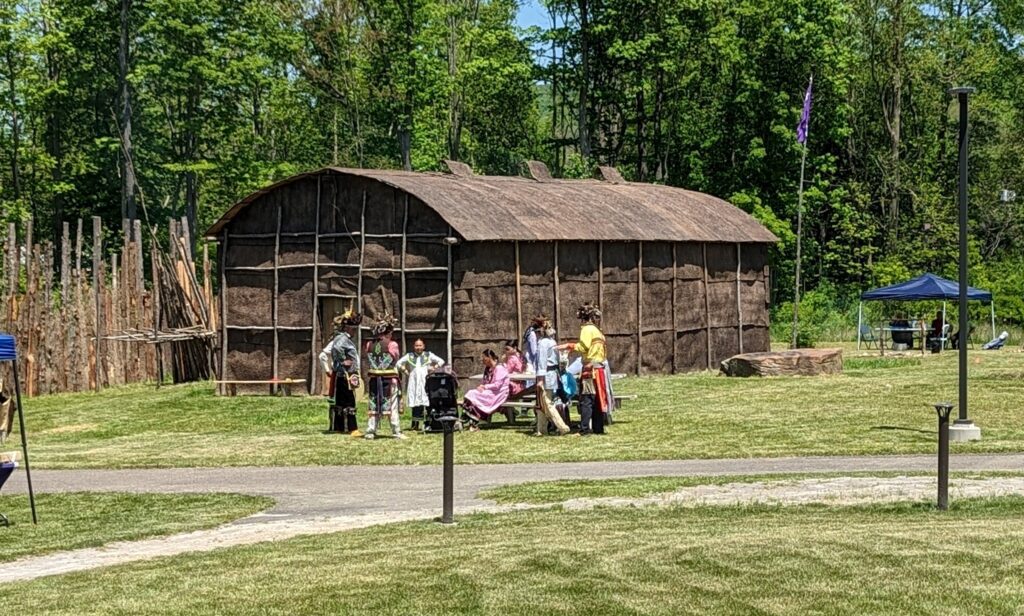
longhouse at Seneca Iroquois National Museum
Longhouse Replica Dedication Ceremony at the Onöhsagwë:de’Cultural Center on May 27, 2023.

You have so many options! The Sundance Institute has released a guide to the Indigenous works at the 2023 Sundance Film Festival. The website of Carnegie Library of Pittsburgh offers staff picks and lists of Indigenous authors. The Canadian Broadcasting Corporation released a list of Indigenous musical artists to watch out for in 2023. My personal favorite is Hayley Wallis (What a voice!). Vogue featured 21 Indigenous Artists to watch out for from this year’s Santa Fe Indian Market. The list includes fashion designers, painters, beaded and metal jewelry designers, sculptors, and textile artists. You can also support Indigenous artists by purchasing art through the online gift shop of the Seneca Iroquois National Museum/Onöhsagwë:de’ Cultural Center or take a drive up to purchase something in person and see the new longhouse that they’ve built behind the museum.   

Help Change Derogatory Mascots and Place Names

Sign petitions, attend community forums, and advocate for the changing of harmful stereotypes and offensive signage in our community.  From the Cleveland Guardians to Hemlock Hollow Road, there are many instances of this happening around us. The National Congress of American Indians offers resources to help end the era of harmful mascots.

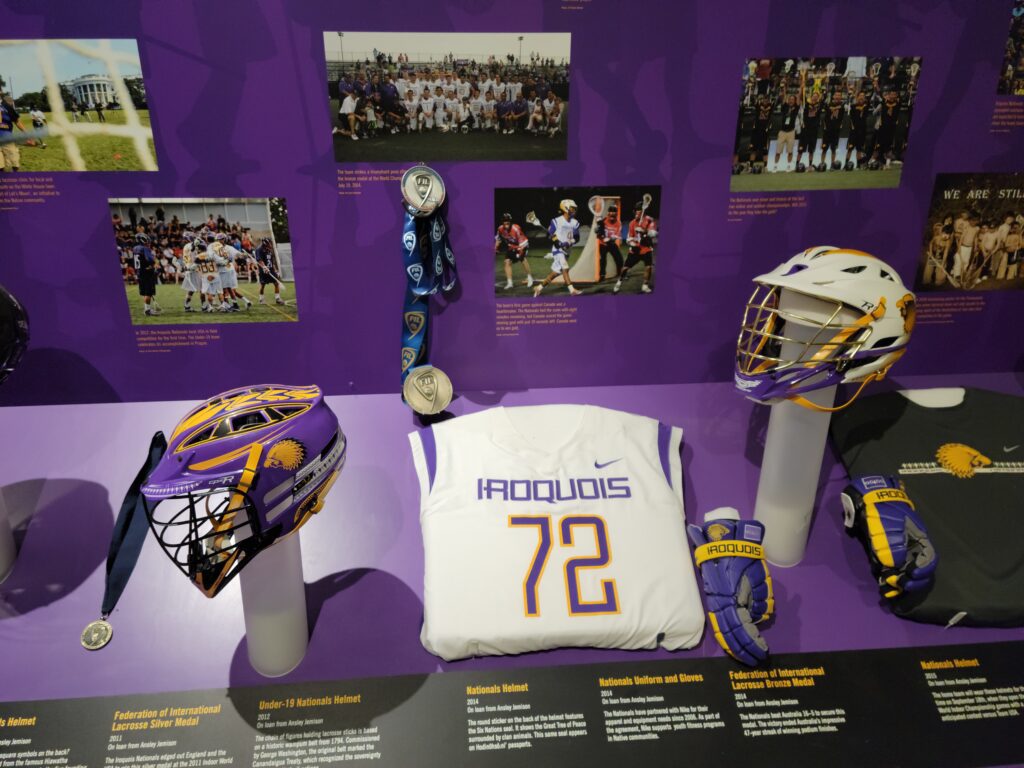
Jersey, helmets, photos, and more in a display about the Haudenosaunee Nationals.
Haudenosaunee Nationals Lacrosse Team exhibit at the Onöhsagwë:de’ Cultural Center.

Also, learn about the Haudenosaunee Nationals Lacrosse Team, who hope to make it to the 2028 Olympics! Learn about how they changed their name in 2022 to reflect their collective identity and donate to help them reach their goals if you are able!

Consider Donating Time or Resources

The Seneca Iroquois National Museum/ Onöhsagwë:de’ Cultural Center is only a few hours drive from Pittsburgh and occasionally may be looking for volunteers. Check their website and follow their social media accounts for more information.


View this profile on Instagram


SINM (@senecairoquoisnationalmuseum) • Instagram photos and videos

If you are able, here are just a few organizations who can use your help:

Native American Agriculture Fund

NDN Collective

Association of American Indian Affairs

Advancing Indigenous People in STEM

So, join me once again in unlearning some Columbus Day myths and celebrating the cultural diversity of Indigenous People throughout the history of our region. Remember that the best places to start educating yourself are the local libraries and museums. Carnegie Museum of Natural History offers guided tours of our cultural halls that strengthen the messages we wish to share with the community. Visit the Alcoa Hall of American Indians to learn more about the Tlingit, Lakota, Hopi, and Haudenosaunee, and keep in mind that there are so many other Indigenous groups, traditions, nations, and organizations for you to explore on your own!

Amy L. Covell-Murthy (she/her) is Archaeology Collection Manager/Head of the Section of Anthropology.

Related Content

Bringing a Little O-Gah-Pah to Pittsburgh

New Vision of Old Rock Art

Staff Favorites: Dolls in the Museum’s Care

Carnegie Museum of Natural History Blog Citation Information

Blog author: Covell-Murthy, Amy
Publication date: October 2, 2023

Share this post!

  • Share on Twitter Share on Twitter
  • Share on Facebook Share on Facebook
  • Share on Pinterest Share on Pinterest
  • Share on LinkedIn Share on LinkedIn
  • Share on Reddit Share on Reddit
  • Share via Email Share via Email

Filed Under: Blog Tagged With: Amy Covell-Murthy, anthropology

August 4, 2023 by Erin Southerland

Staff Favorites: Dolls in the Museum’s Care

by the Section of Anthropology and Archaeology Staff and Volunteers

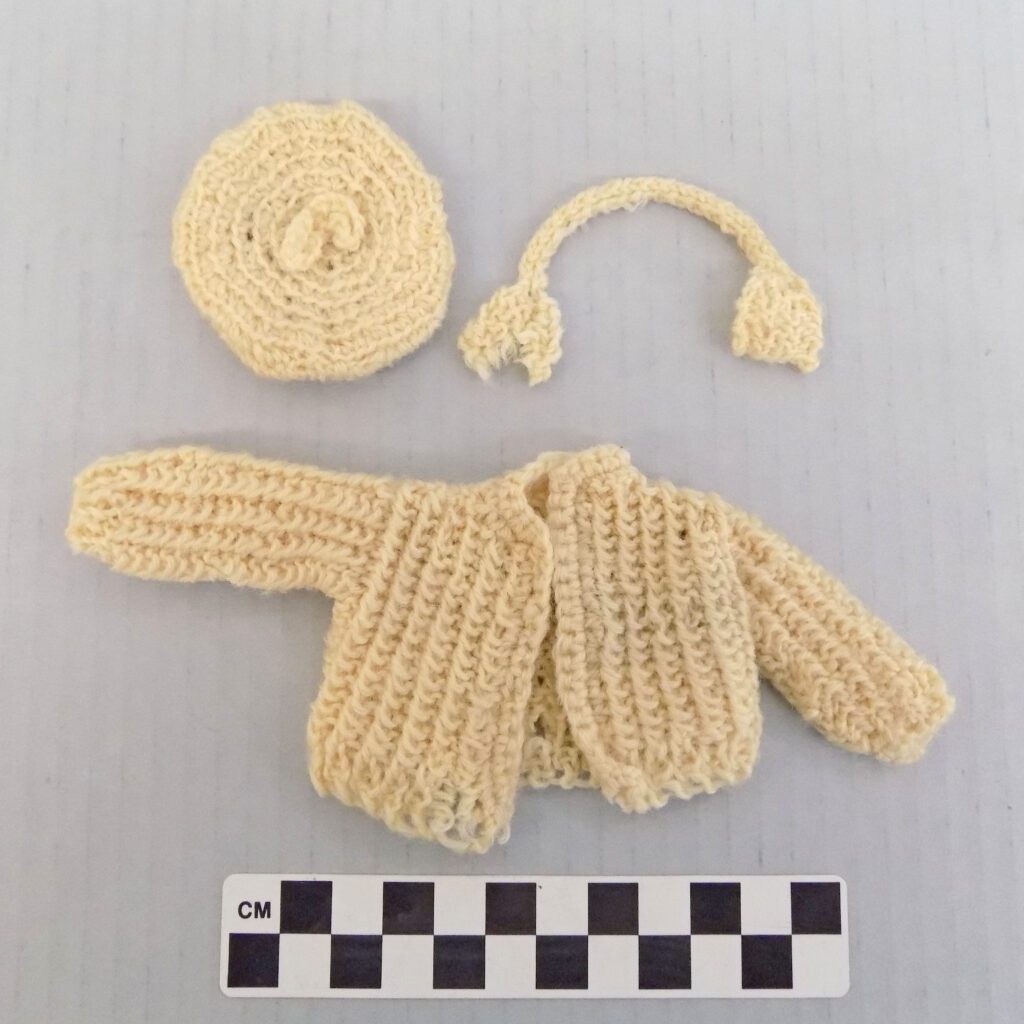
With the pink wave that is Barbie sweeping the theaters, we thought it would be a good opportunity to spotlight our doll collection. The Anthropology collection at CMNH holds more than three thousand dolls and it is our pleasure to take care of them. Historically and anthropologically speaking, dolls have always served cultural, spiritual, and societal purposes. Whether for entertainment, religion, or education, they can be found all over the world and have been around for thousands of years.

Barbie

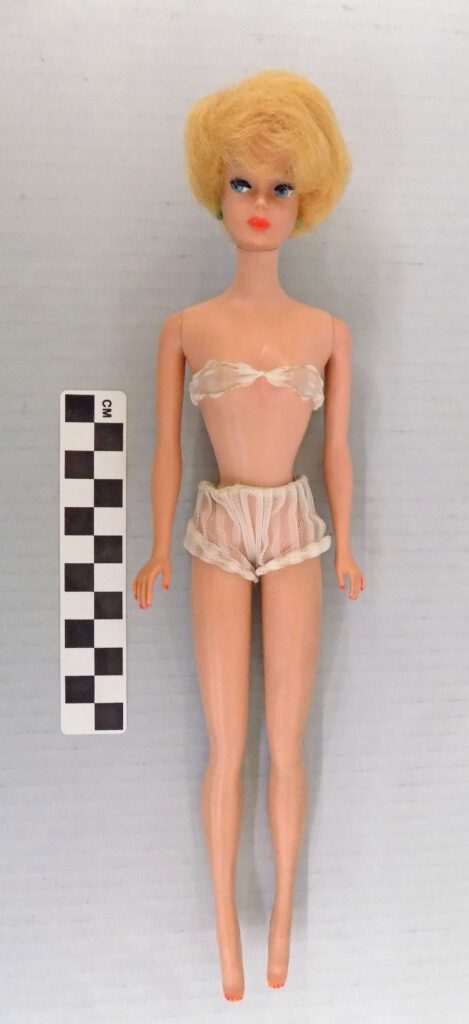
Barbie doll
White hat, earmuffs, and sweater for a Barbie doll
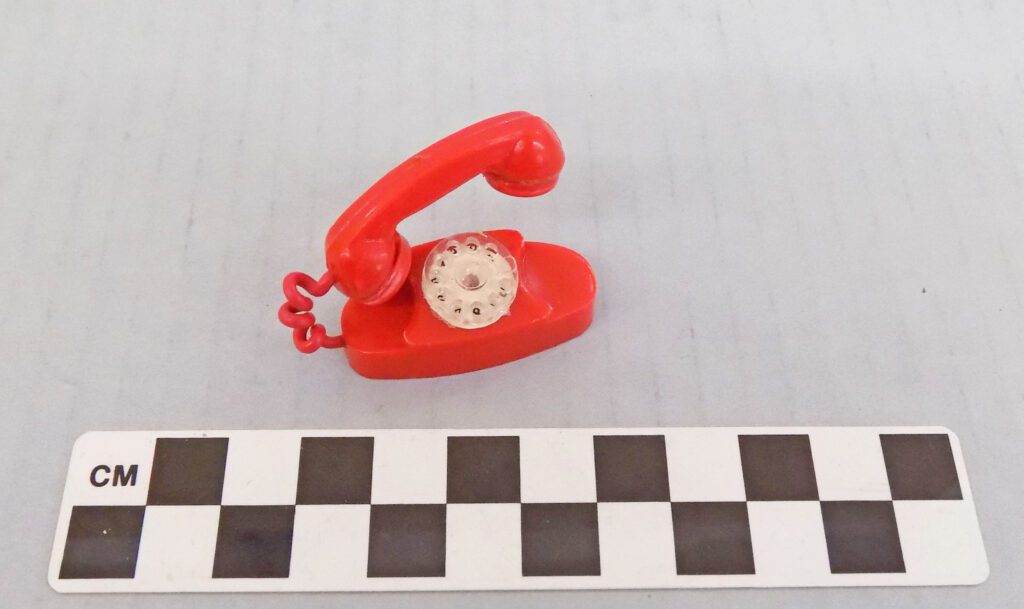
Barbie-sized red rotary telephone

“Hi Barbie! Until recently, our doll collection lacked any traces of Barbie. Then a close friend of the Section of Anthropology was kind enough to not only donate their beloved original doll but also the clothing that they had sewn for her. Barbie and Ken, as an astronaut, a rock star, a pregnant Midge, beach, or any other iteration, have impacted the lives of millions. Sadly, there has not been an archaeologist Barbie but the best part about playing with dolls is that I can easily pretend that the paleontologist version is diligently studying human culture instead of dinosaurs (Sorry, Dr. Lamanna). 

Individuality has always been important to me, so I have always been the biggest fan of Weird Barbie, upon whom I did my fair share of hair cutting and marker tattooing. And while we have only one Barbie at CMNH, we have plenty of other dolls in the collection that our staff and volunteers have chosen to write about. Please enjoy some of our favorites.” –Amy Covell-Murthy, Archaeology Collection Manager and Head of the Section of Anthropology

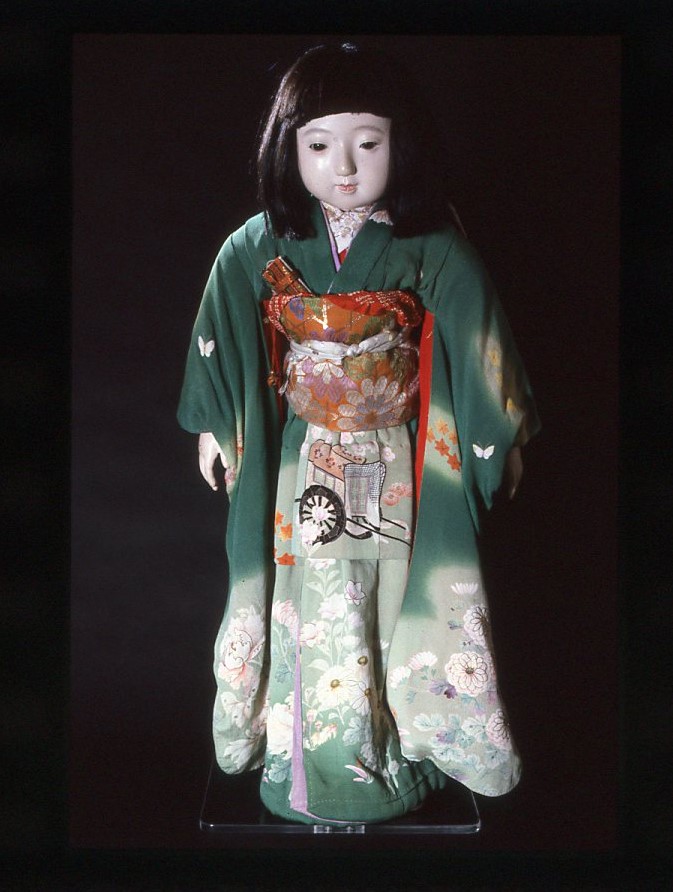
Miss Kochi the Friendship Doll

On January 14, 1929, complete with passport, steamer ticket, and a trunk full of accessories, Miss Kochi the friendship doll arrived in Pittsburgh to her new home at the museum. Representing the children of Kochi, the southernmost prefecture on the island of Shikoku in Japan, Miss Kochi crossed the Pacific  with 57 other friendship dolls who went to various cities within the United States. 

Created as part of a doll exchange program between the children of Japan and the U.S., Miss Kochi and her sister dolls were lovingly made with the hope of promoting peace between the two countries in the years leading up to World War II. Crafted by some of the most respected doll makers in Japan, the ambassador dolls, as they were also known, are all 85cm high. They have moveable arms and legs and real human hair. Each is dressed in a colorful kimono made of pure silk and accompanied by lacquered tea sets, furniture, and other accessories used in the celebration of Hinamatsuri, or Doll’s Day. Miss Kochi is dressed in a beautiful, embroidered, emerald green kimono with a red sash. 

“Miss Kochi is one of my favorite dolls in the collection because I love all the care and detail that was put into her outfit and tiny accessories. Additionally, the message of friendship and kindness that motivated her creation and eventual journey to Pittsburgh is charming and inspiring.” –Kristina Gaugler, Anthropology Collection Manager

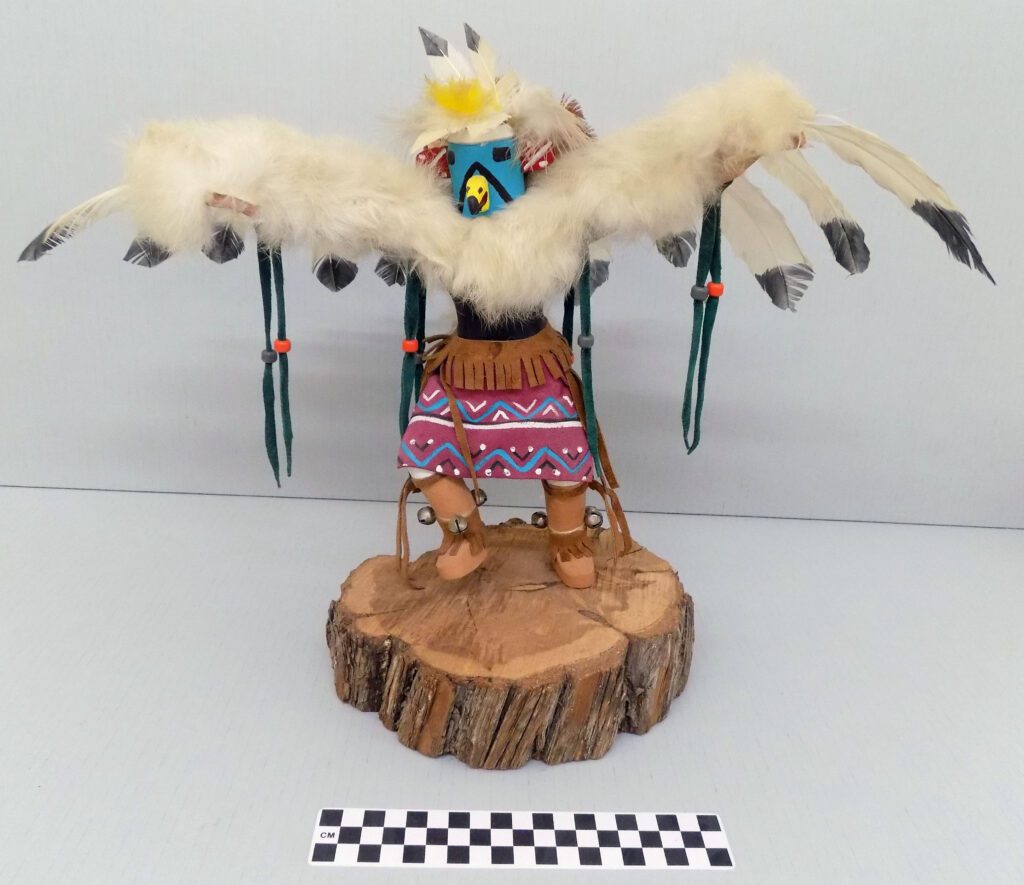
Eagle Kachina

eagle katsina

The Eagle Kachina holds special significance to both the Hopi and Zuni people, representing important spiritual and cultural aspects in their respective traditions.

To the Hopi people, the Eagle Kachina is considered a powerful and sacred being. It is associated with spiritual strength, protection, and a close connection to the divine. The eagle is revered for its ability to soar high in the sky, reaching great heights, and is seen as a messenger between the earthly world and the spiritual realms. During Hopi Kachina ceremonies, the Eagle Kachina is often portrayed by a dancer wearing an elaborate costume and a mask representing the eagle’s features. The dancer embodies the spirit of the Eagle Kachina and plays a significant role in ceremonial dances. 

For the Zuni people, the Eagle Kachina, also known as “Ko’kko,” holds similar importance. The Zuni Eagle Kachina represents the embodiment of the eagle spirit and is venerated for its connection to the heavens and its role as a messenger to the gods. The Zuni people view the Eagle Kachina as a symbol of power, courage, and wisdom, and it plays a crucial role in their rituals and religious practices. Like the Hopi, the Zuni also create intricate Kachina dolls, including the Eagle Kachina, as sacred objects representing the spirits and their significance in Zuni culture.

“I like the Eagle Kachina doll as it signifies all that is important to me as it is to the Hopi and Zuni, the spiritual connection to the natural world.”—Jim Barno, Archaeology Volunteer

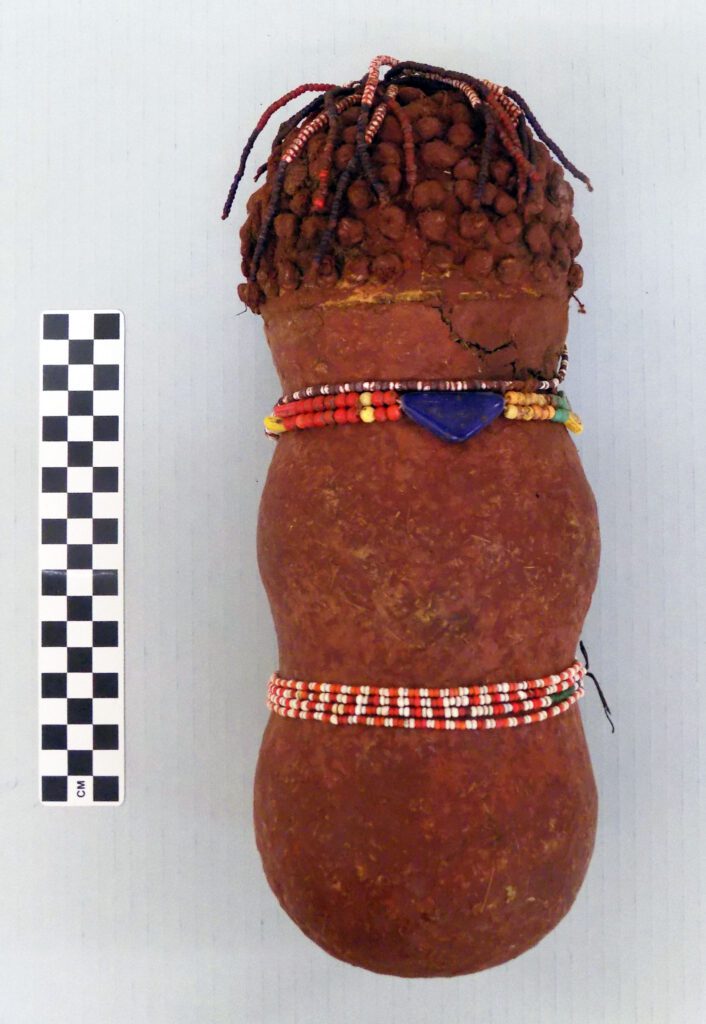
Calabash Gourd Doll

calabash gourd doll

To make this doll, a Tonga woman or girl from a village near Lake Kariba in Zimbabwe, would have filled calabash gourds with sand, seeds, or stone, and covered the gourds with mud, dung, and leaves, before decorating them with strands of beads. Dolls like this one were made by or given to Tonga girls around the ages of 10 to 13, as they approached puberty. The doll came into CMNH’s collection in 1967 as one of many objects from the Tonga people obtained through trade by Terence Coffin-Grey, a taxidermist who worked in natural history museums in Zimbabwe and the U.S., including at CMNH. This doll’s “hairstyle,” with tight balls made of mud and strands of beads, resembles that of some Tonga women of the time, based on photographs shared with CMNH by Coffin-Grey. CMNH has several other similar dolls of different sizes, shapes, and decorations, including some with fabric skirts.

“I chose this doll based on the recommendation of Amy Covell-Murthy and was immediately charmed and intrigued when I saw it. When I held it, I was struck by the weight of it, and I loved learning about this practice of doll-making shared between women and girls in a matrilineal society.” –Deirdre M. Smith, Assistant Curator

Talash Doll

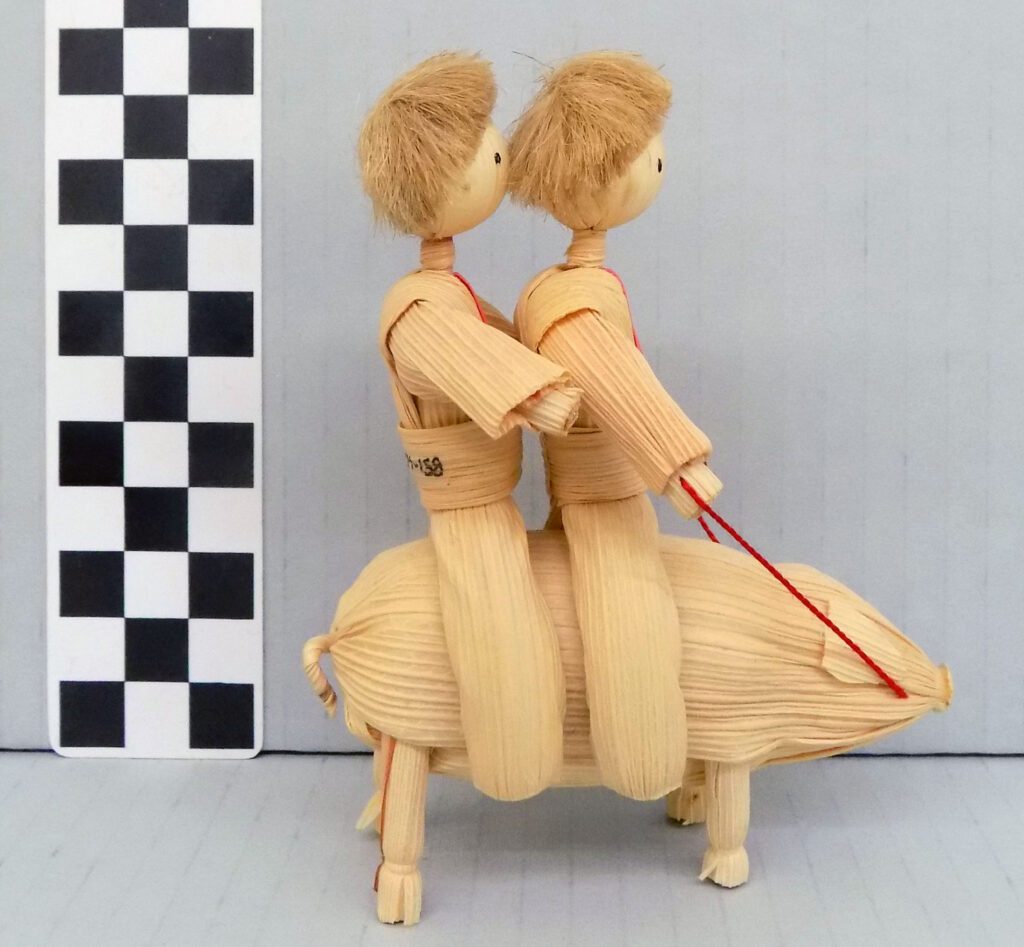
Talash and corn cob dolls

We are all a part of nature. Our ancestors created dolls for children using the natural materials around themselves. The tradition of making dolls from talash, the leaves wrapped around a corn cob, dates back many generations.

Talash is a very interesting material that is easy to work with, and the products made from it are very warm and beautiful. The husks of the corn would be removed in the fall after harvesting the corn. They would then be dried and stored in a dry place. The leaves come in different colors and shades, from white to brown. If necessary, the leaves could also be painted, sometimes with dyes made of onion peel or food coloring. To begin weaving, the middle leaves of cobs are often preferred for their strength and flexibility so as not to tear. The husks are also moistened with water to help give them more elasticity. The length of the strip up to 1 cm is in the middle. Strips that are uneven or ripped would be discarded.

This doll is of boys riding a pig, which highlights ordinary country life in a European village. Eastern Europe has a lot of rivers such as the Danube, Vistula, Dnipro, and others. The territory near the rivers is very large, and kids would help relatives graze pigs on these meadows, while also occasionally playing with them. 

“This doll showed me how people create interesting toys with simple natural things. This is part of our deep roots and traditions in Eastern Europe. I also like the fairy tale by Hans Christian Andersen called Swineherdand (The Swineherd), and for me this doll is reminiscent of that story.”—Lidiia Zadorozhna Ruban, Anthropology Library Volunteer

Balinese Tjili Doll

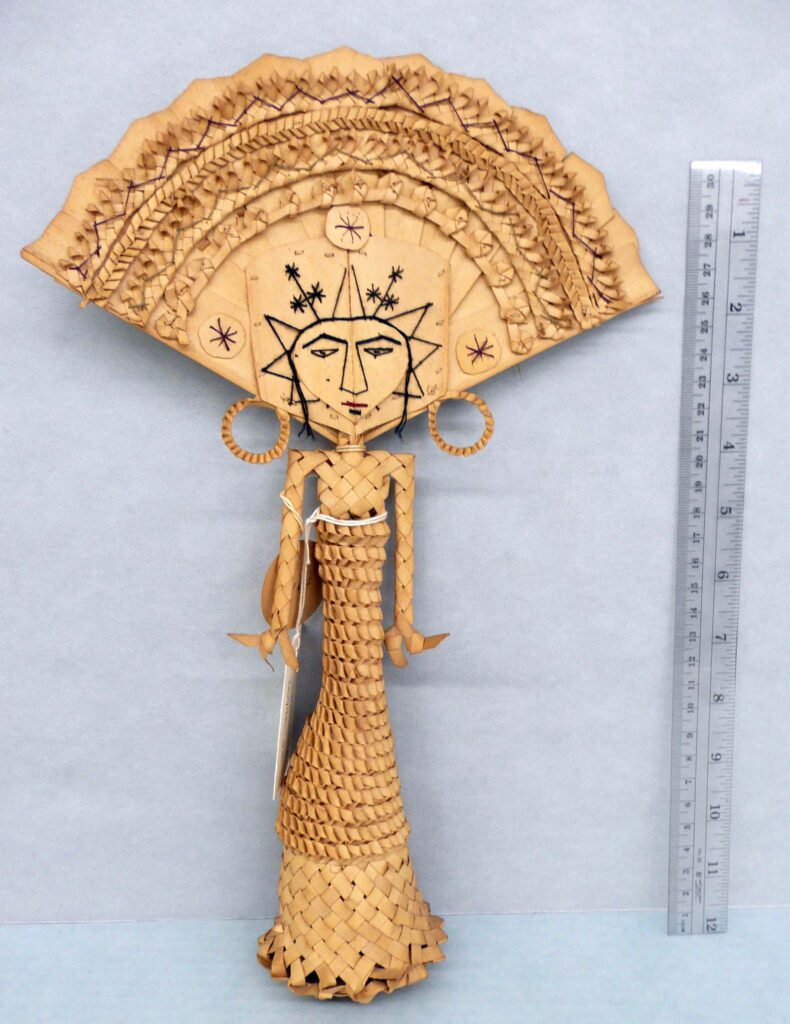
Balinese Tjili doll

This Balinese Tjili doll came to be a part of the Carnegie collection in 1980 through the donation of Dr. Betty J. Meggers, an international doll collector. Made in the image of Dewi Sri, Indonesia’s goddess of rice and fertility, figures like this doll symbolize fruitfulness and good harvests. 

“This doll caught my attention because of her intricate woven design and large, fan-like headdress that radiates like a setting sun. I believe her story shows how dolls can serve so many purposes and are beloved by different cultures all around the world.”—Lily Heistand, Anthropology Volunteer

Folklórico Dancer

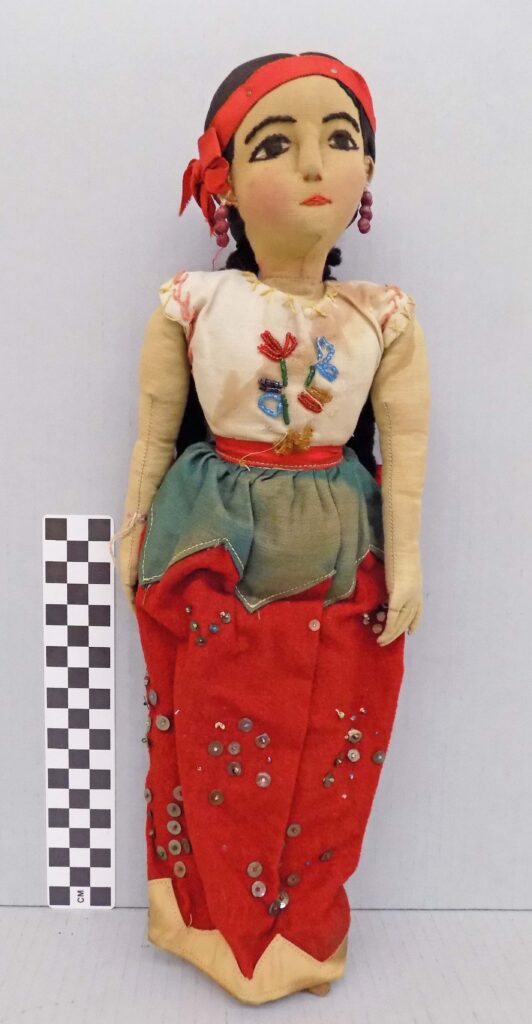
folklorico dancer doll
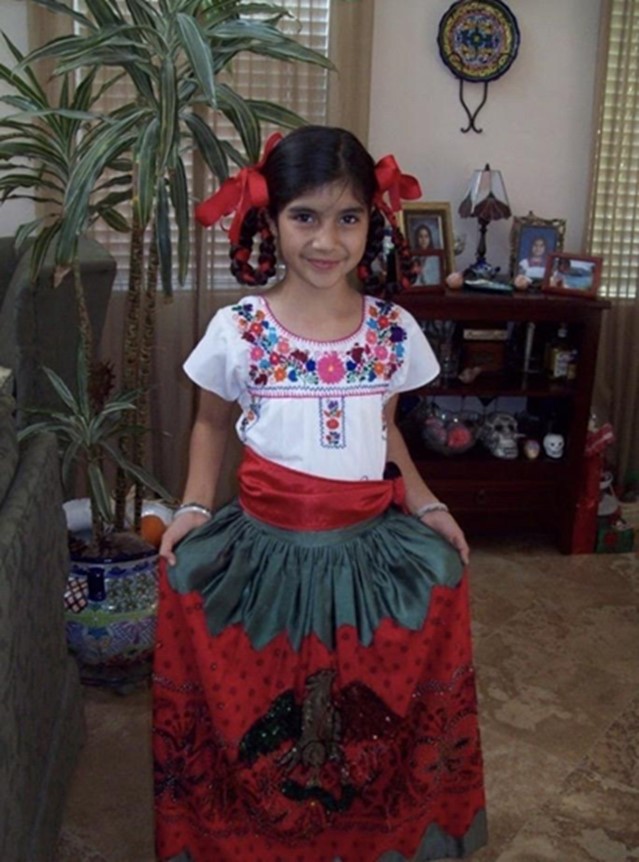
Young Matí wearing same dress style

This doll is a folklórico dancer! Made in Cuernavaca, Morelos, México, this doll joined the museum’s collection as a donation in March of 1950. She is made of wool and cotton and has black braids (trenzas folklóricas), a white embroidered blouse (blusa bordada), and a sequined red and green skirt (china poblana). All these components make her instantly recognizable as a ballet folklórico dancer (folk dancer). Her skirt is designed after one of the most recognizable traditional styles of dress in Mexico, la china poblana. China poblana skirts tend to be heavy as they are made with layers of embroidery using sequins and beads to depict the Mexican coat of arms of the eagle perched on a cactus with a snake in its mouth. Historically, this style of dress was popular in the state of Puebla, but nowadays it is typically worn by dancers when performing El Jarabe Tapatío, which is a dance from the state of Jalisco and México’s national dance. 

“I chose this doll because she beautifully represents my culture and my family. My abuelita embroidered a china poblana skirt that my mom performed in, and years later I also danced in it. This doll represents a tradition that ties together three generations of women in my family and the beauty of our cultural traditions.”—Matí Castillo, Fine Fellow, University of Pittsburgh

Angel of Mercy

Canadian Angel of Mercy doll

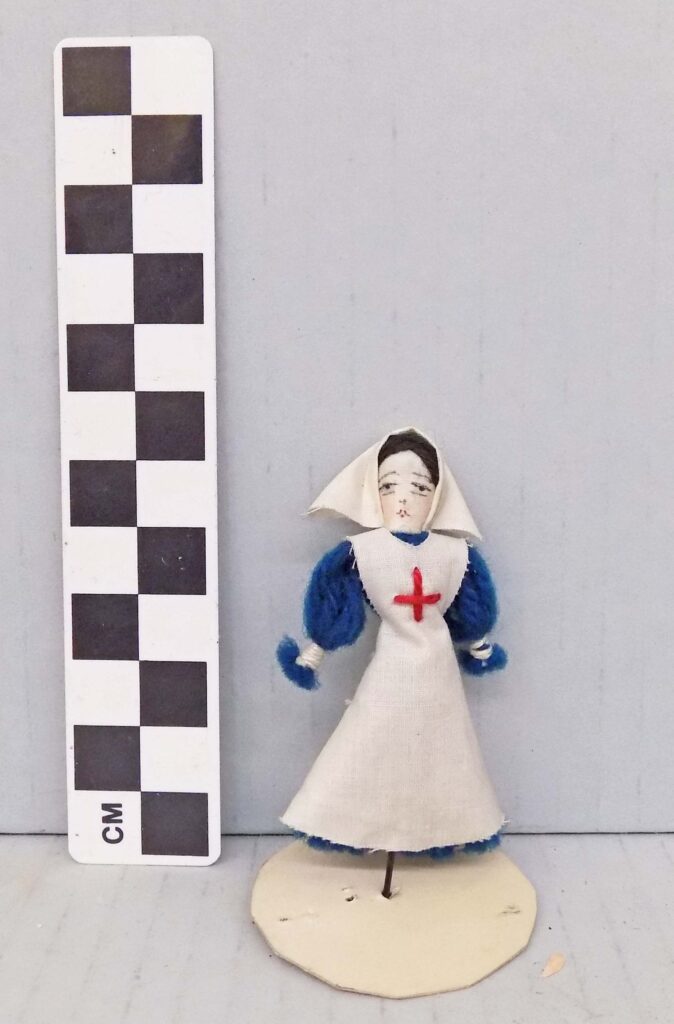
This doll is an “Angel of Mercy.” This nickname was affectionately given to the unsung heroes of the Great War, the nursing sisters, who worked long gruesome hours and attended to the needs of injured soldiers. The casualties of World War I were extensive, but the nurses worked tirelessly to aid in wound cleaning, bacterial-growth prevention, and even assist in emergency surgeries all while fearing for their own wellbeing. This doll was donated in 1918 by Mrs. Virginia Hayes Osburn along with many other ‘war woolies.’ These war woolies were dolls that were made by the Canadian Red Cross Vancouver during the Great War. According to the British Red Cross Museum and Archive, these “wooly” dolls were crafted by the Vancouver Prisoners of War Branch of the Canadian Red Cross to fundraise during World War I.

“I chose this Canadian Red Cross Nurse doll because though she is miniature, her face was expressive, and I wanted to research more about her because the other war woolies she was housed with were depictions of English monarchs; I wanted to tell her story as an unsung female hero of the Great War.”—Caitlin Erb, St. Laurance University Post-Baccalaureate Intern

A. Marque Character Doll

black and white photo of two character dolls
Isabeau de Baviere doll

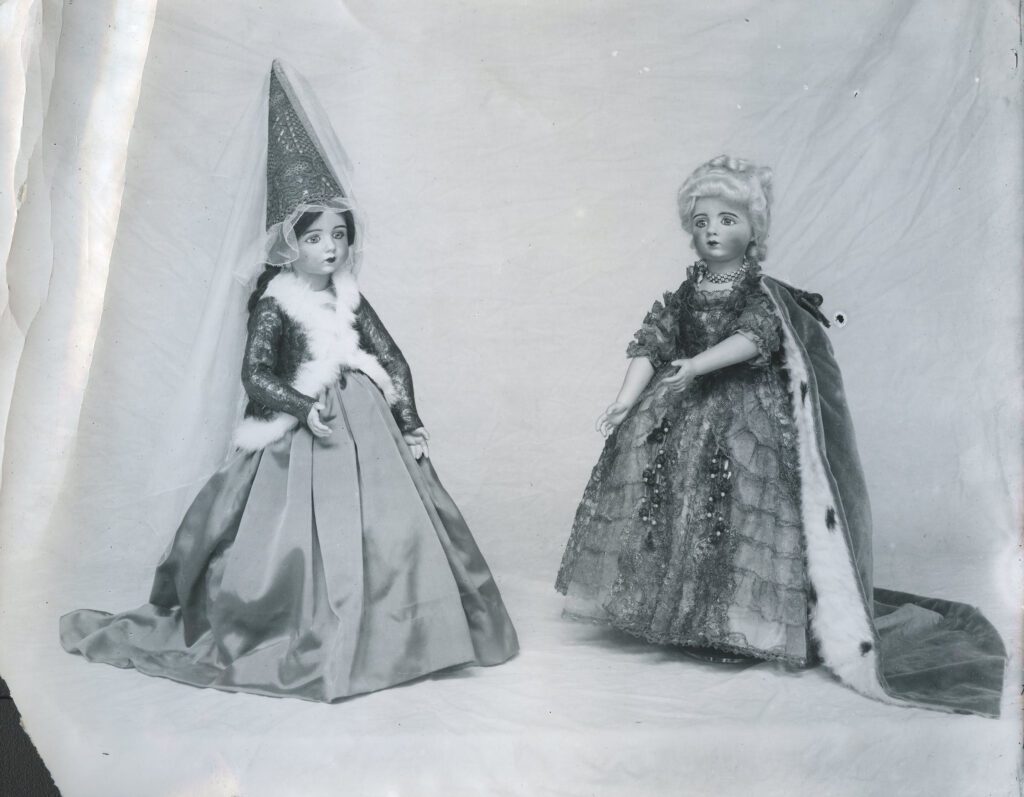
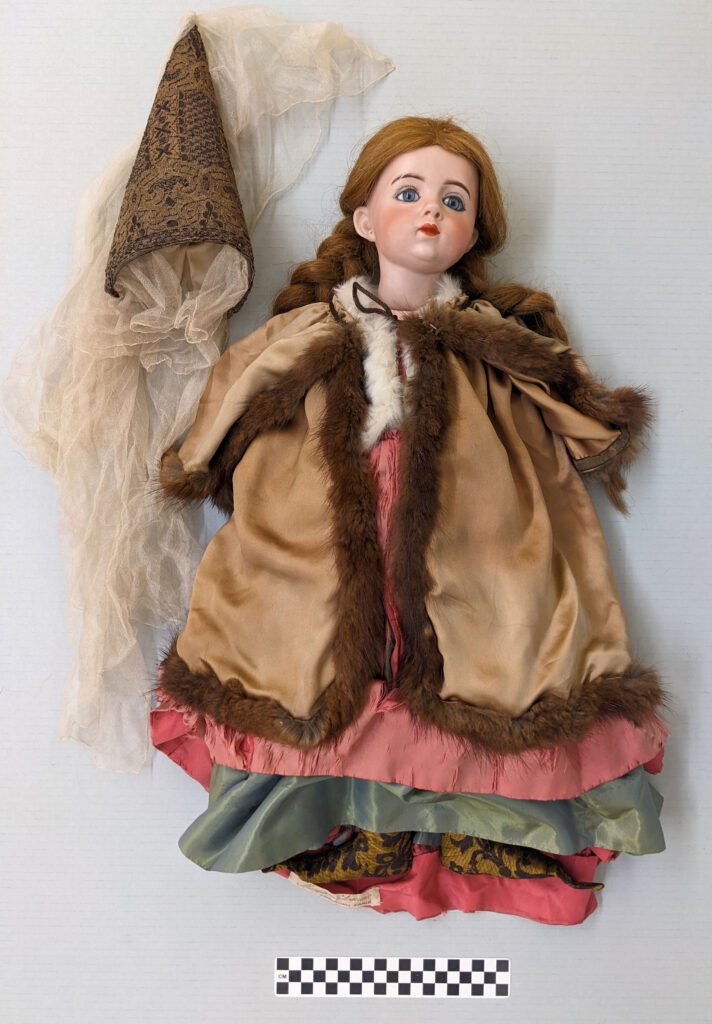
Fashion icon Isabeau de Bavière is one of the five queens that made their way to Carnegie Museum in 1916. After seeing a French character doll exhibit in the Metropolitan Museum in 1915, Herbert DuPuy wrote to the Director of Carnegie Museum, Dr. W.H. Holland, suggesting the addition of such wonderfully crafted dolls into Carnegie’s collection. Less than a year later, five A. Marque and thirty-five other character dolls from the Paris doll company S.F.B.J were part of the museum. 

Isabeau is a rare A. Marque bisque doll, fashioned after the queen of France reigning from 1371-1435, and dressed by the famous couture artist Margaine Lacroix. She gives a glimpse into the accurate historical fashion of the late fifteenth-century nobility. From her undergarments to the recognizable pointed hennin hat of the Medieval period, Isabeau directly copies portraits of the queen. 

“I chose this wonderful doll because of her fascinating history and design; the A. Marque dolls are some of the rarest dolls the museum currently owns, and one of my favorites to admire.”—Elizabeth R. Dragus, Anthropology Volunteer 

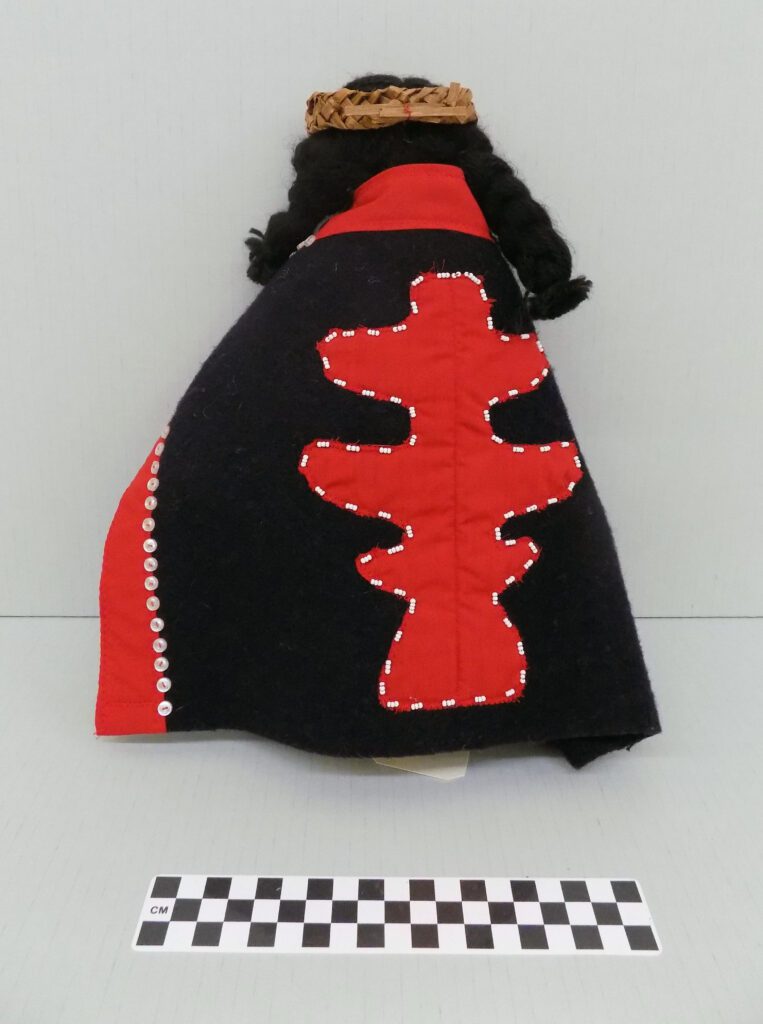
Kwakwa̱ka̱ʼwakw Woman

Kwakwa̱ka̱ʼwakw Woman doll
Kwakwa̱ka̱ʼwakw Woman doll back

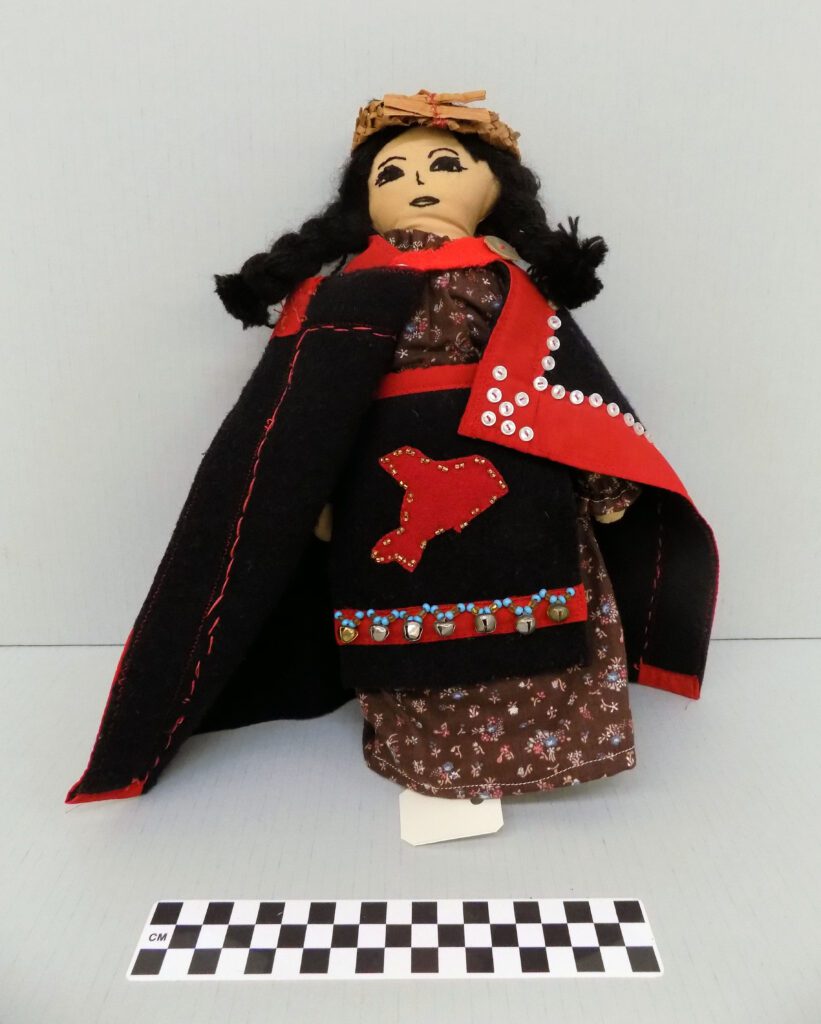
The Kwakwa̱ka̱ʼwakw Woman doll was donated by James B. Richardson III, (Carnegie Museum Anthropology Curator Emeritus), in memory of his mother Miriam Davenport Richardson. The doll was made by Debra Bell of the Nimpkish Band of the Kwakwa̱ka̱ʼwakw Nation located in Alert Bay, British Columbia. Debra Bell is one of a very few Northwest Coast Indigenous female doll makers. On a research expedition for Carnegie Museum of Natural History’s Alcoa Hall James Richardson purchased this doll in 1992.

Embroidered on the wool felt blanket is a “Tree of Life” design, symbolic of the coniferous forests of the Pacific Northwest which are full of Sitka spruce, Douglas fir,  yellow cedar, and western red cedar. Collectively, these tree species are the sustenance of Indigenous people, providing lumber for homes, fire for heat, homes for birds, and shelter for mammals. They also sustain waterways and breathe oxygen into the air.

A plaited cedar bark wreath adorns the doll’s head. Yellow cedar is considered the finest cedar in the region and used in traditional ceremonial objects. The tree is found in deep porous soil on slopes, around lakesides, and within estuaries. The oral history of yellow cedar in Northwest cultures derives from this story; “Raven asked a few young women what forest creature they were afraid of. The women replied, ’none.’  Raven then asked if the women were afraid of owls. The women exclaimed, ‘Yes, [they] were terrified of owls!’ Raven (being known as a trickster) hid in some bushes making owl sounds. The young women went running up the slopes. That is why yellow cedar is only found on slopes.” 

Most Northwest tribes believe humans can transform into animals and back again. The red felt killer whale applique embroidered with pairs of amber glass seed beads on the doll’s dress symbolizes one of these stories of human transformation. The killer whale is known as Natsilane and believed to be part of Earth’s creation. Natsilane was drowned by his brothers who wanted control of the world. Left to die, Natsilane was rescued by a sea otter and restored to his legitimate place as leader. Natsilane helped the sea otters find the safest hunting waters in return for saving his life.

The Northwest Coastal native Americans have a fiercely independent culture steeped in storytelling and deeply rooted in the infinite wisdom of nature.  All these attributes can be noted when viewing the Kwakwa̱ka̱ʼwakw Woman doll.

“I was taken by this doll’s face staring out from her collection box with blue glass paperweight eyes and painted eyelashes for numerous reasons. I had lived in Oregon and Washington states for a few years and was always caught by the breathtaking beauty of shorelines and forests. The doll reminded me of that majestic landscape in her blue wool button blanket. Although the button blanket did not appear in the Northwest culture until colonization, the deep color of the wool is reminiscent of the sea and sky in the area.”—Georgia Feild, Archaeology Volunteer and Museum Educator II   

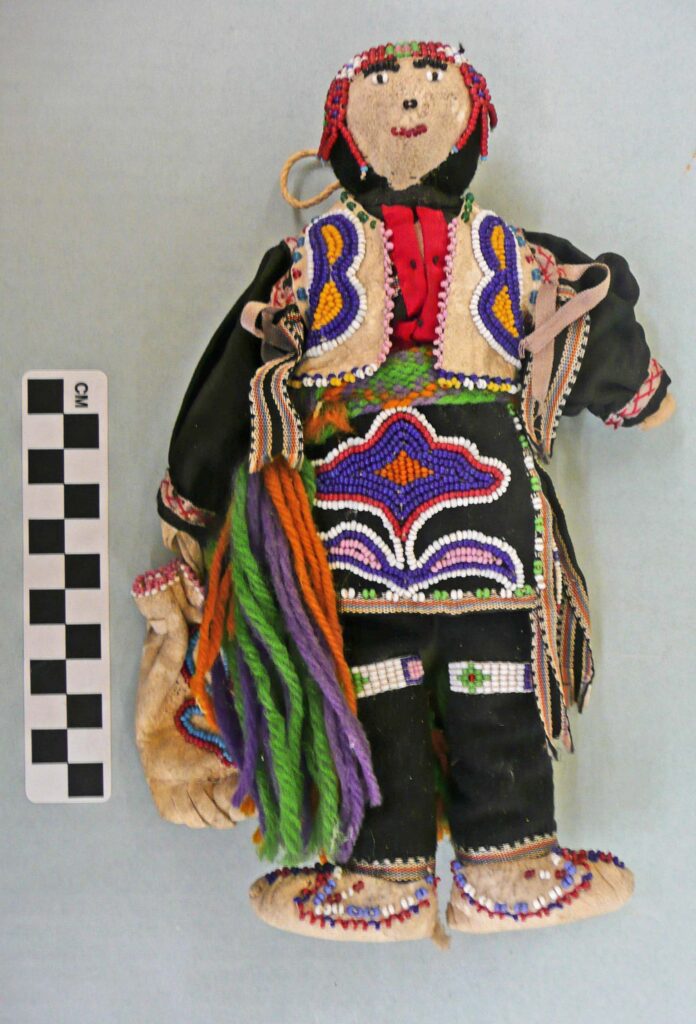
Meskwaki Man

Meskwaki man doll in traditional clothing

“My favorite doll in the collection is the Meskwaki man in traditional clothing, probably made in the 1920s. Part of what caught my eye was the attention to detail. 

The man’s head, moccasins, and bag are made from brain-tanned deerskin, with simplified traditional sewn beadwork designs. His beaded headband is loom-woven, and his body is sewn of cotton muslin. 

He has a satin shirt with silk ribbons [like the ribbon shirts worn today], and wool trousers under his beaded aprons. Originally, men wore loincloths, beaded for special occasions, which evolved into aprons in the last half of the 19th century as men started wearing trousers. 

My favorite part of the outfit is the finger-woven sash. Finger-weaving is a form of oblique interlacing, a sort of wide, flat braid. I was first introduced to finger-weaving in the late 1960s, when I made finger-woven sashes in my dorm room for all my hippie college friends. Finger-weaving was and is found all over eastern North America, where the technique is used to create sash belts, garters, and bags. Colors, designs, and techniques differ in the different cultural areas. The people in the upper Midwest made wide bands which the men wrapped around their heads like turbans and adorned with feathers. [Southeastern men also wore turbans with feathers but preferred to use silk shawls.]

The earliest recorded piece extant of the technique comes from the Craig Mound in Spiro, Oklahoma, and dates to around 850-1450CE. It is currently in the collections of the National Museum of Natural History, Smithsonian Institution.”—Deborah Harding, Anthropology Collection Manager Emeritus 

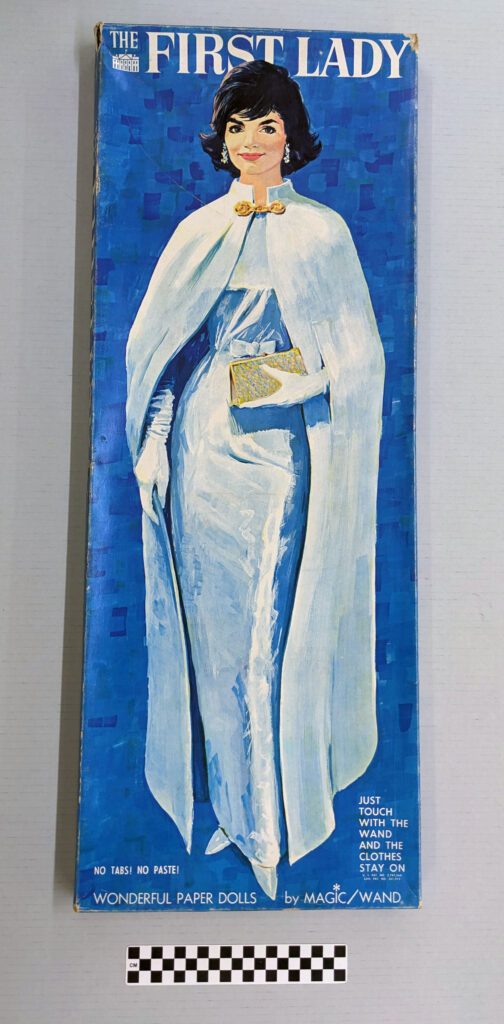
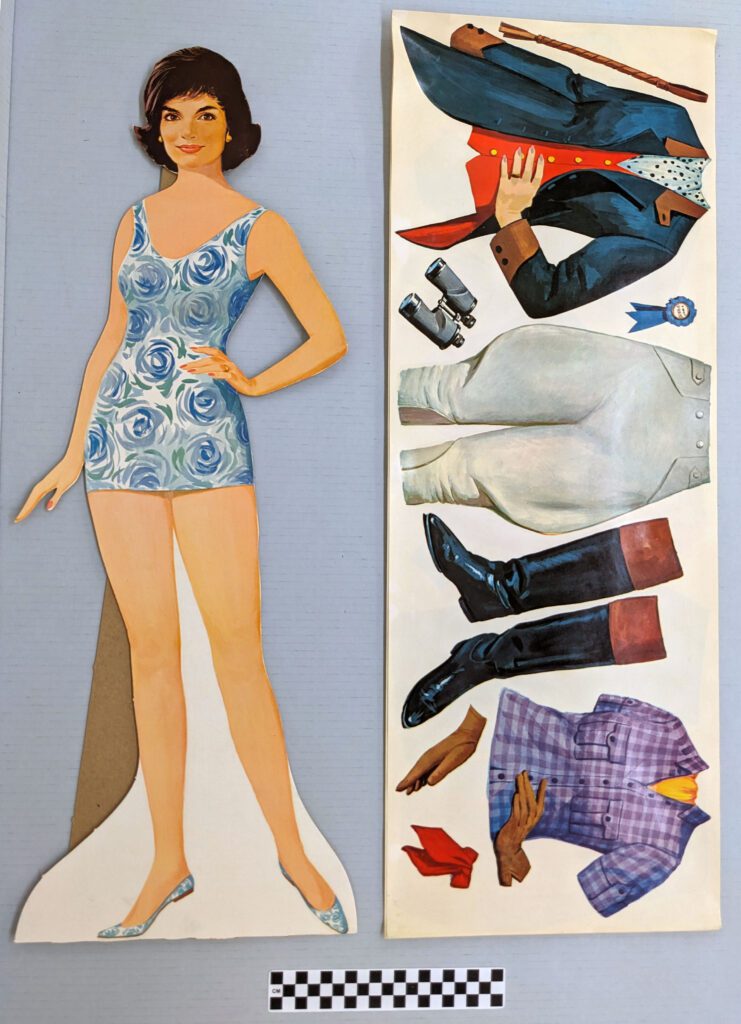
First Lady Paper Doll

box for a First Lady paper doll
first lady paper doll

This supersized paper doll depicts fashion icon and First Lady Jackie O. It was donated by Dr. Betty Meggers. She and her mother collected dolls from around the world beginning at least as early as the 1930s. She donated more than 1,000 to the museum. As you can see from the box, this paper doll used a “magic wand” to keep the clothes on the doll – no tape or paste required!

“I used to love dressing, playing with, and making paper dolls. I chose paper dolls because they are universally accessible, all it takes to create one is paper and imagination. Manufactured paper dolls come from all over the world and provide people with the opportunity to see, play with, and learn about all different types of people, jobs, and cultures. They are also great for kids like me, who really love fashion. My grandma Kelley had a wonderful set of dolls and paper dolls that I would play with whenever I went to her house. I love the freedom of being able to dress the dolls however I wanted, to change their hair and outfits, and even to design new outfits of my own.”—Lisa Haney, Assistant Curator, Egypt on the Nile

Tibetan Buddhist Doll

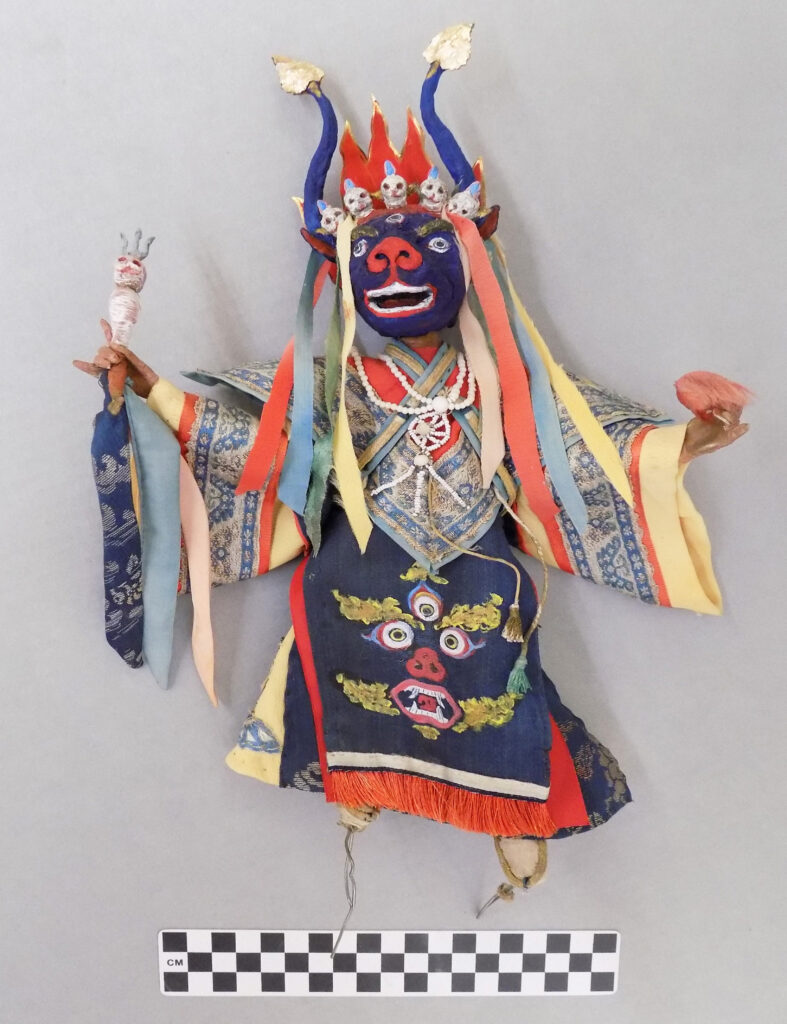
colorful doll of Yamantaka, Destroyer of the God of Death

Yamantaka, “Destroyer of the God of Death.” Not exactly a character you’d think of making into a doll to be used as a plaything, something to cuddle, or as a tool to teach children how to care for babies. However, to practitioners and students of Tibetan Buddhism, this type of doll serves as a visual reminder of the history, values, and lessons that are core to the culture. Although doll-making isn’t a traditional art form in Tibet, Yamantaka shows up in many other visual forms of Tibetan Buddhist art. This unusual doll from the museum’s collection showcases some handicrafts that aretraditional to the culture such as garment-making, tapestry, sculpting, painting, and beading.

Who was Yamantaka and why make a doll of him? The short version of the story is that there was a monk who became wrathful and took on the form of an enraged water buffalo. He caused death and destruction all over Tibet and became known as Yama, The God of Death. The people prayed for someone to stop him and restore peace. A bodhisattva (a deity who helps people) transformed himself into the form of an even bigger, scarier water buffalo to find Yama and convince him to change his ways. By stopping the God of Death, the bodhisattva became known as Yamantaka, the Destroyer of the God of Death. Yamantaka showed mercy on the repentant monk and reminded him to live by the Buddhist principles of compassion, self-control, detachment from ego, and wisdom-seeking. By exemplifying these qualities and restoring peace, Yamantaka was regarded as a protector of Buddhism. A legendary superhero. Someone deserving to have a doll, or rather an action figure, made in his likeness for future generations to aspire to.

“This doll stood out to me at first glance because of its vivid, striking visual impact. Then, as you let your eyes coast over all the details, you become aware that it is just as nuanced as it is bold. For example, the subtle metallic tips on the flames are equally important as the formidable facial expression. For every single thing you see there’s more to the story, and it’s probably not what you’d expect. The doll’s purpose was to preserve, teach, and remind people of the culture. Indeed, it inspired me to seek out and learn about the significance of Yamantaka’s story and, by extension, Tibetan Buddhist traditions and beliefs.”  -Jillian Hanna, Anthropology Volunteer 

Bye Barbie!

Many of our dolls have been used to augment traveling exhibitions and have served as research subjects. It is our great honor to care for them and learn from them. The next time you visit the museum, don’t forget to stop by the Alcoa Hall of American Indians and look for our dolls that are currently on exhibit. 

Related Content

Bringing a Little O-Gah-Pah to Pittsburgh

New Vision of Old Rock Art

Grass Baskets of the Chumash

Sources Consulted

 CMNH accession records

Transformations: Salmon, Bear, Raven, and Humans

Tonga, Britannica.com

Taxidermy Hall of Fame

Bruce Frank Primitive Art

Stichting Nationaal Museum van Wereldculturen

Tibetan Buddhist Art

The Rise of Yamantaka, Destroyer of the Lord of Death

British Red Cross. (2010). Small woolen doll dressed in French military uniform. British Red Cross collection online. https://museumandarchives.redcross.org.uk/objects/8999   

Flexon M. Mizinga, “Marriage and Bridewealth in a Matrilineal Society: The Case of the Tonga of Southern Zambia, 1900-1995,” African Economic History 28 (2000): 53-87.

Malaika P. Yanou, Mirjam Ros-Tonen, James Reed, and Terry Sunderland, “Local knowledge and practices among Tonga people in Zambia and Zimbabwe: A review,” Environmental Science & Policy 142 (April 2023): 68-78.

Wilfrid Laurier University. (2015). Angels of Mercy: Canadian Nurses in the Great War. Youtube. Retrieved July 27th, 2023. from https://www.youtube.com/watch?v=0zITLh6jPYY

Carnegie Museum of Natural History Blog Citation Information

Blog author: Covell-Murthy, Amy; Gaugler, Kristina; Barno, Jim; Smith, Deirdre M.; Zadorozhna Ruban, Lidiia; Heistand, Lily; Castillo, Matí; Erb, Caitlin; Dragus, Elizabeth R.; Feild, Georgia; Harding, Deborah; Haney, Lisa; Hanna, Jillian
Publication date: August 4, 2023

Share this post!

  • Share on Twitter Share on Twitter
  • Share on Facebook Share on Facebook
  • Share on Pinterest Share on Pinterest
  • Share on LinkedIn Share on LinkedIn
  • Share on Reddit Share on Reddit
  • Share via Email Share via Email

Filed Under: Blog Tagged With: Amy Covell-Murthy, anthropology, Kristina Gaugler, Lisa Haney, Science News, SWK2

May 24, 2023 by Erin Southerland

Bringing A Little O-Gah-Pah to Pittsburgh

by Amy L. Covell-Murthy

It is important for Carnegie Museum of Natural History (CMNH) to maintain relationships with the diverse Indigenous communities whose stories we hope to share with the Greater Pittsburgh Area. This ensures that we are centering Indigenous knowledge in how we collect, display, care for, and interpret cultural material. A very important part of this work is to continuously consult with tribal representatives and Indigenous advisors. This is most evident in the process of repatriation, which is governed in the United States by a federal law called the Native American Graves Protection and Repatriation Act (NAGPRA), which was signed in 1991. 

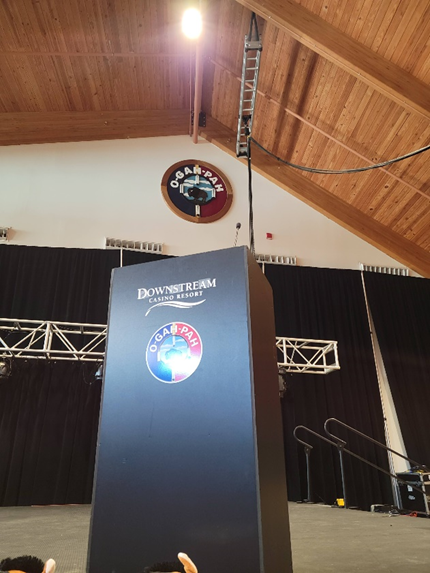
In November 2022, as the concluding action of nearly ten years of consultation, I travelled 962 miles West to complete a NAGPRA transfer with a representative of the Quapaw Nation. I met Carrie Wilson, Quapaw NAGPRA Director, at the Arkansas Archaeological Survey at the University of Arkansas, where we rejoined human remains from Poinsette County with other Quapaw people to await a proper and private reinternment in the future. Afterward, by volunteering at the O-Gah-Pah “Quapaw” Fall Gathering in Northeastern Oklahoma at the Downstream Resort and Casino, I had the pleasure of a brief immersion in some aspects of Quapaw Culture. 

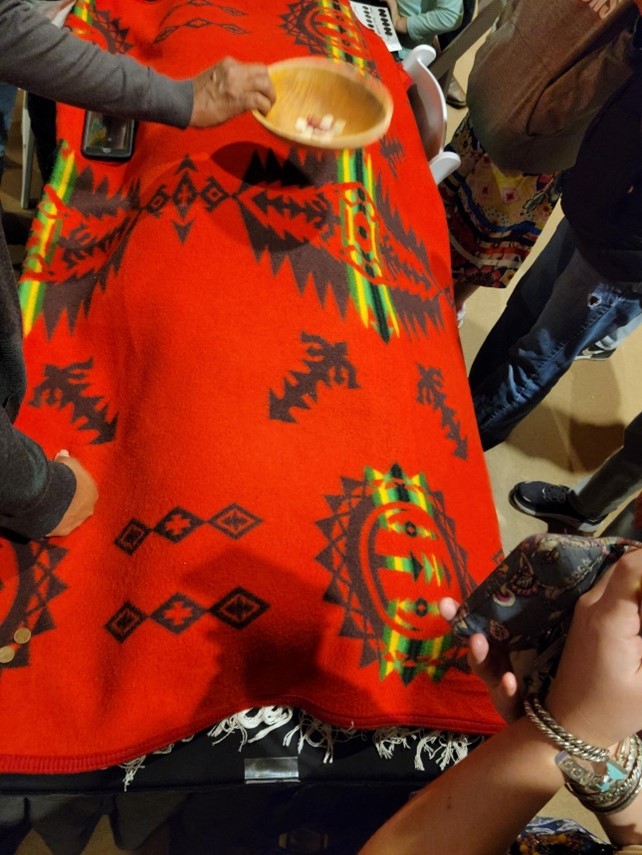
Quapaw Dice Game, photo by Amy Covell-Murthy
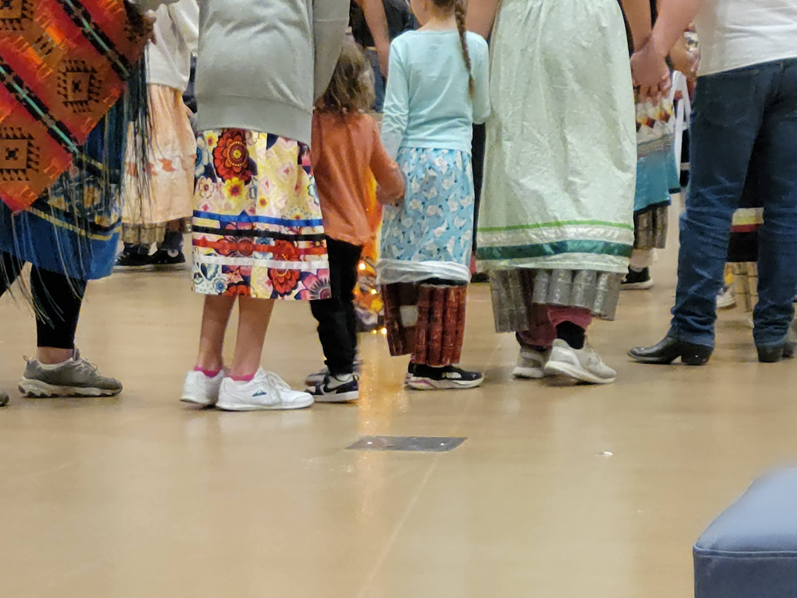
Stomp Dance Participants, photo by Amy Covell-Murthy

Carrie and I had our work cut out for us preparing for the Fall Gathering. We got to know one another better over lunch and then drove to Quapaw, Oklahoma to get ready. On the day of the event, I rolled up my sleeves and helped sell 50/50 raffle tickets, organize games for kids, keep track of auction items, and set up for the Stomp Dance. I learned how to play Quapaw Dice and cheered everyone on in the foot races. I met so many wonderful people and was humbled by the welcome I received. I ate my share of fry bread and chili and paused to be thankful for the opportunity to forge such meaningful relationships.

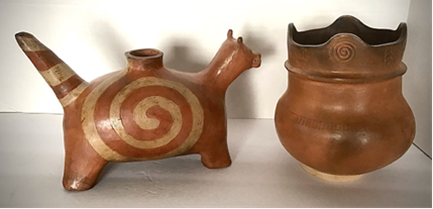
Dog Effigy and Quapaw Pot by Betty Gaedtke, photo by Betty Gaedtke

While volunteering I was able to meet Betty Gaedtke or Te-mi-zhi-ka (little buffalo woman). Betty is an accomplished Quapaw artist who specializes in authentic Quapaw and Mississippian Pottery. While Betty’s pieces are authentic, they are not archaeological and provide a window into Quapaw style and technique. Her work can be seen in fifteen different venues, including the Crystal Bridges Museum, the Museum of The Ghost Ranch, and the Gilcrease Museum. Thanks to a generous endowment, CMNH was able to purchase two pieces from Betty in 2023 to add to our collection and help us bring the story of the Quapaw to Pittsburgh. These pieces are a great reminder that the Quapaw Nation is alive and well.

O-Gah-Pah logo at the Downstream Casino, Photo by Amy Covell-Murthy

So many things in Pittsburgh are inspired by the confluence of our three rivers. Things are named after them, transported on them, and festivals are held on and around them. Like the important role the three rivers play in our local culture, the Mississippi River is very significant to the Quapaw Nation and instrumental in how their name formed. According to the Quapaw Nation website: “The Quapaw were a division of a larger group known as the Dhegiha Sioux many years ago. The Dhegiha split into the tribes known today as the Quapaw, Osage, Ponca, Kansa, and Omaha when they left the Ohio Valley. The Quapaw moved down the Mississippi River into Arkansas, this is the origin of the word Ogaxpa, which can be translated as “downstream people.” You can learn more by visiting QuapawTribe.com.

Caring for culturally significant collections takes empathy and the willingness to accept Indigenous ways of knowing when making decisions on behalf of the material. We are working hard to bring authentic and diverse voices into the narratives that CMNH shares. So, join me in learning more about the O-Gah-Pah and remember to stop relegating Indigenous people and communities to the past when they are thriving across our country. 

Amy L. Covell-Murthy is Archaeological Collection Manager at Carnegie Museum of Natural History.

Related Content

New Vision of Old Rock Art

A Trip to Grave Creek Mound

Grass Baskets of the Chumash

Carnegie Museum of Natural History Blog Citation Information

Blog author: Covell-Murthy, Amy
Publication date: May 24, 2023

Share this post!

  • Share on Twitter Share on Twitter
  • Share on Facebook Share on Facebook
  • Share on Pinterest Share on Pinterest
  • Share on LinkedIn Share on LinkedIn
  • Share on Reddit Share on Reddit
  • Share via Email Share via Email

Filed Under: Blog Tagged With: Amy Covell-Murthy, anthropology, archaeology, Science News

  • Page 1
  • Page 2
  • Page 3
  • Interim pages omitted …
  • Page 8
  • Go to Next Page »

sidebar

About

  • Mission & Commitments
  • Directors Team
  • Museum History

Get Involved

  • Volunteer
  • Membership
  • Carnegie Discoverers
  • Donate
  • Employment
  • Events

Bring a Group

  • Groups of 10 or More
  • Birthday Parties at the Museum
  • Field Trips

Powdermill

  • Powdermill Nature Reserve
  • Powdermill Field Trips
  • Powdermill Staff
  • Research at Powdermill

More Information

  • Image Permission Requests
  • Science Stories
  • Accessibility
  • Shopping Cart
  • Contact
  • Visitor Policies
One of the Four Carnegie Museums | © Carnegie Institute | Privacy Policy | Terms of Use | Accessibility
Rad works here logo